
Nepal's Supreme Court Just Ruled on Elephant Safaris in Chitwan — What It Means for Your Jungle Trip
A 62-point court order is pushing Nepal's most famous jungle safari away from riding elephants. Here's what's actually changing in Sauraha, and what your options are now.
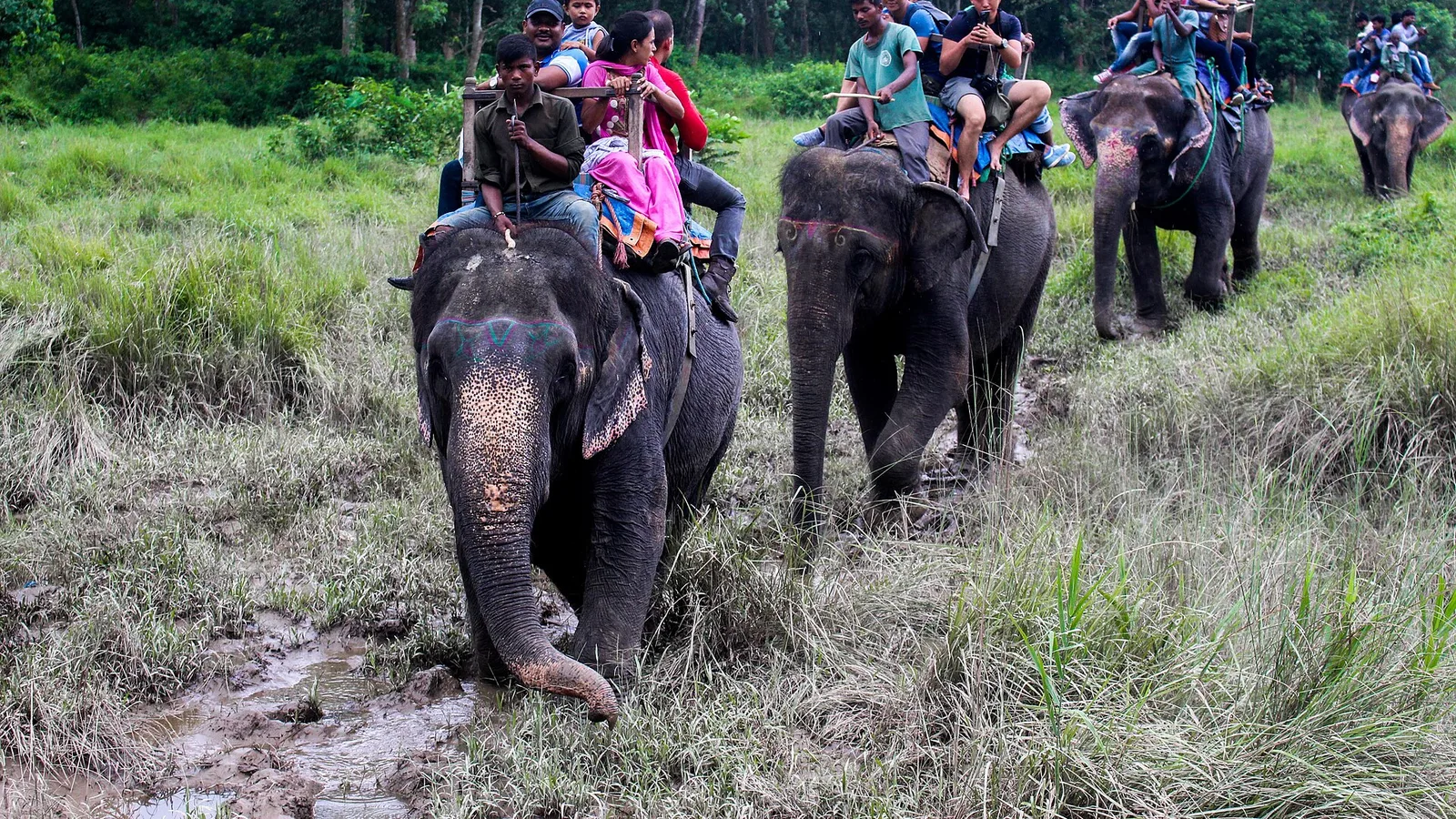
For as long as most travellers have been visiting Chitwan National Park, the signature photo has been the same one: tourists swaying on an elephant's back through tall grass, scanning for rhinos. Nepal's Supreme Court has now put that tradition on notice.
In a 62-point order issued on 17 December 2025, a bench of Justices Hari Prasad Phuyal and Tek Prasad Dhungana ruled on a wider wildlife-welfare case that reaches directly into Sauraha, the village that acts as Chitwan's tourism gateway. Point 48 of the order states that allowing tourists to ride elephants must be reconsidered from an animal-welfare standpoint, and that alternatives should be adopted. Point 51 goes further, directing the government to draft clear legal policy transitioning Nepal toward ethical eco-tourism, citing international models like elephant bush walks and fixed-distance observation platforms.
Key facts
- Supreme Court order: 17 December 2025, 62 points, targeting elephant-riding tourism specifically at points 48 and 51.
- Sauraha's main cooperative currently runs 30 elephants; roughly 14 more are independently owned — down from about 63 before the Covid-19 pandemic.
- Around 38–40 elephants are used for safaris on a typical day today.
- The court did not set an immediate ban or a phase-out date — it ordered a managed transition, not a shutdown.
The ruling has put private elephant owners in an uncomfortable spot. According to United Elephant Operation Cooperative chairman Dipendra Khatiwada, most owners say they are open to shifting toward ethical alternatives — but argue a sudden ban would gut a local economy that has depended on elephant tourism for decades, while doing nothing for the animals already living in captivity. Their ask is a phased transition with real financial support, not a court order that changes the rules overnight.
There are already signs the market is moving on its own. Some Sauraha operators have introduced 'elephant bush walks' — guests walk alongside the elephants at a distance rather than riding them — and report the walks cost more than a traditional ride and are drawing a positive response, particularly from European visitors who no longer want to ride at all. Community forests around the buffer zone are also being asked to accept replacement revenue from jeep safaris, guided walks, canoe trips and wildlife photography permits, to offset what an eventual reduction in elephant-riding income would cost the local area.
| Option | Elephant contact | What it's like |
|---|---|---|
| Elephant-back ride | Direct riding | Traditional format; now under formal court review |
| Elephant bush walk | Walk alongside, no riding | Newer, premium-priced, growing demand |
| Jeep safari | None | Covers more ground; good rhino/tiger sighting odds |
| Canoe trip, Rapti River | None | Crocodiles, birdlife, a quieter pace |
| Guided nature walk | None | On foot with an armed park guide; closest land encounters |
What this means for your Chitwan trip
What this means for you
Nothing about entering Chitwan National Park changes immediately — the court ordered a transition plan, not a same-day ban, and elephant-back rides are still operating in Sauraha as owners and the government work out what comes next. But if an elephant ride was the reason you were adding Chitwan to a Nepal itinerary, it's worth knowing the format is actively being phased toward walks, jeep safaris and river trips instead. Trekkers already tend to pair Chitwan with a hill trek as a lower-altitude add-on at the start or end of a trip — for that combination, a jeep safari plus a guided nature walk covers the same wildlife (rhino, gharial crocodile, over 500 recorded bird species) without wading into the welfare debate at all.
Chitwan's tourism board is watching the same numbers Sauraha's mahouts are: elephant numbers already roughly halved since before the pandemic, and a Supreme Court that has now put the practice on the record. Whatever the government's transition policy ends up looking like, the direction is set. The debate now is how fast, and who pays for it.
Source: The Kathmandu Post.
Cover photo: Yogwis via Wikimedia Commons (CC BY-SA 4.0).
计划徒步?
我们负责许可证、后勤与向导
NMA 认证的本地向导,价格透明,自 1998 年以来 5,000+ 次徒步。告诉我们你的日期,其余的交给我们。


更多「Industry & Tourism」
Industry & Tourism
Nepal Now Has the World's Second-Highest Bungee Jump — 228 Metres Into the World's Deepest Gorge
Only Macau Tower stands taller. The Kushma Bungee drops jumpers 228 metres into the Kali Gandaki gorge, squeezed between two 8,000-metre giants a couple of hours from Pokhara.
Industry & Tourism
Nepal's Top Court Just Called Elephant Safari Rides 'Inherently Irresponsible' — Here's What Happens Now in Chitwan
A December Supreme Court ruling told Sauraha to phase out elephant rides on welfare grounds. Eight months on, roughly 44 elephants and the guides who ride them are caught between a court order, a third of a local forest's income, and tourists who no longer want to ride anyway.
Industry & Tourism
Nepal Built a Glass Platform That Juts Into Thin Air 1,420 Metres Up — and 300,000 People Have Already Walked Onto It
The Bhedetar Skywalk turned a sleepy hill station in Nepal's far east into one of the country's fastest-growing tourist draws, with views stretching toward Kanchenjunga and 14 districts below.