
Nepal's First Bungee Jump Opened in 1999 on a Bridge Built for One Purpose — Jumping Off It
A hundred kilometres east of Kathmandu on the road to Tibet, a steel suspension bridge engineered only for bungee jumping has been dropping visitors 160 metres into the Bhote Koshi gorge for 27 years — the jump that started Nepal's adventure-sports industry.
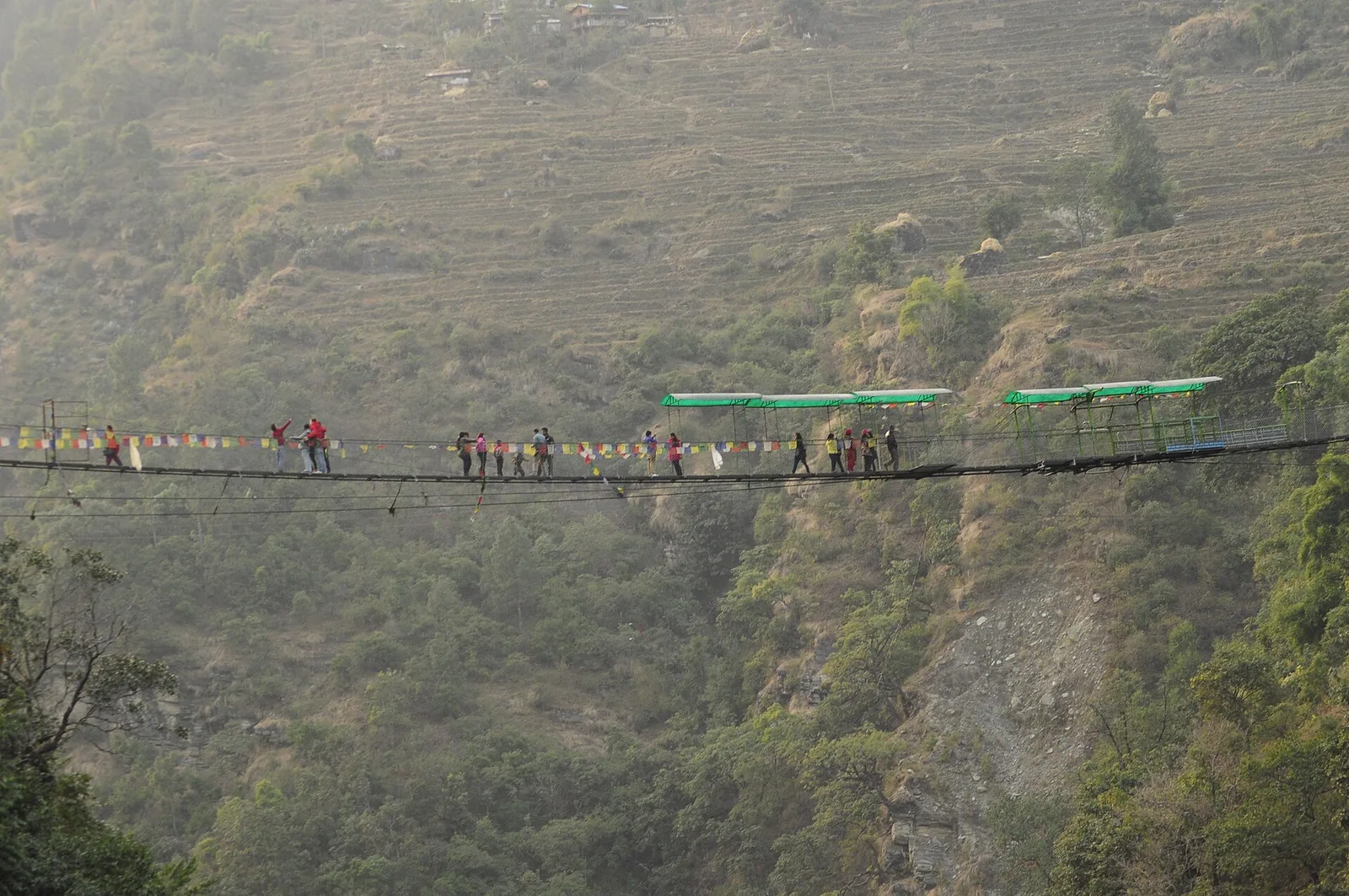
Most of the suspension bridges strung across Nepal's gorges were built to move people, yaks and porters from one village to the next. One was not. On the Araniko Highway, about 100km east of Kathmandu toward the Tibet border, a 166-metre steel bridge spans the Bhote Koshi River for a single purpose: so that people can jump off it, tethered to a bungee cord, and free-fall 160 metres toward the water below. It has been doing exactly that since 1999, and it remains one of the highest bridge bungee jumps in Asia.
Key facts
- The bridge spans 166 metres; the jump drops 160 metres to the river below
- Built and opened in 1999 by New Zealand bungee operator David Allardice with Bishnu Neupane — Nepal's first commercial bungee site
- Located in Sindhupalchowk district, roughly 100km (a three-to-four hour drive) east of Kathmandu on the Araniko Highway
- Engineered to a 4x safety factor under Swiss structural standards, with a rated load of 41.5 tonnes
The site is run by The Last Resort, and the bridge itself is Nepal's only privately owned bridge, built for adrenaline, not traffic. It was designed by a bungee consultant from New Zealand, the country that turned the sport into a commercial industry in the 1980s, and it's still staffed by jumpmasters trained to that lineage. Jumpers step off a small platform at the bridge's centre, drop into several seconds of freefall over the river gorge, and rebound on the cord before being lowered or hauled back up. A day trip typically bundles the jump with a canyon swing, rafting on the Bhote Koshi's whitewater, or a buffet lunch at the resort overlooking the gorge, enough to fill a full day out of Kathmandu without ever reaching Everest or Annapurna.
Nepal didn't invent bungee jumping, and the Bhote Koshi bridge isn't the tallest in the world. But its 160-metre drop puts it in genuinely rare company, and being first mattered: when it opened in 1999, it was Nepal's introduction to commercial adventure sports beyond trekking and rafting, and it helped establish the hills around Kathmandu and Pokhara as a base for paragliding, canyoning and zip-lining that followed over the next two decades.
Macau Tower's 233-metre platform jump, opened by AJ Hackett in 2006, holds the Guinness World Record for the highest commercial bungee jump from a building. Bloukrans Bridge in South Africa, recognised since 2003, holds the record for the highest bridge bungee jump in the world at 216 metres. The Bhote Koshi doesn't chase either record — it's a bridge over a Himalayan river, not an engineered tower — but at 160 metres it still delivers one of the longest falls most people will ever take on purpose, and it's been doing it for longer than either of the newer record-holders.
What this means for trekkers
The takeaway
The Bhote Koshi jump sits on the same highway most overland trips to Kathmandu's eastern hills already use, which makes it an easy add-on rather than a special trip: pair it with a short cultural loop through the Kathmandu Valley, or treat it as the adrenaline day before or after a longer trek. It requires no fitness or altitude acclimatisation, the opposite end of the spectrum from a multi-week Himalayan trek, but a genuine taste of the same restless curiosity that built Nepal's trekking industry in the first place.
We run the Bhote Koshi jump as a one-day bungee jump add-on out of Kathmandu, and it pairs naturally with Pokhara's other adrenaline record, the world's steepest zip-line, or a gentler day on an ultralight flight over the Annapurna foothills for anyone who wants the view without the freefall.
Source: HighestBridges.com, with additional detail from The Last Resort's own site history.
Cover photo: Sudan Shrestha via Wikimedia Commons (CC BY-SA 3.0).
计划徒步?
我们负责许可证、后勤与向导
NMA 认证的本地向导,价格透明,自 1998 年以来 5,000+ 次徒步。告诉我们你的日期,其余的交给我们。


更多「Industry & Tourism」
Industry & Tourism
There's a Museum on the Everest Trail Where Every Exhibit Was Once Garbage Someone Carried Down the Mountain
At 3,775 metres above Namche Bazaar, Sagarmatha Next turns Everest's decades of climbing waste into art — and it sits directly on the trail every Everest Base Camp trekker already walks.
Industry & Tourism
Nepal Just Opened Its Pitch to Japan and Britain at Two of the World's Biggest Travel Trade Shows
Applications opened this week for Tourism Expo Japan and World Travel Market London — the two trade floors where Nepal's tourism industry spends the next three months courting the agents and media who decide how you hear about a trek here.
Industry & Tourism
Why a Bottle of Water Costs Four Times More at Everest Base Camp Than in Kathmandu
Every hour of altitude on the Everest trail adds a real cost to water, noodles and Wi-Fi — and it has nothing to do with tourists being an easy mark.