
eSIM vs Local SIM in 2026: The Cheapest Way to Stay Connected in Nepal and Across Asia
eSIM, local SIM or roaming? Here's what each really costs in 2026, which one holds a signal on the trek, and how to pick for a Nepal trip or a longer Asia swing.
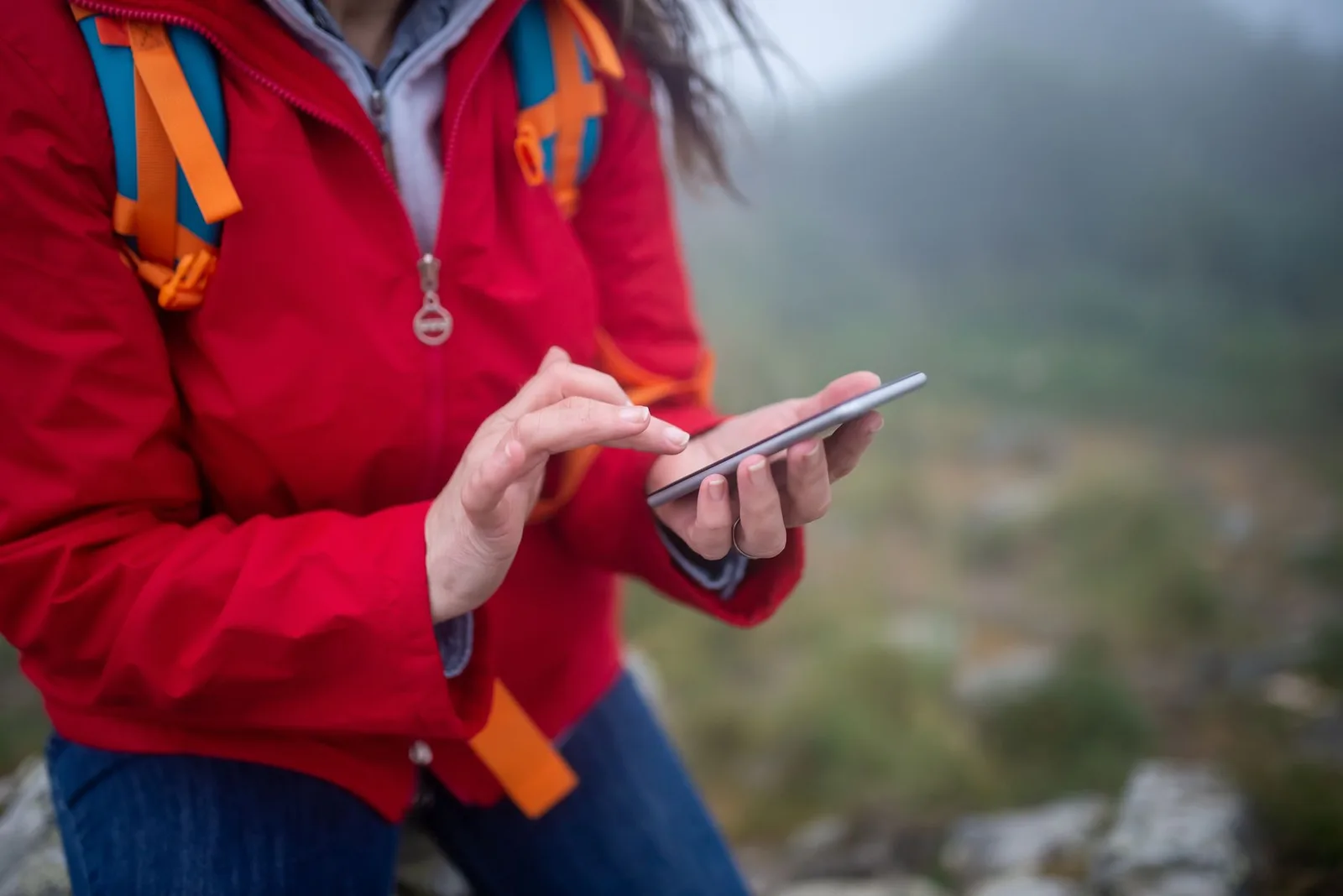
Ten minutes after you clear immigration at Kathmandu's Tribhuvan International Airport, someone will ask if you need a SIM card. It is one of the first small decisions of any Nepal trip, and in 2026 it is more open than it used to be: you can now walk out already connected, without ever visiting a counter. Here is how the three ways of staying online actually compare — for a Nepal trek, and for a longer swing across Asia — so you spend on data, not on regret.
At a glance
- eSIM is a SIM built into your phone. You buy a plan online, scan a QR code before you fly, and land already connected — no shop, no passport queue.
- Both of Nepal's carriers, Ncell and Nepal Telecom (NTC/Namaste), now support eSIM as of 2026, alongside the usual physical tourist SIMs at the airport.
- A local prepaid SIM is still the cheapest per-gigabyte option inside Nepal; a travel eSIM is the most convenient; home-carrier roaming is almost always the most expensive.
- On the high trails, no network is flawless — NTC generally reaches further into the mountains than Ncell.
How an eSIM actually works
An eSIM (embedded SIM) is a small chip already inside most phones sold in the last few years — recent iPhones, Google Pixels, and Samsung Galaxy S and Z models all support it. Instead of slotting in a plastic card, you buy a data plan from an app or website, receive a QR code, scan it in your settings, and a new "line" appears on your phone. You can keep your home number active on your physical SIM for calls and texts while the eSIM handles cheap local data — that dual-SIM trick is the whole appeal.
The practical win is timing. You can set it up on your sofa the night before, then step off the plane in Kathmandu already online for maps, ride apps and messaging — no hunting for a booth, no handing over your passport for registration. The catch: your phone must be eSIM-capable and carrier-unlocked. Check both before you rely on it.
The three ways to get online
Roughly, your options break down like this. Prices move constantly and vary by plan, so treat these as 2026 ballparks, not quotes.
| Option | Rough cost | Best for |
|---|---|---|
| Local prepaid SIM (Ncell / NTC) | A few hundred to ~1,000 NPR (about US$3–8) for several GB, valid 1–4 weeks | Longest trips, deepest trekking, lowest cost per GB |
| Travel eSIM | Nepal-only plans often start around US$5–15; a regional Asia eSIM runs roughly US$25–50 for 10–20GB over a month | Convenience, arriving connected, multi-country Asia trips |
| Home-carrier roaming | Commonly US$5–15 per day, or brutal pay-per-use rates | Very short trips, or emergencies only |
The headline finding, confirmed across travel and telecom comparisons in 2026, is simple: a travel eSIM typically undercuts standard roaming by anywhere from 30% to well over 70%, and a local SIM is cheaper still per gigabyte. Roaming's only virtue is that you do nothing — which is exactly why carriers can charge for it.
Local SIM in Nepal: Ncell vs NTC
At the airport arrivals hall, dedicated Ncell and Nepal Telecom counters are staffed by English-speaking agents; bring your passport and expect the whole thing — SIM, tourist data pack, registration and activation — to take 10–15 minutes. Tourist bundles pair a chunk of data with some local minutes, valid for 7, 15 or 30 days.
Ncell tends to be faster in the cities and along the busier trekking valleys. NTC is the state operator with a rural-coverage mandate, so it holds a signal further into the high country. Many seasoned trekkers carry an NTC SIM precisely for the mountains — more on that below.
What really happens on the trek
Connectivity in Kathmandu and Pokhara is genuinely good — fast enough for video calls in most neighbourhoods. The story changes with altitude. Coverage clings to the villages and thins out on the passes and long stretches between settlements. On the Everest trail, NTC users report holding a signal around Tengboche, Dingboche and Lobuche where Ncell has already dropped, and it is a similar picture near Annapurna Base Camp. At Everest Base Camp itself, no network is truly reliable — this is where paid tea-house Wi-Fi (Everest Link and similar) earns its keep.
What this means for you
Don't expect any single SIM to give you full bars to base camp — nobody's does. Set your phone to airplane mode between villages to save battery (cold at altitude drains it fast), carry a power bank, and treat tea-house Wi-Fi as your backup for the highest days. For genuinely remote routes — Dolpo, upper Manaslu, the far west — plan for stretches with no signal at all, and let people at home know in advance.
So which should you pick?
Nepal only, keeping it simple: an eSIM (an Ncell/NTC eSIM, or a global travel-eSIM plan) gets you online the moment you land — ideal if you'll mostly use towns and standard teahouse trails. A long or remote Nepal trek: add a physical NTC SIM for its reach into the mountains; it is cheap insurance. A multi-country Asia trip — say Nepal plus Thailand, India or Vietnam — a single regional Asia eSIM covering many countries is usually the best value and saves juggling cards at every border. Roaming? Keep it for a two-day layover, and turn it off otherwise.
For the full picture on tea-house Wi-Fi, charging and staying reachable on the trail, see our companion guide, Nepal trekking Wi-Fi & connectivity in 2026. And when you trek with us, your guide carries a local SIM and knows exactly where the signal lives and dies on your route — one less thing for you to solve at 4,000 metres.
Cover photo: Kampus Production via Pexels (Pexels License).
来源: Travel Himalaya Nepal desk
计划徒步?
我们负责许可证、后勤与向导
NMA 认证的本地向导,价格透明,自 1998 年以来 5,000+ 次徒步。告诉我们你的日期,其余的交给我们。

