
重大 · Safety & Advisories
Barrier Lake Above Nepal Breaches — Fresh Flood Risk Down the Bhote Koshi–Trishuli After the Rasuwa Disaster (2026)
A barrier lake on the Tibet border has breached — Nepal’s Bhote Koshi–Trishuli corridor faces a fresh, secondary flood threat days after the 26 August Rasuwa disaster. Here is what is confirmed, what is not, and what to do if you are downstream.
Breaking — updated 28 August 2026
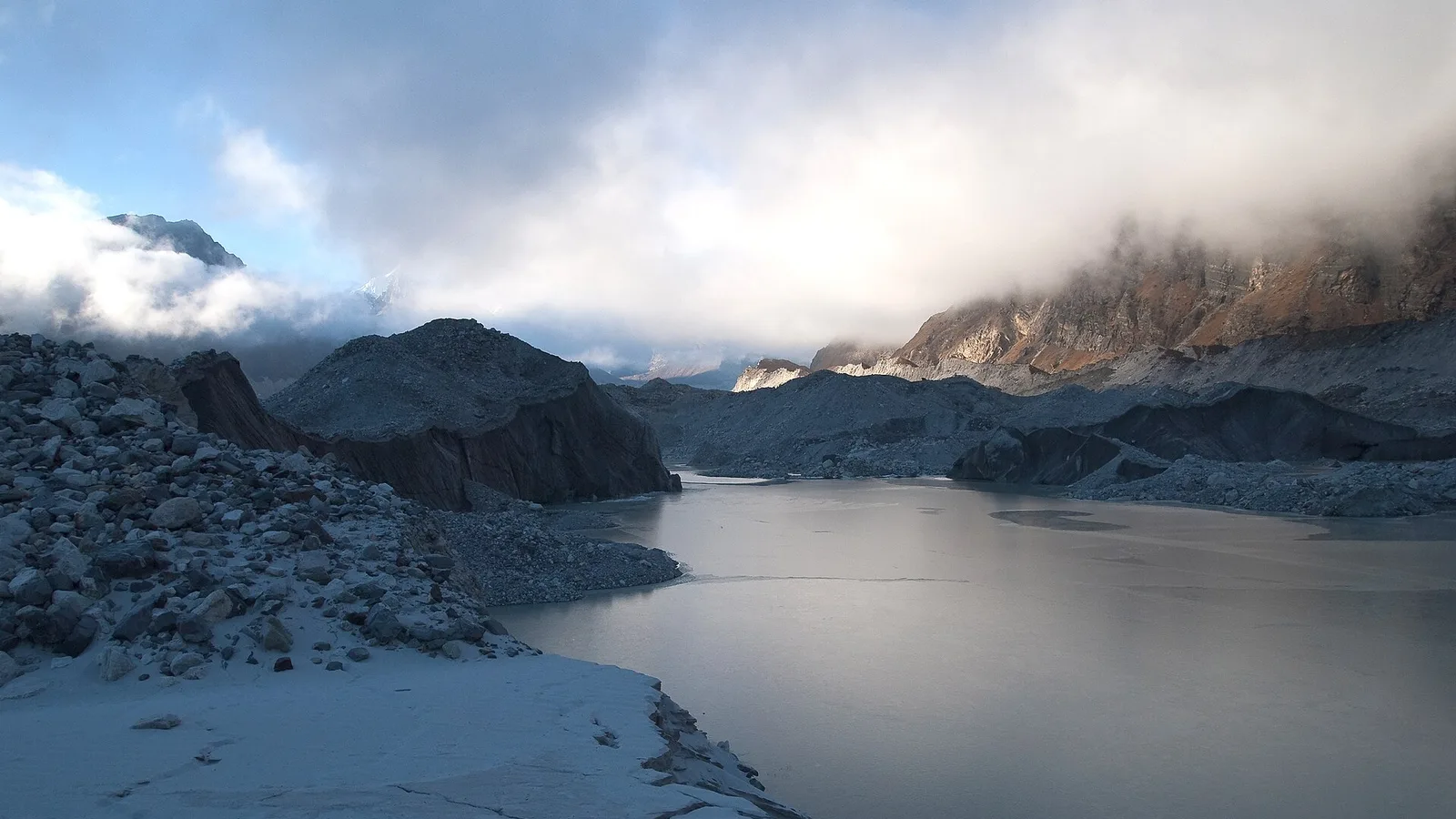
A new barrier lake that formed on the Tibet side of the border after the 26 August disaster has now breached, the Nepali Army informed Rasuwa's chief district officer on Friday 28 August. Authorities warn of a possible fresh surge down the Bhote Koshi. The scale of any downstream flooding in Nepal had not been established at the time of writing. If you are in the Bhote Koshi–Trishuli corridor, act on official instructions now, not on this article. We are tracking developments in our Nepal Floods 2026 live updates.
The warning at a glance — all figures attributed, provisional
- The hazard: a temporary barrier lake — a natural dam of landslide or glacier debris ponding a river behind it — formed just north of the Nepal–Tibet border.
- Volume: about 2 million cubic metres as of Thursday morning, 27 August, per China's Ministry of Water Resources (reported by Global Times).
- State: already overflowing, with roughly 3 million cubic metres more water expected to drain into it over about three days.
- Risk: China's water ministry assessed a high risk of breach and was running flood simulations; the lake has since reportedly breached (Nepali Army, via Rasuwa CDO, 28 August).
- Who is downstream: the lake sits above the Bhote Koshi, which feeds the Trishuli — putting Rasuwa and Nuwakot first in line, with Dhading, Gorkha and Chitwan named as alert districts.
Nepal is facing a second flood threat within days of the catastrophe that struck Rasuwa on 26 August. China's Ministry of Water Resources warned that a barrier lake had formed near the confluence of the Chhochen Khola and Purepu Tsangpo rivers — the stream that becomes the Bhote Koshi once it crosses into Nepal — and that it posed a high risk of breaching. On Friday 28 August, the Nepali Army informed Rasuwa Chief District Officer Narendra Pariyar that the lake had breached, raising fresh concern of another wall of water moving down the Bhote Koshi into Nepal.
This is an active, moving situation, not a settled one. What follows is what has been confirmed and attributed as of the morning of 28 August. We have deliberately not put a number, a time or a casualty figure on any downstream flood, because none had been established when this was written — and we will not guess about people's lives.
If you are in the Bhote Koshi–Trishuli corridor
Move to higher ground away from the river and stay there — do not go down to the banks to watch or film. This corridor runs from Rasuwagadhi and Timure through Syabrubesi, then down the Trishuli past Betrawati, Bidur (Trishuli Bazaar), Devighat and on toward Nuwakot, Dhading and beyond. Follow the instructions of the Nepal Army, Armed Police Force, Nepal Police and your local district authorities, and keep your phone charged for official alerts. A barrier-lake breach can send a surge downstream with very little warning. If you are trekking or staying near the river, ask your guide, hotel or operator to confirm the latest advisory before you move.
What China's water ministry said
According to China's Ministry of Water Resources, cited by Chinese state media, the barrier lake held roughly 2 million cubic metres of water as of Thursday morning (27 August) and was already overflowing. A further 3 million cubic metres was expected to flow in over the following three days, which is what drove the high-risk assessment: a dam of loose debris holding back a rising volume of water is inherently unstable. The ministry said it was closely monitoring the lake and conducting flood simulations and analyses to prepare for a potential breach.
Where the water would go
The geography is the whole story. The barrier lake formed on the Tibetan side, above the point where the river enters Nepal as the Bhote Koshi. From the border it runs through Rasuwa — the same Timure and Syabrubesi settlements devastated on 26 August — and then joins the Trishuli, carrying any surge down through Nuwakot and into Dhading. Authorities have named Dhading, Gorkha and Chitwan among the districts on alert further downstream, reflecting how far a large release can travel along the Trishuli system.
| District | Position on the river |
|---|---|
| Rasuwa | First in line — Rasuwagadhi, Timure, Syabrubesi on the Bhote Koshi |
| Nuwakot | Downstream on the Trishuli — Betrawati, Bidur, Devighat |
| Dhading | Alert district, Trishuli corridor |
| Gorkha | Alert district, further down the system |
| Chitwan | Alert district, lower Trishuli / Narayani |
Why this is happening now
The barrier lake is the aftershock of the 26 August disaster. That flood was traced to a magnitude 5.2 event recorded by the US Geological Survey — consistent with a glacier collapse — which sent debris into the Lhende Khola, a Bhote Koshi tributary, and down into Rasuwa. Nepal's National Disaster Risk Reduction and Management Authority (NDRRMA) reported 359 people confirmed dead and 910 out of contact in its bulletin on the evening of 27 August; later police and government tallies have run higher, and every one of these figures is provisional and has risen daily. Our full account of that event is here: Bhote Koshi flash flood, 26 August 2026 — what happened in Rasuwa.
A landslide or ice-and-rock avalanche can dam a river in minutes and then fail suddenly — the classic barrier-lake breach, closely related to the glacial lake outburst floods we explain in Nepal's fast-growing mountain hazard. This stretch of river has now flooded twice in roughly fourteen months, and scientists at ICIMOD have described such events as increasing at an unprecedented pace across the Hindu Kush Himalaya.
What we do not know yet
We do not know how much water the breach released, how fast it is moving, or what it will mean on the ground in Nepal — and we will not print a guess. The 2 million cubic metre figure is a Thursday-morning estimate from across the border; conditions change hour to hour. Treat every number here as provisional. We would rather report a warning that passed than amplify a disaster.
This is a safety notice, nothing more. Our advice is simple: follow official channels — the NDRRMA, the Nepal Army, the Armed Police Force, Nepal Police and your district administration — and check our Nepal Floods 2026 live updates hub, which we are keeping current as verified information comes in. Our thoughts are with the families in Rasuwa and along the river.
Sources and further reading: The Kathmandu Post — barrier lake breaches · The Kathmandu Post — China warns of new barrier lake · Global Times — China's Ministry of Water Resources · Outlook India · ICIMOD · USGS earthquakes. Barrier-lake volumes and breach-risk figures are attributed to China's Ministry of Water Resources as reported; the breach was reported by the Nepali Army via the Rasuwa CDO. All figures are provisional and were current as reported on 27–28 August 2026.
Cover photo: Vyacheslav Argenberg via Wikimedia Commons (CC BY 4.0).
更多「Safety & Advisories」
Safety & Advisories
Tamang Heritage Trail 2026 Status: Nepal’s Cultural Langtang Trek After the Rasuwa Flood
The most flood-affected Langtang trek — access is disrupted and recovery is underway, so confirm before booking early autumn 2026.
Safety & Advisories
Gosaikunda Trek 2026 Status: Can You Still Reach the Sacred Lakes After the Rasuwa Flood?
Yes, via Dhunche the sacred lakes are largely spared — road access up the Pasang Lhamu Highway is still recovering after the 26 August flood.
Safety & Advisories
Chitwan After the 2026 Floods: Is the Jungle Safari Open?
The core-park safari is closed — but for the routine monsoon, not the flood; road access is the real disruption. An honest region status and what it means for your trip.