
Nepal's Gurung Honey Hunters Scale Cliffs for the World's Largest Bee and Its 'Mad Honey'
Gurung harvesters descend Himalayan cliffs on handmade ladders to cut combs from the world's largest honeybee, whose red 'mad honey' is prized as medicine and mild intoxicant.
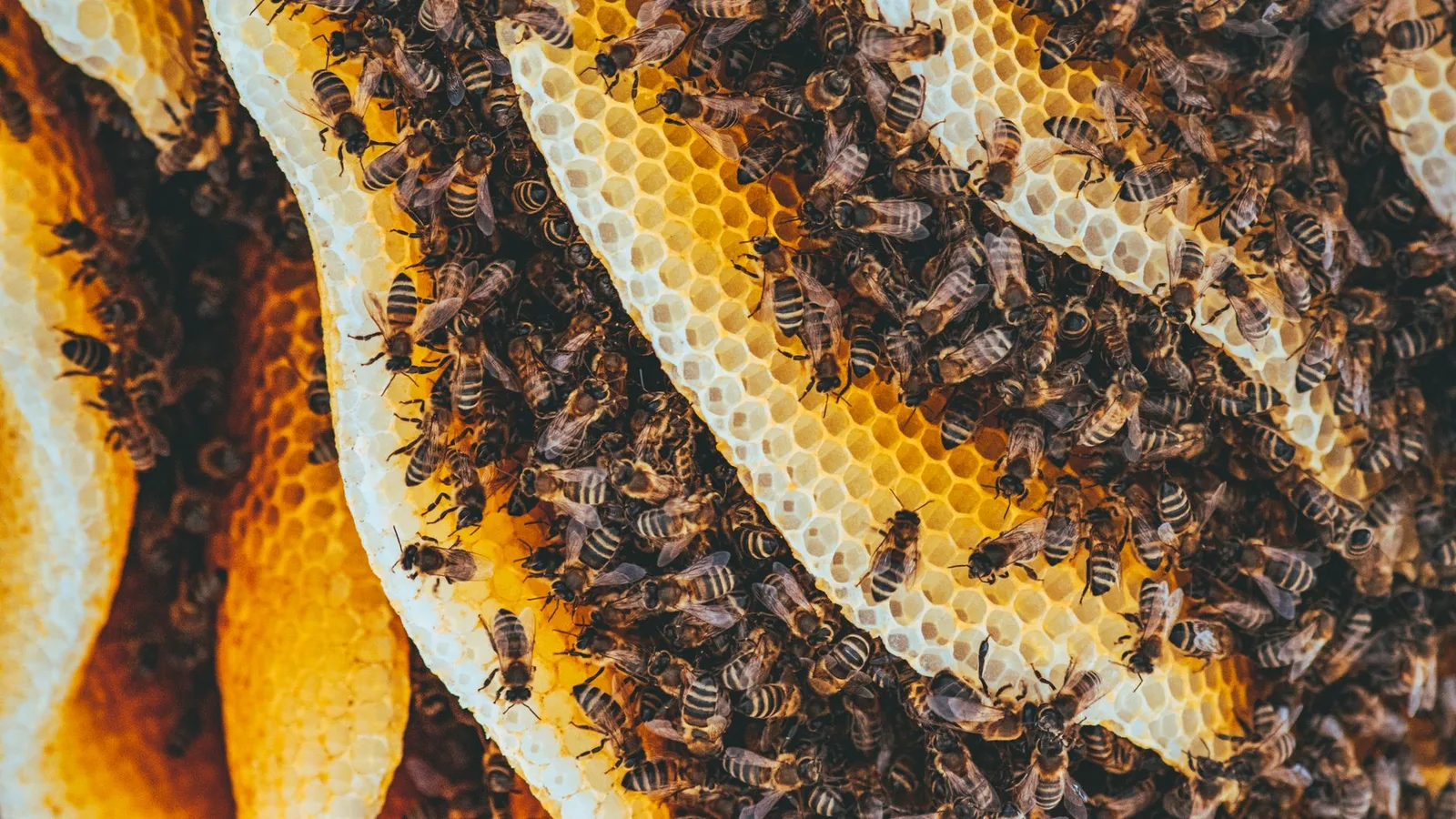
High in the middle hills of Nepal, twice a year, a small group of villagers do something that looks impossible. They light smoking fires at the foot of a sheer cliff, climb to the top, and lower a long ladder woven from rope and bamboo over the edge. Then one of them climbs down it — hundreds of feet above the valley floor, swaying in the smoke and the anger of thousands of bees — to cut dripping combs of honey from the rock. This is cliff honey hunting, one of the oldest living traditions of the Gurung people, and it is quietly disappearing.
The basics
- Who: Gurung honey-hunting communities of Nepal's mid-hills
- When: traditionally two harvests a year, broadly in spring and autumn
- The bee: Apis laboriosa, the Himalayan giant honey bee — the world's largest honey bee
- The prize: red “mad honey,” valued for its purported medicinal and mildly intoxicating qualities
The bee that builds on cliffs
The honey comes from Apis laboriosa, the Himalayan giant honey bee, which is the world's largest honey bee — single adults can measure up to 3.0 cm (1.2 in) long. It is found across the mountains of Nepal, Bhutan, India, Myanmar, Laos, Vietnam and China's Yunnan province, and it mostly nests at altitudes between 2,500 and 3,000 m (8,200 and 9,800 ft), building very large combs under overhangs on the south-western faces of vertical cliffs. A single nest can hold as much as 60 kg (130 lb) of honey. Those two facts — enormous, exposed combs on unclimbable rock — are exactly why harvesting them has always demanded such extraordinary nerve.
How the harvest works
The method is disarmingly simple and genuinely dangerous. Hunters build smoky fires below the nests to drive the bees off the comb, then work from above, anchoring a handmade rope-and-bamboo ladder at the clifftop and letting it fall down the rock face. A harvester descends the ladder to the combs while others on the cliff-top manage ropes and lower baskets to catch the cut honeycomb. There is no modern safety gear in the traditional practice, the bees do sting, and a fall would be fatal. The knowledge of which cliffs hold nests, how to read the bees, and how to build and trust the ladder is passed down within families and villages rather than written anywhere.
| Aspect | Detail |
|---|---|
| Species | Apis laboriosa — world's largest honey bee |
| Adult size | Up to 3.0 cm (1.2 in) long |
| Nesting altitude | Mostly 2,500–3,000 m (8,200–9,800 ft) |
| Nest site | Overhangs on south-western faces of vertical cliffs |
| Honey per nest | Up to 60 kg (130 lb) |
| Value | Red honey wholesales at roughly five times ordinary honey |
The “mad honey” and why it matters
Part of the harvest is ordinary honey. But some of it is the famous red “mad honey,” prized for its purported medicinal value and intoxicating qualities. Those effects come from grayanotoxin, a natural compound the bees pick up in the nectar of white rhododendrons that bloom on the high slopes. Rhododendrons belong to the plant family Ericaceae, and nearly all parts of a grayanotoxin-producing rhododendron — stem, leaves, flowers, pollen and nectar — contain the molecule, so it passes straight into the honey. The Gurung people of Nepal are especially renowned for their use of this mad honey, both as a traditional medicine and for its intoxicating properties, and the red honey can sell for around five times the price of ordinary honey.
A note on mad honey
Mad honey is not a novelty to sample casually. Grayanotoxin can slow the heart and lower blood pressure, and even small amounts may cause dizziness, nausea, fainting and weakness; larger doses can bring loss of coordination and severe muscle weakness. Cases of “mad honey poisoning” are documented in the medical literature — concentrated in Turkey, with Nepal accounting for a smaller share. If you ever encounter it, treat it with real respect. And treat the harvest itself with respect too: the fairest way to experience this tradition is to buy honey directly from a hunting community and to watch, if invited, without turning a dangerous act of livelihood into a photo-op.
A tradition under pressure
For all its fame, cliff honey hunting is fragile. Community members and researchers point to a familiar set of pressures: the hunters are ageing and fewer young people are learning the skill; the bees and their high-cliff nests are sensitive to changes in habitat and climate; and rising outside demand — for the honey and for the spectacle of the harvest itself — can push communities to over-harvest or to perform the hunt on someone else's schedule rather than the bees'. Where the tradition survives best, it is because a village still controls its own cliffs, harvests sustainably, and keeps the knowledge inside the community.
Where it sits on the trekking map
The Gurung heartland is the middle-hill country of the Annapurna foothills — the same green ridges, terraced fields and stone villages that trekkers pass through on the classic Annapurna walks. You are extremely unlikely to stumble onto a live harvest, and you should not expect to; it is not a scheduled attraction. But understanding that this world exists just off the trail is part of what makes trekking here more than a walk between viewpoints. If you want to travel in a way that meets the people whose home this is, start with our guide to authentic, culture-first Nepal, and consider a gentle route through Gurung country such as the Ghorepani Poon Hill trek or the Mardi Himal trek. Walk softly, ask before you photograph, and buy local — that is how a living tradition stays alive.
Source: Travel Himalaya Nepal, drawing on published references for Apis laboriosa, grayanotoxin and mad honey, and the Gurung people.
Cover photo: Ion Ceban @ionelceban via Pexels (Pexels License).
计划徒步?
我们负责许可证、后勤与向导
NMA 认证的本地向导,价格透明,自 1998 年以来 5,000+ 次徒步。告诉我们你的日期,其余的交给我们。


