
Nepal Picks a Living Goddess Every Few Years — and She's Almost Always Three Years Old
In a centuries-old ritual beside Kathmandu's Durbar Square, a toddler is chosen for 32 physical perfections, tested for total fearlessness beside sacrificed buffalo heads, and enthroned as a living goddess — until her first period ends the reign overnight.
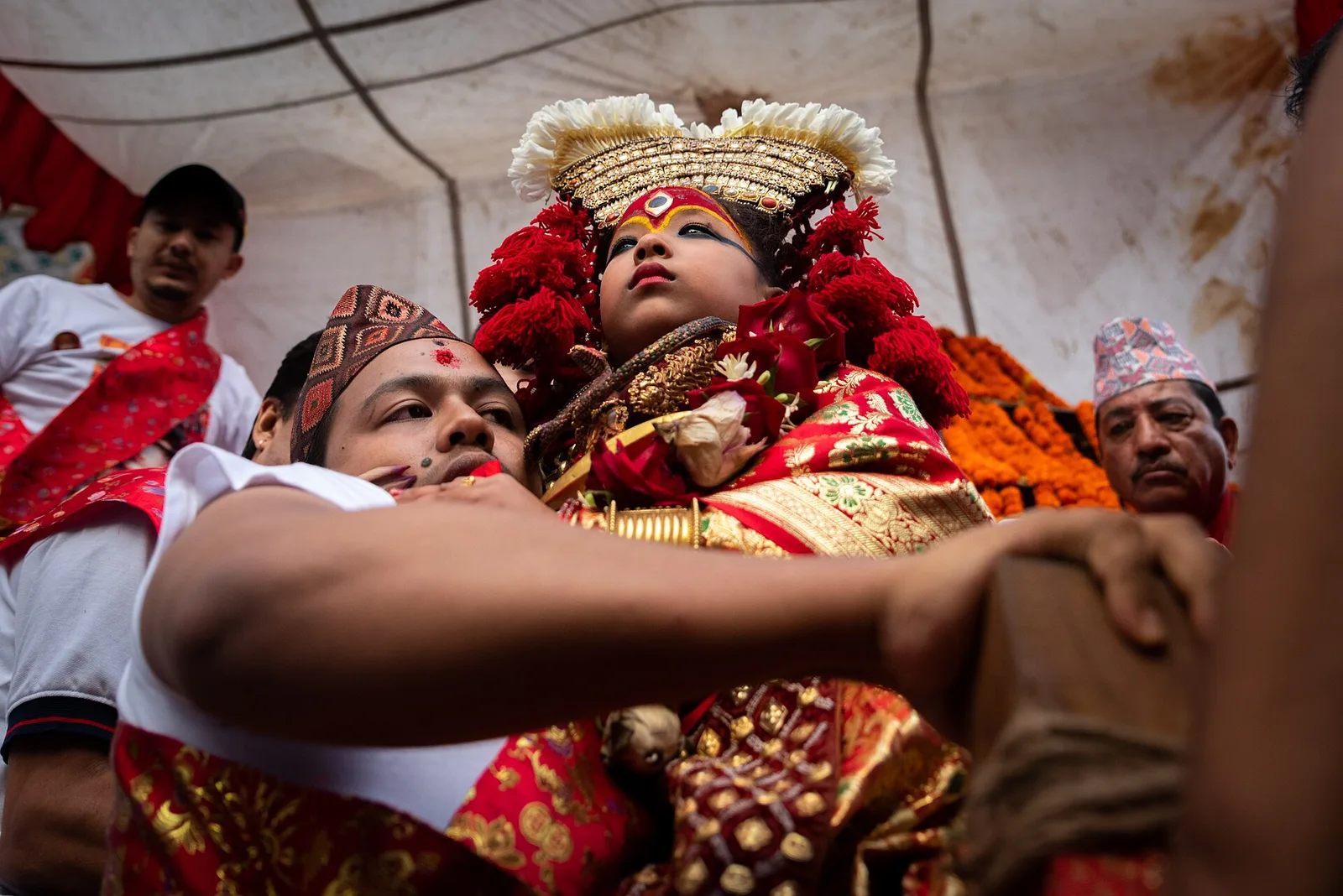
On most afternoons in Kathmandu's Durbar Square, tourists cluster below a carved wooden window waiting for a small girl to appear, look down for a few silent seconds, and vanish again. She is not a performer and not a princess. Nepal considers her a living goddess — and she is almost always around three years old.
Key facts
- The Kumari tradition has run continuously since the 17th century, formalised under Nepal's Malla kings.
- Girls are chosen at roughly ages 3 to 5, exclusively from the Newar Shakya Buddhist clan of the Kathmandu Valley.
- Candidates are screened for 32 physical “perfections” and must show zero fear during a ritual night surrounded by sacrificed buffalo and goat heads.
- Her reign ends the moment she reaches her first menstrual period — often after 8–10 years as a deity.
The residence is real and still standing: the Kumari Ghar, a three-storey carved palace on the southern edge of Kathmandu Durbar Square, built in 1757 by King Jaya Prakash Malla. According to Nepal's official tourism board, the reigning Kumari is worshipped as the living incarnation of the goddess Taleju Bhawani — revered by Hindus and Buddhists alike, a rare religious crossover in a country where the two faiths otherwise stay in their own lanes. Kathmandu is not alone: Patan, Bhaktapur, Bungmati and Thimi each keep their own Kumari, chosen and worshipped the same way.
Selection is not casual. A panel of senior Buddhist priests, the royal priest of Taleju and the royal astrologer inspect candidates against a checklist of 32 physical requirements — poetic-sounding conditions like eyelashes like a cow and a body shaped like a banyan tree — along with unblemished skin and unbroken health. The finalists then face Kalratri, the eighth night of the Dashain festival: led into a darkened courtyard lit only by candles, surrounded by 108 freshly sacrificed buffalo and goat heads, while men in fearsome masks dance and shriek around them. A girl who cries or flinches is disqualified on the spot — the goddess she is meant to embody cannot be housed in a body that fears blood. The last test is quieter: she must correctly pick the belongings of the previous Kumari out of a mixed pile.
Nepal's Malla kings formalise the Kumari tradition as a living channel to the goddess Taleju.
King Jaya Prakash Malla completes the palace on Durbar Square where the reigning Kumari still lives.
Nepal ends 240 years of monarchy; the republic's leaders inherit the custom of receiving her blessing.
Nepal formalises a monthly stipend for Kumaris, current and retired, after former goddesses struggled to return to ordinary life.
That last step addresses a real problem. Rashmila Shakya, who reigned as Kathmandu's Kumari from 1984 to 1991, later wrote a memoir describing how she had to learn to walk in shoes, do homework and make friends for the first time as a teenager — after a childhood spent barely touching the ground, carried everywhere so her feet, believed too sacred to walk on ordinary soil, stayed clean. Nepal's government now pays reigning and retired Kumaris a monthly allowance, plus a one-time payment when a former Kumari marries.
| Status | NPR / month | USD approx. |
|---|---|---|
| Reigning Kumari | 6,000 | $86 |
| Retired Kumari | 3,600 | $52 |
| One-time wedding stipend | 50,000 | $725 |
What this means for travellers
Can you actually see her?
Yes — respectfully. The Kumari occasionally appears at her window in Kathmandu Durbar Square, part of the same UNESCO-listed basin we cover in our guide to the valley's seven heritage sites. Your best chance is Indra Jatra each September, when she is carried through the old city in a golden palanquin. Photography of her in person is not permitted, and the courtyard etiquette is strict — go with a guide who knows it.
Durbar Square sits at the start of almost every Kathmandu itinerary we run, from a single day tour of the city to a fuller three-day cultural circuit or the opening days of our Nepal Classic Tour before you head into the hills. It is one of the few places on earth where you can stand inside a living, seventeenth-century religious tradition rather than a museum reconstruction of one — ask your guide when the window is likely to open.
Source: Nepal Tourism Board, “Living Goddess Kumari.”
Cover photo: Wikimedman via Wikimedia Commons (CC BY-SA 4.0).
计划徒步?
我们负责许可证、后勤与向导
NMA 认证的本地向导,价格透明,自 1998 年以来 5,000+ 次徒步。告诉我们你的日期,其余的交给我们。


更多「Records & People」
Records & People
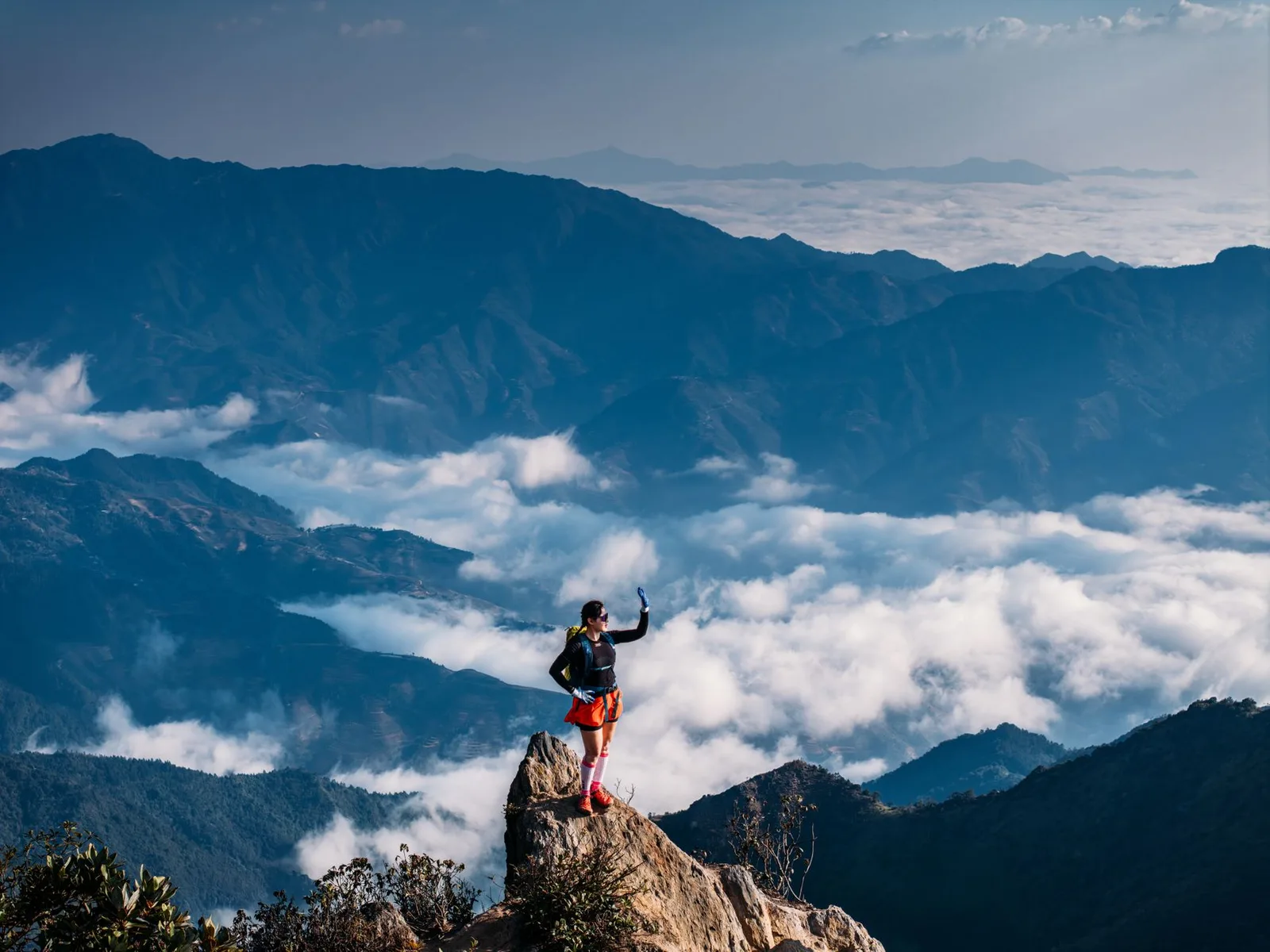
She Climbed Everest Three Times in 13 Days. No Woman Had Ever Done It Twice.
Nepali photojournalist Purnima Shrestha set a world first on Everest in 2024 — and this May she went back up for a sixth summit altogether.
Records & People
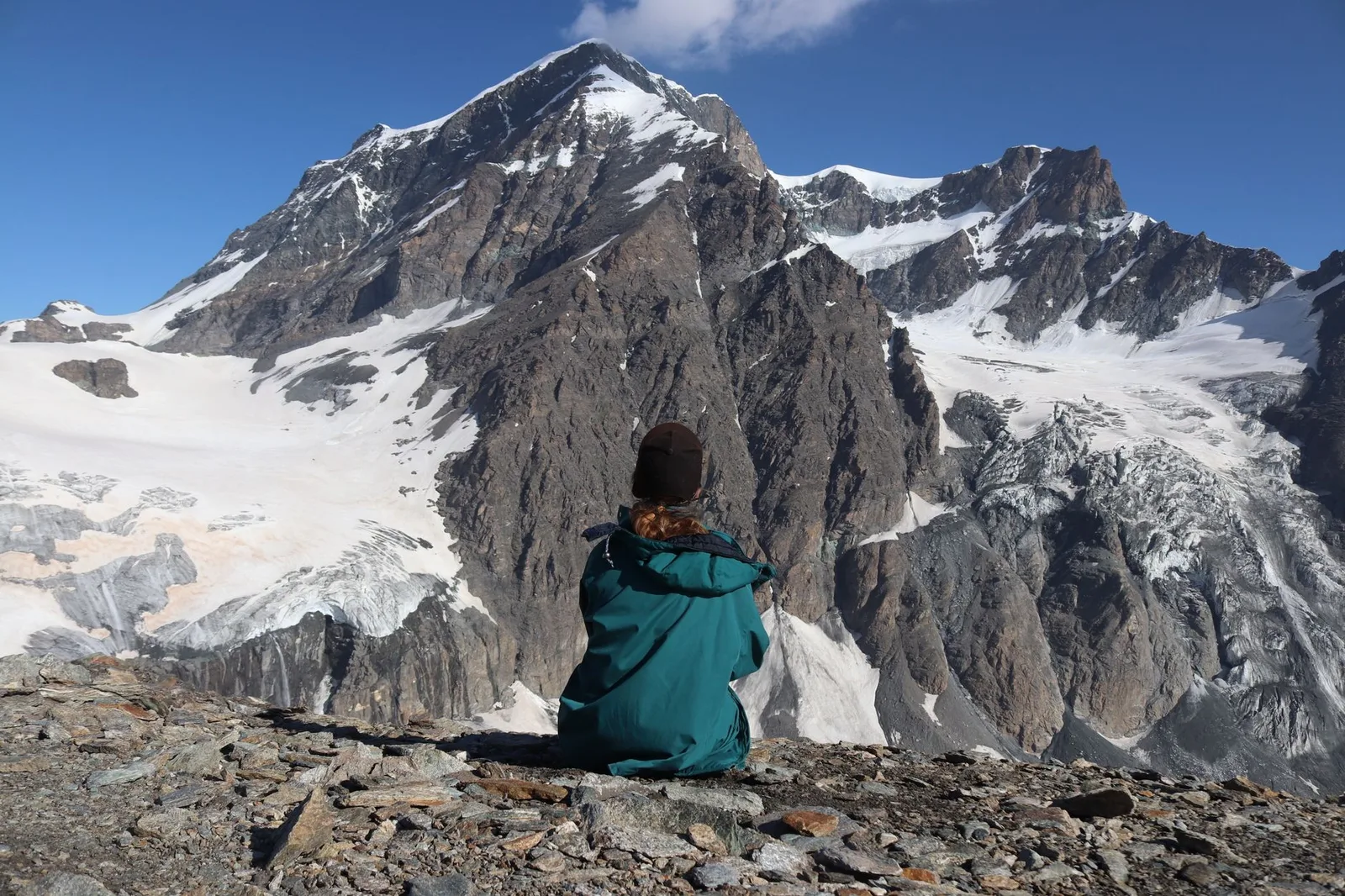
A Former Cross-Country Skier Just Became the First Woman to Climb Everest, Lhotse and Nuptse in the Same 10 Days
Kristin Harila, who summited all 14 of the world's 8,000m peaks in a record 92 days, has now completed Everest's brutal Triple Crown — mostly without bottled oxygen.
Records & People
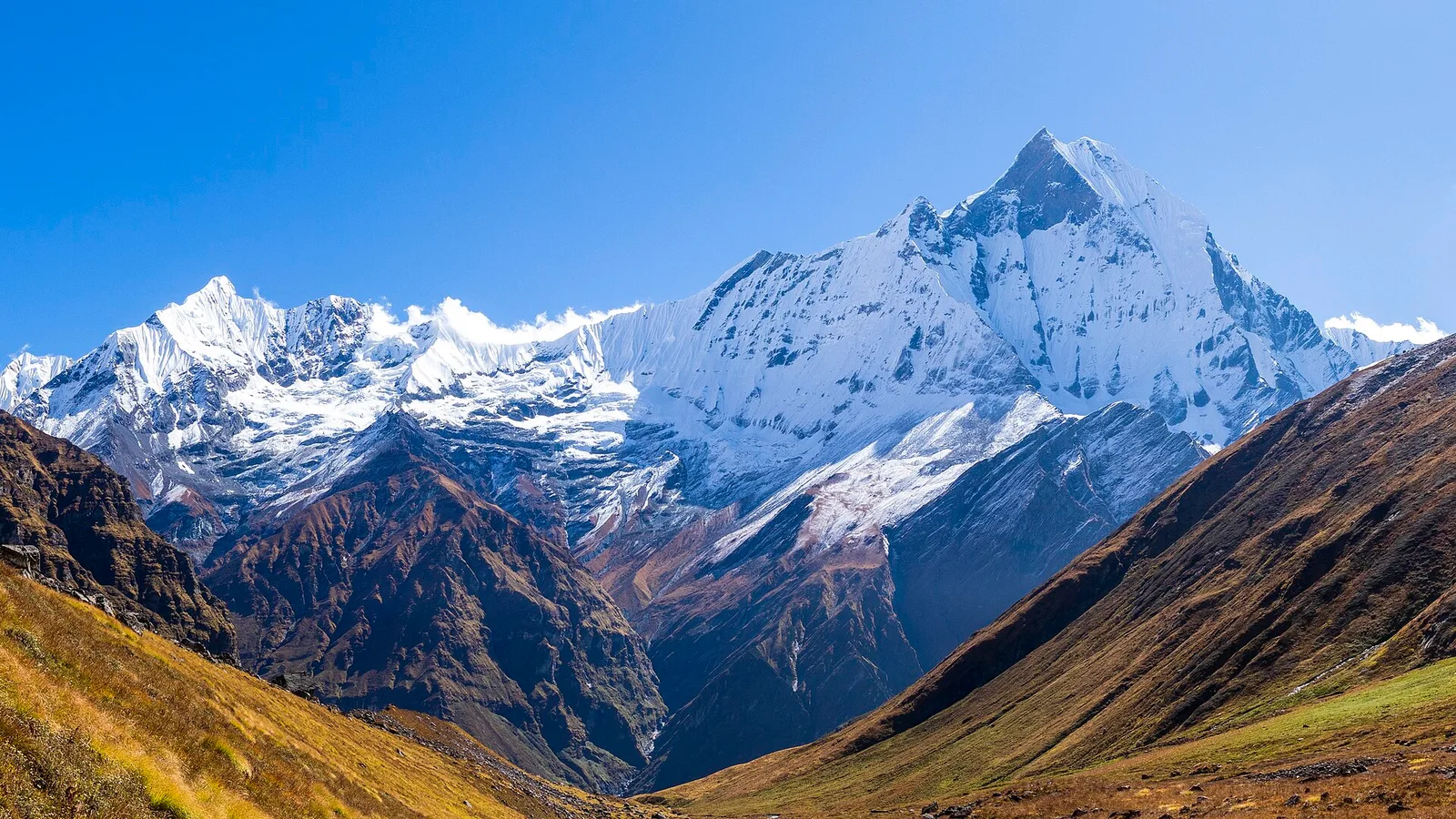
Two Climbers Got Within 45 Metres of the Summit in 1957. Nepal Has Banned Anyone From Finishing It Ever Since.
Machapuchare towers over Pokhara and watches over half our treks in the Annapurna region — and by law, nobody is allowed to stand on top of it.