
From 95 Rhinos to 600-Plus in Chitwan: Nepal’s One-Horned Rhino Comeback (2026)
Nepal brought its one-horned rhino back from near-extinction — from 95 survivors in Chitwan to a thriving Terai population, through army patrols and community buffer zones.
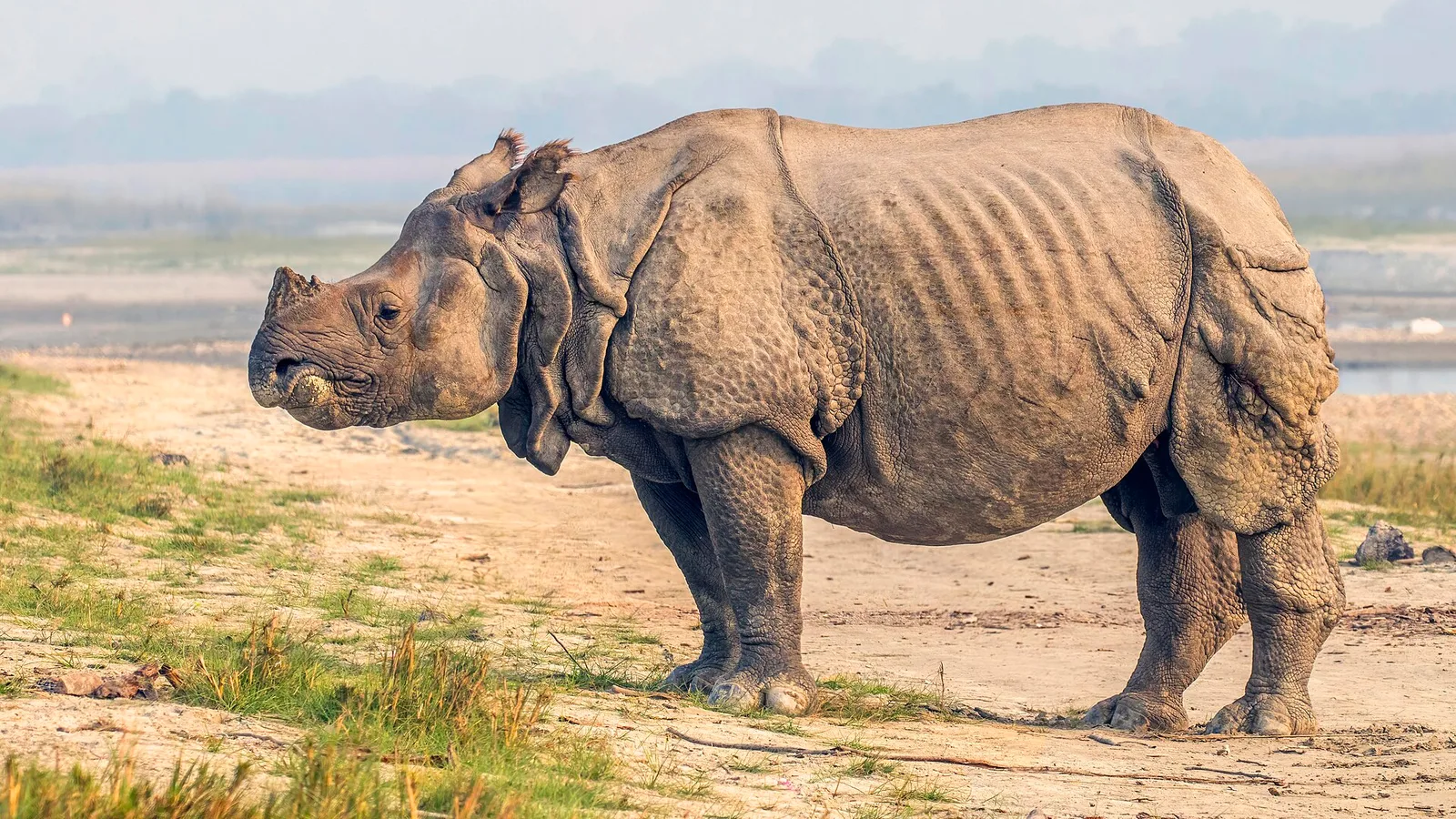
Few conservation stories run as sharply against the grain as Nepal's greater one-horned rhino. Sixty years ago the animal was all but gone from the country — barely 95 survived in the Chitwan valley, hunted for their horns and squeezed out of a jungle being cleared for farmland. Today Chitwan is once again thick with rhinos, and Nepal counts them in the hundreds. It is one of Asia's genuine wildlife comebacks, and you can watch it graze at dawn from the back of a jeep.
The one-horned rhino at a glance
- Where — Chitwan National Park, in Nepal's lowland Terai; also Bardia, Shuklaphanta and Parsa
- The turnaround — from about 95 rhinos in the late 1960s to 600-plus in Chitwan today
- Anti-poaching — army-backed patrols and community buffer zones; Bardia went 1994–2000 without a single successful poaching
- Status — listed Vulnerable by the IUCN, and still recovering
Why the rhino nearly vanished
Around 1950 the Chitwan valley held roughly 800 rhinos. Then the lowlands opened up. Malaria, which had long kept the Terai thinly settled, was brought under control with DDT; tens of thousands of people moved south to farm the newly habitable jungle. By the end of the 1960s some 70% of Chitwan's forest had been cleared, and with settlement came poaching for the rhino's horn, prized in traditional medicine markets. The population crashed to about 95 animals — a whisker from local extinction.
How Nepal turned it around
The response was decisive. In 1973 the government created Royal Chitwan National Park and, crucially, put the Nepal Army in charge of protecting it, backed by a dedicated rhino patrol and a network of guard posts. In 1984 Chitwan became a UNESCO World Heritage Site, cementing its status. Just as important was what happened at the edges: buffer-zone programmes gave local communities a direct stake in the park's success, plowing a share of tourism revenue back into villages so that a living rhino was worth more than a poached one. From 1986, surplus animals were translocated from Chitwan to re-seed Bardia and Shuklaphanta, spreading the risk across the Terai Arc.
| Year | Count | What it shows |
|---|---|---|
| c.1950 | ~800 (Chitwan valley) | Baseline before the collapse |
| late 1960s | 95 (Chitwan) | Near-extinction low point |
| c.2000 | 544 (Chitwan) | Recovery well under way |
| 2015 | 605 (Chitwan) · 645 (Nepal) | Up 21% since 2011 |
| 2025 | ~752 (Nepal, all parks) | Latest verified national figure |
Where the numbers stand now
By the turn of the century Chitwan was back up to 544 rhinos. The 2015 national census counted 645 across Nepal, of which 605 were in Chitwan — a jump of 21%, or 111 animals, in the four years from 2011. The most recent figures put Nepal's total at around 752, part of a global one-horned rhino population of roughly 4,075 shared with India. There is no fresh 2026 census number yet: Nepal's rhino count is a periodic national exercise, and the next one will update these totals. Until then, the honest headline is that the trend has been steadily up for half a century.
The threats that remain
Poaching, remarkably, is no longer the main danger — the patrols and buffer zones have seen to that, and Nepal is now cited internationally for its anti-poaching record, with entire calendar years recorded in which not one rhino was lost to poachers. The pressures now are quieter and harder to police: a shrinking, fragmented habitat hemmed in by farmland; the everyday friction of large animals living alongside people; and, above all, the monsoon. When the Rapti and Narayani rivers rise, floods can drown calves and sweep animals across the border into India. A recovering population is not a finished one, and Chitwan's rhinos still need the park intact around them.
See a wild rhino for yourself
This is the part most visitors miss. Nepal is not only mountains — drop south from the Himalaya into the Terai and you are in rhino country, where dawn jeep drives and dugout-canoe floats put you within sight of grazing rhinos, wild elephants, gharial crocodiles and, if you are lucky, a Bengal tiger. We build exactly this into our 3-day Chitwan Jungle Safari, and for wilder, quieter country there is our 4-day Bardia National Park Safari. Both pair beautifully with a trek — see our guide to Nepal's wild side beyond trekking for how to combine the two.
How to see rhinos responsibly
Keep your distance and let the animal set the terms — a rhino that changes its behaviour because of you is too close. Choose operators who use licensed naturalist guides and stay on sanctioned jeep and canoe routes, never off-track for a better photo. Skip captive-elephant rides in favour of jeep and walking safaris. And know that your park fee and buffer-zone levy are part of the machine that keeps these animals alive: responsible tourism is the reason a rhino in Chitwan is now worth more standing than poached.
Fifty years ago the greater one-horned rhino was a symbol of what Nepal was losing. Today it is a symbol of what careful, community-rooted conservation can win back. Come and see it — plan a Chitwan safari with us and add the Terai to your Himalayan trip.
Cover photo: Charles J. Sharp via Wikimedia Commons (CC BY-SA 4.0).
来源: Wikipedia (Chitwan National Park; Indian rhinoceros)
计划徒步?
我们负责许可证、后勤与向导
NMA 认证的本地向导,价格透明,自 1998 年以来 5,000+ 次徒步。告诉我们你的日期,其余的交给我们。

