
Nepal Has a Hidden Amphitheatre Ringed by Ten Himalayan Giants — and You Can Only Walk In Through One Narrow Gate
The Annapurna Sanctuary is a 4,130-metre basin walled in by peaks over 7,000 metres on every side — a place so shadowed it sees just seven hours of sun a day, even in summer.
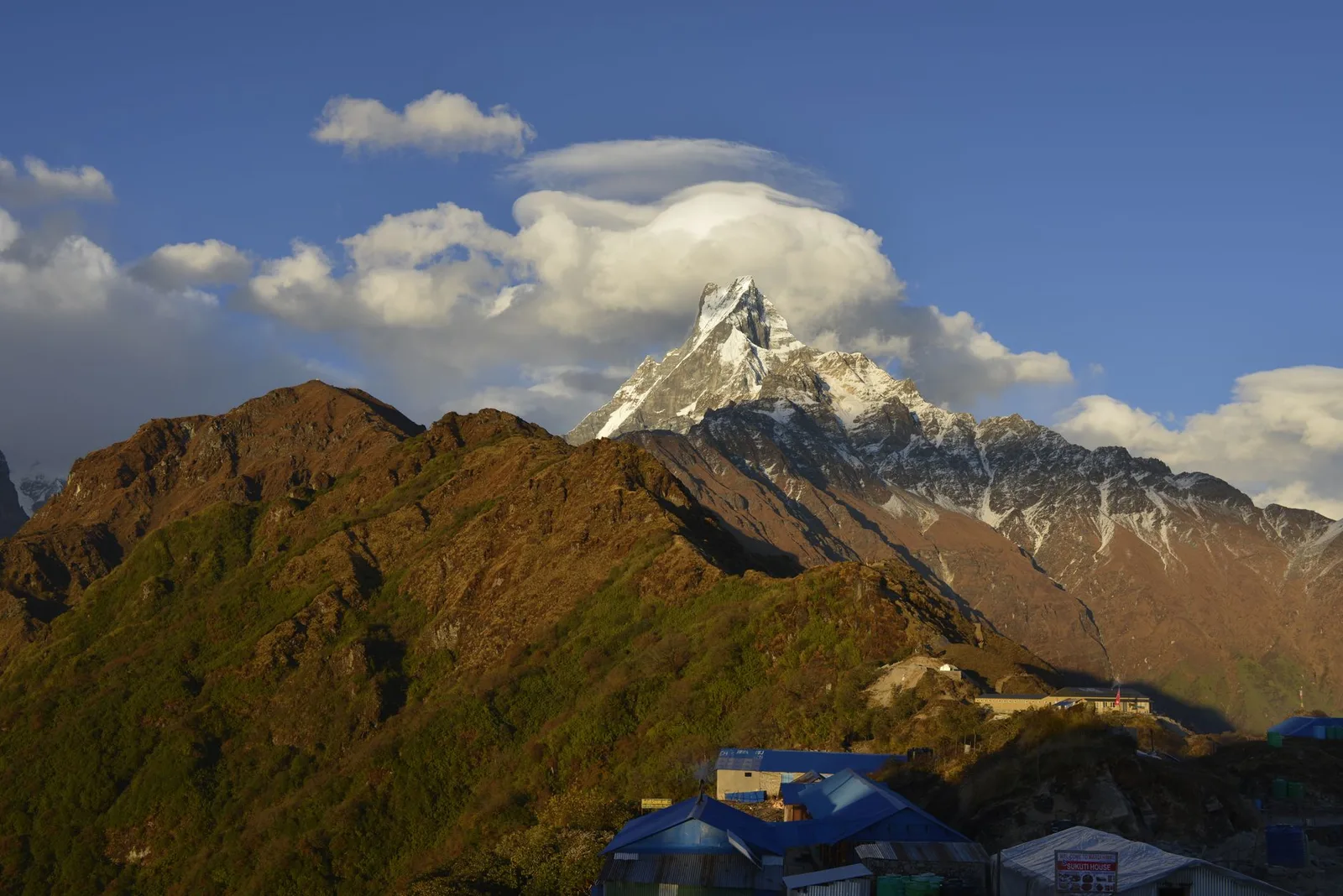
Forty kilometres north of Pokhara, the ground does something nowhere else in Nepal does: it closes in, then opens into a room. Walk two days up the Modi Khola gorge, squeeze through a gap barely wide enough for the trail between two mountains, and the valley suddenly falls away into an oval basin more than four kilometres above sea level — ringed on every side by summits over 7,000 metres. Locals call it a sanctuary. Geographers call it one of the most complete natural amphitheatres on Earth.
Key facts
- The basin floor sits at 4,130m (13,550ft), fully enclosed by the Annapurna range
- The only entrance is a narrow gate between Hiunchuli and Machapuchare, first mapped by an outsider in 1956
- Because the walls are so high, the sanctuary floor gets only about 7 hours of direct sun a day — even at the height of summer
- Six major summits between roughly 6,440m and 8,091m ring the basin, visible from a single viewpoint at its head
The man credited with formally finding it was a British Army officer, Colonel Jimmy Roberts, who pushed up the gorge in 1956 while scouting a route for a Machapuchare expedition. He wasn't the first human to see it — Gurung shepherds and hunters had known the basin for generations, and it carried deep religious weight long before it had a Western name. But he was the first outsider to map its walls and describe it in writing, and the name he gave it, the Annapurna Sanctuary, stuck.
A room built by six mountains
Stand at the head of the basin, at what's now called Annapurna Base Camp, and turn in a full circle. Annapurna I, the tenth-highest mountain on Earth at 8,091m, rises directly ahead. Machapuchare — the “Fishtail,” sacred to Shiva and, uniquely among Nepal's major peaks, never legally climbed — guards the entrance behind you. Around the rest of the rim: Annapurna South, Gangapurna, Annapurna III and Hiunchuli, close enough that the scale stops registering as a view and starts registering as a wall.
| Peak | Height |
|---|---|
| Annapurna I | 8,091m |
| Annapurna III | 7,555m |
| Gangapurna | 7,455m |
| Annapurna South | 7,219m |
| Machapuchare | 6,993m |
| Hiunchuli | 6,441m |
The enclosure isn't just visual. Because the rim is so continuous and so high, the basin traps its own weather: south-facing slopes lower down carry near-tropical rhododendron and bamboo forest, while the sanctuary floor itself sits closer in climate to the Tibetan Plateau — cold, dry and starved of direct light. Guides who've walked it for decades still point out how fast the temperature drops the moment you pass through the gate between Hiunchuli and Machapuchare, sometimes within a single hour of trail.
Why the Gurung people kept it closed
Long before trekkers arrived, the Gurung communities of the Annapurna foothills treated the basin as forbidden ground. Local belief held it as a treasure house guarded by Naga spirits, and Machapuchare's summit as the seat of Shiva himself — reason enough that entry to parts of the sanctuary was traditionally restricted. Some of that caution has softened with tourism, but the reverence hasn't: ask any guide from Ghandruk or Chhomrong why Machapuchare has never been summited, and the answer isn't a permit rule. It's a promise.
What this means for trekkers
You don't need mountaineering skill to stand inside this amphitheatre — you need about a week. The Annapurna Base Camp trek follows the same Modi Khola approach Roberts used in 1956, climbing through Gurung villages and rhododendron forest and through the narrow gate itself before the valley opens onto the basin floor. Most routes take 7–9 days round-trip from Pokhara, reach a maximum altitude of 4,130m, and require no technical gear — just fitness, layers, and the acclimatisation time the altitude actually demands. For the wider region beyond the Sanctuary itself, see our full Annapurna region guide.
Peak season for the Sanctuary is pre-monsoon (March–May) and post-monsoon (late September–November), when the basin's notoriously narrow window of clear sky is most reliable. Outside those months, the same walls that make the amphitheatre spectacular also make it one of the cloudiest, wettest corners of the Annapurna region. Our 9-day Annapurna Base Camp itinerary is built around exactly that window, or for trekkers short on time, the 6-day version compresses the same route without cutting the acclimatisation margin that a high, enclosed basin like this one actually needs.
Source: Wikipedia, Annapurna Sanctuary — cross-referenced against published accounts of the 1956 Roberts reconnaissance.
Cover photo: Jungsik Kwak via Pexels (Pexels License).
来源: Wikipedia
计划徒步?
我们负责许可证、后勤与向导
NMA 认证的本地向导,价格透明,自 1998 年以来 5,000+ 次徒步。告诉我们你的日期,其余的交给我们。


更多「Trail & Weather」
Trail & Weather
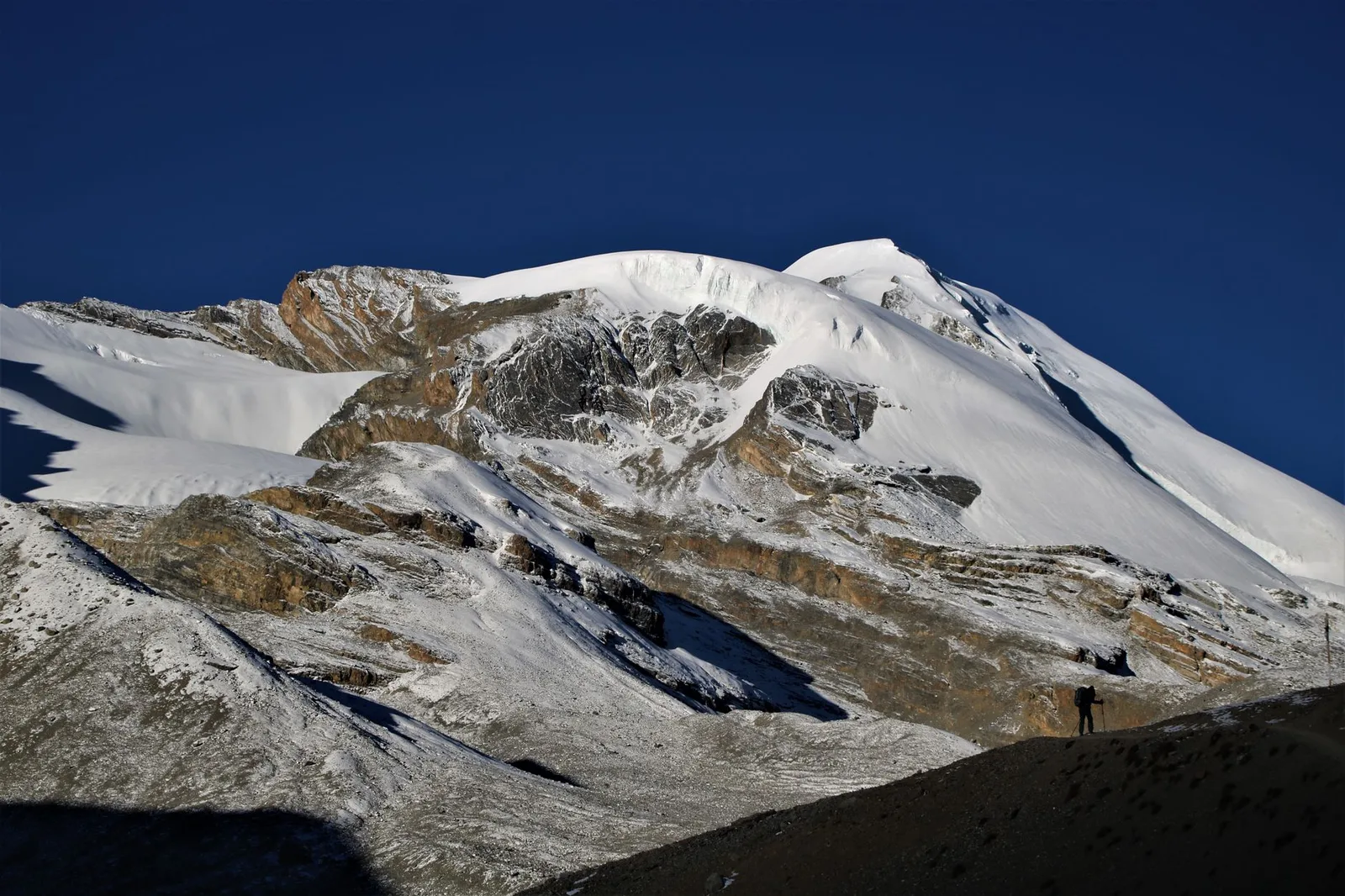
From Rice Paddies to Arctic Desert in 12 Days: The Wild Climate Range Inside Nepal's Annapurna Circuit
One trek, one conservation area, four climate zones and 1,226 species of wildflowers — the numbers behind Nepal's most complete walk through the Himalaya.
Trail & Weather
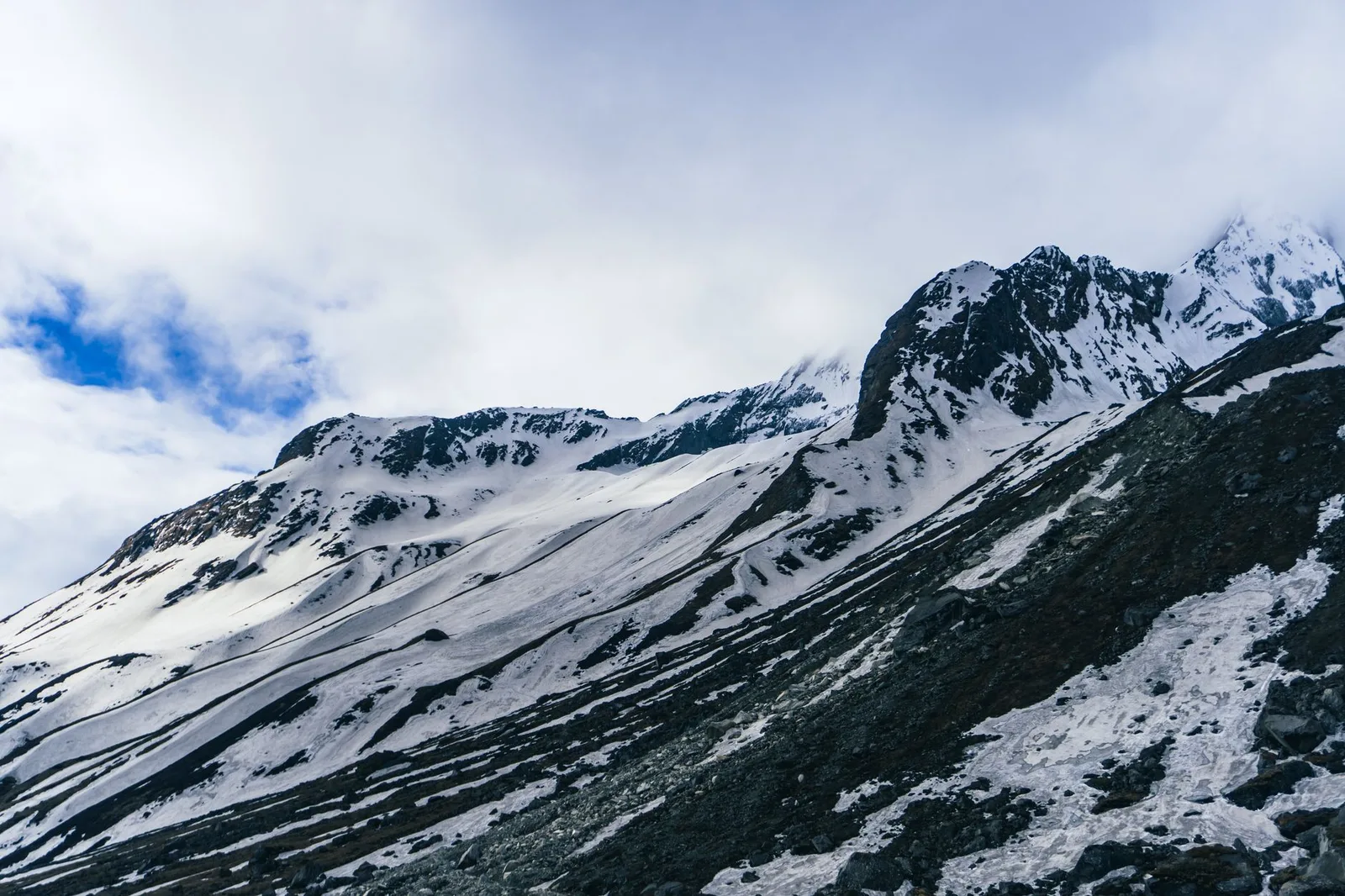
How cold does the Everest Base Camp trek actually get? Real night temperatures by altitude and month
The honest numbers: about −10°C to −15°C on a normal autumn or spring night at the highest camp, and below −20°C in mid-winter — plus exactly what to pack for it.
Trail & Weather
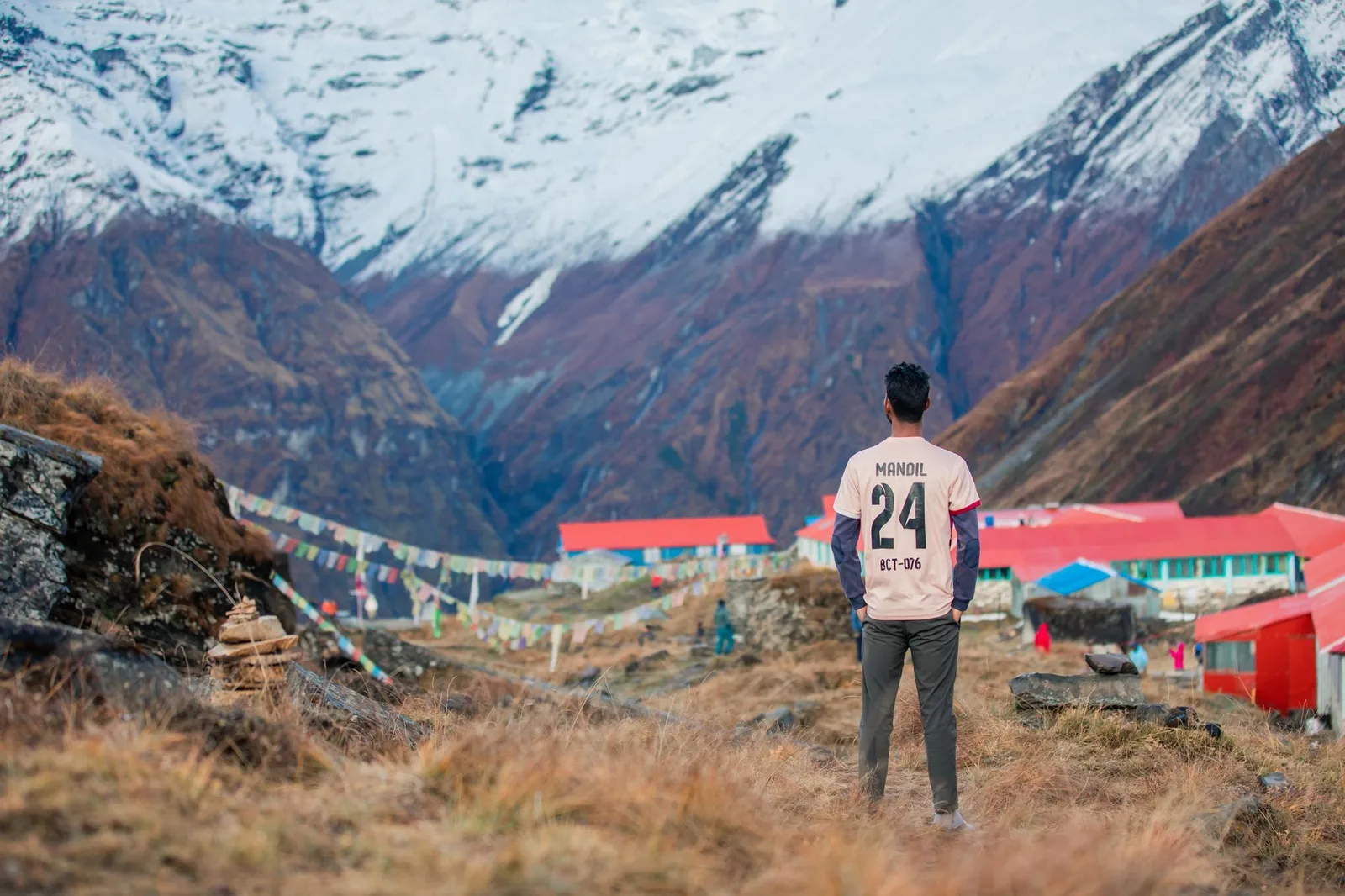
Annapurna Circuit vs Annapurna Base Camp: They Share a Name, Not a Trek — The Honest 2026 Difference
One crosses a 5,416-metre pass into the desert beyond the Himalaya; the other walks into a glacial amphitheatre at 4,130 metres. Here's which one actually matches what you're picturing when you say Annapurna.