
Why Four Pairs of Giant Painted Eyes Watch You From Every Direction in Kathmandu
The all-seeing eyes atop Nepal's Boudhanath Stupa are not decoration — every element, from the nose shaped like a Nepali numeral to the 13 gold tiers above, encodes a specific step toward enlightenment.
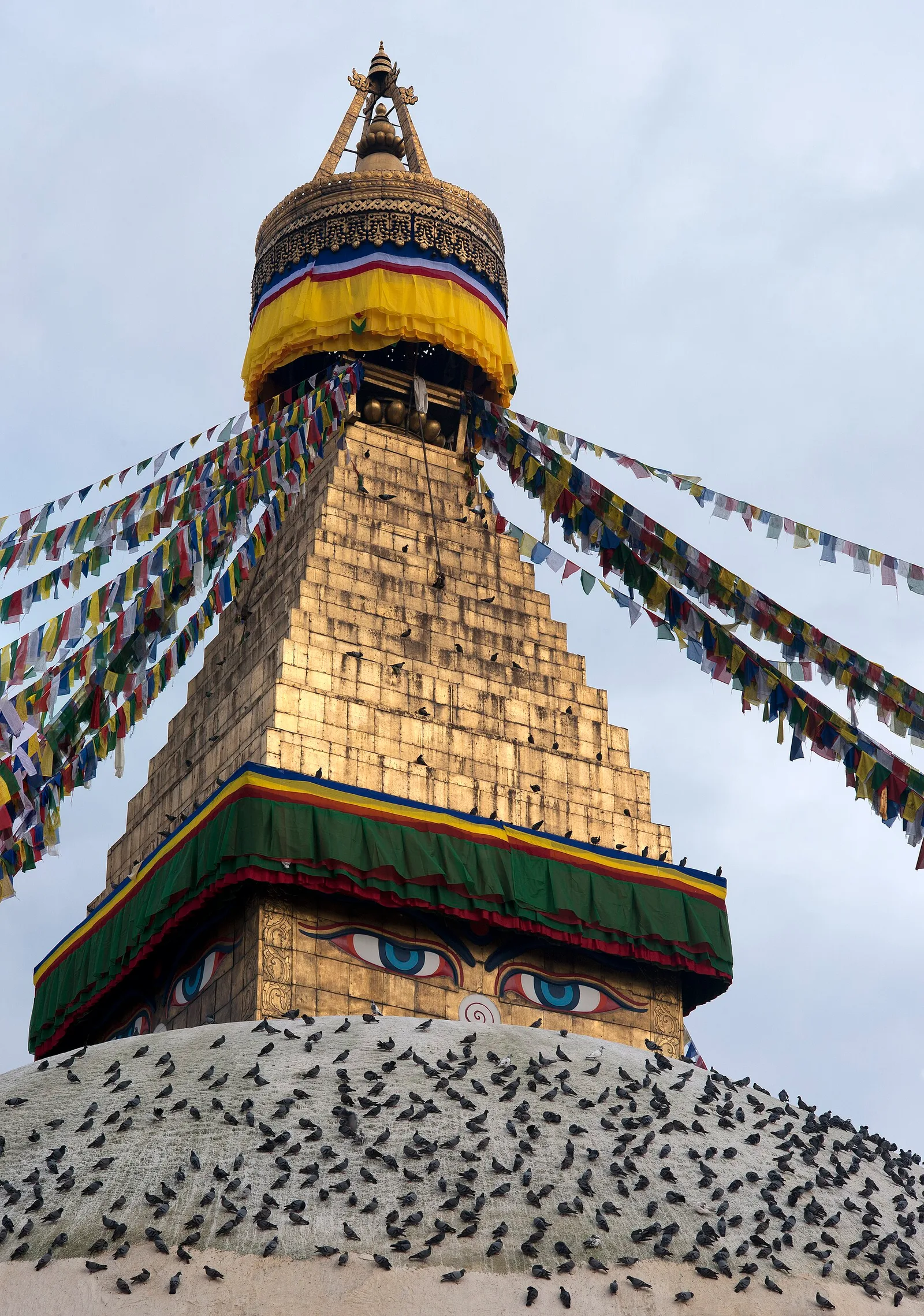
Stand anywhere near Boudhanath in Kathmandu and you cannot escape being watched. Four pairs of painted eyes, each larger than a city bus is long, stare out from the stupa's central tower in every direction at once — and unlike almost every other giant landmark built to be looked at, this one was built to look back. Most visitors photograph the eyes and move on. Almost none are told what they, and everything stacked beneath and above them, actually mean.
Key facts
- The tower carrying the eyes rises roughly 36 metres above the Kathmandu Valley floor, making Boudhanath among the largest stupas in South Asia.
- The dome is ringed by 108 niches, each holding an image of the Buddha Amitabha — 108 being the sacred number repeated throughout Tibetan Buddhist practice, from mala beads to mantra counts.
- Above the eyes, a golden spire climbs in 13 tiers, one for each stage on the traditional path to enlightenment.
- The 2015 earthquake cracked the spire so badly it had to be dismantled down to the dome; rebuilding it used roughly 30kg of gold, funded entirely by Buddhist donations with no government money.
Read from the ground up, the stupa is a diagram, not a monument. The white dome represents the earth; the square base beneath the eyes represents a mandala with the four cardinal directions built in, which is why the eyes face north, south, east and west simultaneously rather than one direction. On each face, the two large eyes are read as method (the right eye) and wisdom (the left) — together, the union the entire structure is meant to represent. Between them sits a smaller third eye, the eye of wisdom that sees beyond ordinary duality. And below all three, the curling mark that looks at first glance like a question mark or a stylised nose is actually the Nepali numeral for one — the single, undivided path to nirvana that Tibetan Buddhist teaching holds all roads eventually converge on.
The tradition dates the first stupa on this site to the 5th or 6th century CE — though, like much of the Kathmandu Valley's early history, the exact founding is impossible to verify and historians treat it as legend rather than record. The dome and structure visitors walk around today are largely the product of a rebuild dated to roughly the 14th century. In 1979, Boudhanath was inscribed as one of seven monument zones making up the Kathmandu Valley UNESCO World Heritage Site, alongside Durbar Square, Swayambhunath and Pashupatinath.
Local tradition places the first stupa here in the Licchavi period, though the exact date is unverifiable.
The structure standing now dates largely from this rebuild.
Boudhanath becomes one of seven monument zones in the Kathmandu Valley World Heritage Site.
The Gorkha earthquake cracks the spire so severely it must be dismantled down to the dome.
Over 600 monks and nuns gather to reconsecrate the rebuilt stupa, funded entirely by global Buddhist donations.
What this means for visitors
What this means for visitors
Boudhanath is free to enter and best experienced at dusk, walking the kora — the clockwise circuit — with the neighbourhood's Tibetan exile community, who have called the streets around the stupa home since the 1959 diaspora. Spin the prayer wheels as you pass, always clockwise, and look up: the eyes are painted at a scale meant to be legible from anywhere on the plaza below, which is part of why they feel like they're following you.
It sits an easy stop on any Kathmandu Valley cultural circuit, usually paired with Pashupatinath and Swayambhunath in a single day, and it pairs naturally with Nepal's other living religious landmark, the child Kumari goddess enthroned a few kilometres away in Durbar Square. Few landmarks anywhere pack an entire philosophy — method, wisdom, unity, and thirteen stages to enlightenment — into a shape you can walk around in fifteen minutes.
Source: Studio Matrx: Boudhanath Stupa Architecture.
Cover photo: User:Ggia via Wikimedia Commons (CC BY-SA 3.0).
来源: Studio Matrx
计划徒步?
我们负责许可证、后勤与向导
NMA 认证的本地向导,价格透明,自 1998 年以来 5,000+ 次徒步。告诉我们你的日期,其余的交给我们。


更多「Records & People」
Records & People
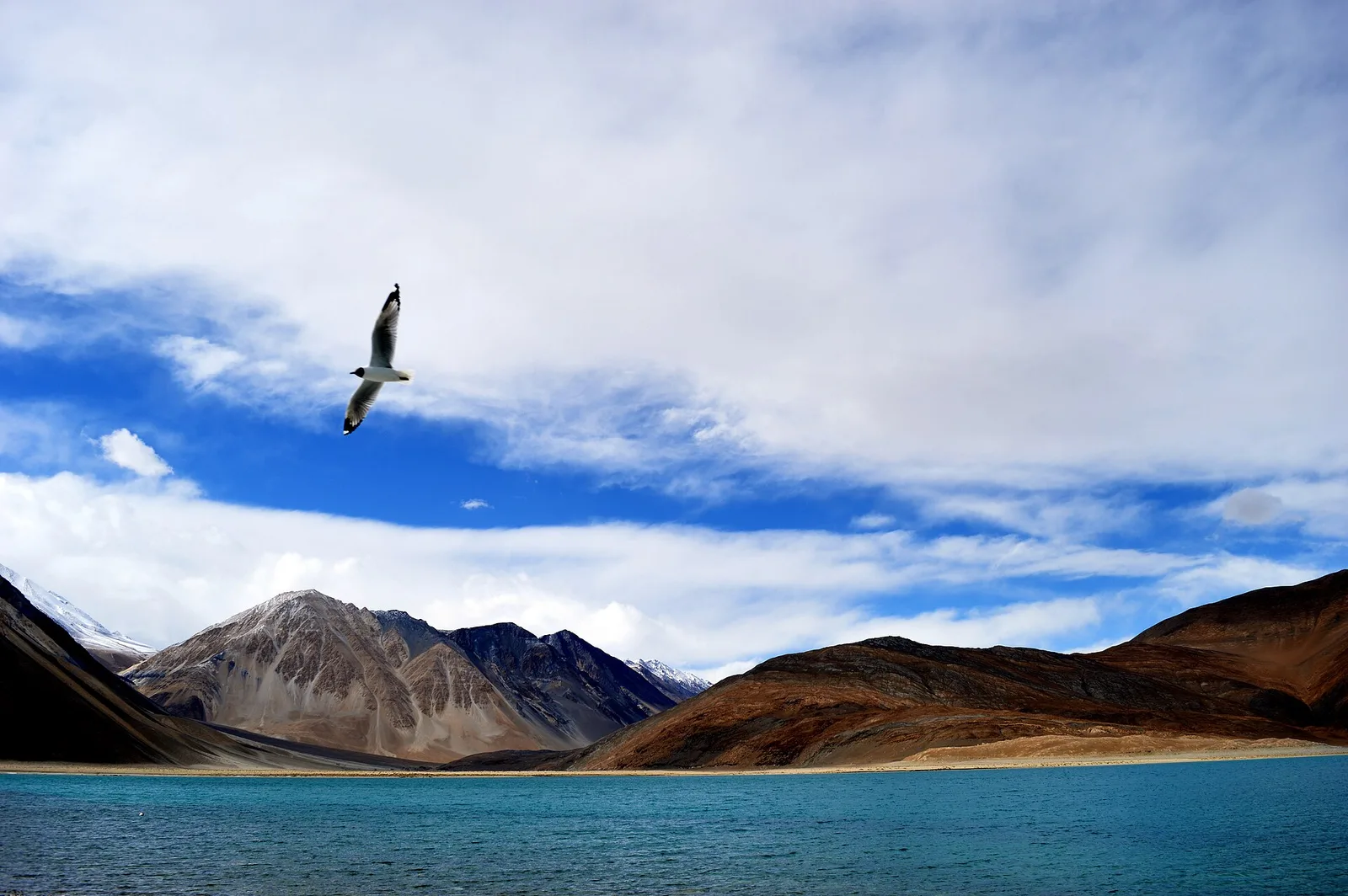
The Bird That Crosses the Himalaya in Eight Hours, Flying Higher Than Everest Base Camp
GPS trackers finally proved how bar-headed geese cross the world's highest mountains twice a year, nonstop, at altitudes that would leave an unacclimatized human unconscious.
Records & People
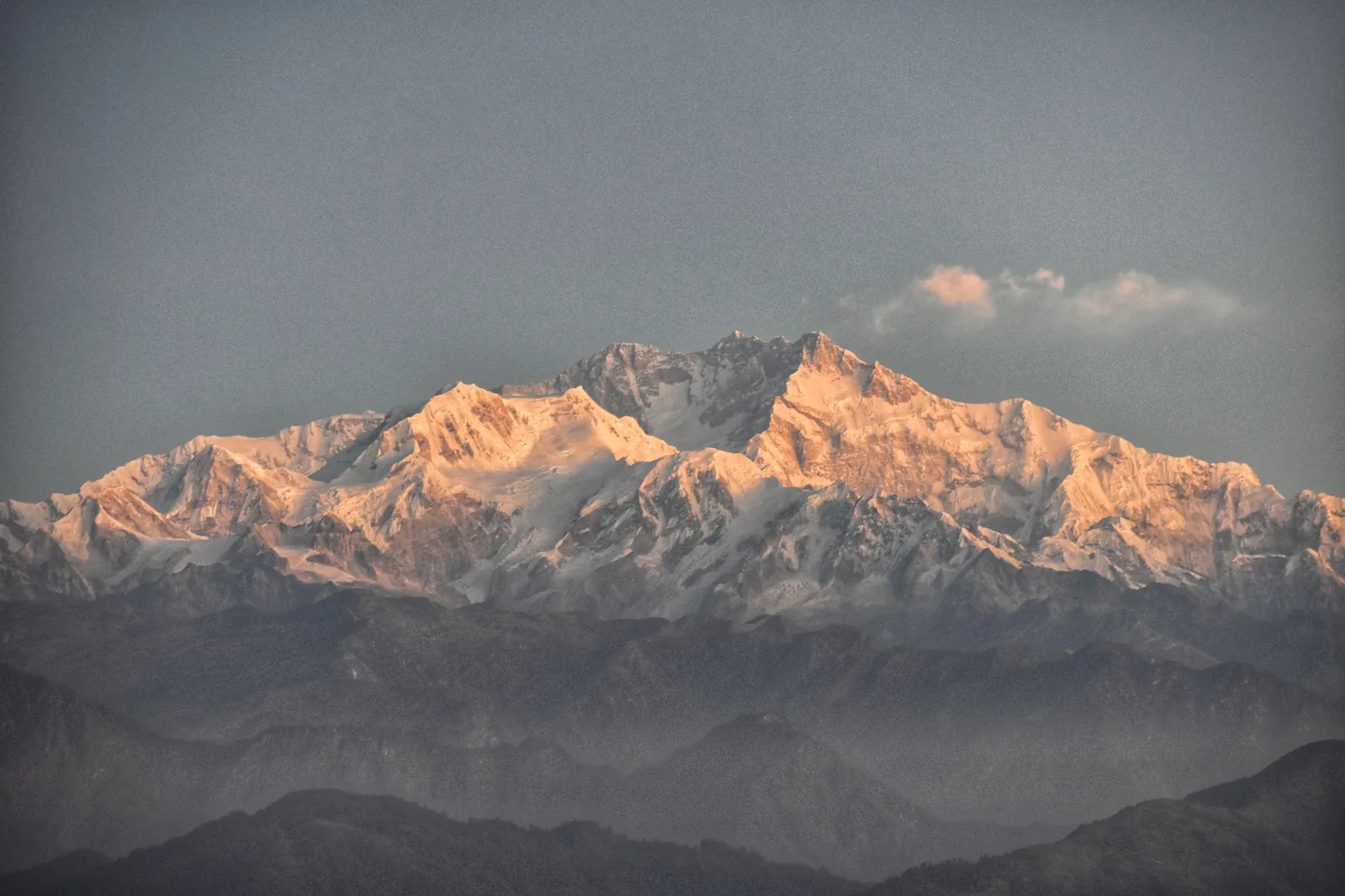
Nepal Says It Has 14 of the World's Eight-Thousanders. The Rest of the World Still Counts Eight.
In February 2025 Nepal's tourism department quietly redrew the map of the world's highest mountains, finding six new 8,000-metre summits hidden inside three already-famous massifs — but the body that keeps the official list still hasn't signed off.
Records & People
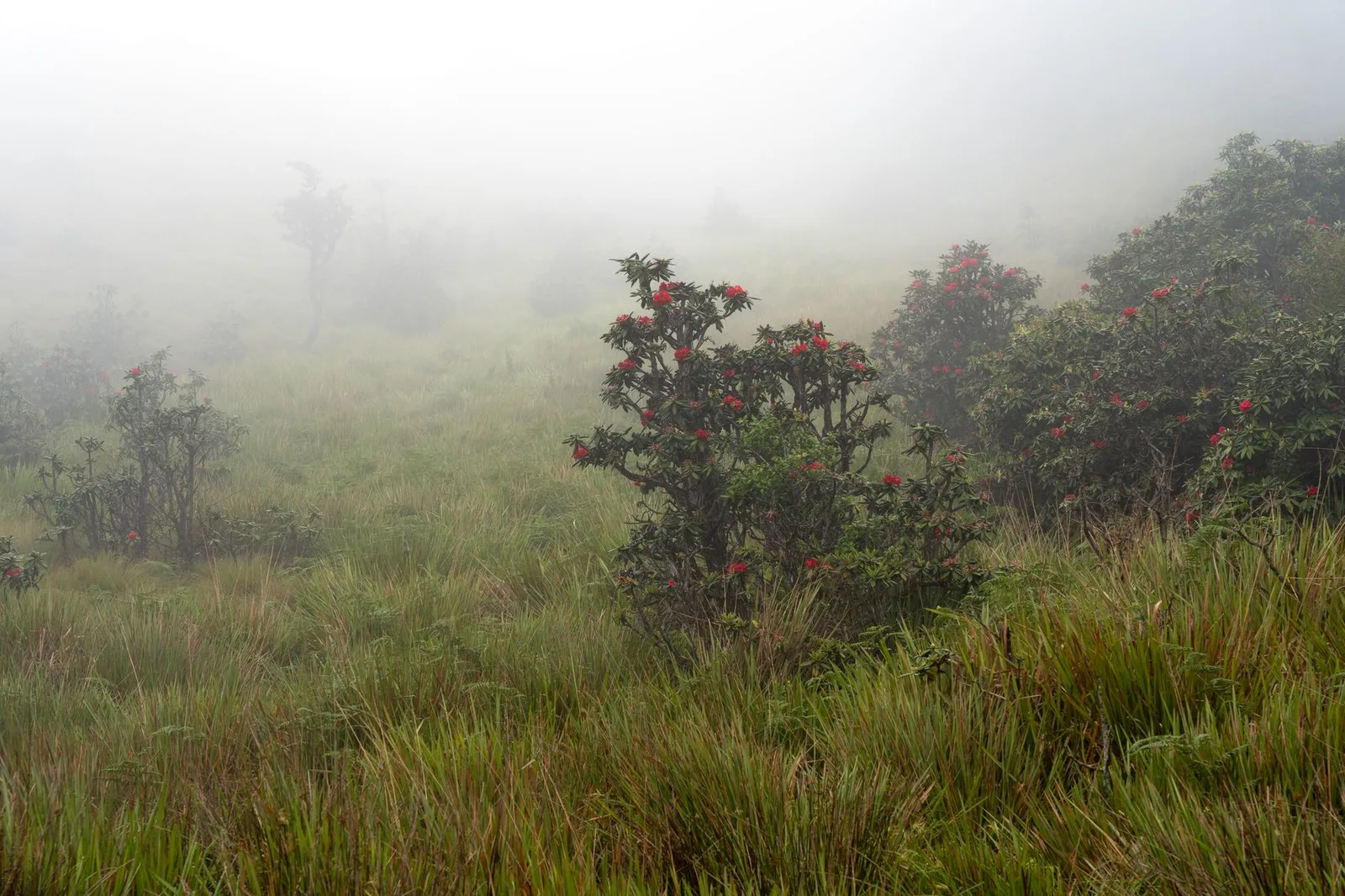
Nepal Is Home to the World's Largest Rhododendron Forest, and It Blooms Blood-Red Every Spring
Inside the Annapurna forest above Ghorepani that turns crimson for ten weeks a year, and the narrow window when the low, mid and high bloom all line up at once.