
Chhath 2026: Nepal's Sun-Worship Festival of the Terai and Mithila Explained
Four days of fasting, river-standing and dawn offerings
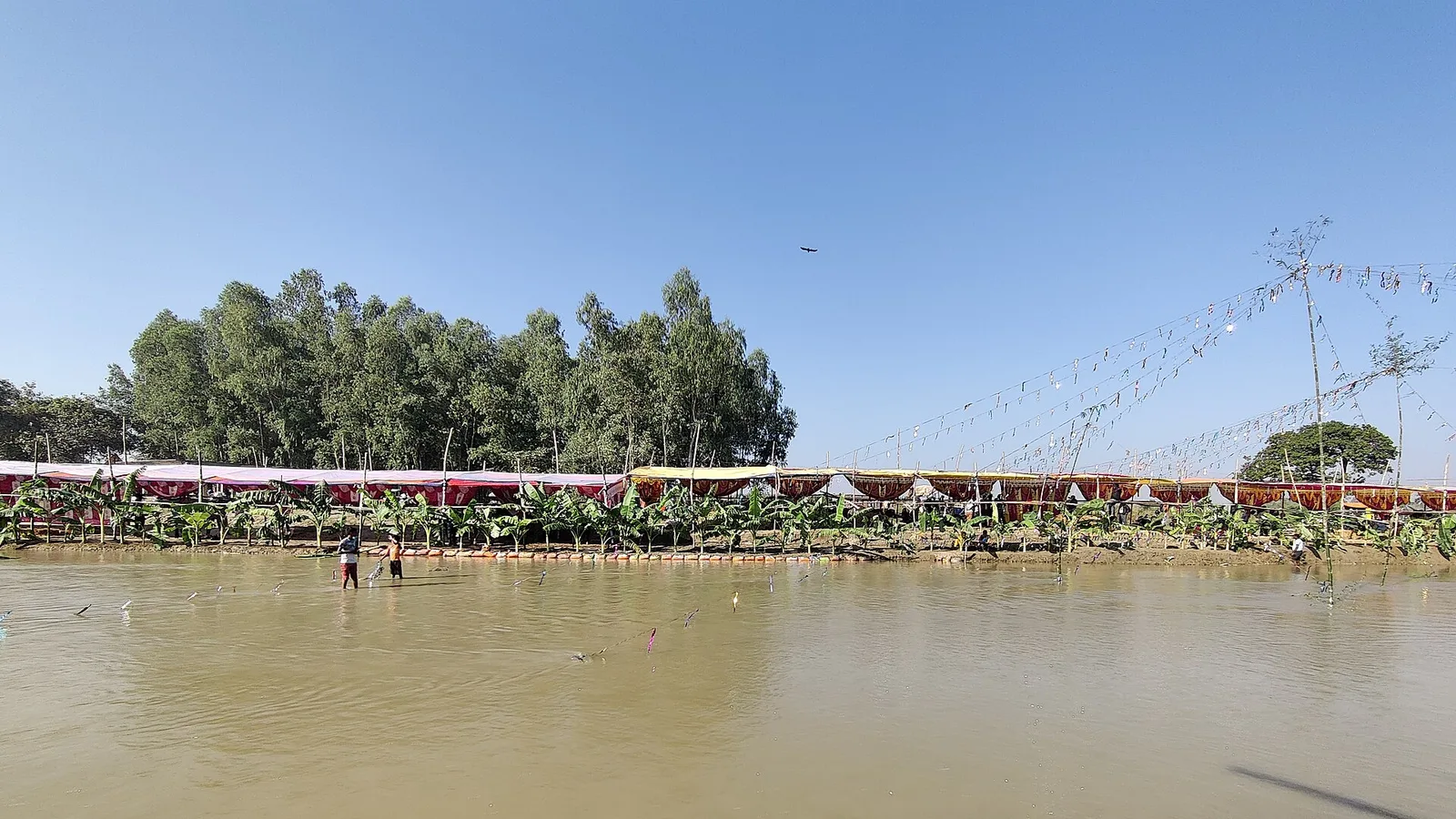
Away from the high mountains most visitors come to Nepal for, the flat, fertile plains of the southern Terai keep one of the most demanding and beautiful festivals in the Hindu year. Chhath is a four-day festival of thanksgiving to Surya, the Sun god, and to Chhathi Maiya, and for the families who keep it there is nothing else quite like it — days of rigorous fasting that end waist-deep in a cold river at first light, arms raised to the rising sun.
It is huge across the Terai and the wider Mithila region — Janakpur and the eastern and central plains above all — and in recent years it has grown well beyond there, filling the ghats and pond-sides of Kathmandu too. Here is what Chhath actually is, where it comes from, and how to witness it with respect if you happen to be travelling through the plains when it falls.
At a glance
- What: a four-day Hindu festival of thanksgiving to Surya (the Sun god) and Chhathi Maiya.
- How: rigorous fasting — including a nirjala stretch without even water — and standing in rivers or ponds at dusk and dawn to offer arghya to the setting and rising sun.
- Where: the heartland is the Terai and the Mithila region — Janakpur and the eastern and central plains — and, increasingly, Kathmandu.
- When: the sixth day of the bright fortnight of the Hindu month of Kartika (October–November), roughly six days after Diwali / Tihar. Exact 2026 dates follow the lunar calendar — confirm locally nearer the time.
Roots in the Terai and Mithila
Chhath belongs to the plains. Its heartland runs across Mithila and the Terai and on into Bihar and the neighbouring states of eastern India — a cultural region that pays little attention to the modern border. In Nepal it is the great festival of the southern lowlands, and Janakpur, the ancient Mithila city, is one of its most important centres. For families here it is often held closer to the heart than any other festival of the year, kept unbroken across generations and carried wherever people from the plains have since moved.
That is why you now see it in Kathmandu. As families from the Terai have settled in the capital, they have brought Chhath with them, and the rivers and ponds of the valley now draw large, devoted crowds on the main evening and morning. What was once a festival you had to be in the plains to see has become one of the most visible religious gatherings in the country.
The four days
Chhath is unusually structured — four distinct days, each with its own name and its own ritual, building towards the two great offerings to the sun.
| Day | Name | Ritual |
|---|---|---|
| Day 1 | Nahay Khay | A holy bath and cleansing of the home; the devotee eats a simple sattvic meal — traditionally bottle gourd (lauki) with lentils and rice. |
| Day 2 | Kharna (Lohanda) | A day of fasting without water, broken in the evening with kheer — rice pudding sweetened with jaggery — and bread. The long fast begins after this meal. |
| Day 3 | Sandhya Arghya | Families carry offerings to a river or pond and, standing in the water, offer arghya to the setting sun at dusk. |
| Day 4 | Usha Arghya (Parana) | Before dawn the devotees return to the water to offer arghya to the rising sun, then break the fast with the parana rite. |
The fast, the water and the sun
What sets Chhath apart is the sheer rigour of the vow. The main fasting stretch is nirjala — without food and without so much as a sip of water — and it is held for well over a day, through the evening offering and on until the fast is broken the next morning. The person keeping the fast, very often a woman of the household, does so on behalf of the whole family's wellbeing.
The offerings themselves are the heart of it. Twice — once as the sun sets, once as it rises — devotees wade into a river or pond and raise arghya to Surya: water and milk poured towards the sun, together with fruit and thekua, the festival's traditional sweet, arranged in bamboo winnowing trays. Everything offered is pure and vegetarian, prepared without onion or garlic. Traditional Chhath songs carry across the water, and the banks fill with lamps. There is no temple and no priest at the centre of it; the river, the sun and the family are enough.
A festival that keeps growing
Chhath's reach has widened noticeably. Within Nepal it has spread from the Terai into Kathmandu and other hill cities as plains families have moved; the main evening now sees riverbanks and ghats in the capital packed with worshippers. It travels with the diaspora too, kept by Mithila and Bihari communities well beyond South Asia. For a festival with no grand processions and no fireworks — only water, fasting and light — that quiet spread says a great deal about how deeply it is held. For the calendar around it, see our Dashain and Tihar 2026 date guide, since Chhath follows a handful of days after Tihar.
Witnessing Chhath respectfully
If you find yourself near a ghat on the main evening or morning, you are welcome to watch — but this is worship, not a show. Keep back from the devotees standing in the water and never wade in among them. Ask before photographing anyone, especially those keeping the fast, and lower your camera during the moment of offering. Dress modestly, keep your voice down, and take your shoes and any litter away with you — the ghats are being kept ritually clean. A little distance and quiet is the whole courtesy.
Travelling in the plains
Most visitors treat the Terai as a corridor, but it is a destination in its own right — and the gateway to two of Nepal's greatest lowland draws, the jungles of Chitwan and the birthplace of the Buddha at Lumbini. If your Nepal trip runs into late October or November, a day in the plains around Chhath will show you a side of the country the trekking trails never do. Talk to us about weaving Janakpur, Chitwan or a wider cultural loop into your itinerary, and we will time it around the festival for you.
Cover photo: Pustam.EGR via Wikimedia Commons (CC BY-SA 4.0).
More Nepal festivals
来源: Wikipedia
计划徒步?
我们负责许可证、后勤与向导
NMA 认证的本地向导,价格透明,自 1998 年以来 5,000+ 次徒步。告诉我们你的日期,其余的交给我们。


更多「Festivals & Events」
Festivals & Events
Losar 2026: Nepal's Tibetan New Year and Its Masked Monastery Dances
The Tibetan-Buddhist New Year of Nepal's high country, explained.
Festivals & Events
Gai Jatra 2026: Nepal’s Newar Festival of Cows, Grief and Laughter
The Newar festival where grief and comedy walk together.
Festivals & Events
Teej 2026: Nepal's Great Women's Festival of Red, Fasting and Song
Nepal's great women's festival of fasting, red and song.