
Losar 2026: Nepal's Tibetan New Year and Its Masked Monastery Dances
The Tibetan-Buddhist New Year of Nepal's high country, explained.
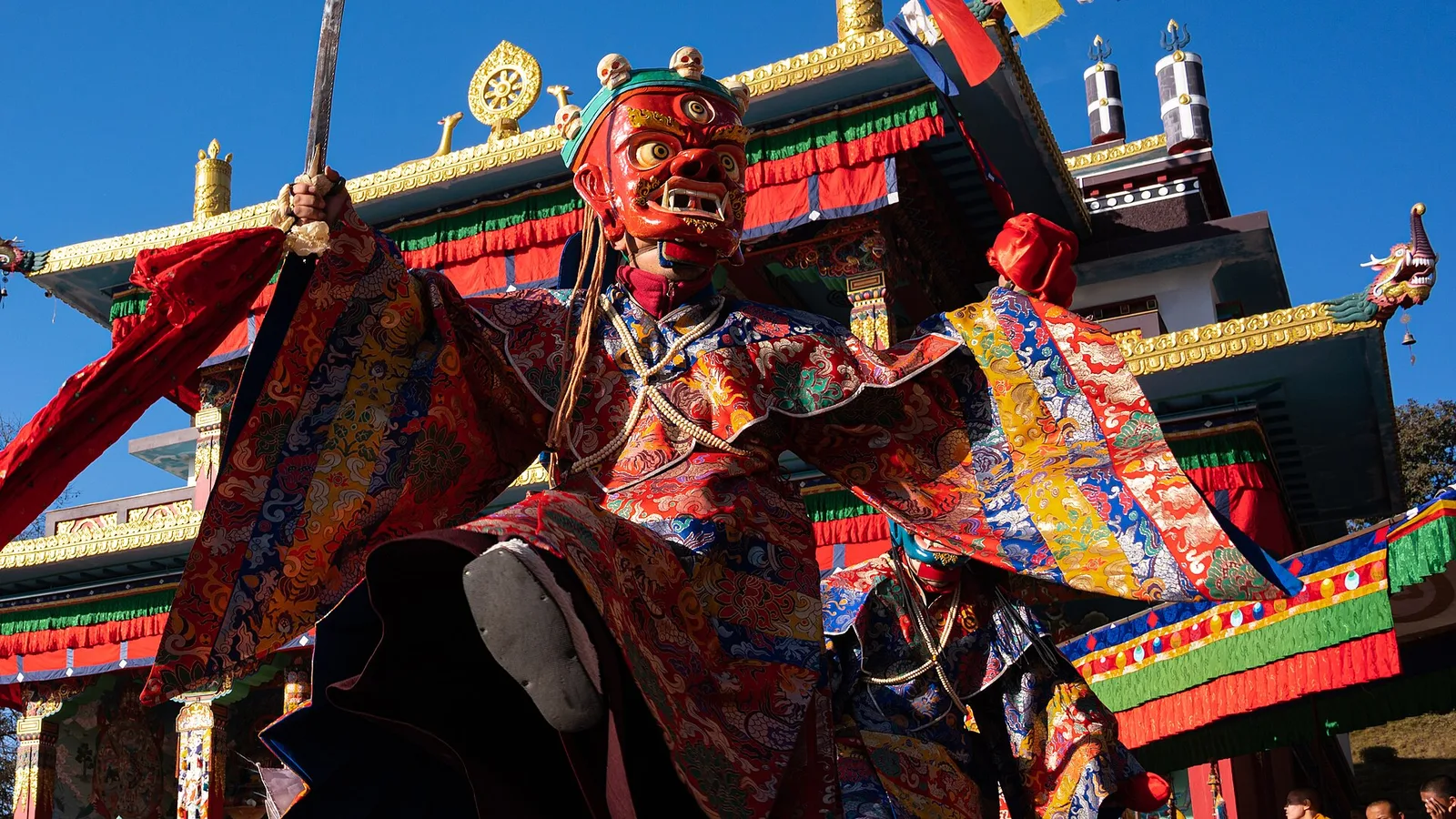
When the coldest, quietest weeks settle over Nepal’s high country, its Buddhist villages light up from the inside. This is Losar — the New Year of the Tibetan-Buddhist world — and in the Sherpa, Tamang, Gurung and Tibetan communities of the mountains it is the most important celebration of the year. The name says exactly what it is: in Tibetan, lo means “year” and sar means “new.” Homes are scrubbed, debts are settled, old quarrels are put down, and prayer flags that have faded through a hard year are pulled down and strung up fresh against the wind.
Losar at a glance
- What: the Tibetan-Buddhist New Year, observed by Tibetans, Sherpas, Tamangs, Gurungs, Bhutanese, Ladakhis and Tibetan Buddhists worldwide
- Not one festival but several: Nepal’s hill communities keep their own new years — Tamu Losar (Gurung), Sonam Losar (Tamang) and Gyalpo Losar (Sherpa and Tibetan)
- When: set by the lunar calendar, so the dates shift every year, falling across winter from December to March
- Where: the Buddhist high country — the Khumbu below Everest, Langtang, the Tamang and Gurung hills, and Tibetan communities across the Himalaya
There is no single “Losar”
Travellers often assume Losar is one date on the calendar. It is not. Several of Nepal’s Himalayan peoples celebrate their own new year, each on its own day, each with its own name — a reminder of how many distinct cultures share these mountains.
| New Year | Community | Rough timing |
|---|---|---|
| Tamu Losar | Gurung (Tamu) | 15th of Poush in the Nepali calendar — December / January |
| Sonam Losar | Tamang (and Hyolmo) | Roughly eight weeks before Tibetan Losar — January / February |
| Gyalpo Losar | Sherpa and Tibetan | First day of the Tibetan lunar year — February / March |
Tamu Losar, the Gurung new year, falls on the 15th of Poush and turns over a twelve-year animal cycle much like the wider Tibetan zodiac. Sonam Losar, kept by the Tamang, arrives some weeks ahead of the Tibetan reckoning. Gyalpo Losar — the “king’s new year” of the Sherpa and Tibetans — is the one most trekkers picture, tied to the first day of the lunisolar Tibetan calendar and unfolding over fifteen days, with the main celebrations in the first three. Because all of these follow the moon, the Gregorian dates move each year; in 2025, for example, Gyalpo Losar began at the end of February. For that reason we do not fix a single date here — the exact day is set by the lunar calendar and confirmed closer to the time.
How the new year is welcomed
The preparations are as meaningful as the day itself. Houses are cleaned from top to bottom to sweep out the residue of the old year. Auspicious signs — the sun, the moon — are painted in flour, and branches of juniper, cedar and rhododendron are burned as fragrant incense to purify the home. Families make an effort to clear debts and mend arguments before the year turns, so the new one begins with a clean slate.
Then comes the food and the symbolism. Households fry kapse, crisp twists of dough stacked high for guests, and prepare guthuk, a hearty soup eaten in the run-up to the new year. A brew called changkol is made from chhaang, the local barley beer. Many families build a phyemar — a wooden box heaped with roasted barley flour and grain — and shape a decorative sheep’s head from coloured butter, both offerings for prosperity in the year ahead. In the monasteries, monks lead prayers honouring Palden Lhamo, the fierce protector-deity of the dharma.
The masked dances of the monasteries
For many visitors the abiding memory of a Himalayan Buddhist festival is the cham — the masked, costumed dance performed by monks to the crash and drone of Tibetan horns, drums and cymbals. Cham is far more than spectacle. It is understood as a moving meditation and an offering, a form of moral teaching about compassion, and a source of spiritual merit for everyone who watches. The dancers, hidden behind vivid carved masks and heavy brocade robes, act out episodes from the life of Guru Rinpoche (Padmasambhava) and other saints. In the celebrated Black Hat dance, the dancers mark the defeat of a tyrant — a vivid enactment of good overcoming evil.
Early Western travellers, unsettled by the wrathful masks, called these “devil dances.” The name says more about the observers than the ritual: what looks fearsome is, to the community, protective and profoundly sacred. Around Losar and through the winter festival season, gompas across the Buddhist Himalaya fill with these dances, drawing families down from scattered villages to watch together.
Experiencing Losar respectfully
Losar is a religious observance and a family occasion, not a show staged for visitors. If you are in the mountains when it falls, you are a welcome guest — but a guest. Ask before photographing people or ceremonies, keep to the edges during monastery rituals, walk clockwise around chortens and mani walls, and accept tea or food if it is offered. A quiet “Tashi Delek” — the traditional Losar greeting — goes a long way.
Losar in Nepal’s trekking country
Losar falls squarely in the Himalayan winter, the season when the high trails are at their quietest and clearest. In the Khumbu below Everest, in Langtang, and across the Tamang and Gurung hills, it is the moment the monasteries come alive — prayer flags snapping in cold blue air, juniper smoke rising, drums carrying across the valley. For anyone drawn to the culture as much as the climbs, it is one of the richest times to be in the mountains. To understand the people whose festival this is, read our companion pieces on the culture of the Sherpa people and who the Sherpa really are.
If a winter trek through this living Buddhist landscape appeals, our team in Kathmandu can help you plan the route and time it around the mountain festival calendar — just get in touch and tell us what you would like to see.
Cover photo: Wikimedman via Wikimedia Commons (CC BY-SA 4.0).
More Nepal festivals
来源: Wikipedia
计划徒步?
我们负责许可证、后勤与向导
NMA 认证的本地向导,价格透明,自 1998 年以来 5,000+ 次徒步。告诉我们你的日期,其余的交给我们。


更多「Festivals & Events」
Festivals & Events
Chhath 2026: Nepal's Sun-Worship Festival of the Terai and Mithila Explained
Four days of fasting, river-standing and dawn offerings
Festivals & Events
Gai Jatra 2026: Nepal’s Newar Festival of Cows, Grief and Laughter
The Newar festival where grief and comedy walk together.
Festivals & Events
Teej 2026: Nepal's Great Women's Festival of Red, Fasting and Song
Nepal's great women's festival of fasting, red and song.