
Every Year in Nepal, Someone Holds Up a Jeweled Vest and Asks: Whose Is This? No One Has Ever Answered.
At the climax of a month-long Kathmandu Valley chariot festival, Nepal's president and its child living goddess watch as an official asks the crowd who owns a priceless vest — and for generations, nobody has stepped forward.
At a glance
- Published
- TopicFestivals & Events
- Verified againstNepal News
- Treks coveredKathmandu & Pokhara Tour — 5 Days, Kathmandu Valley Cultural Tour — 3 Days, Nepal Classic Tour — 7 Days
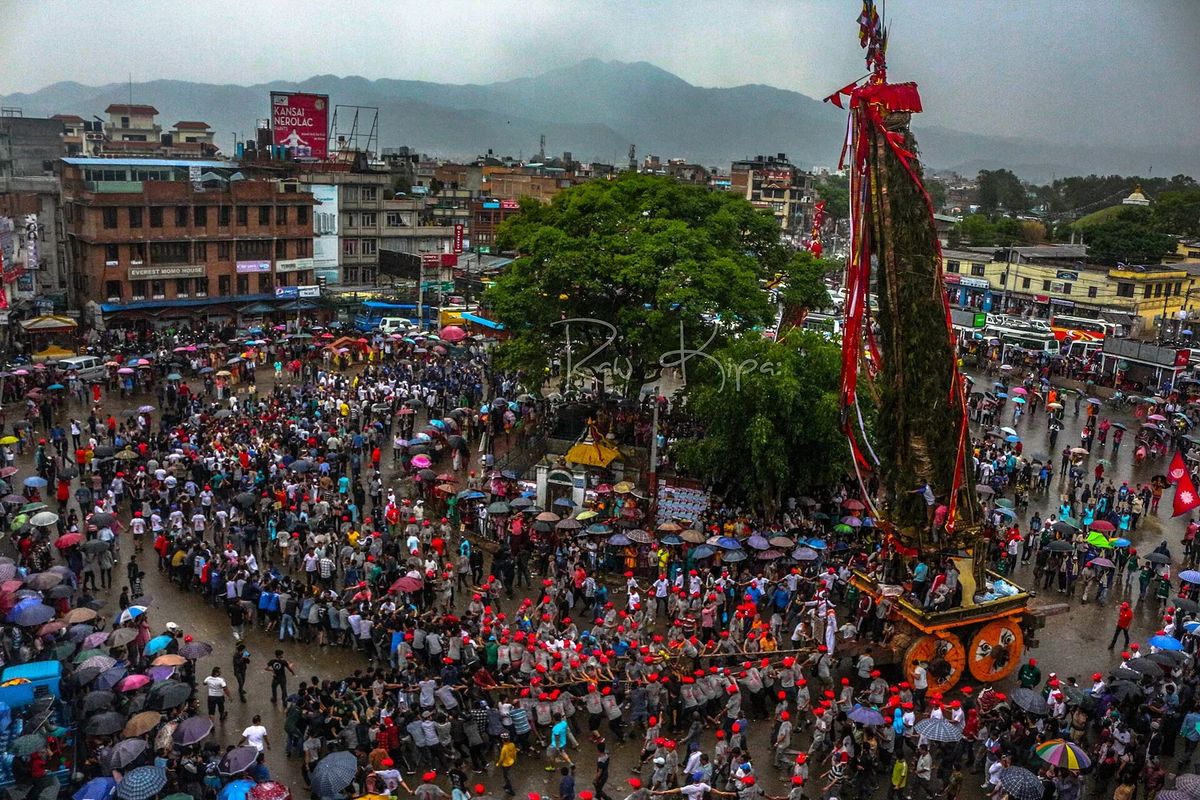
Once a year in Kathmandu Valley, at the climax of a chariot festival that has run for well over a thousand years, an official climbs onto a swaying 52-foot wooden tower, holds up a jewel-studded vest in front of Nepal's president and its living child goddess, and asks the crowd a simple question: does this belong to you? For as long as anyone can prove otherwise, the answer has always been no.
Key facts
- The Rato Machhindranath Jatra is Nepal's longest festival, running over a month through the city of Patan (Lalitpur).
- Its chariot stands roughly 52 feet (16m) tall with 13 tiers — built entirely from bamboo, pine branches and soaked vines, with no iron nails.
- The festival closes with Bhoto Jatra, when a bejeweled vest is displayed and the crowd is asked to prove ownership — unclaimed for generations.
- A larger, 12-yearly version of the chariot is hauled all the way to Bungamati village; the next cycle is due in 2027.
The story behind the vest is as strange as the ceremony itself. According to legend, a farmer from the Kathmandu Valley once cured a painful eye ailment suffered by the wife of Karkotak Nagraj, a serpent king believed to rule the underworld from beneath Taudaha Lake. In gratitude, the naga king gave the farmer a priceless bejeweled vest, the bhoto. The farmer wore it proudly — until, by most tellings, a demon stole it while he was out working his field. Years later, at the annual chariot festival, the farmer spotted someone (or something) wearing his vest, and the two argued over whose it really was. Unable to settle the dispute, the king of the day handed the vest to Machhindranath himself, decreeing it would be shown to the public each year until a rightful owner stepped forward with proof.
Centuries on, nobody ever has. Every year, in front of the President of Nepal and the Kumari — the young girl worshipped as a living goddess (see our earlier report on how Nepal chooses its living goddess) — an official holds the bhoto aloft from the chariot's top tier and repeats the same ancient invitation to the crowd below. Nobody answers. The vest goes back into storage for another year.
| Detail | Fact |
|---|---|
| Chariot height | ~52 ft (16m), 13 tiers |
| Fasteners used | None — bamboo, pine, soaked vine rope only |
| Builders | 4 hereditary Newar clans |
| Typical duration | 4-6+ weeks |
| Origin legend | King Narendra Deva, 7th century AD |
| Next 12-year mega-cycle | 2027 |
The chariot itself is a feat that would make an engineer wince. Four hereditary Newar clans divide the labor: the Bosi gather timber from the forest, the Barahi prepare it, the Yewal lash the tower together with rope and vine, and the Chitrakar paint and decorate the finished structure. The method is said to follow the original design of a Tantric guru named Bandhudatta Vajracharya, unchanged for generations. Not a single iron nail goes into a structure that then gets dragged, swaying, through Patan's narrow medieval streets by teams of men hauling on thick ropes.
The festival's origin story explains why Patan bothers at all. Long ago, the valley suffered a drought so severe that crops failed and people began to starve. Astrologers blamed a wandering yogi, Guru Gorakhnath, who — offended after townspeople refused him alms — captured every rain-bringing naga in the valley and sat on them in meditation, physically blocking the monsoon. Desperate, King Narendra Deva sent for Machhindranath, a rain deity from Assam, reasoning that only his presence could lure Gorakhnath into rising and freeing the trapped serpents. It worked, according to tradition, and Patan has pulled the deity through its streets every year since — through earthquakes, monarchies and a decade of civil war.
What this means for your trip
If you're building a Nepal itinerary around mid-April to early June, ask your guide whether the jatra falls inside your dates. Watching a 16-metre unnailed wooden tower get muscled through a medieval square, or catching the Bhoto Jatra finale itself, is a once-a-year spectacle most first-time visitors never hear about until they stumble into it. It slots naturally alongside a Kathmandu Valley cultural day and needs no special permit or advance ticket — just good timing.
Exact dates shift every year because they're set by lunar calendar and astrological calculation, so confirm before you book. But if you land in the valley during the festival window, skip nothing else that afternoon — head straight to Patan.
Source: Nepal News, cross-checked against Travel Himalaya Nepal field reporting.
Cover photo: Ramesh Maharjan via Wikimedia Commons (CC BY-SA 4.0).
More Nepal festivals
Still running this season
Kathmandu & Pokhara Tour — 5 Days is running normally
NMA-certified local guides, transparent pricing, 5,000+ treks since 1998. Message us your dates and we'll sort the permits, lodges and logistics — reply within 24 hours, no obligation.
Popular Nepal treks
All treks →
Related coverage
Festivals & Events
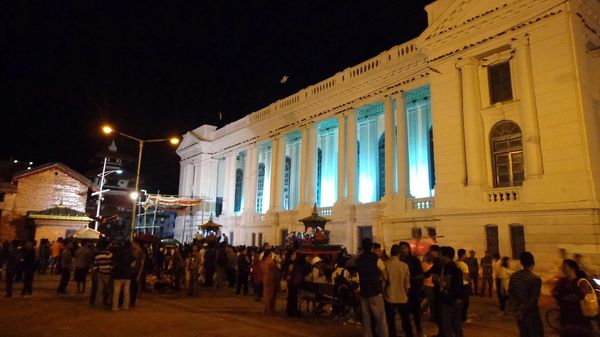
Kathmandu's Biggest Street Festival Has a Stone Demon That Spits Rice Beer Into the Crowd
Indra Jatra runs September 25 to October 2, 2026, and turns Kathmandu Durbar Square into eight days of chariot processions, masked demon dances and a mask that pours alcohol from its mouth.
Festivals & Events
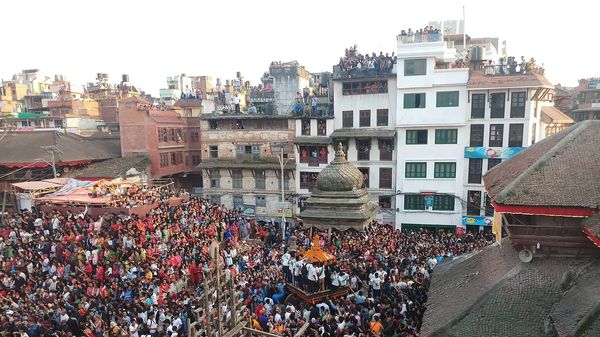
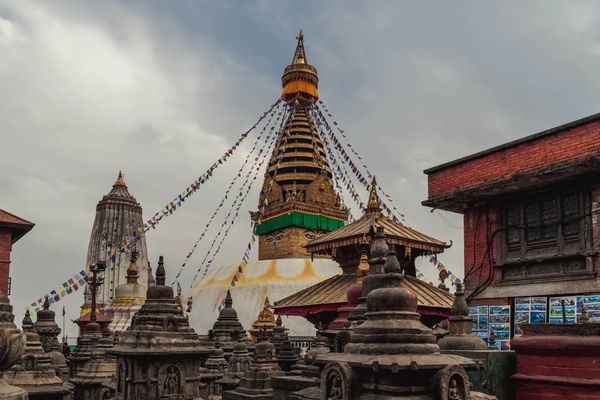
Indra Jatra 2026: Kathmandu's Biggest Street Festival, the Living Goddess and How to See It
Kathmandu's biggest street festival honours Indra
Safety & Advisories
Is a Kathmandu Valley Tour Affected by the 2026 Nepal Floods?
No — Kathmandu is the capital, at about 1,400 m in central Nepal, well south of the Rasuwa flood. The airport is running normally and every UNESCO heritage site in the valley is open. Here is the honest, detailed status.
Culture & Heritage
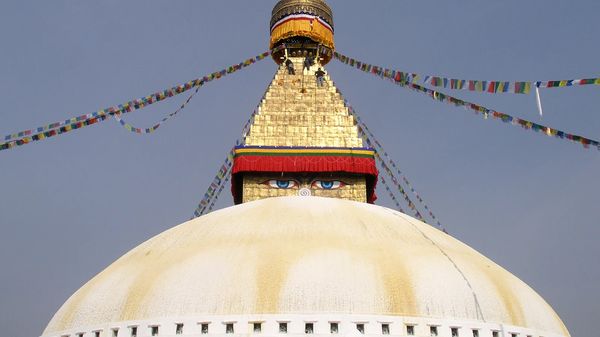
Kathmandu Valley UNESCO Site: 7 Monument Zones, One Inscription (2026)
Seven monument zones, inscribed together in 1979 as one World Heritage Site, are the cultural gateway every Nepal trek passes through.
Latest from the desk
Records & People
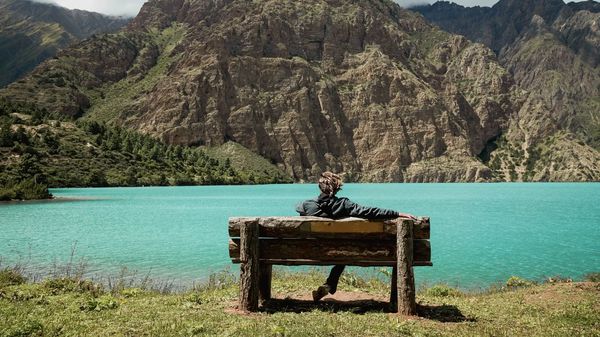
Everyone Calls This Nepal's Deepest Lake. A Government Survey Says It Isn't.
Phoksundo's turquoise water and no-fishing custom are real, but Nepal's own hydrology surveys put the actual depth record on a different lake entirely.
Flights & Access
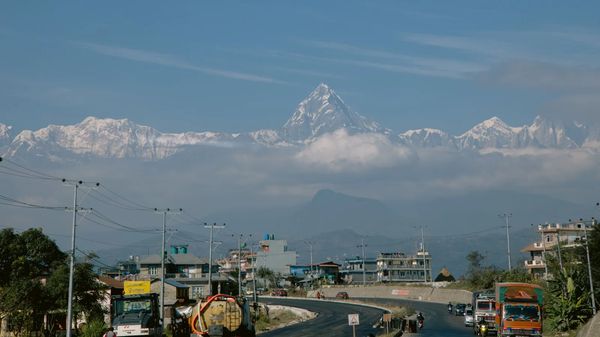
Pokhara Just Got Its First Real International Flight, Three Years After the Airport Opened
flydubai starts daily Dubai–Pokhara flights on 23 September 2026, the first scheduled international airline to serve Nepal's trekking capital since its $216 million airport opened in 2023.
Festivals & Events
Dashain 2027 tika is Saturday 9 October, twelve days earlier than this year
Dashain 2027 runs 30 September to 14 October, tika on Saturday the 9th. Bhai Tika is 31 October. Why the early date matters for an autumn trek.