
The Man the World's Tallest Mountain Is Named After Never Once Saw It
Everest was measured by an Indian mathematician the British empire barely credited, named after a surveyor who begged them not to, and didn't get its Nepali name until a historian rediscovered it in 1939.
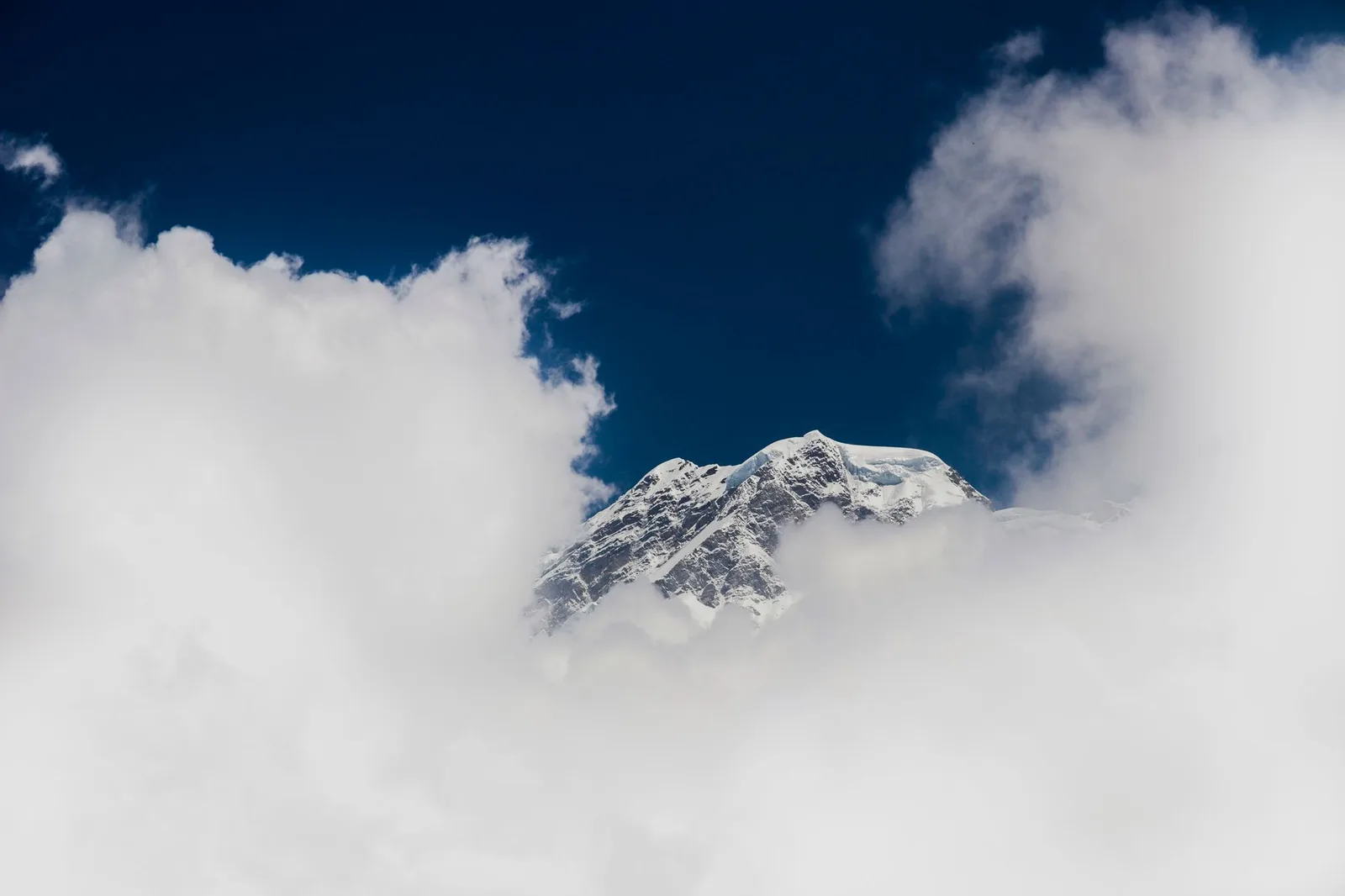
Sir George Everest never laid eyes on Mount Everest. Not once. He spent three decades running the Great Trigonometrical Survey of India, retired to England in 1843, and died in 1866 — a decade after the mountain bearing his name was confirmed as the highest point on Earth, and 87 years before anyone stood on its summit. He even asked the Royal Geographical Society not to use his name, arguing it couldn't be written in Hindi and that a local name should stand instead. They named it after him anyway.
Key facts
- The mountain's height was first calculated in 1852 by Radhanath Sikdar, an Indian mathematician working as a Survey "computer," using theodolite readings taken from up to 240km away — British surveyors were barred from entering Nepal or Tibet
- Sikdar's result: almost exactly 29,000 feet; his boss added 2 feet so it would not look like a suspiciously round estimate
- The modern, satellite-verified height, jointly announced by Nepal and China in December 2020: 8,848.86 metres (29,031.7 ft) — Sikdar was off by barely 30 feet, with no satellites at all
- Nepal's own name for the mountain, Sagarmatha, was not publicised until 1939, by historian Baburam Acharya — who insisted he had only rediscovered an old name, not invented one
Before any of that, Tibetans and Sherpas already had a name: Chomolungma, "Goddess Mother of the World," used for centuries by the communities who actually lived in its shadow. British surveyors, forbidden from crossing into Nepal or Tibet to check for a local name up close, catalogued the peak only as "Peak b," then "Peak XV," triangulating its height from stations on the Indian plains far to the south. When Andrew Waugh, the Survey's superintendent, forwarded Sikdar's 1852 calculation, he sat on it for four years — checking and rechecking the numbers before finally announcing in March 1856 that Peak XV, at 29,002 feet, was the tallest mountain ever measured. Only in 1865 did the Royal Geographical Society rename it Everest, overruling the objections of the man himself.
Survey chief Andrew Waugh spots an unnamed peak from over 200km away and logs it as "Peak XV."
Indian mathematician Radhanath Sikdar computes Peak XV as the world's highest, close to 29,000 feet, from trigonometric readings alone.
The Royal Geographical Society names the peak Mount Everest, after a surveyor who had asked them not to.
Tenzing Norgay and Edmund Hillary reach the top — 101 years after its height was first calculated from a river plain hundreds of kilometres away.
Nepal and China jointly announce a satellite-verified height of 8,848.86 metres, ending decades of dispute.
What this means for anyone planning the trip
What this means for you
Fly into Nepal today and you will see all three names still doing separate jobs. Officially, Nepal calls it Sagarmatha — "Forehead of the Sky" — the name in every domestic permit and park document, including the entry paperwork for Sagarmatha National Park itself. Tibetans still call it Chomolungma. Everywhere else in English, it is simply Everest, honouring a man who was already retired and half a world away when his name was attached to it. None of the three names belonged to the mountain by popular local vote — each was fixed by whoever happened to be doing the paperwork at the time. What has not changed is the trek itself: the same Khumbu valley Sikdar computed from a river plain 200km distant is now walked by thousands of trekkers a season on routes like our Everest Base Camp trek and the shorter Everest View trek, both of which end with the same mountain in view — whichever of its three names you use.
Source: The Kathmandu Post
Cover photo: Pratikxox via Pexels (Pexels License).
计划徒步?
我们负责许可证、后勤与向导
NMA 认证的本地向导,价格透明,自 1998 年以来 5,000+ 次徒步。告诉我们你的日期,其余的交给我们。


更多「Records & People」
Records & People
Sherpas Carry a Gene From an Extinct Human Species That Lets Them Breathe Where Others Suffocate
The reason your Sherpa guide isn't gasping at 5,000 metres traces back tens of thousands of years to interbreeding with the Denisovans, an extinct human relative known only from a Siberian cave.
Records & People
A River Stole Another River 89,000 Years Ago — and It's Still Making Everest Taller Today
Scientists have finally explained why Mount Everest is taller than it should be: an ancient river heist that's still lifting the mountain by up to 2mm a year.
Records & People
The 1951 Photo That Convinced the World Yetis Were Real — And What DNA Finally Proved Made the Tracks
Eric Shipton's footprint photograph from the Menlung Glacier near Everest ran in newspapers worldwide and launched a legend. A 2017 DNA study on nine yeti specimens finally settled what made them.