
How to Sleep on a Long-Haul Flight in 2026: Seat, Kit and Timing Tactics That Actually Help
Real, practical tactics for in-flight sleep — pick a window seat, pack a proper neck pillow, eye mask and earplugs, time your rest to the destination, skip the alcohol, and move every couple of hours. Plus the honest limits.
Key facts
- Real sleep in economy is hard, and honest advice starts there — you are aiming for rest and a few broken hours, not a full night.
- The controllable levers are all small: a window seat to lean on, a proper neck pillow, eye mask and earplugs, timing your sleep to night at your destination, and skipping alcohol and heavy meals.
- The NHS advises drinking plenty of water on long flights and going easy on alcohol and caffeine, which both worsen the way you feel on arrival.
- Long stretches of sitting still are the real risk. The NHS recommends moving around and staying hydrated on journeys over four hours to lower the chance of deep vein thrombosis (DVT).
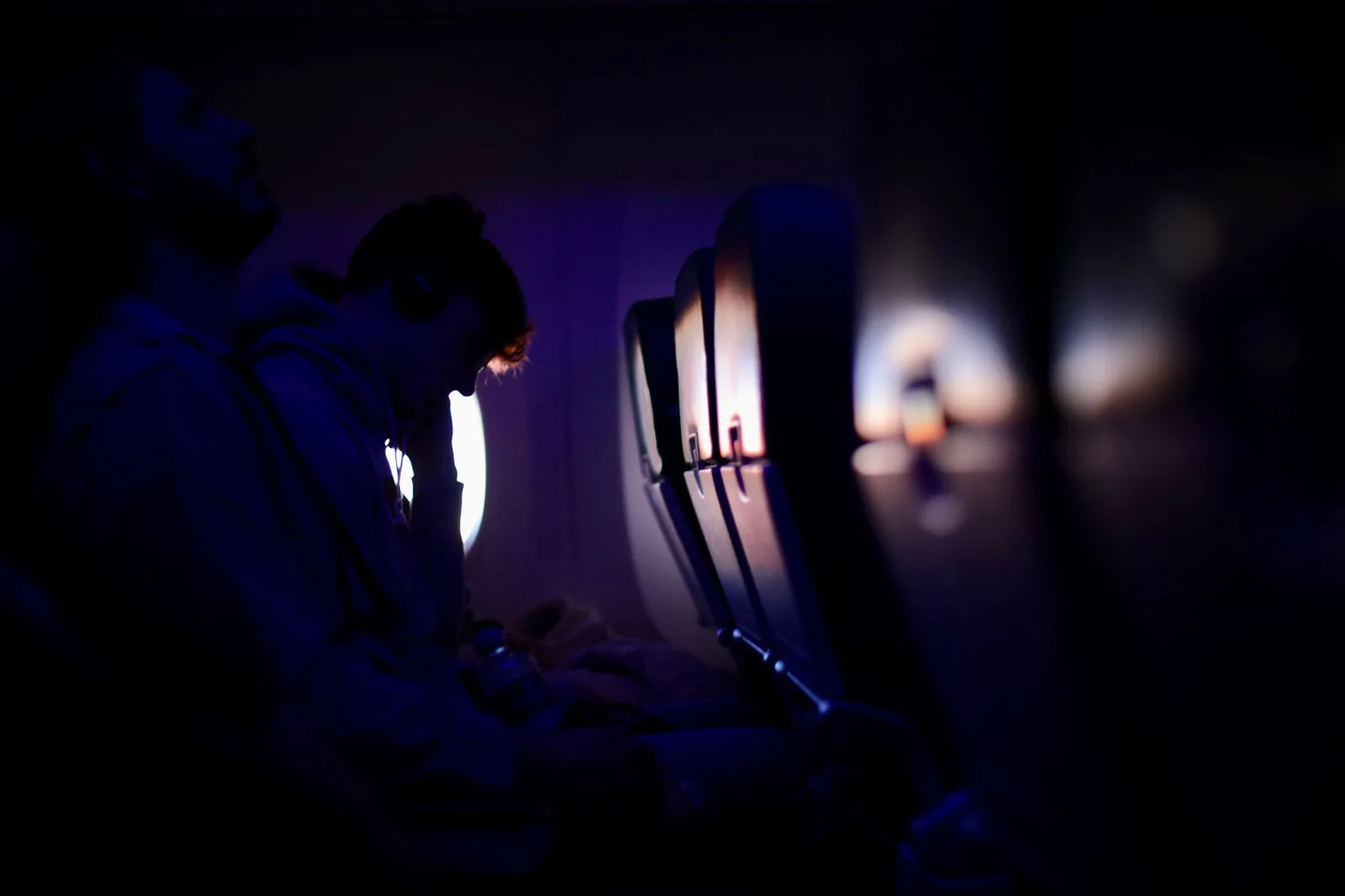
Everyone wants the same thing on a long-haul flight: to close their eyes, and open them somewhere near the destination. The truth most airlines will not print on the ticket is that sleeping upright in an economy seat is genuinely difficult, and no gadget changes that. What you can do is stack a handful of small advantages so the odds of real rest go up — the right seat, the right kit, the right timing, and a short list of things to avoid. None of it is exotic. All of it helps.
Pick the right seat
Seat choice is the single decision you make before you even pack, and it matters more than any accessory. A window seat gives you a wall to lean against and puts you in control of the blind — and, crucially, nobody climbs over you to reach the aisle. The aisle seat is the opposite bargain: easy to stretch and get up, but you are woken every time a neighbour or the cart needs past. If sleep is the priority, choose the window and commit to it.
Beyond that, a few rows reward the light sleeper. Seats near the galley and toilets get constant foot traffic and light; the very back tends to be noisier and reclines less. If you can, sit ahead of the wings and away from the bathrooms.
The kit that actually helps
You do not need much, but the few things you carry should be good. A proper neck pillow — one that supports the chin so your head does not drop forward — is the difference between dozing and jolting awake. Add an eye mask to block the cabin lights and the seatmate's screen, and earplugs or noise-cancelling headphones to take the edge off the engine drone and announcements. Cabins run cold once the lights go down, so bring a layer you can pull on: a hoodie or a light packable jacket beats relying on a thin airline blanket.
| Factor | What helps | Why it works |
|---|---|---|
| Seat choice | Window seat, ahead of the galley and toilets | A wall to lean on and no aisle disturbances; quieter with less passing light |
| Kit | Supportive neck pillow, eye mask, earplugs, a warm layer | Stops your head dropping, blocks light and noise, keeps you warm as the cabin cools |
| Food and drink | Skip alcohol and heavy meals; drink water | Alcohol fragments sleep and dehydrates; heavy meals sit badly; dry cabin air needs water |
| Timing | Sleep when it is night at your destination | Nudges your body clock toward local time and eases the arrival adjustment |
| Movement | Walk and stretch every couple of hours | Keeps blood moving during long immobility, lowering DVT risk |
Time your sleep to the destination
The most useful trick costs nothing: look at the clock at where you are going, not where you took off from. If it is night at your destination, that is when to try to sleep — eye mask on, screen off. If it is daytime there, stay awake and save the sleep for the next leg or the first night on the ground. This is the same principle behind beating jet lag, and it is worth reading our companion guide, how to beat jet lag in 2026, for the timezone-recovery side of the same journey. That piece is about the days after you land; this one is about the hours in the seat.
Food, drink and the things to skip
It is tempting to treat a long flight as a chance for a free drink and a big meal. Both work against sleep. Alcohol may make you drowsy at first but it breaks sleep into shallow, restless pieces and dehydrates you in an already dry cabin. A heavy meal close to sleep sits uncomfortably at altitude-adjusted cabin pressure. The NHS advice for long journeys is simple and worth following: drink plenty of water, and go easy on alcohol and caffeine. Eat lightly, hydrate steadily, and your body has a far better chance of settling.
Move every couple of hours. The genuine health point on any long flight is not sleep quality — it is sitting still for hours. Prolonged immobility raises the risk of deep vein thrombosis (DVT), a blood clot in the leg. The NHS recommends walking around when you can and drinking plenty of water on journeys over four hours. Get up, walk the aisle, and flex your calves in your seat. If you have had a clot before, are pregnant, or have other risk factors, ask your doctor about precautions before you fly.
The honest limits
Set expectations: broken sleep is the realistic outcome in economy, and that is fine. A few genuine hours plus rest with your eyes closed will carry you through arrival. Be cautious with sleep aids. The NHS notes that sleeping tablets can be helpful for short-term problems but are potentially addictive and should be used only briefly and for severe symptoms — and a sedative that keeps you deeply still for hours adds to the immobility that raises DVT risk. This is a conversation to have with a doctor or pharmacist, not something to self-prescribe at 35,000 feet. Do not rely on strong sedatives to knock yourself out on a plane.
Why this matters if Nepal is the destination
For most travellers, the flight to Kathmandu is long and rarely direct — a connection through the Gulf, Delhi or Southeast Asia, often twenty hours or more door to door. And unlike a beach holiday, you frequently land and start moving toward the mountains within a day or two, sometimes onto a domestic flight and straight onto the trail. Arriving rested is not a luxury here; it shapes how your first days at altitude feel. Sleep what you can on the long-haul, hydrate the whole way, move every couple of hours, and time your rest to Nepal's night. If a Himalayan trek is what waits at the other end — our 14-day Everest Base Camp trek or the shorter 9-day Annapurna Base Camp trek — turning up clear-headed is the best first step you can take.
Cover photo: Adriaan Ploegh via Pexels (Pexels License).
来源: NHS
计划徒步?
我们负责许可证、后勤与向导
NMA 认证的本地向导,价格透明,自 1998 年以来 5,000+ 次徒步。告诉我们你的日期,其余的交给我们。


更多「Gear & Tech」

Gear & Tech
How to Avoid Getting Locked Out of Your Accounts Abroad in 2026: 2FA, Authenticator Apps and Backup Codes
The digital lock-outs travellers hit overseas — SMS codes sent to a home number you cannot receive, an authenticator app on a lost phone, a bank that blocks a foreign login, an email recovery loop — and the twenty minutes of setup before you fly that prevents every one.
Gear & Tech
How to Pack a Suitcase Efficiently in 2026: Rolling vs Folding, Packing Cubes, and the Weigh-Before-You-Fly Trick
The real techniques that save space and dodge fees — when to roll, when to fold, how packing cubes actually help, loading heavy items over the wheels, a mix-and-match capsule wardrobe, and what must stay in your carry-on.

Gear & Tech
Offline Maps and Navigation for Travel in 2026: How to Find Your Way With No Signal and No Data
Your phone's GPS finds you from satellites even in airplane mode — you just have to download the map first. A practical guide to offline map areas, dedicated trail apps, saved directions, a paper backup and keeping the battery alive.