
How to Pack a Suitcase Efficiently in 2026: Rolling vs Folding, Packing Cubes, and the Weigh-Before-You-Fly Trick
The real techniques that save space and dodge fees — when to roll, when to fold, how packing cubes actually help, loading heavy items over the wheels, a mix-and-match capsule wardrobe, and what must stay in your carry-on.
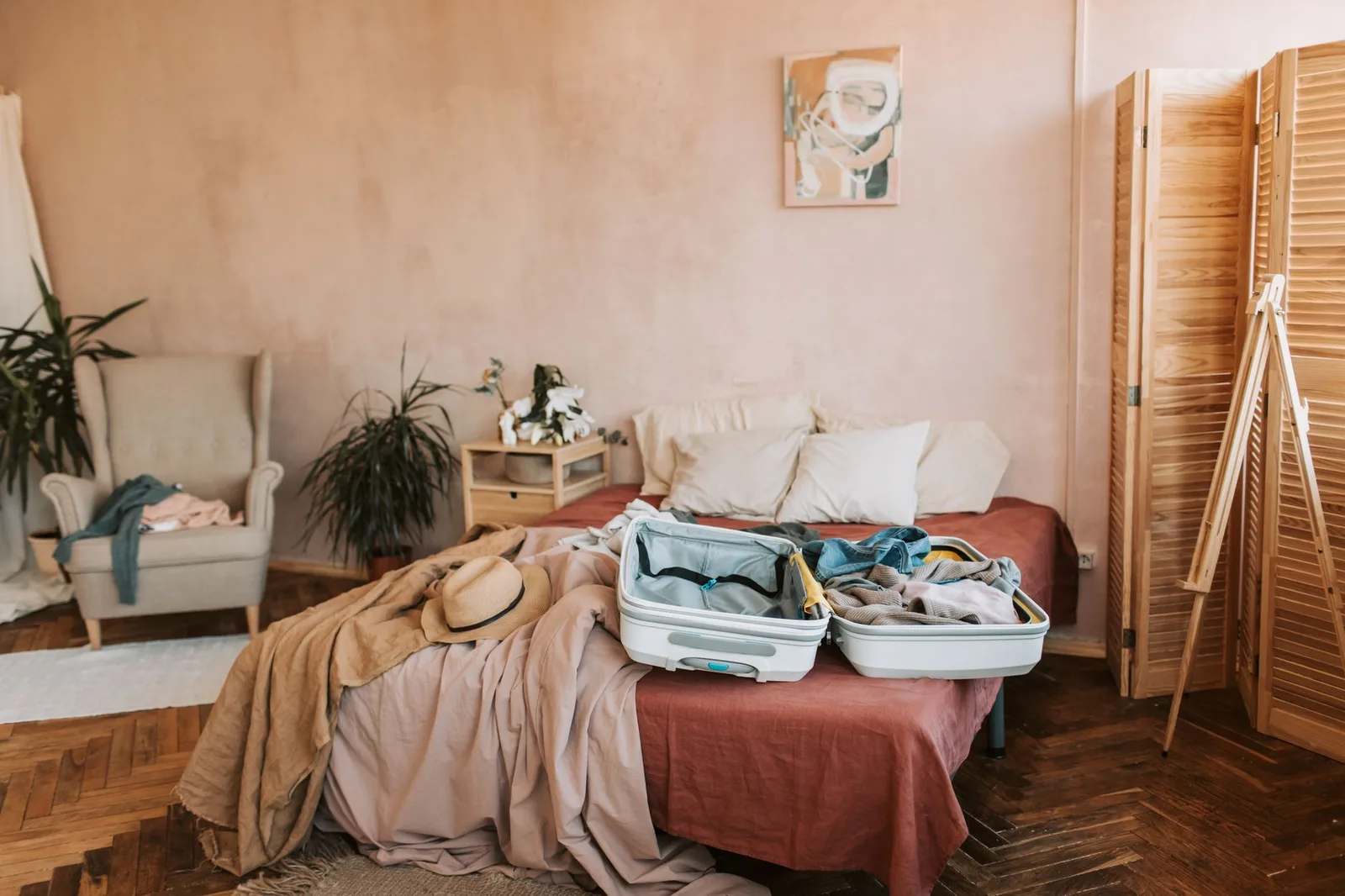
Packing well is not about owning the cleverest bag — it is about method. The short version, so you can start straight away: roll soft clothes to save space, use a couple of packing cubes to keep it that way, put the heaviest things low and over the wheels, and weigh the whole bag at home before a fee ever gets the chance to surprise you. Keep medicines, documents and anything valuable or fragile in the bag that never leaves your side.
The method in one glance
- Roll soft knits, t-shirts and trousers; fold stiff, crease-prone items (shirts, blazers) flat with as few folds as possible
- Packing cubes compartmentalise so the bag stays organised as you live out of it; compression cubes squeeze out air for bulky soft clothing
- Pack heavy items (shoes, toiletry bag, books) low and near the wheels so a rolling case stays stable and does not tip
- Build a small capsule wardrobe in one colour family so a handful of pieces mix into many outfits
- Weigh the bag at home. Airlines charge excess-baggage fees on anything over your allowance, and they are steep at the airport
- Medication, passport, valuables and a fragile electronics stay in your carry-on, never the checked bag
Rolling vs folding vs cubes — what actually earns its place
The rolling-versus-folding argument has a boring answer: it depends on the fabric. Rolling suits soft, forgiving materials — cotton t-shirts, jeans, socks, activewear — because a tight roll uses the dead space a flat stack wastes and puts the creases in soft curves rather than hard lines. Folding still wins for structured, wrinkle-prone garments: a dress shirt or a jacket folded flat, with a minimum of folds, comes out looking far better than one twisted into a roll.
Packing cubes are the third technique and they solve a different problem. They do not conjure space out of nothing; what they do is stop your neat packing from collapsing into chaos the first time you dig for a clean shirt. Sort by category — one cube for tops, one for underwear and socks, one for "worn already" — and the whole bag stays as tidy on day nine as on day one. Compression cubes go a step further, zipping down to force air out of bulky soft items like fleeces and puffy layers.
| Technique | Best for | Watch-out |
|---|---|---|
| Rolling | Soft knits, t-shirts, jeans, socks, activewear — saves space and softens creases | Twists stiff shirts and tailoring into hard wrinkles; roll tight or it loosens |
| Folding (flat) | Dress shirts, blazers, anything structured or crease-prone — fewest, cleanest folds | Wastes the dead space around the stack; a loose pile shifts in transit |
| Packing cubes | Keeping the bag organised for the whole trip; separating clean from worn | Do not by themselves shrink volume — they organise, not compress |
| Compression cubes / bags | Bulky soft layers — fleeces, down jackets, spare warm kit | Squashing makes bags heavier per litre; you can hit the weight limit before the size one |
Load it like a truck: heavy over the wheels
Where weight sits inside the case changes how it behaves. Pack your heaviest things — shoes, the toiletry bag, chargers, anything dense — low and towards the wheeled end, so that when the case stands upright the mass is at the bottom. A low centre of gravity keeps a rolling suitcase from tipping over every time you let go of the handle, and it stops heavy objects from crushing softer clothes mid-flight. Lighter, softer layers go on top, with anything you want uncreased laid flat over the whole pile last.
The capsule wardrobe: pack outfits, not clothes
The single biggest space saving is deciding to carry less, and the capsule wardrobe is how you do it without looking like you did. The idea — a minimalist collection of clothes that can be combined into many outfits — long predates travel blogs; the term appeared in the 1940s and was popularised in the 1970s. For a trip it means choosing pieces in one coordinating colour family so every top works with every bottom. Neutral bases, one or two accent pieces, layers instead of bulk. Ten well-chosen items in a shared palette dress you for more occasions than twenty random ones, and they all fit in half the bag.
Weigh it before the airport
The cheapest baggage fee is the one you never trigger. Airlines charge excess-baggage fees on anything over your allowance, and paying at check-in costs far more than fixing it at home. Stand on a bathroom scale holding the packed bag, subtract your own weight, and you have the number — or hang it from a cheap luggage scale. Do it the night before, while you can still move the heavy shoes into your carry-on, not at the counter with a queue behind you. If you are close to the limit, wear the bulkiest jacket and boots onto the plane.
Shoes, toiletries and the bag that never leaves you
Shoes are the space villains, so bring as few pairs as the trip truly needs — often one worn, one packed. Stuff socks and small items inside them to use the hollow, slip each into a bag or shower cap so soles never touch clothes, and lay them sole-down along the wheeled edge. Toiletries live in one sealed pouch, ideally with liquids in leak-proof bottles and inside a plastic bag — pressure changes make bottles weep. And draw a hard line about your carry-on: medication (in its original labelled packaging), passport and documents, a change of clothes, chargers, and anything valuable or fragile ride in the cabin bag with you. Checked bags are delayed and lost often enough that you never want your only insulin, or your camera, inside one. For the full one-bag approach, see our guide to travelling carry-on only in 2026.
For a Nepal trek, your suitcase splits in two
Everything above gets you to Kathmandu; the trail rewrites the rules. On a Nepal trek you do not roll a hard-shell suitcase up a mountain — wheels and rigid cases are useless on stone steps and mule trails. Instead your kit splits into two soft bags. A duffel (no wheels, so it sits square on a porter's load or a mule) carries the bulk: rolled clothing, spare layers, your sleeping bag. A daypack stays on your own back with the things you need through the day and cannot be parted from — because the porter walks ahead and you will not see that duffel until the evening lodge. Into the daypack go your down jacket, water, valuables, documents, camera and any medication; roll the clothes in the duffel exactly as you would a suitcase, and keep the duffel under the weight limit trekking crews set (commonly around 10–15 kg) out of respect for the porter carrying it. Our guided treks include a proper trek duffel and a full pre-departure kit list, so you pack once and correctly. If a Himalayan trip is on your list, browse our guided treks and we will send the packing brief with your booking.
计划徒步?
我们负责许可证、后勤与向导
NMA 认证的本地向导,价格透明,自 1998 年以来 5,000+ 次徒步。告诉我们你的日期,其余的交给我们。


更多「Gear & Tech」
Gear & Tech
Offline Maps and Navigation for Travel in 2026: How to Find Your Way With No Signal and No Data
Your phone's GPS finds you from satellites even in airplane mode — you just have to download the map first. A practical guide to offline map areas, dedicated trail apps, saved directions, a paper backup and keeping the battery alive.
Gear & Tech
Travelling Abroad With a Drone in 2026: The Rules Travellers Keep Getting Caught By
Carry the batteries in the cabin, register before you fly, and learn the no-fly zones — the general drone-travel rules that vary by country, plus why Nepal restricts drones.
Gear & Tech
How to Back Up Your Photos and Data While Traveling in 2026
The 3-2-1 backup rule made simple for the road: switch on phone cloud sync, carry a spare SD card or small drive, keep maps and documents offline, and never trust one device — especially where trekking Wi-Fi is slow and mobile data thins out at altitude.