
UNESCO Just Added 25 New World Heritage Sites in 2026 — Here’s the Full List
The 48th World Heritage Committee met in Busan and inscribed 25 new sites — from the D-Day beaches and Mount Olympus to the Buddhist site of Sarnath. Here is the full 2026 list, and why it matters from Nepal.
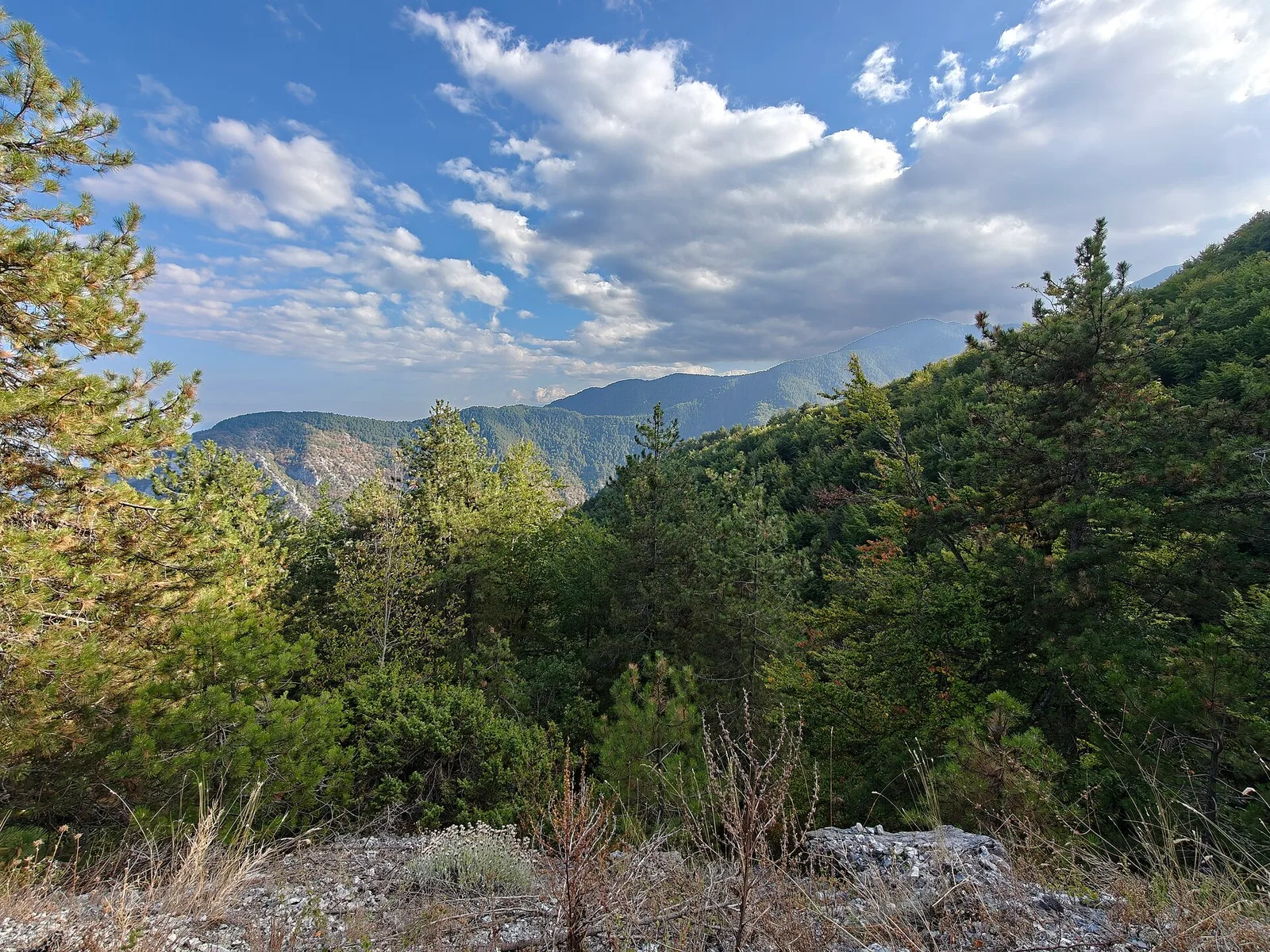
UNESCO added 25 new sites to its World Heritage List in 2026 — among them the D-Day landing beaches of Normandy, the mythological home of the Greek gods on Mount Olympus, and the Indian site where the Buddha is said to have preached his first sermon. The decisions were taken at the 48th session of the World Heritage Committee, held in Busan, Republic of Korea, from 19 to 29 July 2026, and every one of the 25 was adopted by consensus.
For anyone who plans holidays around great places — and if you read a Himalaya travel desk, you probably do — a fresh World Heritage list is a fresh shortlist of where to go next. Here is the full 2026 intake, what stands out, and why it matters even from Nepal.
Key facts
- 25 new sites inscribed in 2026 — 19 cultural, 5 natural and 1 mixed (cultural and natural).
- Decided at the 48th session of the World Heritage Committee in Busan, Republic of Korea, 19–29 July 2026.
- First-ever World Heritage listings for three countries: Comoros, São Tomé and Príncipe and South Sudan.
- Every inscription was adopted by consensus.
The headline sites
The Beaches of the D-Day Landings, Normandy, 1944 (France) were perhaps the most anticipated. The listing covers Utah, Omaha, Gold, Juno and Sword beaches plus Pointe du Hoc, together with surviving stretches of the German Atlantic Wall and the American Cemetery at Colleville-sur-Mer — a landscape shaped as much by remembrance as by the events of 1944.
Greece's wider area of Mount Olympus was the only 2026 site inscribed as mixed, recognised both for its place in Greek mythology as the home of the gods and for its gorges, limestone cliffs and rich alpine flora. India's Ancient Buddhist Site of Sarnath — where the Buddha is traditionally said to have delivered his first sermon — brings its stupas, monasteries and living pilgrimage traditions onto the list. Finland's Aalto Works mark the first inscription of 20th-century Finnish modernist architecture, and Brazil's Amazonia Theaters honour the grand opera houses built deep in the rainforest during the rubber boom.
The full 2026 list, at a glance
| Site | Country | Why it was inscribed |
|---|---|---|
| Beaches of the D-Day Landings, 1944 | France | The Normandy invasion beaches, Atlantic Wall remains and war cemeteries |
| The wider area of Mount Olympus | Greece | Mixed site — mythological home of the gods and a dramatic alpine massif |
| Ancient Buddhist Site of Sarnath | India | Where the Buddha is said to have given his first sermon |
| Aalto Works | Finland | Serial site of Alvar Aalto's pioneering modernist architecture |
| Amazonia Theaters | Brazil | Opera houses built in the Amazon during the rubber boom |
| Cemetery Complexes of the Xiongnu Nobility | Mongolia | Elite burial grounds of the ancient Xiongnu confederation |
| Jingdezhen Handicraft Porcelain Industry Sites | China | Centuries-old heart of Chinese porcelain production |
| Tashkent Modernist Architecture | Uzbekistan | Bold Soviet-era modernist buildings of the capital |
| Okefenokee National Wildlife Refuge | United States | Natural site — a vast subtropical freshwater peatland |
| Boma–Badingilo Migratory Landscape | South Sudan | Natural site protecting one of the world's great animal migrations |
The remaining inscriptions round out an unusually wide-ranging year: Alamūt Castle (Iran), Gdynia Modernist City Centre (Poland), Mount Amel Castles (Lebanon), the Rock Mosques of Mangystau (Kazakhstan), the Royal Capetian Fortresses of Languedoc (France), Sebastia (State of Palestine), the System of Italian-style Condominio Theatres (Italy), the Village of Sidi Bou Saïd (Tunisia), and Thailand's Wat Phra Mahathat Woramahawihan. On the natural side, the Aqaba Marine Reserve (Jordan), the Bony Fish Fossils of the Western Limfjord (Denmark) and Wadi Wurayah (United Arab Emirates) join the list, alongside the cultural Medinas of the Historic Sultanates of the Comoros and The Roças of São Tomé and Príncipe.
Three countries on the map for the first time
The most quietly significant story of 2026 is representation. Comoros, São Tomé and Príncipe, and South Sudan each earned their very first World Heritage inscription — a reminder that the list is still filling in large blanks, especially across Africa and among small island states. UNESCO has long pushed to correct the imbalance that leaves Europe heavily represented and much of the Global South thin on the ground.
Why this matters from Nepal
Sarnath's listing lands close to home for anyone drawn to the Buddhist trail. The Buddha was born at Lumbini in Nepal — itself a UNESCO World Heritage Site — and gave his first teaching at Sarnath, just across the border in India. Nepal already holds four World Heritage sites: Lumbini, Sagarmatha (Everest) National Park, Chitwan National Park, and the Kathmandu Valley, whose seven monument zones are a masterclass in how much heritage one small basin can hold — a story we told in this piece on the Valley's seven sites. If a new list has you itching to stand somewhere that history was made, our Kathmandu UNESCO heritage day tour walks you through several of those monument zones in a day, and the classic Everest Base Camp trek takes you straight into Sagarmatha National Park.
World Heritage status is not just a plaque; it tends to reshape how a place is protected, funded and visited for decades. Each year's list is a small map of what humanity has decided is worth keeping. In 2026, that map grew by 25 — from a Norman coastline to a Greek mountain of myth, and from the porcelain kilns of China to the migrating herds of South Sudan.
Cover photo: Anastasiya Lvova via Wikimedia Commons (CC BY-SA 4.0).
来源: UNESCO World Heritage Centre
计划徒步?
我们负责许可证、后勤与向导
NMA 认证的本地向导,价格透明,自 1998 年以来 5,000+ 次徒步。告诉我们你的日期,其余的交给我们。


更多「Industry & Tourism」
Industry & Tourism
Singapore Has the World's Most Powerful Passport in 2026 — Visa-Free to 192 Countries
Singapore tops the latest Henley Passport Index with visa-free access to 192 destinations, while the US passport slips to 10th. Here is the full 2026 ranking — and where Nepal lands.
Industry & Tourism
How One TV Show Sent Muskoka Searches Up 110%: The 2026 'Set-Jetting' Effect
Screen-inspired travel is now a projected US$8 billion business, and 2026's biggest spikes — Muskoka, Yorkshire, Rome — show why the real adventure set never needed a streaming release.
Industry & Tourism
From Venice's €10 Entry Fee to Bali's Levy: Every Tourist Tax You'll Pay in 2026
Access fees, climate levies and departure taxes are spreading fast in 2026. Here is a verified rundown of who charges what — from Venice and Bali to Barcelona, Bhutan, Japan and the UK — and why Nepal does it differently.