
Northern Lights 2026: Where and When to See the Aurora (Best Destinations)
A clear, no-hype guide to catching the aurora next winter — the best destinations from Tromsø to the Yukon, the September–March season, why the solar cycle still favours 2026, and honest expectation-setting.
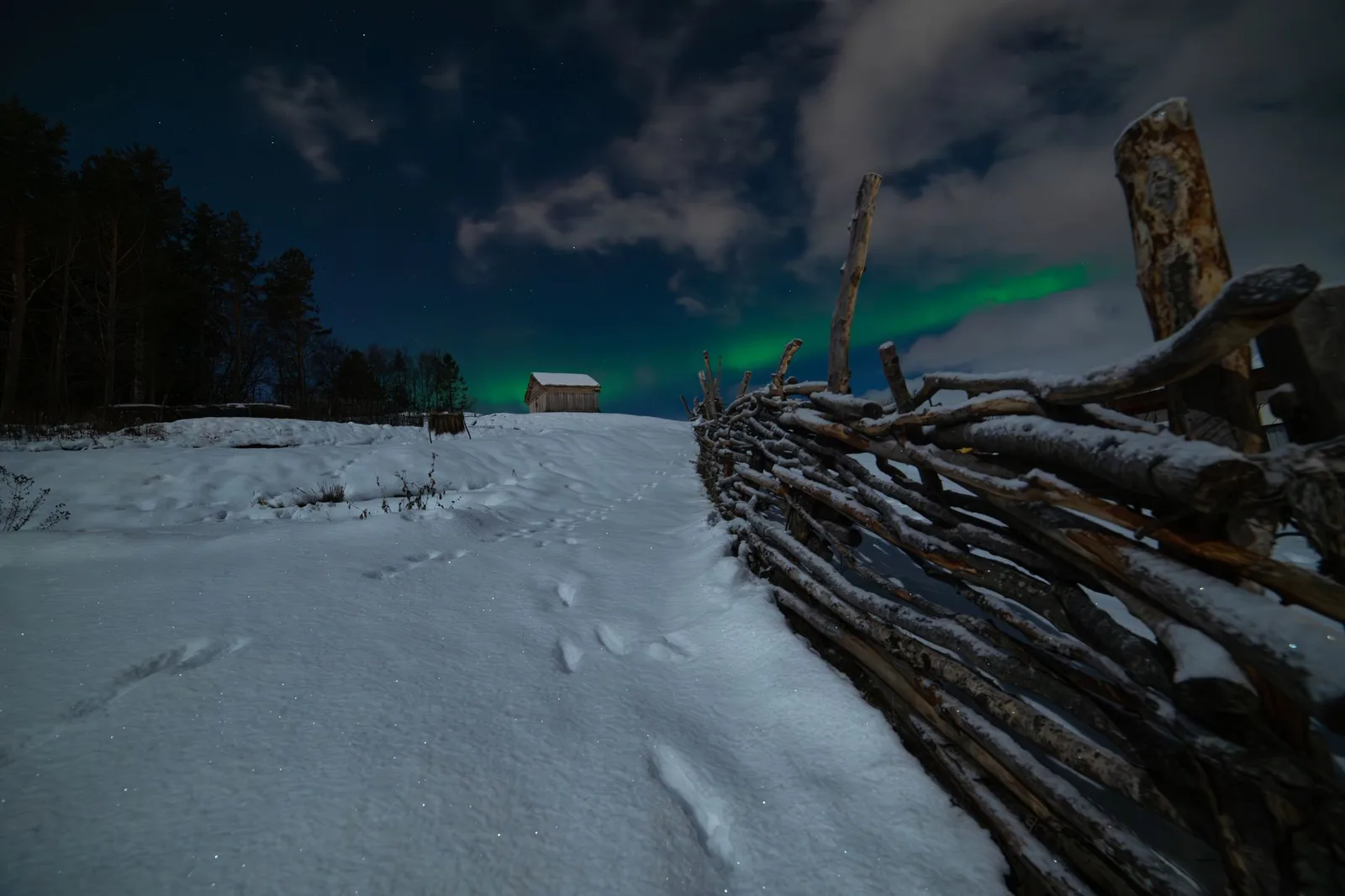
Key facts — northern lights 2026
- Season: roughly September to March, when the far-northern nights are long and dark enough to see the glow. Around midsummer the Arctic sky never gets dark, so the aurora is there but invisible.
- Best latitudes: the aurora sits in a band — the “auroral oval” — centred near 67° north. Tromsø, Abisko, Rovaniemi, Iceland and the Yukon all sit under or close to it.
- Solar cycle: Solar Cycle 25 reached its maximum in October 2024 and ran stronger than forecasters predicted. Activity stays elevated for a few years after the peak, so 2026 still falls in a favourable window.
- No guarantees: you need a dark, clear sky and a bit of luck. Nobody can promise you the lights on a given night — give yourself several nights, not one.
Standing under a curtain of green light that ripples across the whole sky is on almost every traveller’s list, and 2026 is a genuinely good year to try. We are a Nepal trekking company, so the honest disclaimer comes first: you cannot see the aurora from Nepal — it sits far too far south. But we spend our lives chasing dark skies and big-mountain nights, so here is a clear, no-hype guide to where and when to catch the northern lights next winter. If you are still deciding where in the world to spend the cold months, our companion piece on the best warm winter-sun destinations for 2026 covers the opposite escape.
The science, briefly (and why it matters)
The aurora happens when charged particles streaming from the Sun collide with oxygen and nitrogen high in Earth’s atmosphere, making them glow — green most often, with red and violet when a storm is strong. Earth’s magnetic field funnels those particles toward the poles, which is why the display forms that ring-shaped “auroral oval” centred roughly 67° from the equator rather than appearing evenly everywhere. Two practical things follow from this. First, you want to be under or near that oval — the Arctic fringe of Scandinavia, Iceland, northern Canada and Alaska. Second, the show is brighter and more frequent when the Sun is active: displays peak around the 11-year solar maximum and stay strong for the three years or so afterwards. With the Cycle 25 peak now behind us (October 2024), 2026 sits inside that lingering-strong window.
Where to go
Six destinations do this best. They differ less in whether you will see the lights and more in climate, cost and what else there is to do while you wait for a clear night.
| Destination | Why it’s good | Best months | Note |
|---|---|---|---|
| Tromsø, Norway | Big town right under the oval; fjord-and-mountain backdrops; easy flights and tours | Nov–Mar | Coastal, so cloudier — chase gaps inland |
| Abisko, Sweden | Famous “blue hole” microclimate keeps skies unusually clear | Dec–Mar | Small; book the Aurora Sky Station early |
| Finnish Lapland (Rovaniemi/Utsjoki) | Reliable inland cold and clear nights; glass igloos and huskies | Sep–Mar | Further north = better odds |
| Iceland | Whole-country access; pair with waterfalls and hot springs | Sep–Mar | Fast-changing weather; rent a car to move |
| Yukon, Canada | Dry, stable inland skies around Whitehorse; strong displays | Nov–Mar | Very cold; dress for −20°C or below |
| Alaska (Fairbanks) | Sits under the oval; high success rate over multiple nights | Sep–Mar | Head away from city lights |
Two shoulders are worth knowing. September and late March can be superb: the nights are already dark enough, temperatures are milder, and the equinoxes tend to bring livelier geomagnetic activity. And Iceland or coastal Norway will reward flexibility — when clouds roll in over one valley, a clear sky is often an hour’s drive away.
Setting expectations honestly
Here is the part the glossy brochures skip: the aurora is never guaranteed. Even directly under the oval in a strong solar year, you need the sky to be dark and cloud-free at the same time, and you need to be looking when it happens — displays can flare for ten minutes and fade. The single biggest mistake is booking one night and expecting a miracle. Give yourself at least three or four nights in a good location and your odds climb dramatically; a week is better still. Money spent on more nights buys you far more than money spent on a fancier tour.
How to actually catch it
Stay several nights, and go far from town lights. Light pollution washes out all but the strongest shows, so get out into the dark. Watch the forecast, not the clock: follow a local aurora and cloud forecast (the Kp index tells you how active the sky is; the cloud map tells you if you can see it) and be ready to drive to a clear patch. Let your eyes adapt for 15–20 minutes — a faint grey arc to the naked eye often photographs as vivid green. And dress for real cold: the clearest nights are the coldest, and you may be standing still for hours, so layers, insulated boots and hand-warmers are what separate a magical night from a miserable one.
Nepal’s answer: the other great night sky
You will not see the aurora from the Himalaya — Nepal sits far too close to the equator for that. But there is a different night-sky reward here that most travellers never plan for. On a high trek, well above the haze and the lights of any city, the star fields over the mountains are astonishing: the Milky Way arcs from ridge to ridge, and on a clear pre-dawn the sky above Everest or the Annapurna Sanctuary is as dark and star-thick as anywhere on Earth. If the aurora is one bucket-list sky, a Himalayan night is the other — and one you can walk right into. When you are ready for that trip, browse our Nepal treks or message us and we will help you plan it.
Cover photo: Rune Bjørnsen via Pexels (Pexels License).
来源: Wikipedia (Aurora; Solar cycle 25)
计划徒步?
我们负责许可证、后勤与向导
NMA 认证的本地向导,价格透明,自 1998 年以来 5,000+ 次徒步。告诉我们你的日期,其余的交给我们。


更多「World Destinations」
World Destinations
The Cheapest Ski Destinations for 2026: Where to Ski for Far Less Than the Alps
The best-value places to ski in 2026 — Bulgaria, Bosnia, Slovakia, Poland, Georgia and Andorra — what makes each one cheap, and the trade-offs in size and snow.

World Destinations
Tourist Taxes in 2026: Which Destinations Charge Visitors and How Much to Budget
From Amsterdam's 12.5% hotel tax to Venice's day-tripper access fee, plus Bali, Bhutan and Japan — what the big-name destinations charge visitors in 2026, how it is collected, and how to budget for it (and where Nepal's trekking permits fit).
World Destinations
Cheapest Countries to Travel in 2026: Real Daily Budgets, Ranked by Region
From $25-a-day Nepal, Vietnam and Bolivia to the cheapest corners of Europe, a fact-checked guide to where your money goes furthest in 2026 — with honest backpacker daily budgets covering bed, food and local transport, flights excluded.