
The Sherpa: A Tibetan-Origin People, Not a Job Title (2026)
An ethnic group, not an occupation — the Sherpa of the Khumbu have their own language, Nyingma Buddhist faith and a homeland below Everest, far beyond the mountaineering fame that made their name a household word.
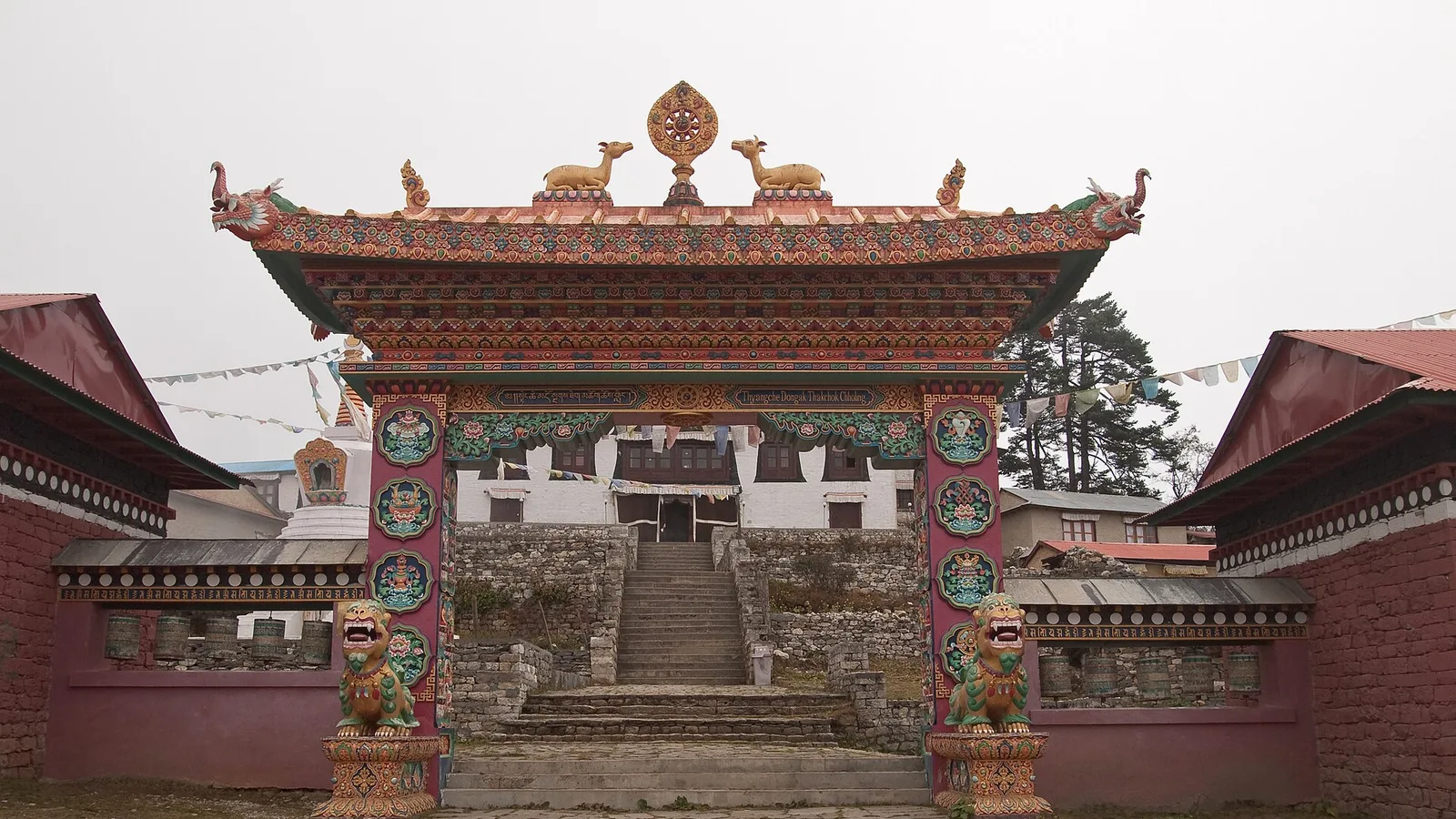
Few names travel as far, or are as misunderstood, as “Sherpa.” To much of the world it has quietly become a job description — a word for anyone who carries a load or fixes a rope high on a Himalayan peak. It is not. The Sherpa are a people: a Tibetan-origin ethnic group with their own language, their own Buddhist faith and a homeland in the high valleys beneath Mount Everest. Reducing them to a role on someone else’s expedition erases centuries of culture. Understanding who they really are is the first act of respect any traveller can offer.
Who the Sherpa are
- An ethnic group of Tibetan origin — not an occupation or a job title
- Their heartland is the Khumbu and Solu (Solukhumbu) region below Everest
- They follow the Nyingma school of Tibetan Buddhism, the oldest of its four traditions
- Nepal’s 2023 census recorded 250,637 Sherpa, about 1.1% of the population
Where they came from
Sherpa oral history traces the community to eastern Tibet, and the very name carries the story: shar (“east”) and pa (“people”) — the people from the east. Historians link their arrival in Nepal’s Khumbu to migrations across the high passes during roughly the 13th and 14th centuries, movements shaped in part by religious and political upheaval in Tibet. Tradition names four founding clans — Minyakpa, Thimmi, Lama Serwa and Chawa — from which the wider network of Sherpa lineages grew. They settled where few others could: a landscape of glaciers, thin air and short growing seasons that most travellers now pass through in a fortnight, but which the Sherpa have called home for centuries.
A Buddhist homeland
To walk the Khumbu is to walk through a living religious landscape. The Sherpa are devout followers of the Nyingma tradition, the oldest of Tibetan Buddhism’s four major schools, and its presence is woven into the trail: prayer flags fraying in the wind, mani walls carved with mantras that you keep to your left, chortens marking a pass, the low sound of a monastery horn at dusk.
At the spiritual heart sits Tengboche Monastery, perched at around 3,860 m with Everest, Lhotse, Nuptse and the spire of Ama Dablam rising beyond it. Established at its present site in 1916, with its main structure built in 1923, it is the largest gompa in the Khumbu and the first celibate monastery of the Nyingma lineage in the region. Tengboche has twice been rebuilt — after a 1934 earthquake and a 1989 fire that destroyed centuries of scriptures, murals and carvings — and each time the community restored it. Trekkers are welcome to sit quietly at prayers; it remains, first and last, a house of worship.
| Festival | What it marks |
|---|---|
| Losar (Gyalpo Losar) | Tibetan New Year — family gatherings, feasting and renewal |
| Mani Rimdu | A 19-day festival held in the tenth month of the Tibetan lunar calendar (October–November); at Tengboche its masked cham dances honour Guru Rinpoche and are the biggest event of the Khumbu year |
| Dumji | A village festival celebrating the birth of Guru Rinpoche and the founding of local temples |
The mountaineering legacy — and its cost
The Sherpa reputation for the high mountains is real, and it is not only a matter of skill or courage. Research published in 2010 identified more than 30 genetic factors that help Tibetan and Sherpa bodies thrive in thin air, among them a variant of the EPAS1 gene — sometimes called the “super-athlete gene” — which helps regulate how the body produces hemoglobin, allowing more efficient use of oxygen. Culture did the rest: generations of living, herding and trading at altitude turned the Khumbu into a place where mountains are worked, not conquered.
That legacy became world history in 1953, when Tenzing Norgay stood on the summit of Everest among the first two people ever to do so. But the story carries a heavy human cost that is too often left out of the triumphant version. In the 2014 Khumbu Icefall disaster, 16 Nepali Sherpa guides were killed in a single avalanche. On 25 April 2015, an earthquake-triggered avalanche struck Everest Base Camp and killed around 22 people. One count records 118 Sherpas dead on Everest between 1921 and 2018 — roughly a third of all deaths on the mountain. Behind the famous summits are Sherpa families who have paid for other people’s ambitions.
Sherpa life today
Climbing is only one thread of Sherpa life, and for most families not the main one. The traditional economy rests on yak and dzo herding, high-altitude farming of hardy crops such as potatoes and barley, and centuries of trans-Himalayan trade across the passes into Tibet. Today many Sherpa families run the teahouses and lodges that make trekking possible, while a global diaspora carries the language and the faith to Kathmandu, Darjeeling and cities far beyond. The Sherpa language, part of the Tibeto-Burman family, is still spoken at home, and the monasteries still fill on festival days. This is a living culture — changing, mobile and modern — not a museum piece to be photographed and left behind.
Meeting Sherpa culture respectfully
Walk clockwise around chortens and mani walls, keeping them to your right. Ask before photographing people, monks or interiors, and step back during prayers rather than through them. Dress modestly inside monasteries and remove your hat. Learn a word or two — tashi delek is a warm greeting. And remember that the person carrying your bag has a name, a family and a home; ask about them, and you will meet the culture, not just the scenery.
You do not have to reach a summit to enter Sherpa country. The classic Everest Base Camp trek walks straight through the Sherpa homeland — Namche Bazaar, Khumjung, the monastery at Tengboche — and a slower, respectful pace leaves room for the culture as well as the peaks. Nepal rewards curiosity about its living traditions: read next about the country’s Gurung cliff honey hunters and the Kumari, Kathmandu’s living goddess.
When you are ready to walk through the Khumbu with a local Sherpa team who will introduce you to their home, not just their mountains, our guides are glad to help you plan a trek that honours the place and its people.
Cover photo: Vyacheslav Argenberg via Wikimedia Commons (CC BY 4.0).
This story is part of Travel Himalaya Nepal’s guide to Nepal's culture and living heritage.
来源: Wikipedia (Sherpa people; Tengboche; Mani Rimdu)
计划徒步?
我们负责许可证、后勤与向导
NMA 认证的本地向导,价格透明,自 1998 年以来 5,000+ 次徒步。告诉我们你的日期,其余的交给我们。


更多「Culture & Heritage」
Culture & Heritage
Nepal's Kumari, the Living Goddess of Kathmandu: Tradition, Selection and the Modern Debate in 2026
A young girl is venerated as a living goddess in Kathmandu — how the Kumari is chosen, how she lives, and the debate around it.
Culture & Heritage
Nepal's Gurung Honey Hunters Scale Cliffs for the World's Largest Bee and Its 'Mad Honey'
Gurung harvesters descend Himalayan cliffs on handmade ladders to cut combs from the world's largest honeybee, whose red 'mad honey' is prized as medicine and mild intoxicant.
Culture & Heritage
Sherpas Aren't Just Acclimatized to Everest — Their DNA Is Borrowed From an Extinct Human Species
A gene that lets Sherpa bodies thrive on a fraction of the oxygen you and I need did not evolve in modern humans at all — it came from the Denisovans, tens of thousands of years before anyone set foot on Everest.