
Spring or Autumn? The Data-Backed Answer to When You Should Trek Nepal in 2026
Real temperature, rainfall and crowding numbers for the Everest and Annapurna regions — not opinion — settle which season actually suits your trek.
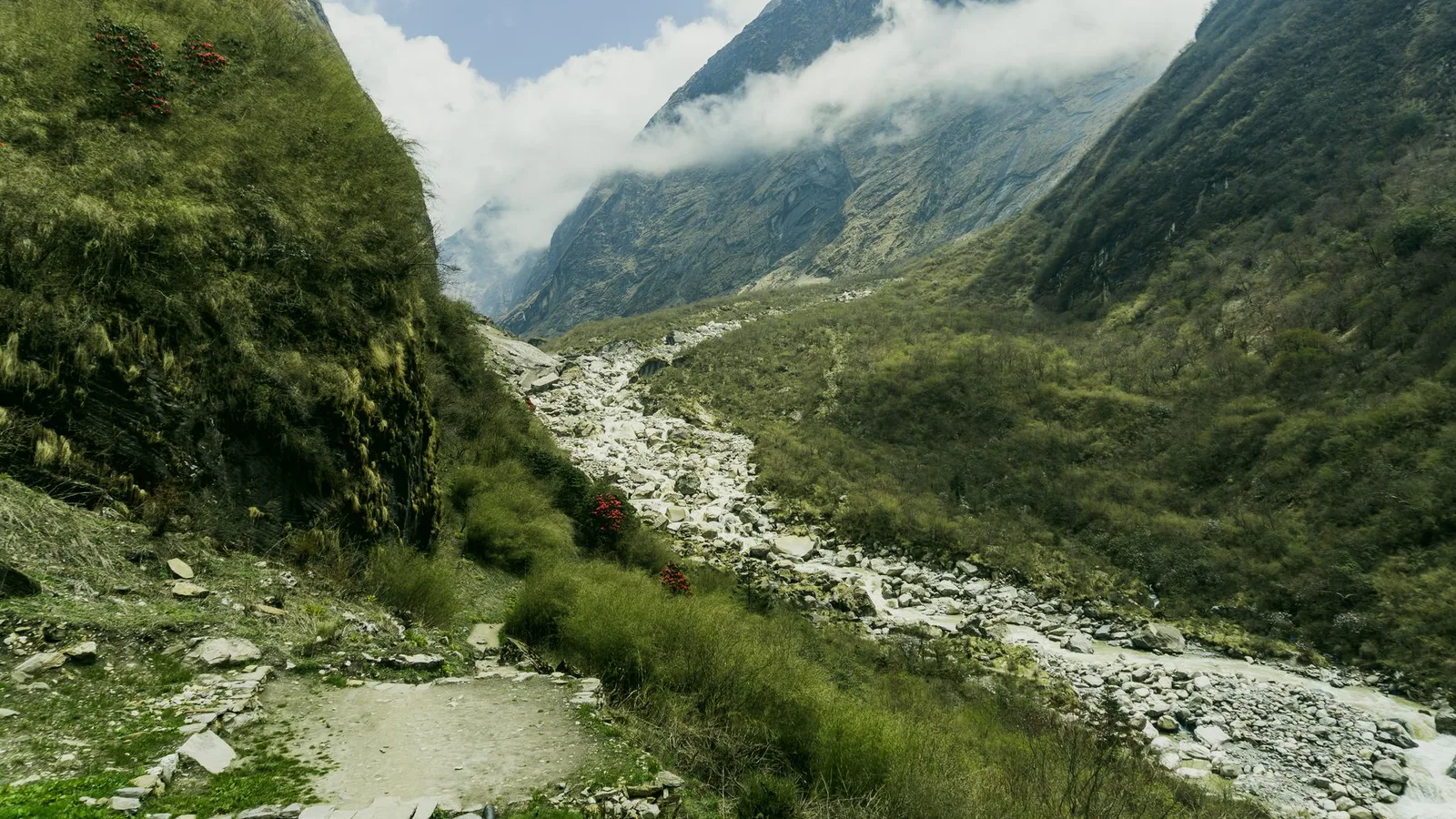
Autumn wins on reliability, spring wins on warmth and flowers, and the Everest region carries a spring crowding problem that Annapurna and Manaslu simply don't have. That's the honest, data-backed answer — not both seasons are lovely, which is what most trekking sites tell you because it's true but useless for actually picking a month.
Key facts
- Namche Bazaar averages 81mm of rain in September against just 6mm in November — autumn dries out fast once the monsoon breaks.
- Kathmandu's driest month is November (10mm); its wettest spring month is May (158mm), as the pre-monsoon builds.
- Nepal issued 495 Everest climbing permits for spring 2026, producing 1,008 summits — roughly 80% of them inside a single ten-day window, 17–26 May.
- Namche's daytime high peaks at 13°C in May versus 8°C in November — spring is measurably warmer at altitude.
The weather, by the numbers
Averaged conditions at Namche Bazaar (3,440m, the gateway to Everest) and Kathmandu (1,400m, a proxy for the mid-hill trails most treks pass through) show two related but distinct stories.
| Month | Namche high | Namche rain | Kathmandu high | Kathmandu rain |
|---|---|---|---|---|
| March | 7°C | 22mm | 24°C | 39mm |
| April | 10°C | 28mm | 27°C | 75mm |
| May | 13°C | 34mm | 29°C | 158mm |
| September | 14°C | 81mm | 28°C | 323mm |
| October | 11°C | 37mm | 26°C | 78mm |
| November | 8°C | 6mm | 22°C | 10mm |
Read it as two overlapping patterns. Kathmandu tracks the monsoon closely — May is already wet, September is drenched, and by November it has essentially stopped raining. Namche, 2,000 metres higher and partly shielded by the high peaks, follows the same arc with a lag: September still carries real monsoon runoff, October is the transition month, and November is the driest, clearest window of the year — at the cost of the coldest nights.
Autumn: peak clarity, tighter window
Late September through November is when Nepal's mountain views are most reliable. The monsoon has washed the dust and haze out of the air, trails have dried out, and the classic long-distance views — the Annapurna massif from Poon Hill, the Everest skyline from Kala Patthar, Manaslu from the Larkya La — are at their sharpest. The trade-off is a short, popular window: everyone knows this too, so October and early November are Nepal's busiest trekking weeks, with Lukla flights and Everest-region teahouses booking out well in advance.
Spring: warmer, flowered, and quietly congested around Everest
March to May is measurably warmer at altitude — Namche's daytime high in May beats November's by a full 5°C — and the rhododendron forests below 3,000m turn the mid-hills red and pink through March and April, a spectacle autumn doesn't have. Spring's real complication isn't the weather, though; it's Everest's climbing season. Nepal issued 495 Everest permits for spring 2026 and logged 1,008 summits, with roughly 80% of them landing in a ten-day window from 17 to 26 May. That fills teahouses and Lukla flight seats along the Everest Base Camp trekking corridor from late April through late May — expedition staff and support trekkers included, not just climbers.
What this means for you
Trekking toward Everest Base Camp: autumn avoids the expedition-season crowding entirely; book April or the first half of May if you want spring's flowers and don't mind sharing the trail with a busy climbing season. Trekking Annapurna, Manaslu or Langtang: that crowding effect barely exists there, so the choice comes down to clean autumn views versus warmer, quieter, rhododendron-lined spring trails — either genuinely works.
The verdict
Autumn suits a first-timer who wants the best odds of a clear summit-day photo and doesn't mind booking early and sharing the trail with everyone else who read the same forecast. Spring suits a trekker chasing rhododendron season, slightly warmer nights, or a quieter Annapurna or Manaslu trail — but on the Everest side, spring means trekking alongside one of the busiest climbing seasons on record, not away from it. Neither season is wrong; they answer different questions, and now you have real numbers to answer yours.
Trekking toward Everest this year, our Everest Base Camp itinerary runs both seasons; for a quieter, flower-season alternative see the Mardi Himal trek or the Annapurna Base Camp trek, both well clear of the spring expedition crowds.
Source: Alan Arnette, Everest 2026 Season Summary; Namche Bazaar and Kathmandu climate averages via Weather2Travel.
Cover photo: Abdul Kayum via Pexels (Pexels License).
来源: Alan Arnette — Everest 2026 Season Summary
计划徒步?
我们负责许可证、后勤与向导
NMA 认证的本地向导,价格透明,自 1998 年以来 5,000+ 次徒步。告诉我们你的日期,其余的交给我们。


更多「Trail & Weather」
Trail & Weather
Langtang Valley in 2026: Is the Village Rebuilt, and Can You Trek It Now?
Yes — Langtang village was rebuilt on safer ground, and the trek is open. Here is the honest current picture, and why the 2026 flood hit a different valley.
Trail & Weather
Why the Annapurna Trail’s River Crossings Keep Failing: The Ghurjung Bridge and the Mechanics of a Debris Surge
The suspension bridges on the ABC trail rarely fail from bad building — they fail when a monsoon cloudburst meets an upstream landslide-dam burst, and when a rising, braided riverbed quietly eats the safety margin engineers designed in.
Trail & Weather
Annapurna Base Camp Trail Hit: The Ghurjung Bridge, Modi River Floods and What ABC Trekkers Need to Know (2026)
The ABC trail is passable but disrupted — here is what happened, what is damaged, and how to plan for autumn.