
The Everest Village That Vanished in 22 Minutes — and the Famous 'Doomsday Lake' Had Nothing to Do With It
For a decade, the Nepal Army raced to defuse Imja Tsho before it could flood the Khumbu. In August 2024, the real disaster came from two lakes with no names on any map.
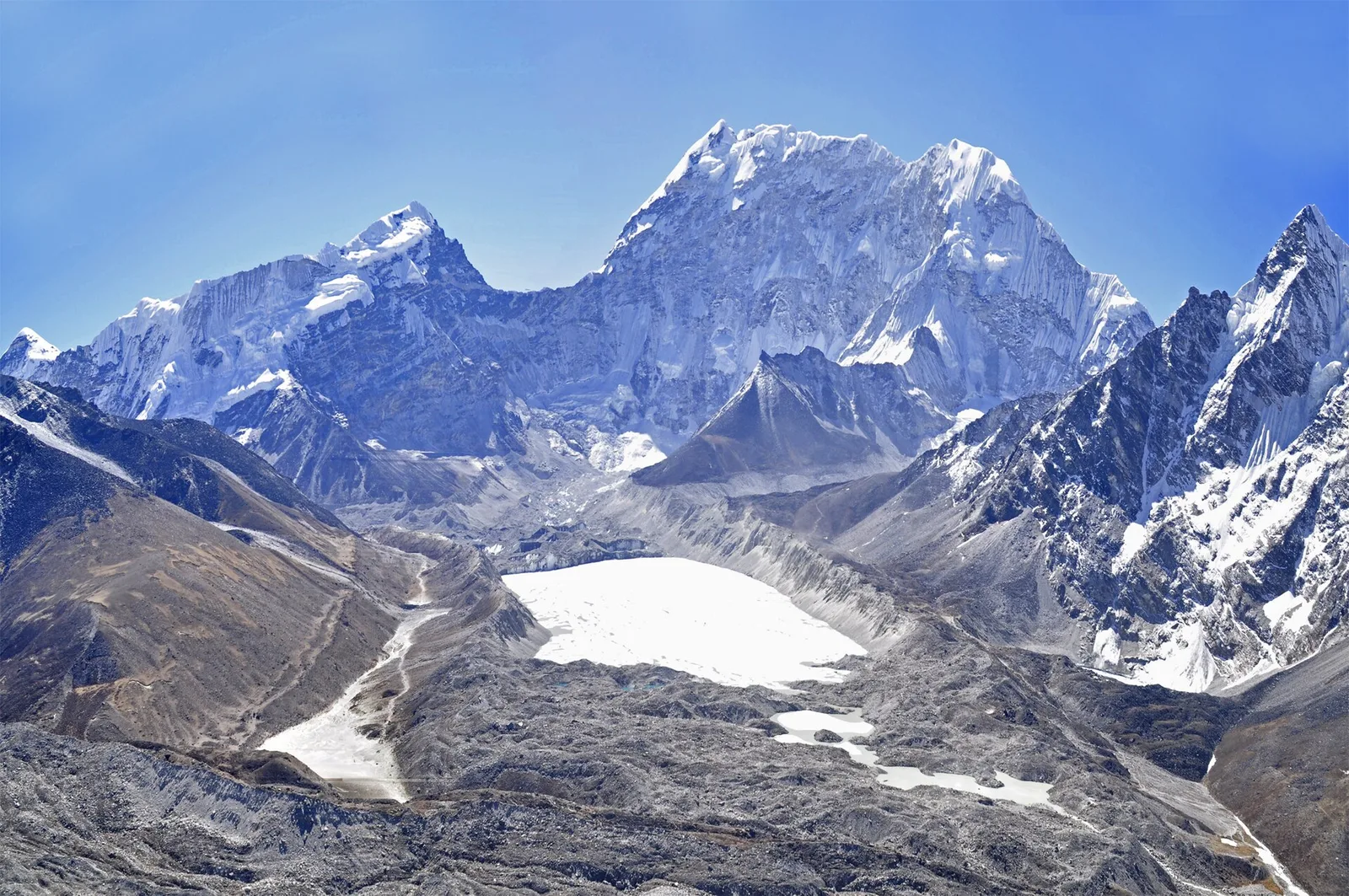
On 16 August 2024, two glacial lakes with no names on any hiking map broke within minutes of each other above Thame village in the Everest region. The resulting flood reached the village in as little as twenty-two minutes. Fifteen kilometres away, the Himalaya's most famous 'doomsday lake' — the one the Nepal Army had spent a decade and a purpose-built siphon system trying to defuse — sat completely untouched.
Key facts
- 459,000 cubic metres of water released — roughly 185 Olympic swimming pools
- Flood wave reached Thame village in 22–32 minutes after the trigger
- ~135 people displaced, around 25 homes and a hydropower plant destroyed
- Losses estimated at $6.18 million in the local rural municipality alone (ICIMOD)
Thame is a small, well-known village on the Everest trekking map — the birthplace of Tenzing Norgay and several generations of celebrated Sherpa climbers. It sits on the route many trekkers take toward Gokyo and the Renjo La pass, well off the direct Everest Base Camp trail but firmly inside the Khumbu. On the morning of the flood, nobody in the village was watching the two lakes that actually caused it, because nobody had reason to. They weren't large. They weren't monitored. They didn't have names on the maps scientists use to track glacial lake risk in the region.
Falls onto a small glacial lake at roughly 4,900m in the Thame watershed.
156,000 cubic metres of water release and fall 120 vertical metres, gaining destructive force.
The wave punches a hole 22m high and 51m wide through a second lake's moraine dam, releasing 303,000 more cubic metres.
Peak discharge exceeds 800 cubic metres per second; debris is traced more than 50km downstream.
Imja Tsho, by contrast, is the lake most people have actually heard of. Formed from the Imja Glacier's meltwater, it grew to roughly 1.28 square kilometres and around 149–157 metres deep by the 2010s, prompting real alarm that a sudden breach could send a flood through villages as far as Pangboche, Tengboche and even Lukla — a watershed the Nepal government estimated held some 96,000 people downstream. In 2016, Nepal Army engineers spent six months at over 5,000m, working two to three hours a day in the thin air, to lower Imja Tsho by 3.5 metres using syphons — described at the time as the highest-altitude disaster mitigation project any army had attempted. It worked. Imja Tsho has not caused a catastrophic flood. The 2024 disaster came from two lakes nobody had put on that list.
What this means for trekkers
What this means for you
The Thame–Gokyo trail has been rebuilt and is open; the damaged sections near Thame and the approach bridges were repaired by 2025 for the following trekking seasons. The lesson from 2024 wasn't that the Khumbu is newly dangerous — it's that the famous, large, closely-watched lake usually isn't the one to fear. ICIMOD and Nepal's disaster agencies have since expanded monitoring beyond the handful of headline lakes toward smaller, higher, harder-to-reach ones. As a trekker, the practical takeaway is simple: book with an operator who tracks real-time trail and weather advisories, avoid camping or lingering right at river confluences below hanging glaciers, and follow your guide's call on any river crossing without arguing the point.
Trails through Thame form part of the classic route to Gokyo Ri and the Gokyo lakes and the wider Everest Three High Passes trek, both of which run with NMA-certified guides who know this ground personally. For a look at how the Khumbu's trails have fared more broadly this year, see our report on trail conditions heading into autumn 2026.
Source: ICIMOD, 'Everest region a hotspot of cryosphere-linked hazards'.
Cover photo: Sharad Joshi via Wikimedia Commons (CC BY-SA 3.0).
来源: ICIMOD
计划徒步?
我们负责许可证、后勤与向导
NMA 认证的本地向导,价格透明,自 1998 年以来 5,000+ 次徒步。告诉我们你的日期,其余的交给我们。


更多「Safety & Advisories」
Safety & Advisories
How Many Acclimatization Days Do You Actually Need for Everest Base Camp? The Real Answer
A 1976 study found altitude sickness in 53% of unacclimatized trekkers near Everest. A 2022 study found it in 55% of trekkers on fixed-schedule group tours. Here's what the research and current medical guidelines actually recommend for your itinerary.
Safety & Advisories
What is the hardest day on the Everest Base Camp trek? An honest answer
Nine in ten returning trekkers name the same one: Lobuche to Gorak Shep to base camp and back — roughly 15 km and 7–9 hours at the trek's highest altitude. Here is why, and the dawn climb that arguably tops it.
Safety & Advisories
Do you need crampons for Everest Base Camp? An honest gear-decision guide
For the standard spring and autumn seasons, no — and most trekkers never touch microspikes either. Here is exactly when a spike earns its place, and why full crampons are overkill.