
Travel Adapters & Power Banks in 2026: What to Pack (and the Airline Rules You'll Break by Accident)
Nepal runs 230V on Type C/D/M plugs, and your power bank flies in the cabin only — up to 100Wh with no approval, 100-160Wh with permission, over 160Wh banned. The 2025 crackdown, the watt-hour maths, and a charging plan that beats teahouse fees.
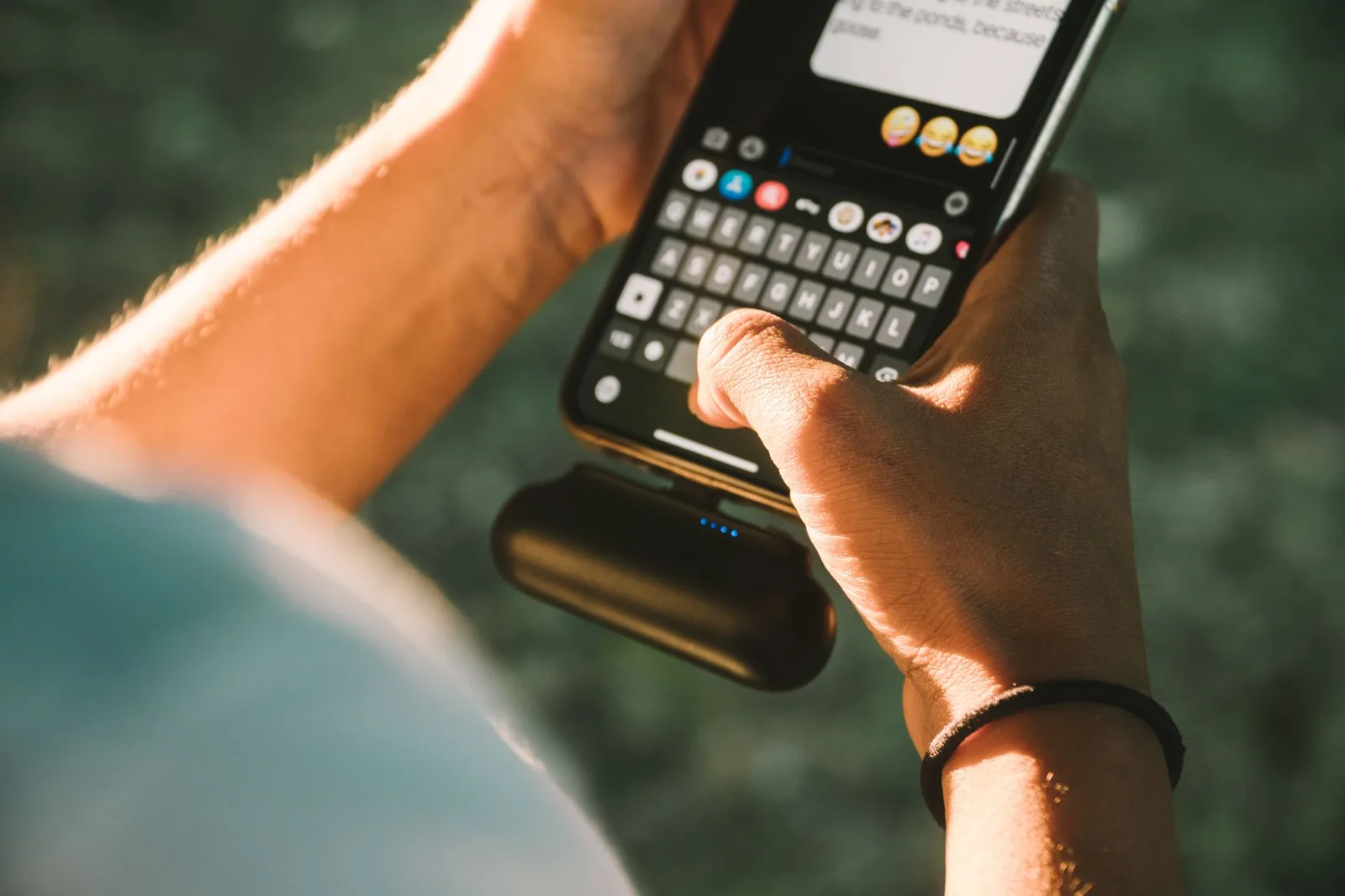
The short version, so you can pack correctly before reading the rest: every power bank and spare lithium battery must travel in your cabin bag, never in checked luggage. Anything up to 100 watt-hours (Wh) needs no permission; between 100 and 160 Wh needs airline approval and is usually limited to two; above 160 Wh is banned from passenger aircraft outright. For the wall, Nepal runs 230 volts at 50 Hz on Type C, D and M sockets, so one good universal adapter covers you here and across most of Asia and Europe. The rules travellers break by accident are almost always about the power bank, not the plug.
Key facts (as of 2026)
- Power banks and spare batteries fly in carry-on only — never in checked baggage (FAA and IATA rules)
- Up to 100 Wh needs no approval; 100–160 Wh needs airline approval, usually a maximum of two; over 160 Wh is not allowed at all
- Most travel power banks are 37–74 Wh (10,000–20,000 mAh), so they are fine — the trap is the giant >100 Wh packs
- Nepal is 230V, 50Hz on Type C, D and M plugs — a universal adapter handles it
- Since a January 2025 cabin fire, Korean and several Asian carriers now ban power banks in overhead bins and forbid charging them from seat USB ports
The plug: Nepal, and everywhere you connect on the way
Nepal's mains supply is 230 volts, 50 hertz, delivered through Type C (the two round pins you see across Europe), Type D (the old three-round-pin British-India standard) and Type M (a chunkier three-pin plug shared with South Africa). In practice a lodge in the Annapurna or Everest region might hand you any of the three, which is exactly why a single universal adapter beats carrying a drawer of country plugs. India uses the same C/D/M mix and the same 230V, so a Nepal–India trip needs nothing extra.
The voltage number matters more than travellers realise. Phone, laptop and camera chargers are almost all "100–240V" switch-mode units — check the small print on the brick — so they run happily on Nepal's 230V with only a plug adapter. What you must not do is plug a 120V-only appliance (some US hair tools) straight into a Nepali socket: adapters change the shape of the pins, not the voltage. For a trek, it is easier to leave the 120V gadget at home.
Adapters: buy the boring universal one
A universal travel adapter with built-in USB-A and USB-C ports is the single most useful thing in a trekker's electronics kit. It covers Nepal's Type C/D/M, UK Type G, continental Europe's C/E/F, US Type A/B and Australia's Type I from one body. Look for a USB-C Power Delivery (PD) port rated at 30W or more if you want to charge a laptop or fast-charge a phone; cheap 5W USB-A-only units will keep a phone alive but crawl on anything bigger. Because a universal adapter fits everything, it does not clamp tightly into every socket, so support the plug rather than letting it dangle from a loose teahouse outlet.
Power banks: the rules you break by accident
This is where good travellers get caught out, because the airline rule is written in watt-hours but the sticker on your power bank shouts milliamp-hours. To convert, take the mAh, divide by 1,000, and multiply by the cell voltage — 3.6 or 3.7V for lithium-ion. A 10,000 mAh bank is about 37 Wh; 20,000 mAh is about 74 Wh; you have to reach roughly 27,000 mAh before you touch the 100 Wh line. So the everyday travel power bank is comfortably legal. The ones that get confiscated are the oversized 30,000 mAh-plus "power stations," which can sit in the 100–160 Wh band (approval needed) or sail past 160 Wh (banned).
| Item | Spec | Airline rule |
|---|---|---|
| 10,000 mAh power bank | ≈37 Wh | Carry-on only; no approval needed |
| 20,000 mAh power bank | ≈74 Wh | Carry-on only; no approval needed |
| 27,000 mAh power bank | ≈100 Wh | Carry-on only; at the no-approval limit |
| Large pack / power station | 100–160 Wh | Carry-on only; airline approval required, usually max 2 |
| Oversized power station | >160 Wh | Not permitted in passenger baggage |
| Any spare battery or power bank | — | Cabin only; never in checked luggage |
Two habits keep you out of trouble at security. Buy a power bank that clearly prints its Wh rating on the case — if an inspector cannot read the rating, they can refuse it. And cap or tape the exposed terminals of any loose spare battery so it cannot short against keys or coins, which is the exact failure that starts fires.
The 2025–26 crackdown you should know about
On 28 January 2025 an Air Busan Airbus A321 caught fire on the ground at Busan, South Korea; all 176 people evacuated safely, and investigators linked the blaze to a lithium power bank stored in an overhead bin. From 1 March 2025 South Korea's airlines banned power banks and e-cigarettes from overhead compartments — you must keep them on your person — forbade charging them from seat USB ports, and capped passengers at five power banks. EVA Air went further and banned using power banks during flights, while Singapore Airlines, Scoot, Thai Airways and China Airlines tightened their own guidance. The direction of travel is clear: keep your power bank in the seat pocket or your pocket, not the bin, and do not charge it in the air.
Charging on the trek: the Nepal reality
On the classic routes — Everest Base Camp, the Annapurna Circuit and Base Camp, Manaslu — teahouses run on a mix of solar, micro-hydro and generators, and they charge you to charge. Expect to pay per device, per hour, and expect the price to climb with the altitude: it is often a couple of US dollars a device down in the valleys and noticeably more at the high lodges near base camp, where every watt has been carried or generated the hard way. Payment is cash, in rupees, and the queue at the single socket in the dining room can be long on a busy night.
The strategy that works: carry a 20,000 mAh power bank (about 74 Wh — legal, and good for four to six phone charges), charge it fully in Kathmandu or Pokhara before you set off, and top your phone from the bank in your sleeping bag rather than paying the lodge each evening. Keep the phone in aeroplane mode and in an inside pocket at night — lithium batteries drain fast and behave badly in the cold. For most trekkers one good power bank plus the occasional paid top-up beats fiddling with a slow solar panel. If you also want to know where you will actually get a signal, our guide to Wi-Fi and connectivity on the Nepal trails maps it out region by region.
Get the electronics right and they disappear into the background — you came for the mountains, not the socket. Planning a trek and want a packing list built around the lodges you will actually stay in? Message our team; we sort the permits, the logistics and the small stuff like where your phone gets charged.
Cover photo: Karl Solano via Pexels (Pexels License).
来源: FAA PackSafe; IATA Lithium Battery Guidance
计划徒步?
我们负责许可证、后勤与向导
NMA 认证的本地向导,价格透明,自 1998 年以来 5,000+ 次徒步。告诉我们你的日期,其余的交给我们。


更多「Gear & Tech」
Gear & Tech
How to Choose a Carry-On Travel Backpack in 2026 (Sizes, Airline Limits & What Matters)
One number decides whether your pack flies free or gets gate-checked. Here are the real 2026 airline carry-on limits, the 40L-vs-45L call, and the features that actually matter — from an operator who fits trekkers into Lukla flights every week.
Gear & Tech
eSIM vs Local SIM in 2026: The Cheapest Way to Stay Connected in Nepal and Across Asia
eSIM, local SIM or roaming? Here's what each really costs in 2026, which one holds a signal on the trek, and how to pick for a Nepal trip or a longer Asia swing.