
Mount Everest's Summit Is Made of Ancient Seafloor — and the Fossils Are Still There
The highest rock on Earth is 450-million-year-old limestone packed with fossilised sea creatures — proof the roof of the world was once the floor of a tropical ocean.
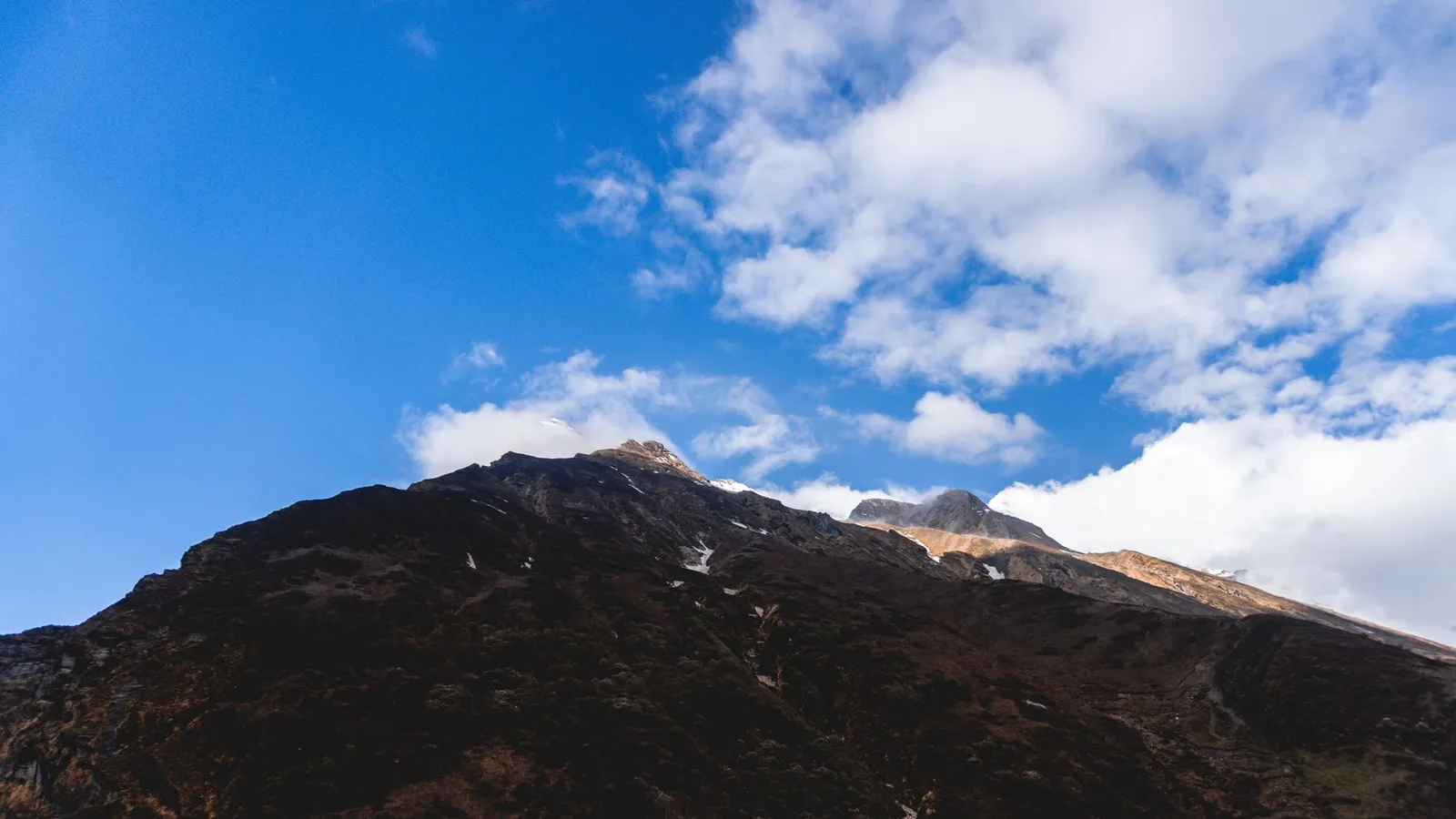
Climb to 8,849 metres above sea level and you are standing, technically, on the bed of an ocean that dried up 450 million years before the first Everest expedition ever left Kathmandu. The final metres of the mountain are not granite or basalt. They are a band of grey limestone called the Qomolangma Formation, and it is stuffed with the fossilised shells of animals that once lived in a warm, shallow sea.
Key facts
- The summit rock is the Qomolangma Formation, a Middle Ordovician limestone laid down roughly 450 million years ago.
- Fossils identified in it include brachiopods, crinoids (sea lilies) and conodonts — all marine animals, none of which could survive anywhere near a mountain.
- Climbers have photographed fossil-bearing beds near the summit, around 8,500m — about 350m below the very top.
- The rock was thrust to the roof of the world when the Indian and Asian continents collided roughly 55–50 million years ago.
How a seafloor ends up 8,849 metres in the air
Geologists call the ancient ocean the Tethys. For tens of millions of years it sat where the Himalaya now stands, and its floor collected the usual debris of a shallow tropical sea — trilobites, brachiopods (small shelled animals related to clams), crinoids, and conodonts, an extinct eel-like creature identified mostly by its tiny tooth-like fossils. According to the International Union of Geological Sciences, the summit beds belong to what researchers call the Toquima-Table Head Realm, a warm, equator-hugging shelf that existed roughly 470–458 million years ago.
Then, around 55–50 million years ago, the Indian tectonic plate rammed into Asia at a geological crawl of a few centimetres a year. The Tethys seabed had nowhere to go but up. Sediment that had settled gently on an ocean floor was folded, cracked and driven skyward until, tens of millions of years later, it became the single highest exposed rock layer on the planet. The Himalaya is still rising today, by a few millimetres a year, as the two continents continue to push against each other.
The Ordovician age of the summit rock was not casually assumed — it was pinned down by geologists studying rock and fossil samples in the 1970s, work later confirmed by researchers including David Harper of Durham University. It means the rock at the top of the world is older than almost anything alive today could imagine: it predates the dinosaurs by roughly 200 million years, and land plants had not yet evolved when this seabed was forming.
Brachiopods, crinoids and conodonts settle on the floor of the Tethys Ocean, becoming the Qomolangma Formation.
The two continental plates collide; the old seafloor begins its slow, grinding journey upward.
Geologists confirm the summit limestone is Ordovician in age — a marine deposit, not a mountain-forming rock.
Nepal and China jointly resurvey the mountain and agree on an official height of 8,848.86m.
What this means for trekkers
What this means for you
You do not need a summit permit, bottled oxygen or a six-figure expedition budget to see this story written in stone. The Khumbu region's trails cut through the same broad geological history — ancient marine and metamorphic rock uplifted into the highest landscape on Earth — and guides on a well-run Everest Base Camp trek will point out the layered, folded rock bands above Dingboche and Lobuche that hint at exactly this deep-time upheaval. It is one more reason the walk to Base Camp is as much an earth-science pilgrimage as a physical one.
For trekkers who want to get closest to that story without a mountaineering permit, the classic Everest Base Camp Trek passes directly beneath the limestone bands of the upper mountain, while the Everest Three High Passes Trek crosses higher terrain with even more exposed geology en route. Either way, you are walking through the folded remains of an ocean that no longer exists, on your way to see the fossils that proved it.
Cover photo: Abdul Kayum via Pexels (Pexels License).
来源: International Union of Geological Sciences (IUGS) Geoheritage
计划徒步?
我们负责许可证、后勤与向导
NMA 认证的本地向导,价格透明,自 1998 年以来 5,000+ 次徒步。告诉我们你的日期,其余的交给我们。


更多「Records & People」
Records & People
There's a Flame in Nepal That Has Burned on Water for Centuries — and Hindus, Buddhists and Sikhs All Call It Holy
At 3,710 metres in Mustang, a natural-gas flame burns beside a glacial spring that has never run dry — one of the only shrines in the Himalaya shared, uncontested, by two major faiths for centuries.
Records & People
The World's Third-Highest Mountain Has, Technically, Never Been Summited
For nearly 70 years, every climber who has reached Kanchenjunga has stopped a few feet short of the true top — a promise kept out of respect for a sacred mountain.
Records & People
Nepal Just Proposed Renaming Annapurna. Here's Why — and Why It Isn't That Simple
Weeks after Nirmal 'Nimsdai' Purja died on Broad Peak, his home municipality wants to rename the world's deadliest 8,000m peak in his honour — a plan that still needs Kathmandu's sign-off and a French family's blessing.