
More Than 200 Climbers Are Still on Everest. Here's Why Nobody Brings Them Down.
Since the first recorded deaths in 1922, upward of 300 people have died attempting the world's highest mountain — and the physics of altitude means most of them never leave it.
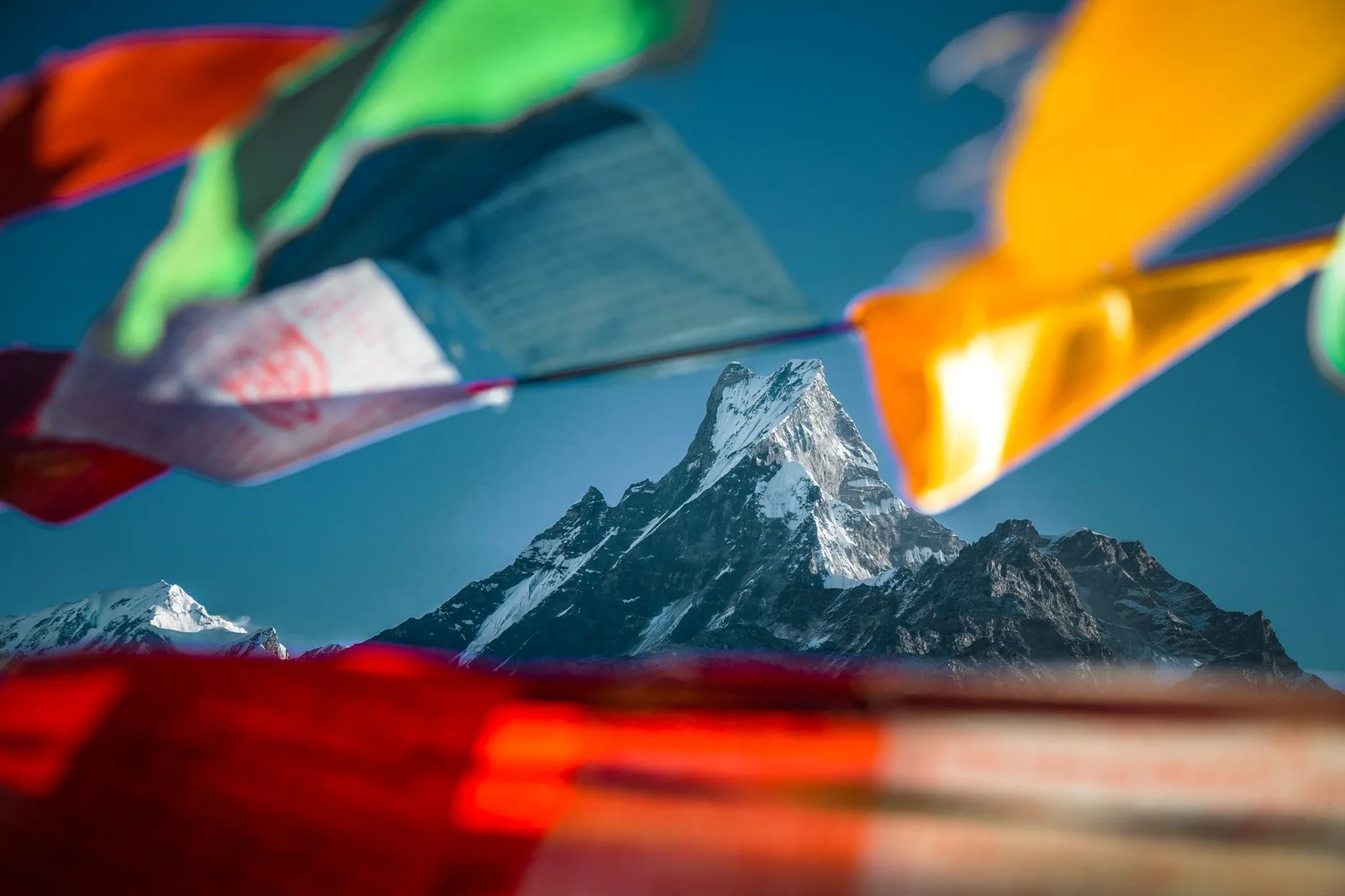
Somewhere above 8,000 metres on Mount Everest, more than 200 climbers are still exactly where they fell — some for over half a century. Not buried, not cremated, not flown home. Just there, in the down suits they died in, preserved by cold and thin air that stop decay almost completely.
Key facts
- More than 300 people have died attempting Everest since the first recorded deaths in 1922
- An estimated 200+ bodies remain on the mountain today, most above 8,000m
- Nepal's 2024 army-led clean-up recovered just 5 bodies, on a budget of over $600,000
- One recovery alone took 11 hours and up to 8 rescuers to move a single body
The reason is simple physiology dressed up as tragedy. Above 8,000 metres — the zone climbers call the “death zone” — the air holds roughly a third of the oxygen available at sea level. The human body cannot acclimatise there; at rest, it is already dying. A climber who collapses in that band is, in practical terms, unreachable by anything but the most determined and dangerous rescue. A body frozen into the ice for years, still wearing crampons, an oxygen mask and a down suit, can weigh well over 220 pounds — more than most teams could safely move even in good weather at sea level, let alone at 8,500m in a gale.
A short history of a very long problem
Everest has been claiming lives since long before anyone reached its summit.
Seven Sherpa porters are killed in an avalanche on the British reconnaissance expedition — the mountain's first recorded fatalities, 31 years before anyone would stand on top.
Edmund Hillary and Tenzing Norgay reach the top and make it back down alive, proving the mountain could be climbed and survived.
Eight climbers die in one afternoon when a sudden blizzard traps multiple expeditions above the South Col.
Eleven climbers die in a single week as photos of a queue of over 200 people near the summit are seen around the world.
Nepali Army teams now run annual high-altitude missions, bringing down a handful of bodies and tonnes of expedition waste each spring.
Some of the dead have, unintentionally, become part of the route. For decades, climbers navigating the upper mountain in low visibility used certain fixed bodies as informal waypoints marking how far there was left to go — a detail that says everything about how normalised death has become on the upper slopes. That is also changing: Nepal has spent recent seasons deliberately removing the best-known of these landmark bodies, partly for dignity and partly because families have finally been able to fund identification and repatriation.
| Factor | Typical figure |
|---|---|
| Rescuers required | Up to 8 |
| Body weight, frozen with gear | 220+ lb |
| Time for one recovery | Up to 11 hrs |
| 2024 Nepal Army clean-up budget | $600,000+ |
| Bodies recovered, 2024 season | 5 |
Climate change is now doing, unintentionally, what money and manpower have struggled to for decades: exposing more of the dead. The Khumbu Glacier, the river of ice that flows past Base Camp, is now retreating up to 65% faster than it was a decade ago, and army teams report that bodies and decades of abandoned expedition gear are becoming more visible as the snow cover thins. Nepal's 2025 season alone saw roughly 11 tonnes of garbage, four bodies and a skeleton brought down from Everest, Lhotse and Nuptse combined.
What this means for trekkers
None of this happens on the trail our guests walk
The death zone begins around 8,000m — more than 2,600 vertical metres above Everest Base Camp itself, which sits at 5,364m and is as close as a standard trek ever gets. Reaching Base Camp on foot involves no fixed ropes, no supplemental oxygen and no summit push; it is a high-altitude walk, not a mountaineering expedition, and the numbers above describe an entirely different undertaking above the Khumbu Icefall. Altitude sickness is the real, manageable risk on the trek — the same logic behind Nepal's two-permit system for the Khumbu and why proper acclimatisation days are non-negotiable on any honest itinerary.
Everest's dead aren't a curiosity for the mountain's marketing — they're the reason every serious operator, including ours, insists on slow ascent profiles, real oxygen-saturation checks, and guides with the authority to turn a client around. The trail to Base Camp shows you the same skyline the climbers above are fighting for, from a place where the mountain has never actually killed anyone for lack of oxygen. See how our 14-day Everest Base Camp itinerary paces the altitude, or compare it against the faster helicopter-return option if time is tight.
Source: CBS News, reporting on Nepal's 2024–25 Everest clean-up campaigns.
Cover photo: Ashok J Kshetri via Pexels (Pexels License).
来源: CBS News
计划徒步?
我们负责许可证、后勤与向导
NMA 认证的本地向导,价格透明,自 1998 年以来 5,000+ 次徒步。告诉我们你的日期,其余的交给我们。


更多「Records & People」
Records & People
Two Men Stepped Off the Summit of Everest — Not to Climb Down, But to Fly
In 2011 a Nepali paraglider pilot launched from Everest's 8,848m summit in the highest free flight ever recorded — and today thousands of ordinary trekkers fly the very same Himalayan thermals from a hillside above Pokhara.
Records & People
The Bird That Crosses the Himalaya in Eight Hours, Flying Higher Than Everest Base Camp
GPS trackers finally proved how bar-headed geese cross the world's highest mountains twice a year, nonstop, at altitudes that would leave an unacclimatized human unconscious.
Records & People
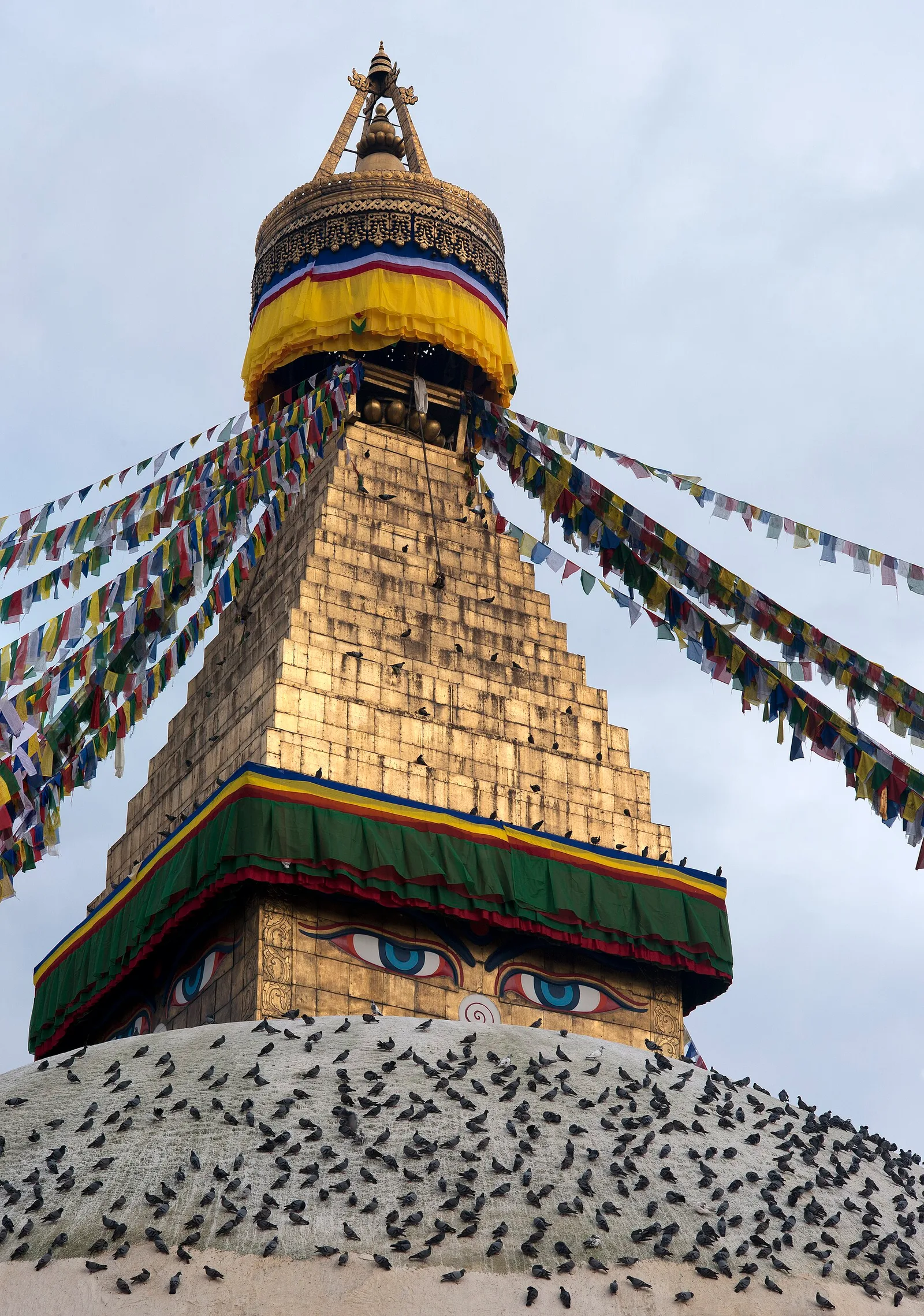
Why Four Pairs of Giant Painted Eyes Watch You From Every Direction in Kathmandu
The all-seeing eyes atop Nepal's Boudhanath Stupa are not decoration — every element, from the nose shaped like a Nepali numeral to the 13 gold tiers above, encodes a specific step toward enlightenment.