
Is the Tsum Valley Trek Affected by the 2026 Nepal Floods?
Short answer: no. Tsum Valley is in the Manaslu region of Gorkha district, on the Budhi Gandaki — a separate valley from the flood-hit Bhote Koshi in Rasuwa. The trail is running normally; the one honest caveat is the monsoon approach road.
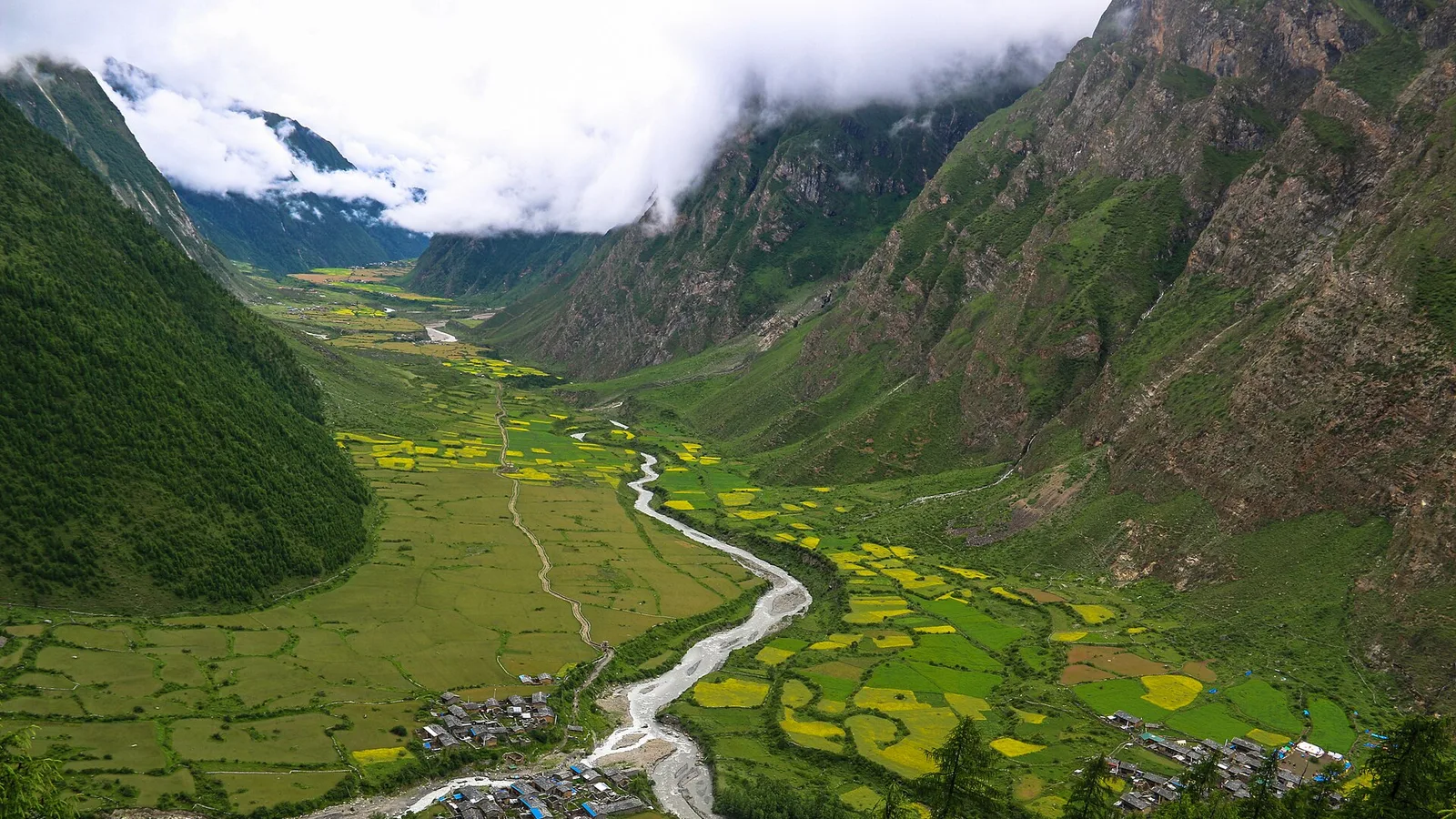
The honest answer up front: no. The Tsum Valley trek is not affected by the 2026 floods, and the trail is running normally. This one needs one line of clarification, because people hear "restricted valley near the Tibet border" and assume it is next to the disaster. It is not. Tsum Valley is in the Manaslu region of Gorkha district, on the Budhi Gandaki river. The 26 August flood hit the Bhote Koshi in Rasuwa — a different valley, a different district, one range to the east. Tsum is Manaslu-adjacent, not Rasuwa-adjacent. That distinction is the whole answer.
Tsum Valley — the three questions that matter
- Is it affected by the flood? No. Tsum sits off the Manaslu approach in Gorkha, on the Budhi Gandaki. The flood was on the Bhote Koshi in Rasuwa — a separate river valley to the east. The Tsum region itself was not hit.
- Can I get there right now? The trailhead is reached from Kathmandu by road via Arughat / Soti Khola to Machha Khola. Here is the honest caveat: that rough jeep road can be unreliable, and occasionally impassable, in heavy monsoon rain from landslides on the lower gorge. The trail is fine; the drive in is the variable. We confirm road status on the day.
- When should I actually go? October–November and March–April. This is a two-week-plus restricted-area trek best done in the clear seasons, not the monsoon.
Where Tsum Valley is — and why the flood didn't touch it
Tsum is a sacred, sealed-off side valley — a Buddhist beyul where, by long tradition, it is forbidden to kill any animal. It branches north-east off the main Manaslu approach along the Budhi Gandaki, deep in Gorkha district. The Budhi Gandaki is a separate valley system from the Bhote Koshi: they run down different sides of the central Himalaya and only meet the wider river network far downstream. The flood surge in Rasuwa came down the Bhote Koshi into the Trishuli in the north-centre of the country; it did not travel up the Budhi Gandaki to Gorkha. Different valley, different approach, one range apart.
I'll give you the honest version rather than a marketing one. The Manaslu–Tsum region as a whole reported normal trail conditions after the August floods, and restricted-area permit processing continued as usual. The genuine monsoon weakness here is not the flood at all — it is the access road. The lower Budhi Gandaki gorge road to Machha Khola is notorious for going soft or blocking after heavy rain, every monsoon, flood year or not. That is why we plan buffer days and why late August is not the season for this trek anyway.
| Region / route | Status | What to do |
|---|---|---|
| Tsum Valley (Manaslu / Gorkha) | Unaffected — trail normal | Plan for autumn; allow buffer days for the monsoon approach road |
| Manaslu Circuit (same approach valley) | Open, trail conditions normal | Same caveat — watch the Kathmandu–Machha Khola road in heavy rain |
| Rasuwa / Langtang corridor | Flood-hit — access cut | Defer; follow the live tracker |
| Kathmandu | Unaffected — normal | Fly in and drive out to Gorkha as planned |
Permits — unchanged by the flood
Tsum Valley is a restricted area: you need a Restricted Area Permit, a minimum of two trekkers, a registered agency and a licensed guide, plus the Manaslu Conservation Area permit. If you are combining Tsum with the Manaslu Circuit you also carry the Manaslu RAP. None of this changed because of the floods — restricted-area permits are being issued normally in Kathmandu. Any "permit disruption" you have read about relates to Langtang and Rasuwa, not Gorkha.
How we run Tsum safely
Tsum is a slow, cultural trek — monasteries, medieval stone villages, and a valley that feels a century removed from the road. We run it with a licensed guide who knows the Budhi Gandaki, plan the drive in with buffer days so a wet, slow road never forces a rushed schedule, and keep the itinerary flexible enough to absorb a lost half-day on the approach. The walking itself keeps to the valley terraces and stone trails above the river; the hazard we actively manage on this route is the monsoon road, not the high trail.
For the whole-country picture we keep a live Nepal trekking conditions page, the flood event is documented in our Bhote Koshi flash flood report, and the provisional, still-rising figures are on our Nepal floods live updates tracker — we link you there rather than freeze a number into this piece while it is still moving.
Planning Tsum Valley for autumn? Ask us first
We would rather tell you the honest road-and-weather picture for your dates than push a booking. Message us on WhatsApp, use the contact form, or read the full route, permits and price on our Tsum Valley Trek (16 days) page. No pressure — if the timing isn't right, we'll say so.
Cover photo: Tsephu via Wikimedia Commons (CC BY 4.0).
计划徒步?
我们负责许可证、后勤与向导
NMA 认证的本地向导,价格透明,自 1998 年以来 5,000+ 次徒步。告诉我们你的日期,其余的交给我们。

更多「Safety & Advisories」
Safety & Advisories
Is the Tilicho Lake Trek Affected by the 2026 Nepal Floods?
No — Tilicho Lake is an Annapurna-region trek in Manang, on the Marsyangdi, well away from the flood-hit Bhote Koshi in Rasuwa, and it is running normally. Here is why the trail is unaffected, plus the one monsoon road caveat.
Safety & Advisories
Is the Kanchenjunga Trek Affected by the 2026 Nepal Floods?
Short answer: no. The Kanchenjunga trek is in the far east of Nepal, in Taplejung district, roughly 600 km from the flood-hit Rasuwa corridor. It is a different region on a different river, and it is running normally.
Safety & Advisories
Is the Khopra Danda Trek Affected by the 2026 Nepal Floods?
Short answer: no. The Khopra Danda (Khopra Ridge) trek sits in the Annapurna region, reached from Pokhara, and is running normally. The 26 August flood hit the Rasuwa / Langtang corridor about 200 km east — a completely different river system.