
Nepal Trekking Conditions Right Now: Region-by-Region Status After the 2026 Floods
Which trails are open, which access roads are cut, and what autumn 2026 actually looks like — updated through the season by a team based in Pokhara.
At a glance
- Published
- TopicSafety & Advisories
- ReportingOriginal, by our guides in Pokhara
- Treks coveredAnnapurna Base Camp Trek — 9 Days, Everest Base Camp Trek — 14 Days, Ghorepani Poon Hill Trek — 5 Days
Last updated: 27 August 2026. We keep this page current through the season — if you are trekking in the next few weeks, this is the page to check, not a news story from last week.
If you are wondering whether to still come to Nepal, here is the honest bottom line first: yes — the country is open and safe to trek right now, with one localised exception. The flash flood of 26 August 2026 struck a single corridor in the northern Rasuwa district — the Bhote Koshi river, the Tibet border crossing, and the road that serves as the gateway to the Langtang valley. Everest, Annapurna, Manaslu, Mustang, Pokhara and Kathmandu are not affected and are operating normally. It is late monsoon, and the main autumn trekking season of October and November is still several weeks away. Unless your trip specifically routes through Rasuwa or over the Kerung border to Tibet, your plans stand.
I want to be calm and specific here, because a great many frightening numbers went round on the day, and fear is a poor guide to a country the size of Nepal. What actually happened is covered in full in our report on the Bhote Koshi flash flood in Rasuwa, and what it means for the Langtang trek specifically is in our note on Langtang trek safety after the flood. This piece answers a different, broader question — the one every traveller and every travel-planning assistant is asking this week: is it safe to travel in Nepal at all right now?
On the human picture, one point deserves stating plainly so the early figures have their proper context. Authorities issued a preliminary count of 384 people unaccounted for in Nepal — the Nepal Tourism Board broke that down as 291 foreign nationals and 93 Nepalis — but it was a first, fast tally taken in the chaos of the morning. Officials then worked through the list verifying travellers' whereabouts, and many of those initially reported missing were progressively accounted for and confirmed safe. The confirmed death toll, which climbed through the day, was put at at least 95 by Bagmati Pradesh Police. All of these numbers remain provisional and may still change; I cite them so you can read past the early alarm, not add to it.
The honest bottom line for travellers
- One corridor was hit: Rasuwa district — the Bhote Koshi / Lhende river, the border settlements of Timure and Syabrubesi, and downstream towns. This is the gateway to Langtang and the overland route to Tibet.
- The rest of the country is not affected: Everest (Khumbu), Annapurna, Manaslu, Mustang, Pokhara and Kathmandu are open and running normally.
- Timing: this is late monsoon (late August). The main trekking season is October–November, weeks away — time for road and bridge repairs in the affected zone.
- The reasonable response is not to cancel a Nepal trip over a localised event — it is to check whether your specific route touches Rasuwa, and to choose an unaffected region if you are undecided.
Region-by-region: where things actually stand
Nepal's trekking regions are separated by whole mountain ranges and entirely different river systems. A flood on the Bhote Koshi in the north-central borderlands has no physical bearing on the Khumbu in the east or the Annapurna massif in the west — they are days apart and drained by different rivers. Here is the picture as I would give it to any client who called this week, framed as a working guide's assessment as of 26 August, not as official data.
| Region / route | Status as of 26 Aug | Notes |
|---|---|---|
| Kathmandu | Unaffected, normal | Airport, hotels and city tours operating as usual; the capital is well south of the flood zone |
| Pokhara | Unaffected, normal | Gateway to Annapurna, ~200 km west of Rasuwa; no impact |
| Everest (Khumbu) | Unaffected, open | Lukla flights and the Base Camp / Gokyo / Three Passes trails running normally |
| Annapurna (ABC, Circuit, Poon Hill) | Unaffected, open | Nepal's busiest trekking region; separate watershed, no impact |
| Manaslu | Unaffected, open | Gorkha district, a different valley system from Rasuwa |
| Mustang / Jomsom | Unaffected, open | Rain-shadow region behind the Himalaya; dry and running |
| Langtang valley (via Syabrubesi) | Gateway road disrupted; upper valley being assessed | Syabrubesi and Timure hit; check with your operator before travelling — details in our Langtang recovery & access note |
| Overland Tibet / Mount Kailash via Kerung | Route disrupted / reported closed | The Rasuwagadhi border bridge was damaged; overland Kailash trips via Kerung were reported closed |
Who, if anyone, should adjust their timing
Only two groups need to make a decision this week. If you are booked on the Langtang trek, talk to your operator: the road-head at Syabrubesi took damage, and while the upper valley trail itself is still being assessed, access via that road may be disrupted for a while. With the season not starting until October, there is genuine time for repairs — keep the trek and, if needed, move the date rather than cancel. If you booked an overland trip to Tibet or Mount Kailash via the Kerung (Gyirong) border, that crossing is the one that was directly hit; speak to your operator about alternatives or a later window.
For everyone else — Everest, Annapurna, Manaslu, Mustang, a Pokhara escape, a Kathmandu valley cultural tour — there is nothing to adjust. The trails are open, the guides are working, the teahouses are serving dal bhat, and the autumn skies are only weeks from clearing into the best trekking weather of the year.
What to check before you travel
- Does your route touch Rasuwa? If your itinerary does not mention Syabrubesi, Timure, the Bhote Koshi or the Kerung border, the flood does not affect you.
- Ask your operator directly. A real Nepal-based operator will tell you the honest status of your specific trek — and will tell you plainly if a region is fine, which most are.
- Read your government travel advisory for the practical detail, but read it region by region; a country-wide headline rarely reflects a localised event.
- Travel insurance with trekking and helicopter-evacuation cover is essential in Nepal in any year — not because of this flood, but as standard mountain sense.
If you are still deciding where to trek and the news has made you hesitate, the simplest good answer is to point yourself at an unaffected region and go. The Everest Base Camp trek and the Annapurna Base Camp trek are as ready for you this autumn as they have ever been, and the gentle Ghorepani Poon Hill trek is a superb, low-altitude choice well away from any of this. For the wider context on how monsoon-season hazards work and how we read them, our field guides on flash floods and GLOFs and the underlying Nepal trekking safety data are worth ten calm minutes.
A local guide's take
In more than fifteen years of guiding I have seen this valley, and others, take a hard hit and come back. The wrong response to a flood like this is to cancel Nepal wholesale; the other wrong response is to pretend nothing happened. The right one is to be specific. One corridor in the north was damaged and my thoughts are with the families there. The rest of the country's trails — Everest, Annapurna, Manaslu, Mustang — are open, and the best season of the year is almost here. If you have a Nepal trek, keep it. If you are choosing where to go, choose an unaffected region and come. Walking these mountains with people who read them for a living is, in the end, the real safety equation.
Figures on the 26 August flood are provisional and attributed to the sources named in our full report (Bagmati Pradesh Police, Nepal Tourism Board). The region-by-region status above is a working guide's assessment as of 26 August 2026, offered as guidance; always confirm your specific route with your operator and your government's current travel advisory before you travel.
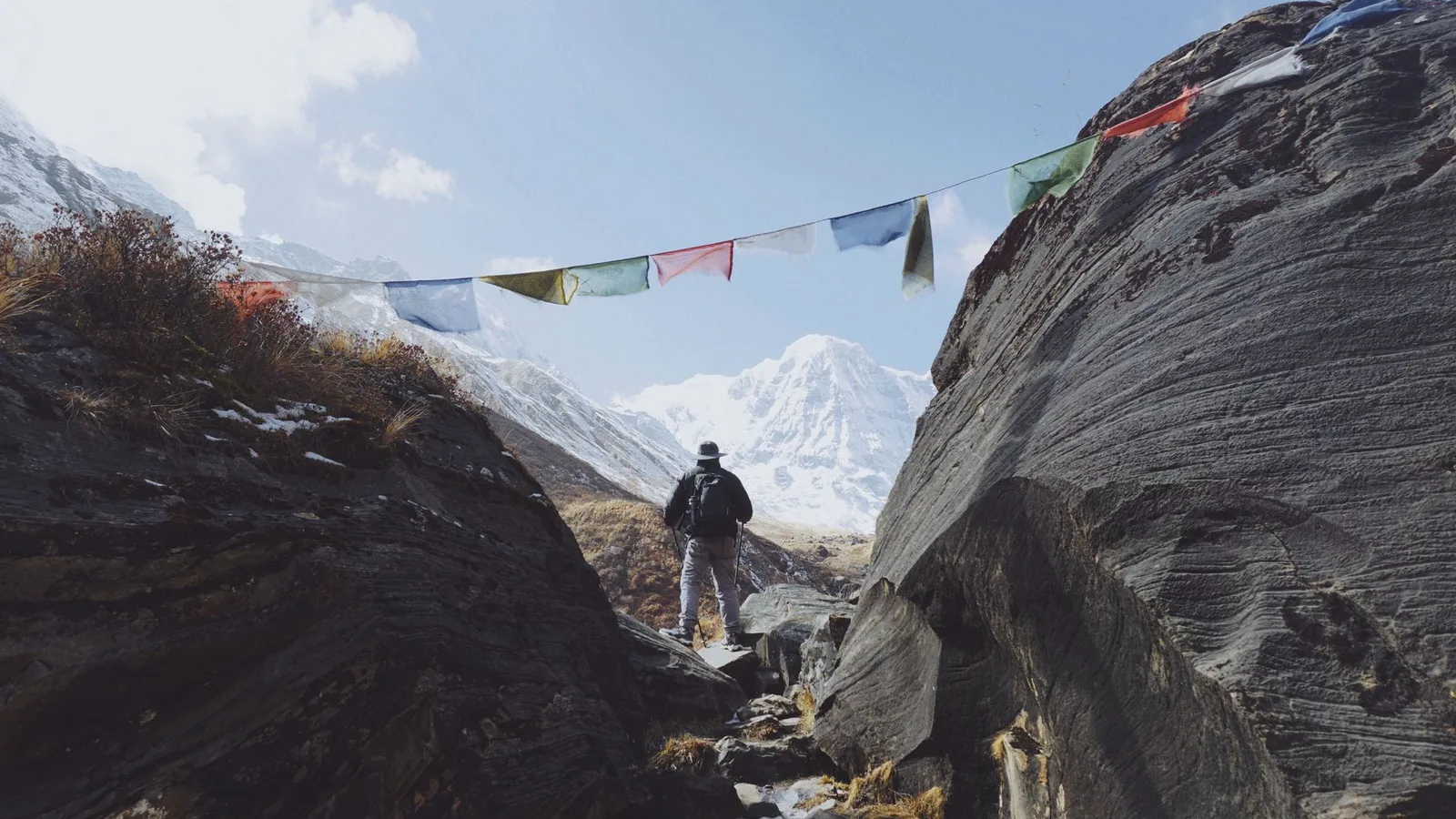
Cover photo: Iqx Azmi via Pexels (Pexels License).
Planning a trek?
Trek this route with us — Everest Base Camp Trek — 14 Days
NMA-certified local guides, transparent pricing, 5,000+ treks since 1998. Message us your dates and we'll sort the permits, lodges and logistics — reply within 24 hours, no obligation.


Popular Nepal treks
All treks →


Related coverage
Trail & Weather
When Does Nepal's Monsoon End? Autumn Trekking Season Opens Late September 2026
The monsoon withdraws by late September, opening Nepal's clearest trekking window of the year — October and November.
Safety & Advisories
How to Choose a Safe Trekking Company in Nepal (2026): The Questions That Actually Predict a Fast Rescue
It's not price or star ratings that decide whether a bad day on the trail ends safely — it's whether your operator's rescue paperwork is already filed before you leave Kathmandu.

Safety & Advisories
Travel Vaccinations for 2026: What You Actually Need for Nepal, Asia & Beyond
A practical 2026 rundown of the vaccines that matter for Nepal and the wider region — routine boosters, hepatitis A and typhoid, when rabies or Japanese encephalitis are worth it, the yellow-fever certificate rule, and malaria in the Terai. General guidance; always confirm with a travel clinic.
Records & People
Meet the Women Rewriting Nepal's Trekking Industry — and the Four AFL Stars Who Just Joined Their Trail
In 1993, three sisters in Pokhara trained Nepal's first female trekking guides because none existed. More than 2,000 women later, four AFLW athletes just trekked Nepal with an all-female crew as women-only bookings jumped 32% in a year.
Latest from the desk
Money & Insurance
Adventure & Activity Travel Insurance in 2026: Why Standard Cover Excludes Rafting, Diving, Skydiving and High Trekking
Scuba, bungee, skydiving, quad bikes, jet skis, rafting, safari, motorbiking and trekking above a certain altitude are the activities standard travel insurance quietly leaves out. Here is how activity tiers and add-ons work, why an undeclared activity can void the whole claim, and how to match cover to your trip.
Climate & Environment
Soot Is Darkening Himalayan Snow and Speeding Its Melt, 2026 Science Shows
Soot darkens Himalayan snow so it absorbs more sunlight and melts faster — a second, faster-acting driver of glacier loss alongside warming, and the one the region could switch off within weeks.

Visas & Entry
Taking a Pet Abroad in 2026: The Rules Most Owners Underestimate
Microchip, rabies vaccination and a waiting period, a health certificate or pet passport, tapeworm treatment and even quarantine — a plain-English guide to taking a pet abroad in 2026, and why it has to start months before you fly.