
重大 · Safety & Advisories
Mount Kailash: The Sacred Peak No One Has Ever Climbed, and Why Pilgrims Keep Getting Stranded in Nepal on the Way
Four religions call it the center of the universe. In 2026, Indian pilgrims travelling the Nepal route got stuck in Kathmandu without the right paperwork — here's the whole story, verified.
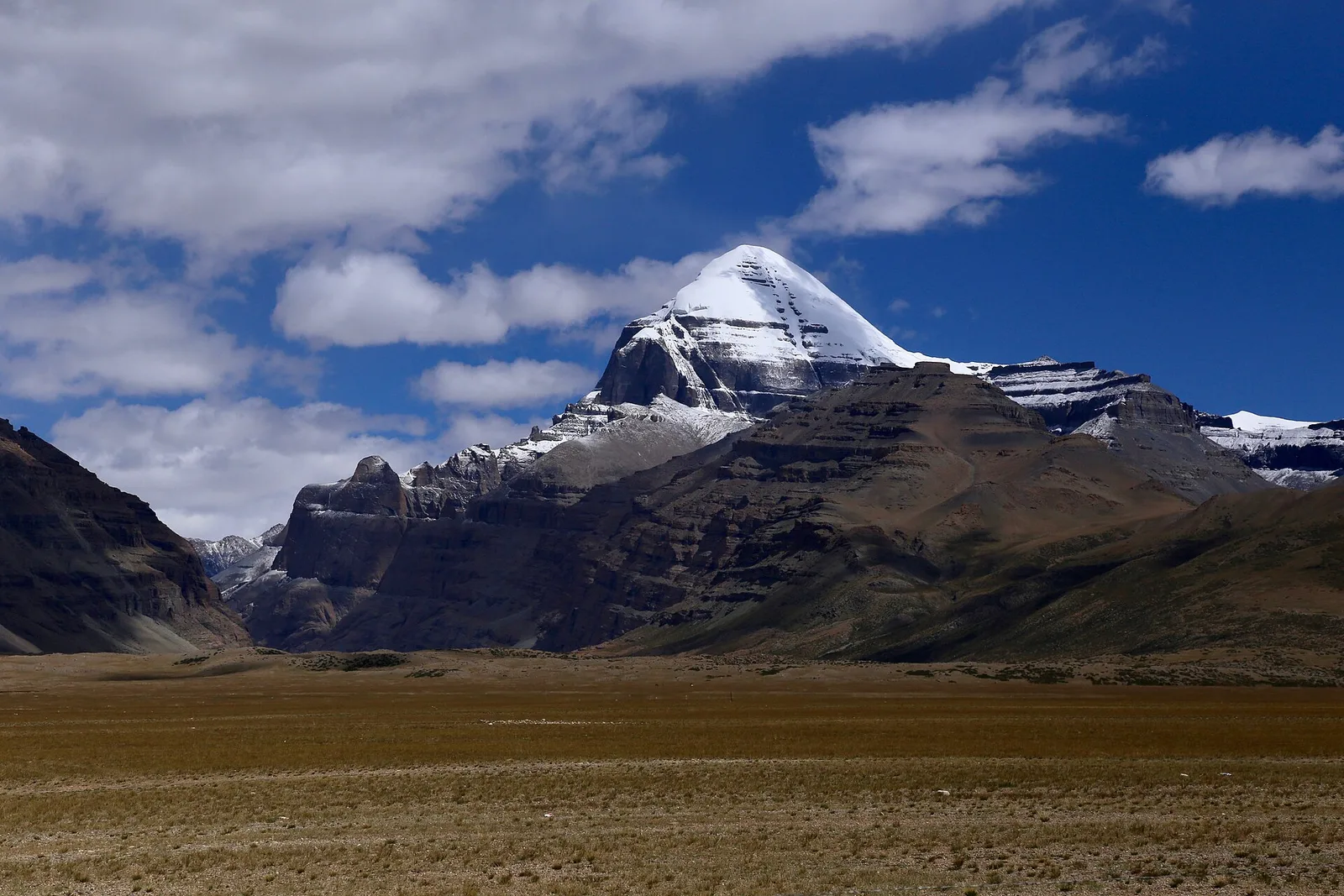
Nobody has ever stood on the summit of Mount Kailash. Not because no one is strong enough — mountaineers who have soloed Everest without bottled oxygen have called it an easy scramble by comparison — but because four of the world's religions quietly agreed, decades ago, that some summits should stay untouched. In 2026 that reverence collided with something far more mundane: paperwork. Indian pilgrims travelling the Nepal route toward Kailash got stuck in Kathmandu this summer without the Chinese permits they needed to finish the journey, and New Delhi has just told parliament why.
Key facts
- Mount Kailash rises 6,638m (21,778ft) in western Tibet, a short land crossing from Nepal's northern border.
- It has never been climbed — the only major Himalayan-scale peak kept permanently off-limits by choice, not difficulty.
- Hindus, Buddhists, Jains and followers of Bon all revere it as the center of the universe.
- On 27 June 2026, India's Ministry of External Affairs issued a formal advisory after pilgrims travelling via Nepal were stranded in Kathmandu without valid Chinese entry permits.
Kailash sits in a remote valley of the Tibetan plateau called Ngari, just across the border from Nepal's Humla and Mustang districts. Tibet has no international airport near the mountain, so the great majority of foreign pilgrims — and nearly all Indian ones — fly into Kathmandu first, then travel on to the Chinese border. That single choke point is where this year's trouble started.
What makes the mountain unusual isn't its height. Several unclimbed 6,000-metre peaks still exist worldwide, mostly because no serious expedition has bothered with them. Kailash is different: it has been offered to climbers, and refused. In the 1980s, Chinese authorities gave Reinhold Messner — the first person to summit Everest solo and without supplemental oxygen — permission to attempt it. He turned it down flat. 'If we conquer this mountain, then we conquer something in people's souls,' he said, suggesting climbers go find something harder instead. In 2001, China issued a permit to a Spanish team anyway. Hindu, Buddhist and Jain organisations launched a coordinated worldwide protest, and within weeks Beijing withdrew the permit and formally banned mountaineering on Kailash for good. No government has granted one since.
Four religions, one mountain
In Hindu belief, Kailash is the seat of Shiva and his consort Parvati. Tibetan Buddhists identify it with Mount Meru, the axis at the centre of the cosmos. Jain scripture holds that Rishabhanatha, the first Tirthankara, achieved spiritual liberation on its slopes. In Bon, Tibet's pre-Buddhist faith, it is the axis mundi, the pillar linking earth and sky. The pilgrimage itself reflects that belief: devotees walk a 52km kora circling the base on foot, and completing the circuit — never reaching the top — is the entire point of the journey.
Hindu, Buddhist, Jain and Bon traditions each independently place Kailash at the spiritual centre of the world.
Offered a Chinese permit to attempt the first ascent, Reinhold Messner refuses.
China allows a Spanish team to attempt Kailash; global protest reverses the decision within weeks, and mountaineering on the peak is banned outright.
The Kailash Mansarovar Yatra halts for five years through the pandemic and a non-renewal of the bilateral arrangement.
688 Indian pilgrims complete the officially organised Yatra for the first time since 2019.
Pilgrims who booked through private operators without confirmed Chinese permits are left stuck in Nepal; India's MEA issues a formal advisory on 27 June.
What this means for anyone travelling the Nepal route
What this means for trekkers
Kailash sits inside Chinese-administered Tibet, so a Nepal-route pilgrimage needs two separate sets of paperwork: Nepal entry documents, and a Chinese group visa plus a Tibet Autonomous Region permit arranged in advance through a government-registered operator. India's Ministry of External Affairs told parliament this year's stranded travellers had booked through private operators without securing the Chinese side first, then discovered in Kathmandu that Tibet was, for them, still closed. Its advice going forward is blunt: don't leave home until every permit is confirmed in writing.
The same principle runs through Nepal's own restricted areas — Upper Mustang, Manaslu, Dolpo, all a short flight or drive from where Kailash-bound pilgrims transit — where a licensed operator secures the permit before you fly, not after. For a country whose highlands sit this close to a border that isn't always predictable, that is the difference between a pilgrimage and an expensive layover in Kathmandu. Trekkers heading into Nepal's own trans-Himalayan desert in Upper Mustang cross the same rain-shadow geology that shapes the Tibetan plateau, without ever touching a border that can close without notice.
Source: The Tribune
Cover photo: Jean-Marie Hullot via Wikimedia Commons (CC BY-SA 4.0).
来源: The Tribune
计划徒步?
我们负责许可证、后勤与向导
NMA 认证的本地向导,价格透明,自 1998 年以来 5,000+ 次徒步。告诉我们你的日期,其余的交给我们。


更多「Safety & Advisories」
Safety & Advisories
Is the Everest Base Camp Trek Actually Dangerous? What the Medical Data Says
No ropes, no crevasses on the standard route — but four in ten trekkers report a medical incident. Here is what a peer-reviewed study of Everest trekkers actually found.
Safety & Advisories
The Everest Village That Vanished in 22 Minutes — and the Famous 'Doomsday Lake' Had Nothing to Do With It
For a decade, the Nepal Army raced to defuse Imja Tsho before it could flood the Khumbu. In August 2024, the real disaster came from two lakes with no names on any map.
Safety & Advisories
How Many Acclimatization Days Do You Actually Need for Everest Base Camp? The Real Answer
A 1976 study found altitude sickness in 53% of unacclimatized trekkers near Everest. A 2022 study found it in 55% of trekkers on fixed-schedule group tours. Here's what the research and current medical guidelines actually recommend for your itinerary.