
How Nepal's Rescue Teams Reached Flood Survivors in Rasuwa
An account of the air-rescue operation after the 26 August 2026 Bhote Koshi flood: who coordinated it, how helicopters reached cut-off villages, and the numbers reported so far.
📍 Developing story — live updates
The 2026 Nepal floods are a developing, nationwide emergency and figures are rising. For the latest verified death toll, missing and rescued numbers, and trek status, follow our continuously-updated Nepal Floods 2026: Live Updates.
When the Bhote Koshi surged out of Tibet and tore through Rasuwa on the morning of 26 August 2026, the villages it hit — Timure, Syabrubesi, Mailung, and settlements downstream toward Nuwakot — were among the hardest places in Nepal to reach even on an ordinary day. Roads and bridges were gone within minutes. What followed was one of the largest air-rescue mobilisations the district has seen. This is an account of how Nepal's rescue teams actually reached the people cut off by the water, drawn from what the security forces and disaster authorities have reported so far. Every figure here is provisional and attributed; the picture was still changing as operations continued.
For the full account of the disaster itself — the cause, the toll, and the cross-border damage — see our companion report, the Bhote Koshi flash flood of 26 August. This piece is about the response.
Key facts
- Nepal mobilised the Nepal Army, the Armed Police Force and Nepal Police, with helicopters and medical teams, coordinated by the National Disaster Risk Reduction and Management Authority (NDRRMA).
- The Nepal Army reported at least around 88 people rescued by air in the first push; as operations continued into the following day, the tally rose past 100 (as reported).
- The government said 13 helicopters — Nepal Army and private — were deployed across Rasuwa and Nuwakot; where aircraft could not land, people were lifted out in baskets (as reported).
- The Nepal Red Cross activated emergency response teams and deployed relief; UN teams and partners offered support.
Who reached the valley first
The response was a joint operation rather than any single agency's. Nepal mobilised the Nepal Army, the Armed Police Force and Nepal Police together, with helicopters and medical teams sent toward the cut-off villages along the Bhote Koshi and the Trishuli. The NDRRMA convened emergency coordination — its committee met under the Home Minister to review rescue and relief, as reported by OnlineKhabar. The Nepal Red Cross, which keeps district-level response teams for exactly this kind of event, activated its volunteers and began moving relief supplies.
That division of labour matters on the ground. With the road-head at Syabrubesi and the border road to Timure both severed, the security forces on foot could secure what was reachable and account for the injured, while the helicopters did the work that only helicopters could — reaching people stranded on rooftops, in tunnels and on isolated stretches of riverbank where no vehicle could go.
| Agency | Role |
|---|---|
| Nepal Army | Air search and rescue; helicopter airlifts and basket lifts from cut-off villages |
| Armed Police Force | Ground rescue and border-post response (nine APF personnel at the Timure outpost were reported missing) |
| Nepal Police | Ground search, evacuation and local coordination |
| NDRRMA | National coordination; emergency committee meeting under the Home Minister |
| Nepal Red Cross | Emergency response teams and relief distribution |
| Private helicopter operators | Additional airlift capacity within the deployed fleet |
The airlift, and why it was so difficult
The scale of the flying was significant for a single district. The government reported deploying 13 helicopters — a mix of Nepal Army and private aircraft — across Rasuwa and neighbouring Nuwakot. On the day after the flood, the Nepal Army continued operations with five helicopters and reported rescuing 97 people, including three airlifted from the Mailung tunnel and 14 from Timure, according to OnlineKhabar.
It was not straightforward flying. In several places the helicopters could not put down at all, and people were reported to have been lifted out in baskets rather than from a landing. At Timure, a helicopter sent to bring people out returned to Kathmandu without landing: the floodwaters had swept away the local helipad, leaving no safe place to touch down. Those details are worth sitting with, because they are the honest texture of a mountain rescue — not every sortie succeeds, and the terrain that makes Rasuwa beautiful is the same terrain that makes reaching it hard.
The numbers, and why they kept moving
Rescue tallies in a fast-moving disaster are a running count, not a final one, and they climbed through the operation. Early reporting from Ratopati put the number rescued by air at around 88. As sorties continued, OnlineKhabar reported more than 100 people brought out — 85 from Dhunche, 13 from Timure, five from Mailung, four from Betrawati and three from Trishuli, by Nepal Army and private helicopters.
These are the figures to hold onto, and to hold loosely: they are as reported by Nepali outlets citing the security forces, and they were still being updated. It is also why the separate "missing" count needs care. The Nepal Tourism Board's preliminary figure of 384 people unaccounted for was exactly that — preliminary — and authorities worked to verify travellers' whereabouts, with many initially listed as missing progressively confirmed safe. Rescue and verification run in parallel, and the reassuring number is often the one that arrives last.
Relief and the international response
Behind the airlifts, the slower work of relief was already under way — Red Cross teams distributing supplies, medical staff flown in with the rescue helicopters, and displaced families being moved to safer ground. The disaster's cross-border reach also drew help from outside Nepal: South Korea set up a task force over its missing citizens, China's leadership called for continued efforts to locate the missing and for better early-warning systems, and UN teams and partners offered support. The Nepal Army and the United Nations both publish official updates through their own channels; for the international picture, the live coverage from CNN and Al Jazeera tracked the response as it developed.
What this means if you're travelling in Nepal
If you have a trip planned, the honest takeaway from this response is a reassuring one: when a disaster hits a remote district, Nepal's security forces and disaster authorities move quickly, with real air capacity and a coordinated command structure. That said, the flood struck the exact road-head — Syabrubesi — where Langtang Valley treks begin, and access is being assessed rather than confirmed. Do not plan around this valley on assumption. Check current access with your operator and with the authorities before committing, and keep an eye on our Nepal trekking conditions update.
The longer lesson
A well-run rescue is the last line of defence, not the first. Rasuwa's people were reached because helicopters and teams could be scrambled within hours — but the Bhote Koshi has now flooded twice in roughly 14 months, and the mountain scientists at ICIMOD have been clear that such events are becoming more frequent across the Himalaya. The most valuable rescue is the one that early warning makes unnecessary, which is why the response and the prevention story belong together. We look at that side in our report on Nepal's glacial-lake early-warning systems.
For now, the account above is what the forces and authorities have reported, and we will update it as verified figures firm up. To the rescue crews still flying the Bhote Koshi corridor, and to the families waiting on news: our respect, and our thanks.
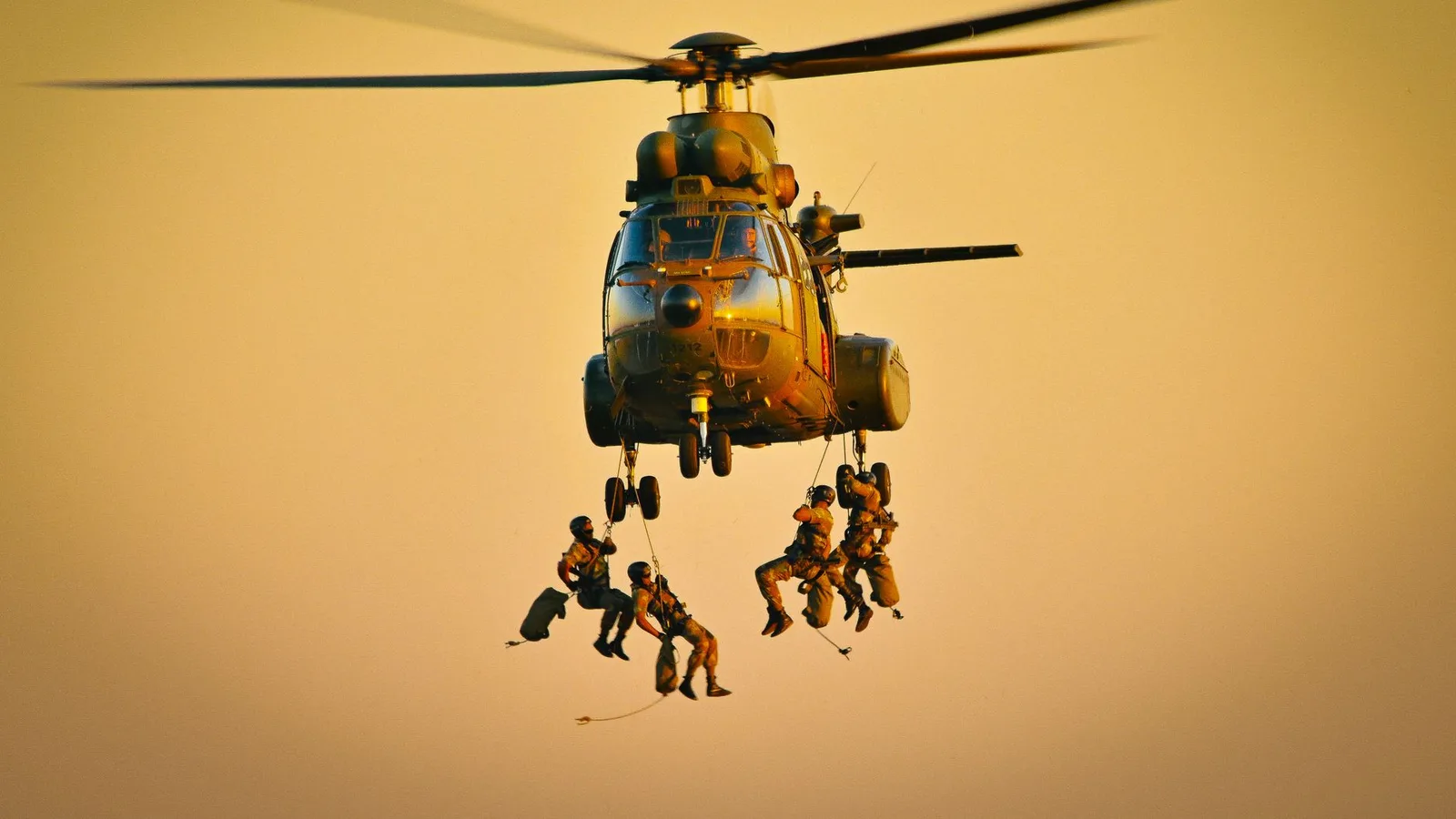
File photo of a military helicopter conducting an airlift, used for context — not the 2026 Rasuwa operation itself. Cover photo: Pieter van der Sandt via Pexels (Pexels License).
计划徒步?
我们负责许可证、后勤与向导
NMA 认证的本地向导,价格透明,自 1998 年以来 5,000+ 次徒步。告诉我们你的日期,其余的交给我们。


更多「Safety & Advisories」

Safety & Advisories
India Sends Around 50 Tonnes of Aid to Nepal as Modi Offers Condolences After the 2026 Floods
India is rushing tonnes of relief and rescue support to flood-hit Nepal, as Prime Minister Narendra Modi conveyed condolences to his Nepali counterpart and pledged India's full solidarity.

Safety & Advisories
Everyone Is Pledging Millions to Nepal. Here Is Where You Can Actually Send Money
The UN released $2m, the US pledged $500,000, India sent 50 tonnes. None of that helps if you are one person with a card. The official fund, the two alternatives worth trusting, and the scam window that is open right now.
Safety & Advisories
Can a Beginner Do the Everest Base Camp Trek? The Honest Difficulty Answer (2026)
No mountaineering skills required — but altitude, not fitness, is what actually turns beginners back. Here is the real difficulty, by the numbers.