
When Does Nepal's Monsoon End? Autumn Trekking Season Opens Late September 2026
The monsoon withdraws by late September, opening Nepal's clearest trekking window of the year — October and November.
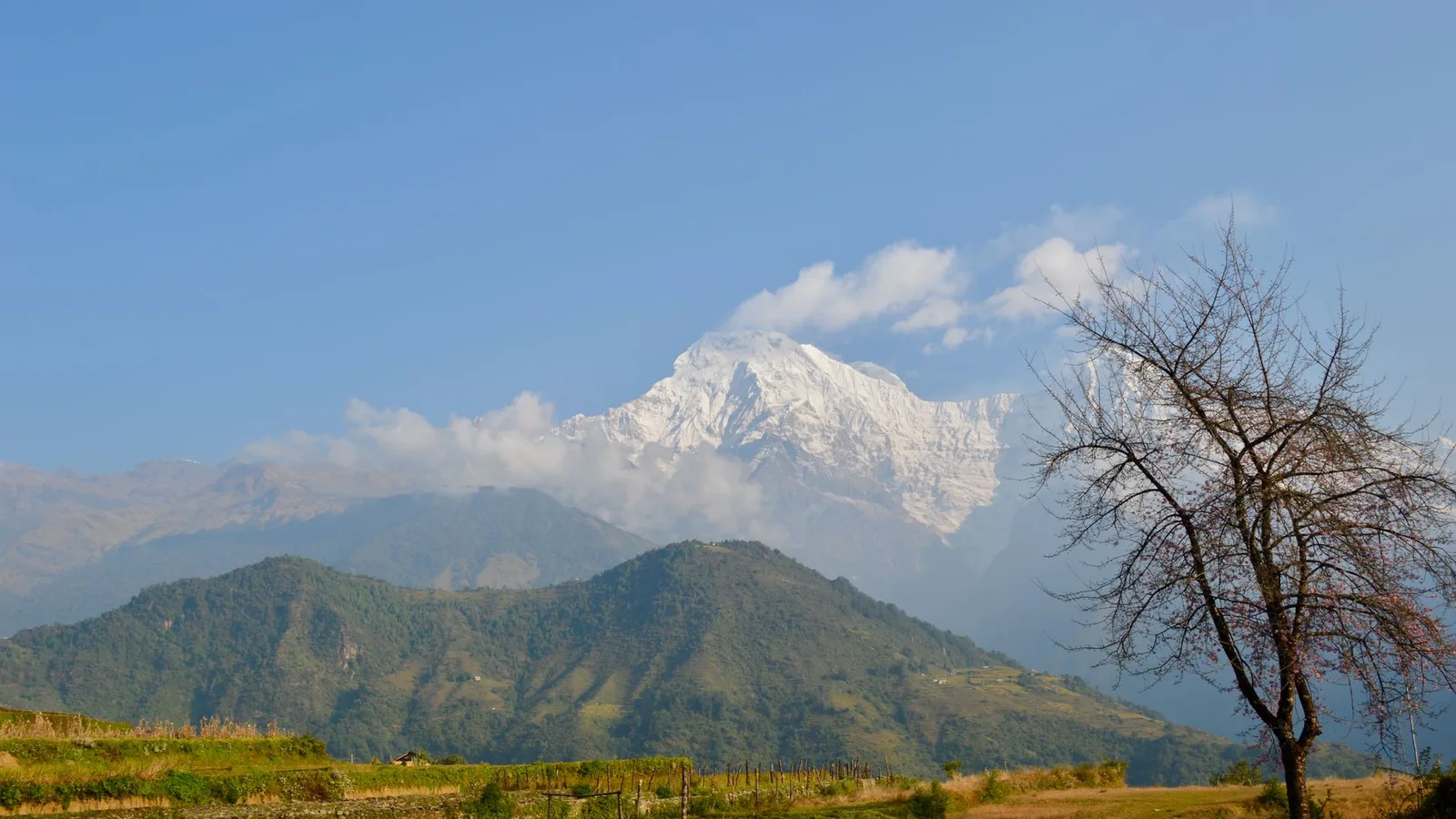
Namaste from Kathmandu. It is the last week of August as I write this, the rice paddies below the city are a hard, wet green, and the question landing in our inbox every single day is the same one: when will the monsoon actually end in 2026, and when can I trek? Here is the honest seasonal picture. The southwest monsoon over Nepal withdraws around late September into early October, and the weeks that follow — October and November — are the clearest, most stable trekking window of the entire year. If you are choosing dates right now, autumn is what you are aiming for.
The short answer
- Nepal's summer monsoon runs roughly mid-June to late September; rains diminish through September and generally taper off by early-to-mid October.
- Autumn (October–November) is peak season — the driest, clearest, most settled skies of the year, and the busiest trails.
- Late September is the early-season gamble: lingering showers and leeches low down, but green hills, thin crowds and lower prices.
- There is no fixed calendar date. The official withdrawal is usually confirmed by Nepal's Department of Hydrology and Meteorology (DHM) in late September — always check the current forecast before you fly.
When the monsoon actually ends
The monsoon is a pattern, not a switch. Sustained rain arrives in Nepal in mid-June and builds through July and August, the two wettest months. By September the system is already weakening — the rain becomes more intermittent, the gaps between downpours grow longer, and the mornings start turning clear before the afternoon cloud builds. Across the wider region the retreat is well documented: withdrawal over India typically begins in early September and finishes by around the beginning of October, and Nepal follows the same arc, with the rains generally ending by mid-October.
What I tell people is this: do not book around a single "end date." Nobody in Nepal can hand you one, and any company that promises a guaranteed dry day in late September is guessing. DHM announces the official withdrawal when the data confirms it, usually in the second half of September, and it shifts a week or two either way from year to year. For a fuller breakdown of the timing, we keep a standing explainer on when the monsoon starts and ends in Nepal that we update each season.
Month by month: August to November
Here is how the next few months tend to play out on the classic mid-altitude trails between roughly 3,500m and 5,000m — Everest, Annapurna, Langtang.
| Month | Typical conditions | Trekking verdict |
|---|---|---|
| August | Peak monsoon — heavy, frequent rain, high humidity, cloud-locked mountains, leeches on forested trails, landslide and flight-delay risk | Only the rain-shadow treks (Upper Mustang, Dolpo) reliably work |
| Late September | Rains easing and more intermittent; hills still lush and green; clear mornings, afternoon cloud; some lingering showers low down | Early season — a gamble, but quiet trails and lower prices |
| October | The driest, clearest, most stable air of the year; warm days, cold nights above 4,000m | Peak season — best visibility, book early |
| November | Still dry and clear, colder as the month goes on, superb long-range views | Peak season — excellent, thinning crowds late in the month |
The late-September trade-off
Late September is the window trekkers argue about most, so let me be straight about it. On the plus side: the country is at its greenest, the rivers are full, the air is washed clean, the trails and teahouses are quiet, and prices have not yet hit their October peak. On the minus side: the monsoon has not fully cleared, so you can still catch rain, especially in the afternoons; the lower forested sections still have leeches until the ground dries out; and mountain views can be hit-or-miss until the cloud lifts for good. If you are flexible and don't mind carrying a good rain layer, it can be a wonderful, uncrowded time to walk. If you have travelled a long way for one guaranteed clear morning at a viewpoint, wait for October. If your only free time is right now, our rain-shadow trek guide shows where the weather already works in your favour.
How roads and flights improve
The change is not only in the sky. Through the monsoon, Nepal's mountain highways take a beating — landslides close sections, the Kathmandu–Pokhara and Prithvi corridors slow to a crawl, and the road to trailheads like Machha Khola or Syabrubesi can wash out. As the rain stops, crews clear the slips, the surfaces dry and firm up, and journeys that felt like a lottery in July become dependable again by mid-October.
Flights follow the same curve. The Lukla air-link that feeds every Everest trek is monsoon's biggest casualty — low cloud grounds planes for hours or whole mornings, and flights often shift to the Manthali (Ramechhap) staging strip in the wet months. Once autumn settles in, the flying windows open up, delays shrink, and the schedule becomes something you can actually plan around. It is exactly why October fills first.
When to book for autumn
October is the single most oversubscribed month in Nepal's trekking calendar, and November is not far behind. Lukla seats, teahouse beds on the popular routes, and the better guides all get spoken for early. If you want the peak window, aim to have your flights and permits arranged two to three months out — for October that means booking by July or early August. Leave it to September and you will still get a trek, but you will fight for the good dates. See why October 2026 is already booking up.
So — when should you come?
If you want the surest bet, come in October or November, when the monsoon is gone and Nepal turns on its finest weather. If you like an empty trail and don't mind a little rain and a few leeches, late September rewards you with green hills and space to yourself. Either way, the worst of the wet is behind us within a few weeks, and the mountains are about to reappear. For a data-led look at every month, read our month-by-month best-time-to-trek breakdown.
When you are ready to put dates on the calendar, our classic autumn routes — the Everest Base Camp Trek, the Annapurna Base Camp Trek, and the shorter Ghorepani Poon Hill Trek — are all at their best from October onward. Message us and we will help you pick the window that fits your time and your fitness. See you on the trail this autumn.
Cover photo: Moin Uddin via Pexels (Pexels License).
来源: Nepal Department of Hydrology and Meteorology (DHM)
计划徒步?
我们负责许可证、后勤与向导
NMA 认证的本地向导,价格透明,自 1998 年以来 5,000+ 次徒步。告诉我们你的日期,其余的交给我们。


更多「Trail & Weather」
Trail & Weather
Everest Base Camp or the Three High Passes Trek? The Honest Difficulty Comparison
Both start in Lukla and both reach Everest Base Camp. Only one adds three passes above 5,300m, a glacier crossing and six extra days — here's who should attempt it.
Trail & Weather
When Is the Best Time to Trek in Nepal? The Real Month-by-Month Data for 2026
Autumn and spring aren't just guidebook folklore — Nepal's own 2025 visitor data backs them up almost exactly. Here is what the numbers, and the weather behind them, actually show.
Trail & Weather
Annapurna Base Camp or Annapurna Circuit? The Real Difference in 2026
Same mountain range, two completely different trips — one climbs into a sanctuary in ten days, the other crosses a 5,416m pass over two weeks. Here is how to choose, with the real numbers.