
When does Nepal’s monsoon actually end in 2026, and why the official date keeps slipping
Nepal monsoon 2026 officially ends 2 October, but it withdrew on 16, 15, 12 and 10 October the last four years. Here is when the rains actually stop.
At a glance
- Published · updated
- TopicTrail & Weather
- Verified againstDepartment of Hydrology and Meteorology (DHM), Government of Nepal
- Treks coveredAnnapurna Base Camp Trek — 15 Days from Kathmandu, Everest Base Camp Trek — 14 Days, Upper Mustang Trek — 12 Days
Where the 2026 monsoon stands — 18 September
Still running. DHM has not declared withdrawal anywhere in Nepal yet, and on the last four years’ record it will not leave the east until the second week of October. It has already done its worst damage of the year: the 26 August Bhote Koshi flood killed at least 1,386 people, with about 5,130 still missing as of 12 September. The Kathmandu–Pokhara highway, cut at Krishnabhir for 18 days, reopened to two-way traffic on 17 September — see which roads are open right now.
The monsoon will not end in Nepal on 30 September, whatever the calendar says. The Department of Hydrology and Meteorology puts the normal withdrawal at 2 October, and the monsoon has missed that date in every one of the last four years — withdrawing on 16 October, 15 October, 12 October and 10 October. If you are booking an autumn trek, the honest planning date for clear skies is the second week of October, not the first.
When will the monsoon end in Nepal in 2026?
DHM has not announced a 2026 withdrawal date yet, and it will not until the retreat is actually underway — the announcement usually lands within a few days of the event. On the last four years’ record, expect it to leave eastern Nepal somewhere between 8 and 16 October.
That date is the last exit, not the first. The monsoon retreats west to east, so the far west clears first, the Annapurna side a few days later and the Everest side last. In 2025, DHM reported the rains gone from Sudurpaschim, Karnali, western Lumbini and parts of Gandaki on 6 October — four days before they left the east on 10 October. If your trek starts from Pokhara, you are usually a few days ahead of the table below; from Lukla, you are on it.
| Year | Onset | Withdrawal | Days late |
|---|---|---|---|
| 2022 | 5 June | 16 October | 14 |
| 2023 | 14 June | 15 October | 13 |
| 2024 | 10 June | 12 October | 10 |
| 2025 | 29 May | 10 October | 8 |
| 2026 | 19 June | not yet announced | — |
| Normal | 13 June | 2 October | — |
Two things are worth reading off that table. The monsoon has run late four years in a row, so treating 30 September as the finish line is how people end up walking the first week of October in cloud. But the lateness is also shrinking — 14 days, then 13, then 10, then 8 — so the gap is narrowing rather than widening. And 2026 started late (19 June against a 13 June normal), which historically does not push withdrawal later; onset and withdrawal are only loosely related.
For the record, DHM’s extremes since 1968 are an earliest withdrawal of 2 September 1995 and a latest of 19 October 2013. The normal season runs 112 days; 2025 ran 135, the longest DHM has recorded, taking the record from 2022’s 134. So a first-week-of-October trek is not doomed — it is a coin toss, and the second week is not.
If you are planning a Nepal trip around the rains, timing is everything — and 2026 is an unusual year. The monsoon reshapes where and when you can trek, but it never shuts the country down. Here are the real 2026 dates from Nepal’s weather office, what they mean on the trail, and the regions that stay dry and walkable straight through summer.
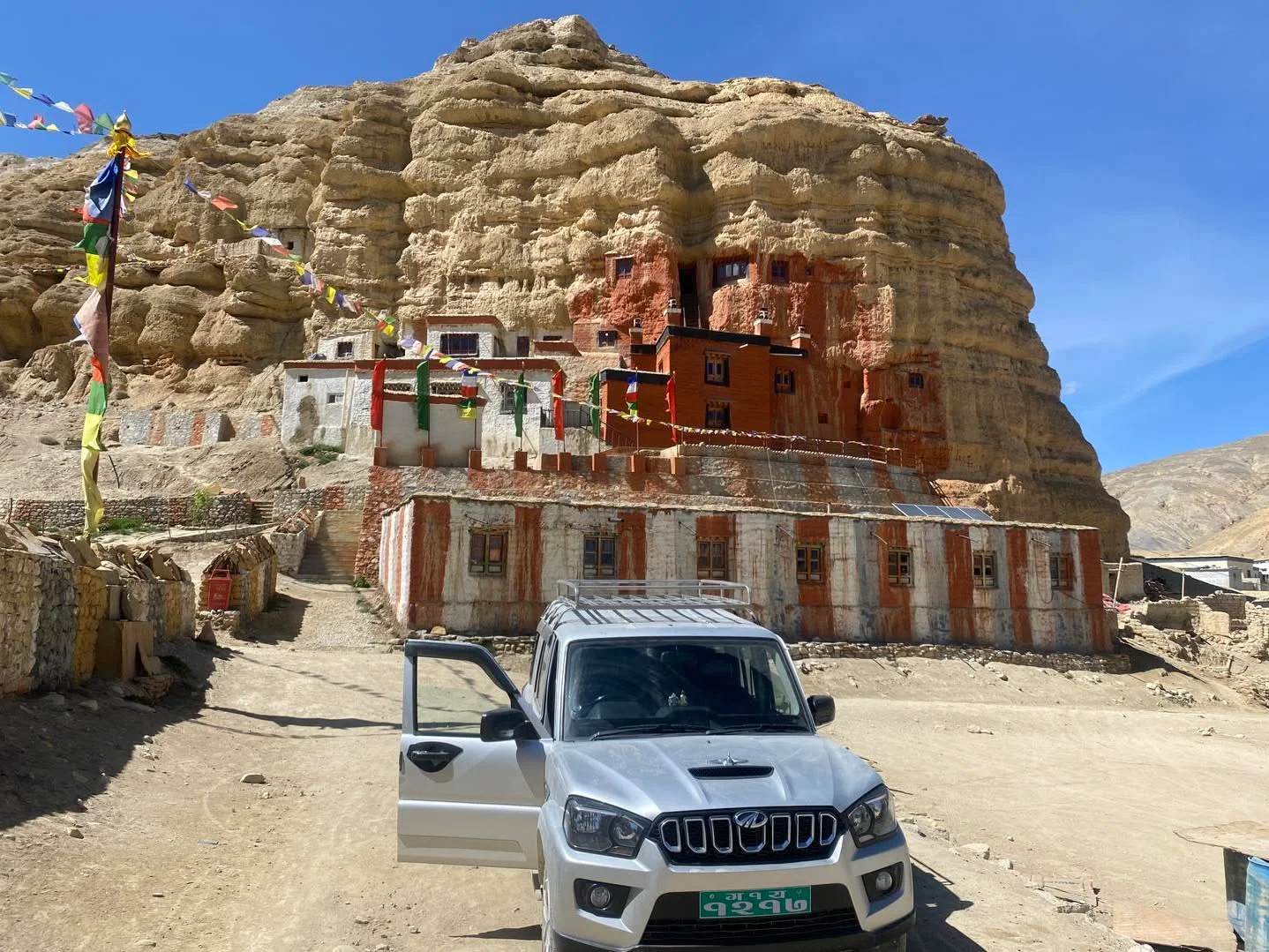
From the trail · Mustang


Nepal monsoon 2026 — the dates
- 2026 onset: 19 June — about a week late, entering from the east (Koshi)
- Normal onset: 13 June · normal withdrawal: ~2 October
- Official monsoon season: 1 June – 30 September
- 2026 outlook: weaker than normal — below-average rain, hotter temperatures
- Heaviest rain: July–August
What the 2026 monsoon is actually doing
Monsoon winds from the Bay of Bengal reached eastern Nepal on 19 June 2026 — roughly a week later than the long-term average onset of 13 June — according to the Department of Hydrology and Meteorology (DHM). Forecasters expect a weaker-than-normal season: southern Karnali, much of Lumbini, eastern Madhesh and southern Koshi each carry a 55–65% probability of below-average rainfall, alongside above-normal temperatures.
One caveat worth its own headline: a drier total does not mean a safer monsoon. The pattern this year — long dry spells broken by short, violent downpours — is exactly what triggers flash floods and landslides, as we explain in our 2026 monsoon risk briefing.
What it means for trekking
Monsoon rain mostly falls in the afternoons and evenings. Expect lush green hills, leeches in the forest below ~2,500 m, cloud that hides the high peaks, and landslide-prone roads. The classic trails — Everest, Annapurna, Langtang — are best avoided at the height of it (July–August). But here is the point most people miss: a big slice of Nepal sits in the rain shadow north of the main Himalaya and stays dry and trekkable all summer.
| Period | Conditions | Trekking verdict |
|---|---|---|
| Mid-June | Monsoon arrives from the east (19 June in 2026) | Switch to the rain-shadow treks |
| July–August | Heaviest rain, cloud-locked peaks, leeches below ~2,500 m, landslide and flight-delay risk | Only the rain shadow (Upper Mustang, Dolpo) reliably works |
| Early–mid September | Still monsoon; rain more broken, clear mornings, afternoon cloud | Rain shadow, or a lower trek with buffer days |
| Late September | Easing but not finished; greenest hills of the year; showers and leeches low down | Early season — a gamble, with quiet trails |
| First week of October | Withdrawal under way in the west; the east often still wet | A coin toss on the classic trails |
| Mid-October–November | Driest, clearest, most stable air of the year; cold nights above 4,000 m | Peak season — book early |
The late-September trade-off
Late September is the window people argue about most, so here it is straight. For it: the country is at its greenest, the rivers are full, the air is washed clean and the teahouses are quiet. Against it: the monsoon has not finished, so afternoon rain is still likely, the forested lower sections keep their leeches until the ground dries, and mountain views are hit-or-miss until the cloud lifts for good. If you are flexible and carry a proper rain shell, it is a lovely, uncrowded time to walk. If you have flown a long way for one clear morning at a viewpoint, wait for mid-October. And if late September is the only time you have, the rain-shadow treks are already dry.
How roads and flights recover as the rain stops
Roads and flights come back on the same curve as the sky, a week or two behind it. Through the monsoon the mountain highways take a beating: slips close sections, and trailhead roads such as the ones to Machha Khola or Syabrubesi can wash out. This year the worst of it hit the country’s main tourist road — the Prithvi Highway at Krishnabhir, closed for 18 days until 17 September. As the rain stops, crews clear the slips, surfaces dry and firm up, and journeys that were a lottery in July become dependable by mid-October.
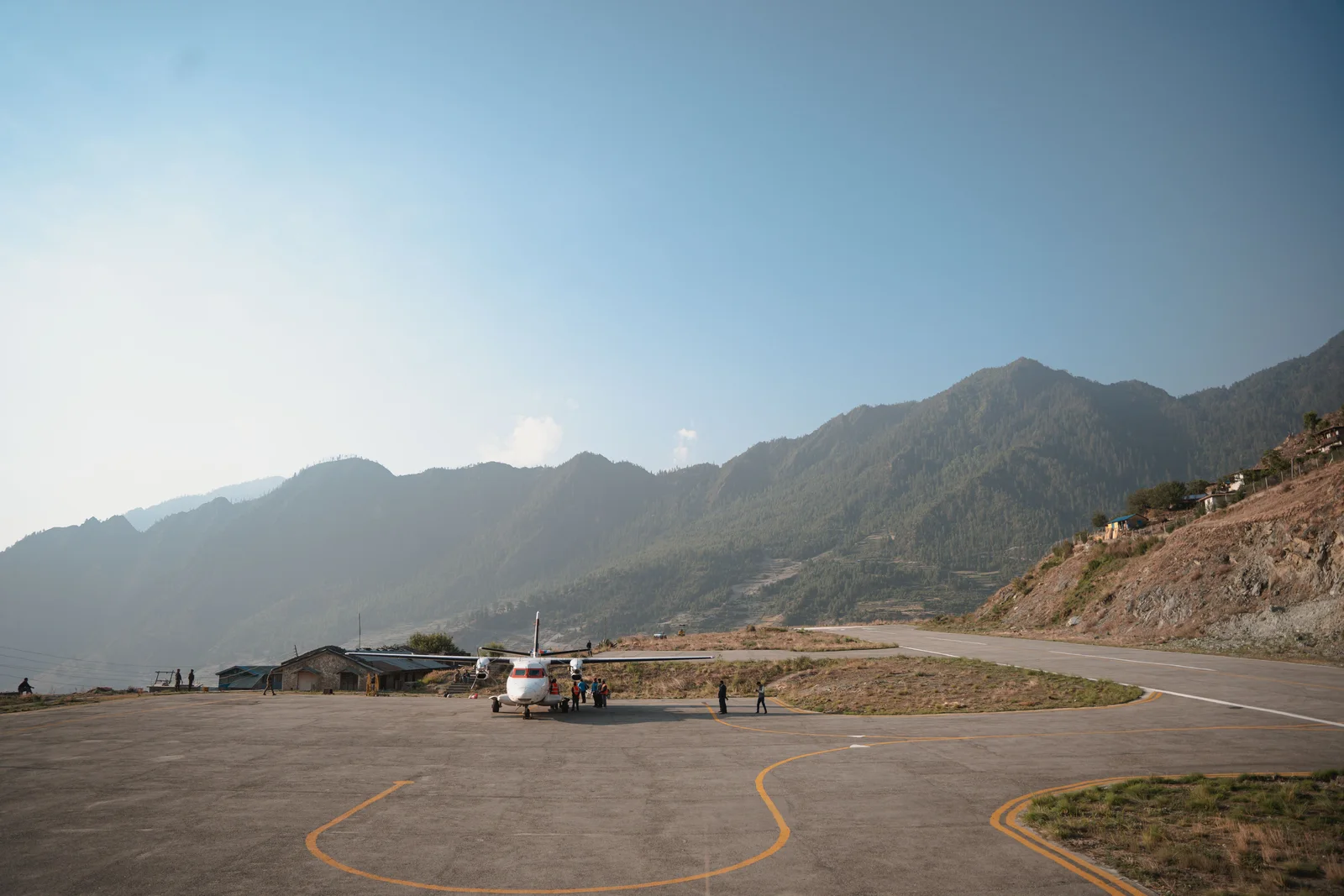
Mountain flights follow the weather too. Low cloud grounds the small planes into Lukla and Jomsom for hours or whole mornings in the wet months; once autumn settles, the flying windows open and delays shrink. Note one thing that does not improve with the weather: in peak autumn, Lukla flights are routed through Manthali (Ramechhap) to ease congestion in Kathmandu, which adds a four-to-five-hour drive — see our report on Lukla flights via Ramechhap.
Where you can still trek in the monsoon
Behind the wall of Dhaulagiri and the Annapurnas, the trans-Himalayan valleys get only a fraction of the rain that soaks the southern hills. That is why Upper Mustang, Dolpo, Jomsom–Muktinath and Nar Phu stay open and rewarding through the summer, with desert colour, clear skies and Tibetan-Buddhist culture instead of mud. For the full list and route notes, see our monsoon rain-shadow guide and current monsoon road conditions.
What this means for you
Trekking before the rains clear? Go rain-shadow north, build in 2–3 buffer days for weather-dependent flights (Lukla and Jomsom both delay in cloud), and remember the danger is in the sudden bursts, not the seasonal totals. Our dry-season-anywhere options are Upper Mustang, Dolpo and the shorter Jomsom–Muktinath — permits, licensed guide and weather-aware logistics handled.
Bottom line for 2026: the monsoon came late and was forecast to run dry, and it still produced the worst flood of the year in late August. For the classic trails, plan your clear-sky days from the second week of October; if you are already here or cannot wait, trek the rain shadow.
Planning for October or November?
Tell us your dates and we will tell you honestly whether they fall before or after the rains clear on your route — and move you to the rain shadow if they do not.
Message us on WhatsApp → · Ask us about your dates →
Everest Base Camp Trek — 14 Days · Annapurna Base Camp from Kathmandu — 15 Days · Upper Mustang — 12 Days
More on timing: is September too early to trek Nepal? · the best two weeks to trek this autumn · best time to trek, month by month.
Sources: Department of Hydrology and Meteorology (DHM), monsoon onset and withdrawal dates and State of the Nepal Climate 2025; The Himalayan Times, DHM withdrawal bulletin, 6 October 2025; The Kathmandu Post; myRepublica. Updated 18 September 2026.
Cover photo: NASA via Wikimedia Commons (Public domain). Airstrip photo: aaerux studio via Pexels (Pexels licence).
Still running this season
Everest Base Camp Trek — 14 Days is running normally
NMA-certified local guides, transparent pricing, 5,000+ treks since 1998. Message us your dates and we'll sort the permits, lodges and logistics — reply within 24 hours, no obligation.
Popular Nepal treks
All treks →
Related coverage
Trail & Weather
Nepal trekking news that actually changes your trip, updated for autumn 2026
The permit rules, fines, airfares, flight routes and road closures that changed for Nepal trekkers in 2026 — what to act on for an autumn booking, and what to ignore.
Trail & Weather
Spring or Autumn? The Data-Backed Answer to When You Should Trek Nepal in 2026
Real temperature, rainfall and crowding numbers for the Everest and Annapurna regions — not opinion — settle which season actually suits your trek.
Festivals & Events
Dashain 2027 tika is Saturday 9 October, twelve days earlier than this year
Dashain 2027 runs 30 September to 14 October, tika on Saturday the 9th. Bhai Tika is 31 October. Why the early date matters for an autumn trek.

Visas & Entry
ETA vs eVisa vs Visa vs Visa-Free in 2026: What the Difference Actually Is
An ETA is a pre-screen, not a visa. An eVisa is a real visa applied for online. A visa on arrival is granted at the border. And none of them guarantees entry — the officer does. Here is the plain-English taxonomy, and where Nepal fits.
Latest from the desk
Records & People
Nobody stood on top of K2 this summer. Here is what stopped the whole mountain
Forty-one people summited K2 in 2025. In 2026, nobody did. Heavy July snow, a hot August and the fewest permits in two decades, and what it tells climbers.
Visas & Entry
The EU just let nine countries relax its EES border checks. Is your airport one of them?
Europe’s EES fingerprint grace period ended on 6 September, then nine countries were reportedly allowed to keep it. What it means for your border queue.
Records & People
Eight Sherpas Build the Path Every Everest Climber Walks, and This Spring One Ice Tower Stopped Them for 19 Days
The Icefall Doctors fix the ladders and ropes through the Khumbu Icefall each spring, and in 2026 a 28-metre serac made it the latest route opening in years.