
Annapurna Circuit vs Annapurna Base Camp: They Share a Name, Not a Trek — The Honest 2026 Difference
One crosses a 5,416-metre pass into the desert beyond the Himalaya; the other walks into a glacial amphitheatre at 4,130 metres. Here's which one actually matches what you're picturing when you say Annapurna.
At a glance
- Published
- TopicTrail & Weather
- Verified againstNational Trust for Nature Conservation (NTNC)
- Treks coveredAnnapurna Base Camp Trek — 9 Days, Annapurna Circuit Trek — 14 Days, Mardi Himal Trek — 7 Days
Annapurna Circuit and Annapurna Base Camp get used almost interchangeably online, but they are two different treks in two different valleys with two different endings. They share the name of the mountain range and, for most itineraries, a starting region near Pokhara — and almost nothing else. Book the wrong one for what you actually pictured, and you find out around day three.
Two entirely different shapes of trek
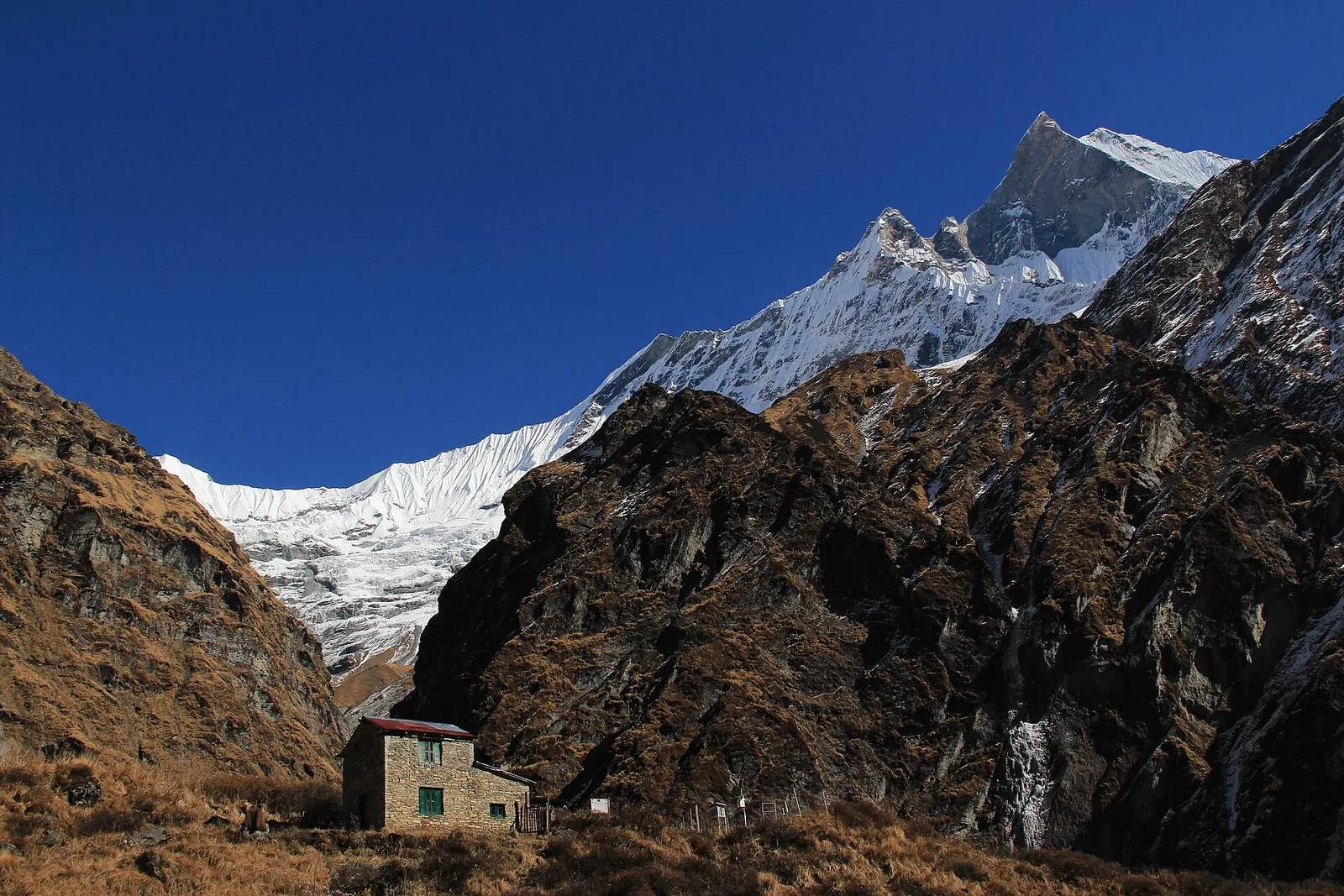
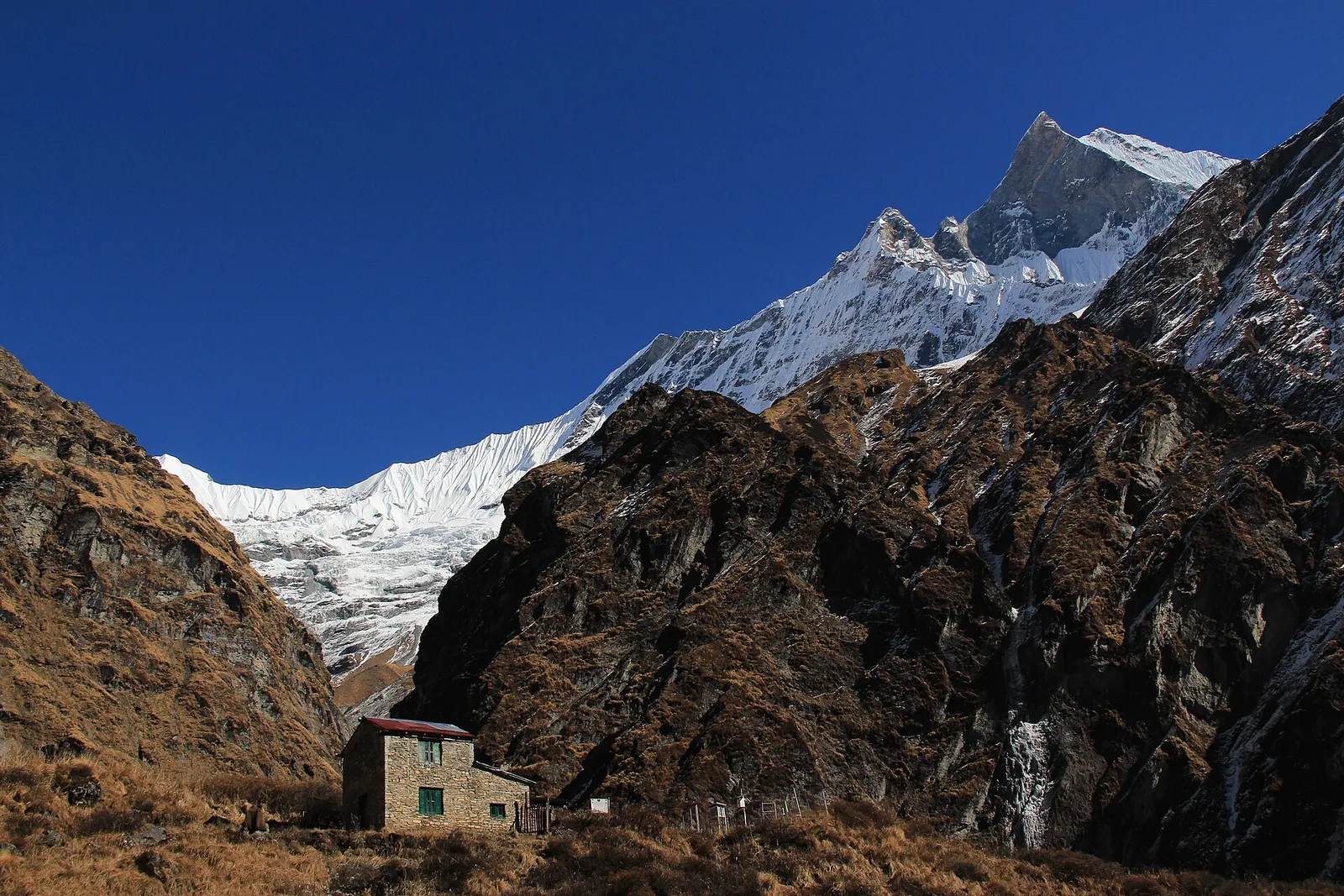
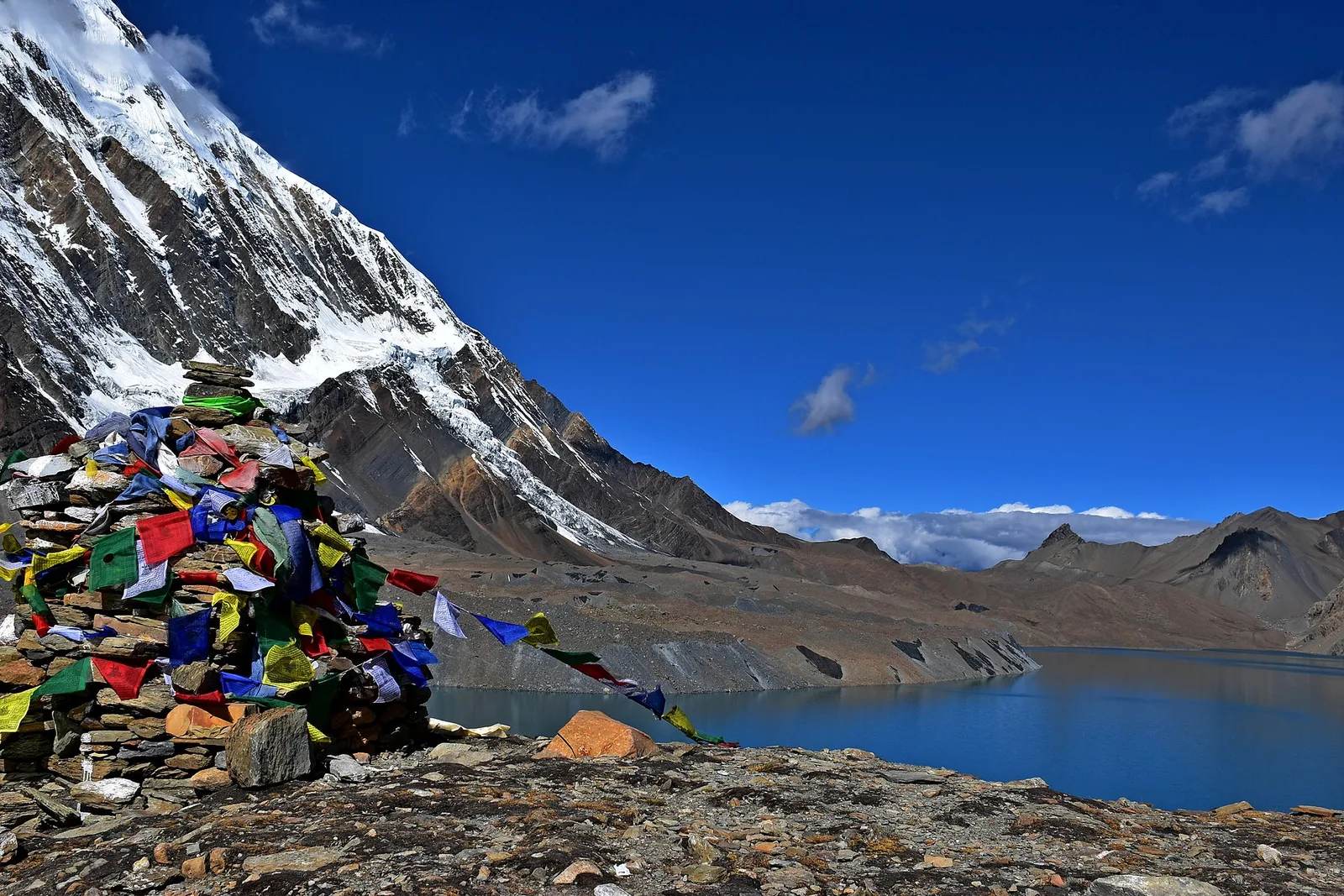
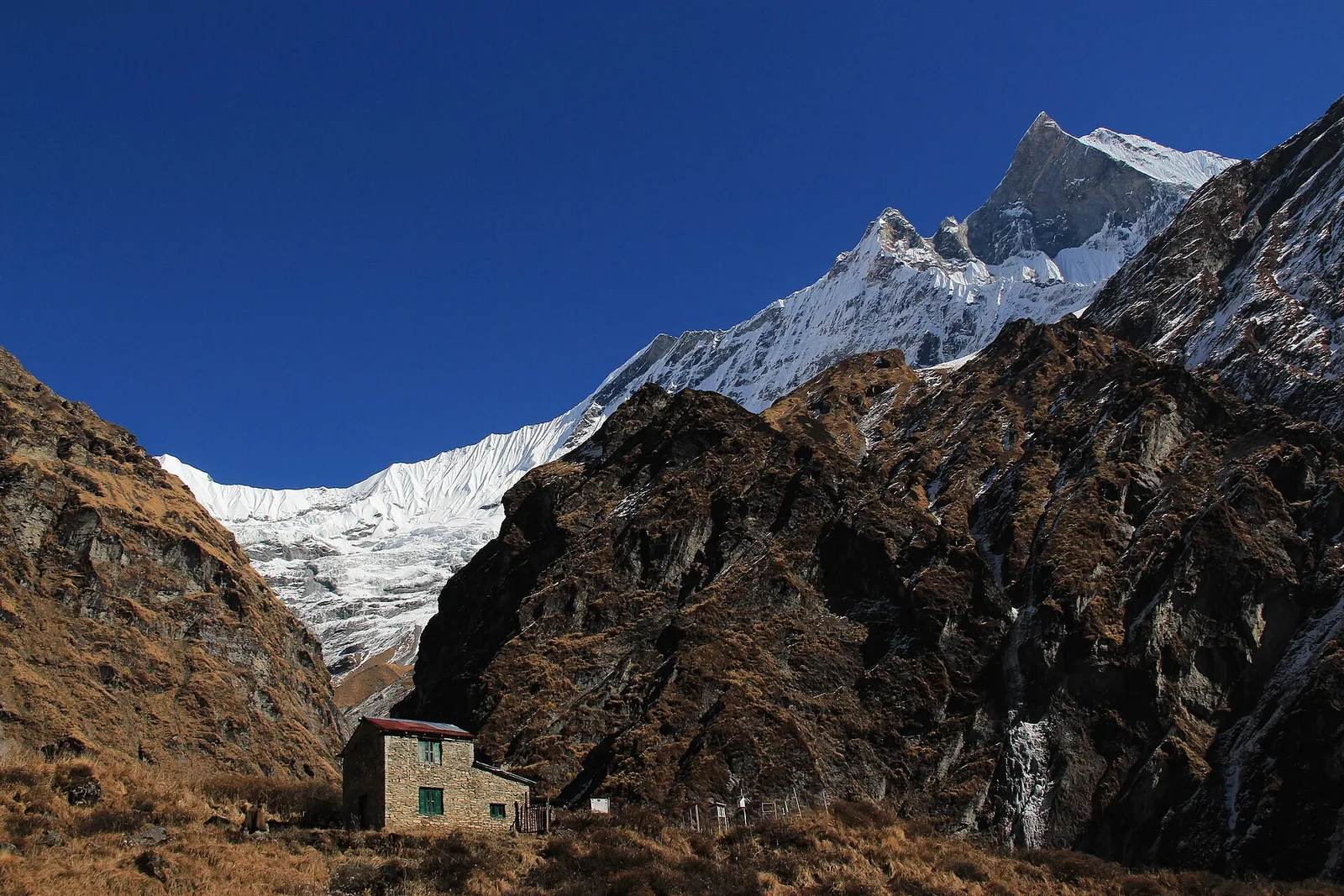
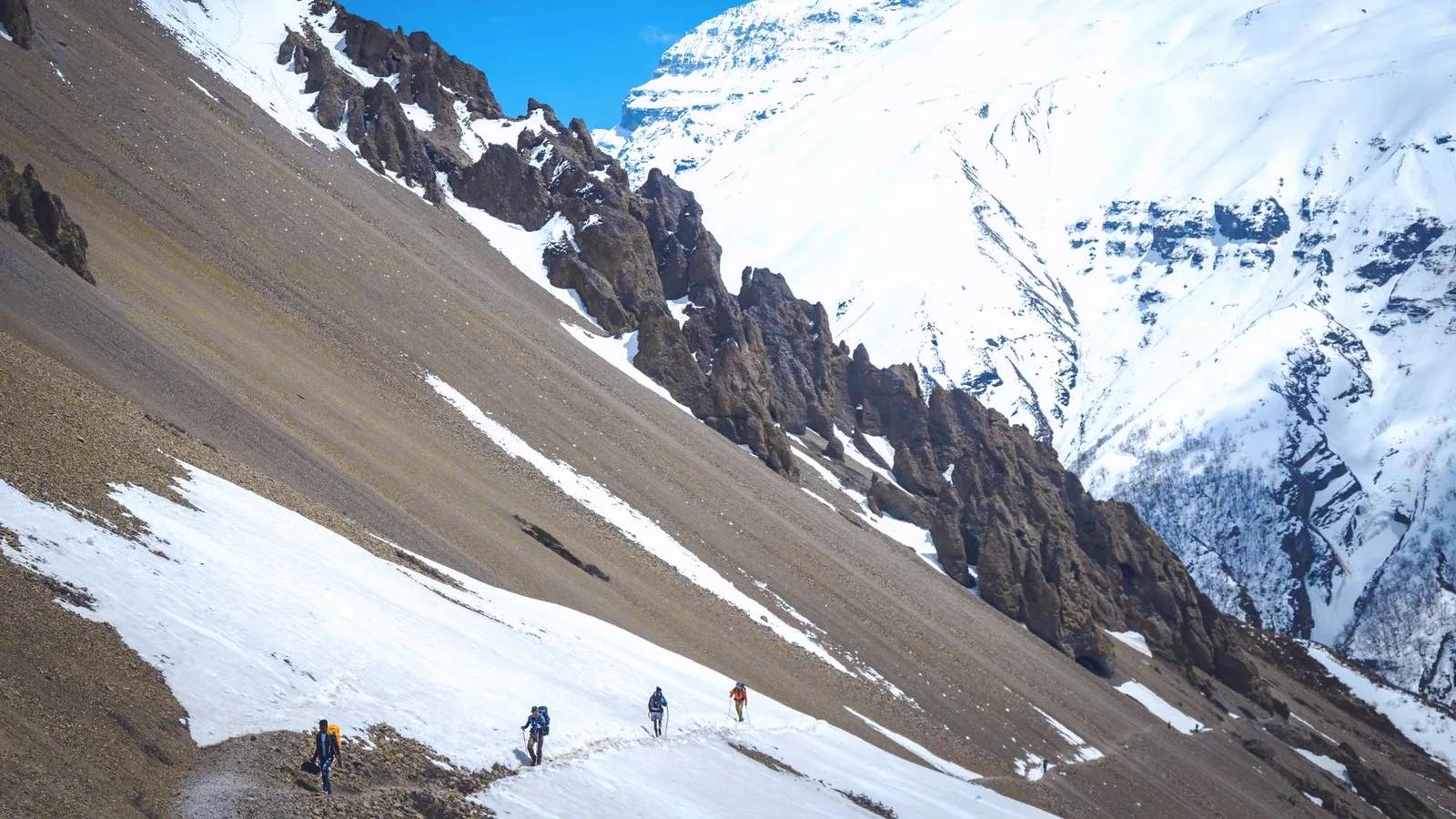
Annapurna Base Camp is an out-and-back walk into the Annapurna Sanctuary, a glacial amphitheatre ringed by Annapurna I, Machapuchare and Hiunchuli, and you retrace your steps out the way you came. The Annapurna Circuit is a loop — you walk up the Marsyangdi valley, cross the Thorong La pass at 5,416m into the high desert of Manang and Mustang, and come down the Kali Gandaki valley on the other side of the range entirely. One is a there-and-back into a bowl of mountains; the other circles the whole massif and crosses to its far side.
| Circuit (14 days) | ABC (9 days) | |
|---|---|---|
| Route shape | Loop, Besisahar to Jomsom | Out-and-back |
| Highest point | 5,416m | 4,130m |
| Difficulty | Challenging | Moderate |
| Permits | ACAP $30 + TIMS $20 | ACAP $30 + TIMS $20 |
| From, 1 trekker | $1,600 | $920 |
What changed in 2026: the road
A jeep road now reaches Manang up the eastern side of the Circuit, and most trekkers start with a drive from Besisahar rather than walking it, which is what has let 10-day itineraries exist alongside the traditional 17-day version. That is a genuine convenience, but it comes with a real trade-off: skipping the lower valley on foot means gaining altitude faster, and altitude sickness risk on the Circuit is driven far more by how fast you climb toward Thorong La than by the pass's elevation on its own. A shortened itinerary needs an extra acclimatisation day built in higher up, not just cut out at the bottom — ask any agency proposing a sub-10-day Circuit exactly where that rest day sits.
Who each trek actually suits
Annapurna Base Camp suits a trekker with seven to nine days who wants the classic amphitheatre view — the reward is close and dramatic, the altitude tops out at a level most fit trekkers handle without much trouble, and there is no technical pass to cross. It does not suit someone chasing variety of landscape; you walk through rhododendron forest into the same bowl and back.
The Annapurna Circuit suits a trekker with ten-plus days who wants the landscape to change completely underfoot — lush Gurung villages, then high alpine desert, then the stark Buddhist culture of Manang and Mustang, crossing one of the highest trekking passes on Earth in between. It does not suit anyone tight on time or nervous about altitude; Thorong La is 1,286m higher than ABC and is crossed in a single long day.
What this means for you
If someone says they are doing Annapurna Base Camp and Annapurna Circuit is what appears in your head — or the reverse — check before you book. They differ by 1,286m of altitude, a week of trekking days, and whether you retrace your steps or cross an entire mountain range to come out the other side.
Related: our 7-day Mardi Himal trek reaches a similar Annapurna viewpoint to ABC on a quieter, less-trekked ridge if neither the crowds nor the full Circuit distance appeal. Source: National Trust for Nature Conservation (NTNC), the official issuer of the Annapurna Conservation Area Permit.
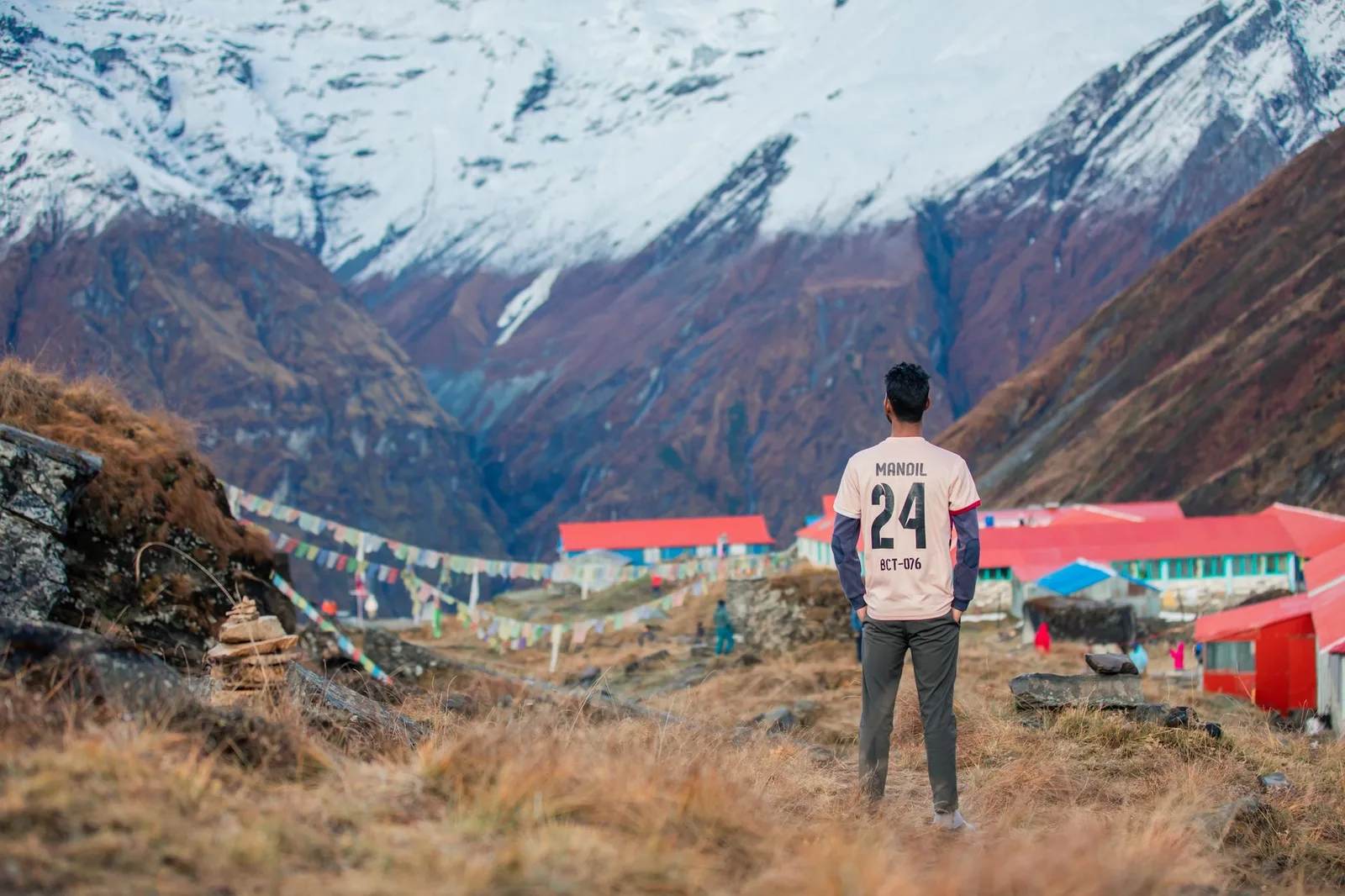
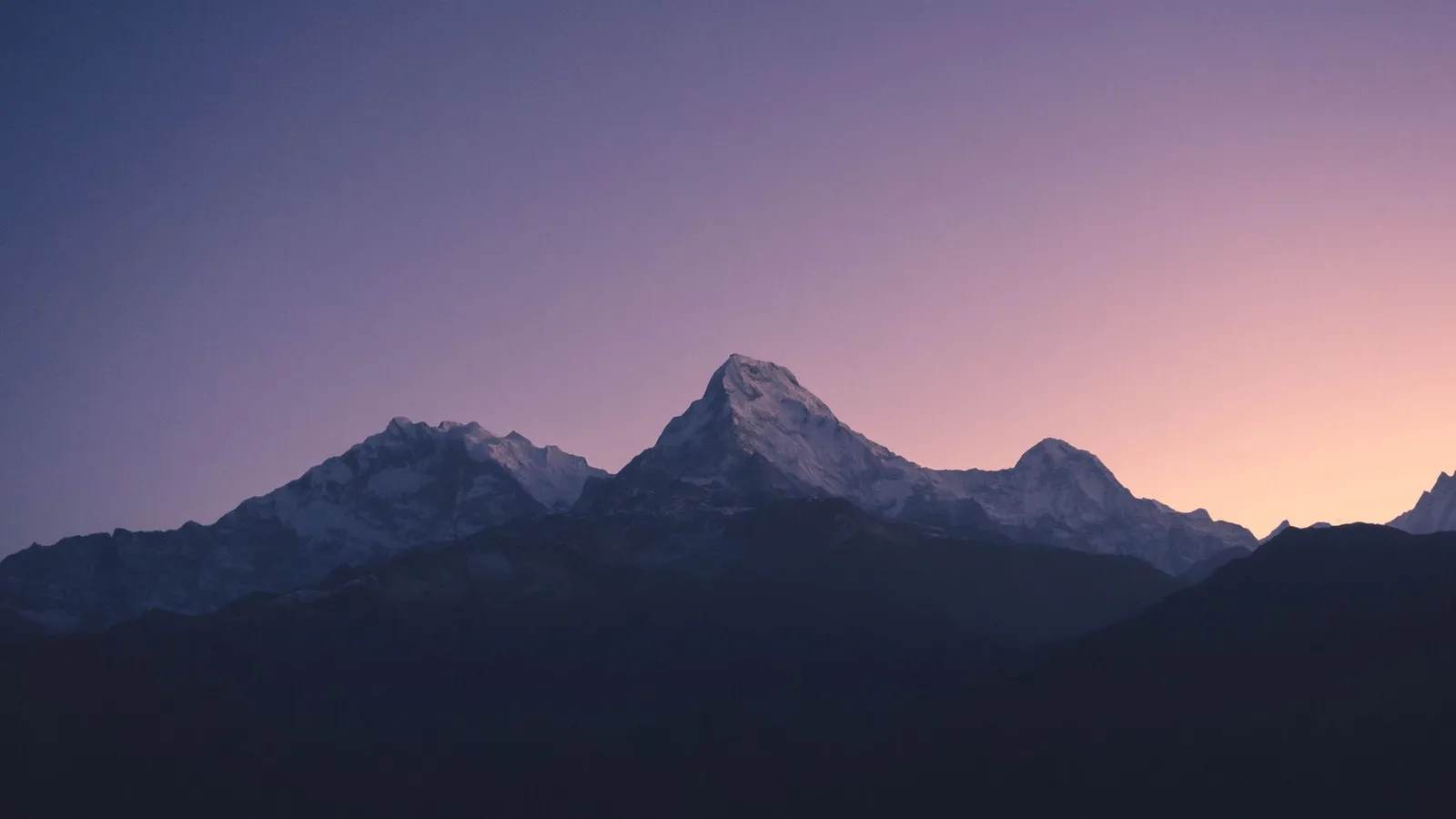
Cover photo: Mandyl Bista via Pexels (Pexels License).
Still running this season
Annapurna Base Camp Trek — 9 Days is running normally
NMA-certified local guides, transparent pricing, 5,000+ treks since 1998. Message us your dates and we'll sort the permits, lodges and logistics — reply within 24 hours, no obligation.
Popular Nepal treks
All treks →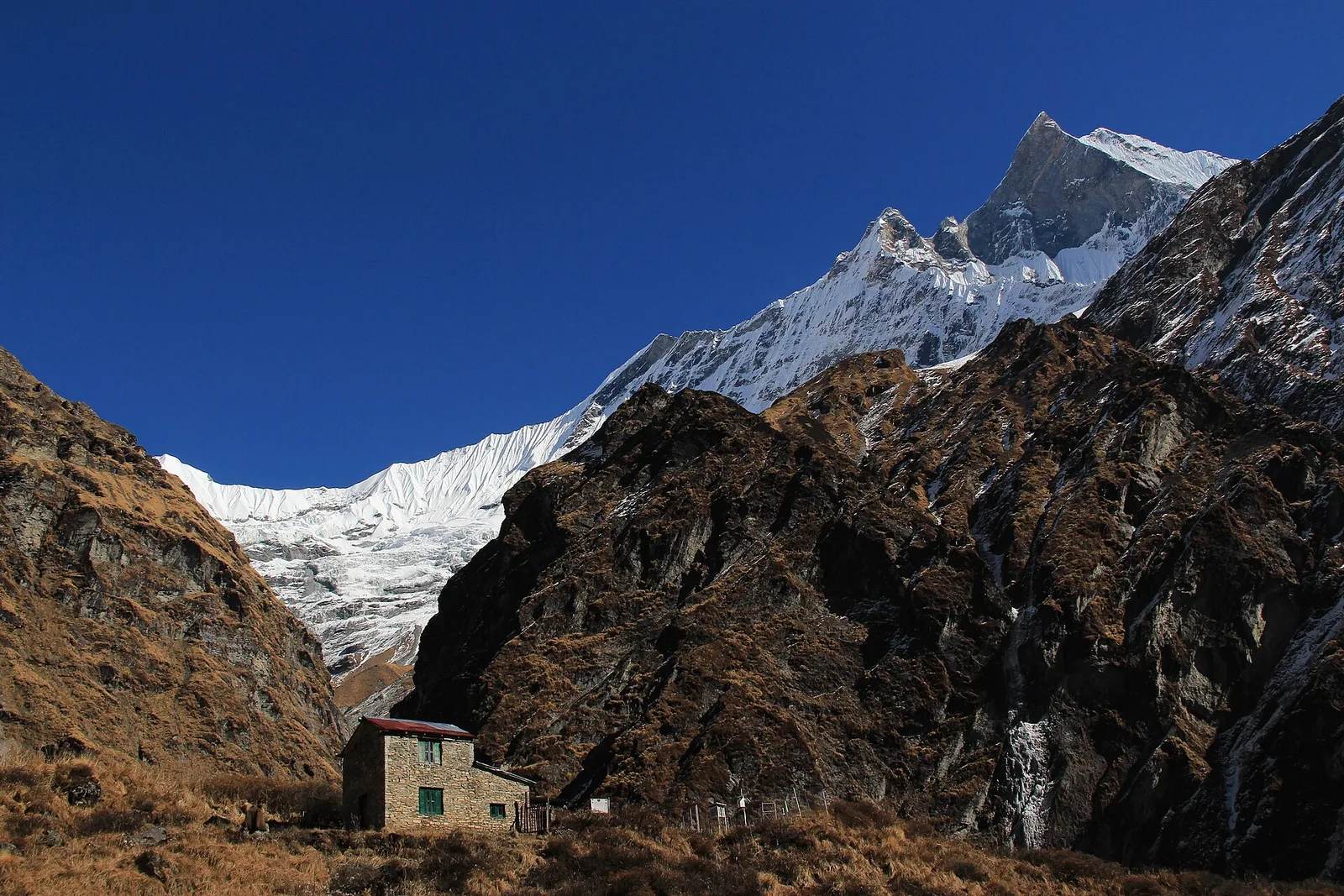
Related coverage
Trail & Weather
Which Nepal Trek Should a Beginner Actually Do in 2026? Poon Hill vs Mardi Himal vs Langtang, Compared
If you've never trekked above 3,000 metres before, the honest starting point is Poon Hill or Panchase, not Everest Base Camp — here's the real difference in altitude, days and cost.
Money & Insurance
Nobody tells you what the Annapurna Base Camp trek really costs in 2026 - here's the honest number
A guided Annapurna Base Camp trek runs about US$700 to US$1,300 per person in 2026, permits and guide included. The permits themselves are only about US$33 - here's where the rest of the money actually goes.
Safety & Advisories
Is Annapurna Base Camp Affected by the 2026 Nepal Floods?
Yes, in part. The Annapurna Base Camp trail took flood damage; the Annapurna Circuit did not. They share a name, not a trail. Here is which is which, the status of each right now, and what it means for an autumn 2026 trek.
Industry & Tourism
Everest Base Camp or Annapurna Base Camp: Which Should You Actually Trek in 2026?
Both are sold as 'base camp treks' but they differ by 1,400 metres of altitude, a week of walking and a coin-flip mountain flight — here is how to pick the right one for your fitness, budget and time.
Latest from the desk
Gear & Tech
Trail shoes or hiking boots, and what the ankle-support research actually found
Most teahouse trekkers wear more boot than the walk needs, and the ankle-support argument holding that up is thinner than the shops suggest.
Gear & Tech
Merino or synthetic base layers, and what a lab found when it measured the smell
Merino wins the week-long wear, synthetic wins the overnight dry, and the lab reason merino stays fresh is not the bacteria story you have been told.
Safety & Advisories
If someone you know is missing in the Nepal flood, you don't have to fly to Kathmandu
Nepal Police have identified 95 of more than 1,200 bodies recovered. Families abroad can be DNA-profiled at home and send the result in. Here is how it works.