
How to Avoid Roaming Charges Abroad in 2026: eSIM, Local SIM, Roaming Passes and Wi-Fi Calling Compared
A practical decision framework for staying connected overseas without the bill shock — carrier roaming passes, local SIMs, eSIMs and Wi-Fi calling, the EU "roam like at home" rules, and what to do in Nepal.
Key facts
- Within the EU and EEA, "roam like at home" lets you use your domestic allowance of calls, texts and data at no extra charge; the rules also cover Iceland, Liechtenstein and Norway, and date from 2017.
- A fair-use policy applies: operators may cap roaming data on very cheap or unlimited plans, and can add small, regulated surcharges only if you spend more time abroad than at home.
- Standard carrier roaming outside such agreements is billed per minute, per text and per megabyte, at rates that vary enormously by carrier and destination — this is where the bill shock comes from.
- Many carriers now sell a flat daily international pass instead of per-megabyte pricing. The fee and the countries covered differ by plan, so confirm your own before you fly rather than assuming a number.
The horror story is always the same: a two-week trip, a phone left on its normal settings, and a roaming bill that lands like a second airfare. It is avoidable. Staying connected abroad in 2026 comes down to four options — a carrier roaming pass, a local SIM, an eSIM, or leaning on Wi-Fi — and the trick is matching the option to the trip rather than defaulting to whatever your phone does.
Before you fly
Do three things before you leave home. Check what your own plan actually charges abroad — log in or call, don't guess. Turn data roaming off by default so nothing bills you by accident while you decide. And if you want to keep your own number, switch on Wi-Fi calling while still on your home network, because some carriers only let you enable it before you travel.
The four ways to stay connected, and when each wins
Which wins depends on trip length, how many countries you cross, and whether keeping your existing number matters.
| Option | Best for | Watch out for |
|---|---|---|
| Carrier roaming pass | Short trips; zero setup; keeping your own number and allowance | Daily fee adds up on longer trips; not offered on every plan or country — confirm yours |
| Local SIM | Longer stays in one country; the cheapest local data and calls | You get a new number, must physically swap the SIM, and usually need your passport to buy one |
| eSIM | Fast setup, multi-country trips, and keeping your primary SIM in place | Your phone must support eSIM; a data-only eSIM will not carry your usual number for calls and texts |
| Wi-Fi only (+ Wi-Fi calling) | Budget travel and short hops where hotel and cafe Wi-Fi is enough | Nothing works away from Wi-Fi; enable Wi-Fi calling in advance if you want to keep your number |
Carrier roaming passes: easy, but watch the daily meter
The simplest option is to do nothing but pay for it. Many carriers — a large share of US networks among them — now offer a flat daily roaming pass: you keep your own number and home allowance and pay a set fee for each day you use your phone abroad. Convenient, and for a short trip often the right call. The catch is arithmetic: charged per day, a fortnight abroad multiplies quickly and can cost far more than a local SIM or eSIM. Carriers change these fees and included countries regularly, so check your own plan directly rather than trusting a figure a friend quotes. Usefully, only the days you use data are normally billed — so on a rest day, airplane mode saves the fee.
Local SIM: cheapest if you are staying put
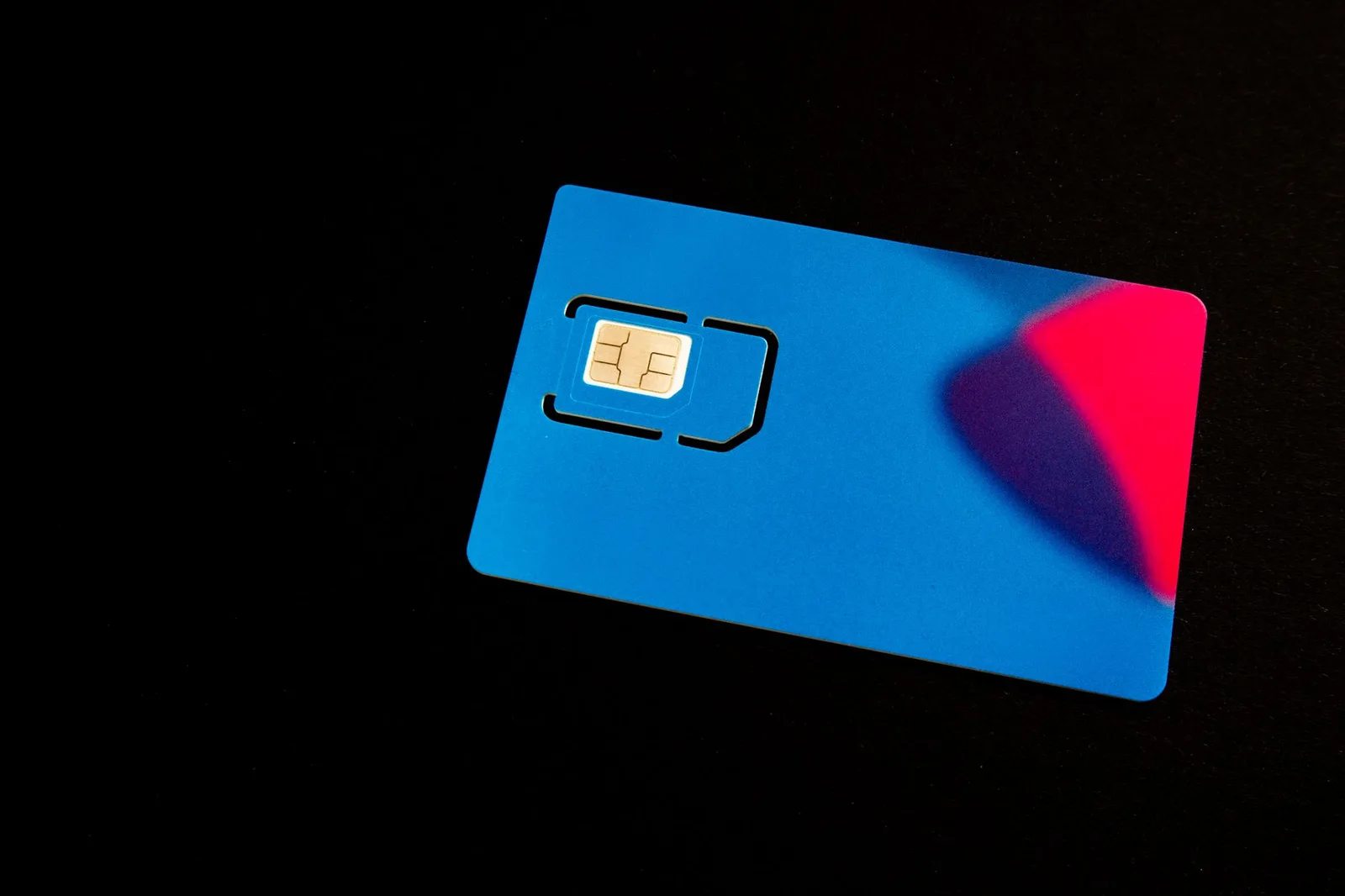
Buy a prepaid SIM from a carrier in the country you are visiting and you pay local rates — almost always the cheapest data and calls available, and unbeatable for a long stay in one country. The trade-offs: a new local number, physically swapping your SIM (keep the tray tool and home SIM safe), and passport registration — sometimes a photo — now required for tourist SIMs in most countries. If people back home need you, have them WhatsApp you rather than your old number.
eSIM: the middle path
An eSIM is a SIM built into your phone, activated by scanning a code — no plastic to swap, and your home SIM stays active for calls while a travel eSIM handles data. It is the fastest way to land already connected, and regional plans spanning several countries suit multi-stop trips. The limits: your phone must support eSIM, and a data-only eSIM will not carry calls or texts on your normal number. We compare eSIMs against physical local SIMs in detail, with Nepal and wider Asia in mind, in our companion guide, eSIM vs local SIM in 2026.
The EU "roam like at home" advantage
If your plan is from an EU or EEA country, you already have the best deal going. Under the EU's "roam like at home" rules, travelling to another country in the zone costs nothing extra — you use your domestic minutes, texts and data at home prices, including for calls you receive. The rules cover the EU plus Iceland, Liechtenstein and Norway, and have applied since 2017. Two honest caveats: a fair-use policy lets operators cap roaming data on very cheap or unlimited plans, and spending more time abroad than at home over a rolling period can trigger small, regulated surcharges aimed at permanent roaming. Beyond the zone, though, a European heading to Asia or the Americas is back to the four options above.
Data-only vs voice, and keeping your number
Decide early whether you need traditional calls at all. Most travellers do not: with data or Wi-Fi you can call and message over WhatsApp, Signal or FaceTime, so a cheap data-only plan or eSIM is all you need. If you must keep your real number reachable — for a bank one-time code, say — the neatest fix is Wi-Fi calling: it routes calls and texts on your home number over any Wi-Fi connection, often at no extra cost. Enable it before you leave and you get both — a local data SIM or eSIM for everyday use, your own number still ringing over Wi-Fi.
In Nepal: a cheap airport SIM, with honest limits high up
Landing in Kathmandu, you have two local carriers — Ncell and state-owned Nepal Telecom (NTC / Namaste) — and both sell tourist SIMs at counters in the arrivals hall at Tribhuvan International Airport. Bring your passport and a passport photo; a data-loaded SIM costs very little. Coverage is good across Kathmandu, Pokhara and most lower trekking towns, and NTC tends to reach further into the mountains. Be realistic about the high country: signal thins as you climb and disappears on remote, high-altitude sections, so no SIM gives you full bars to base camp. Treat teahouse Wi-Fi as your backup on the highest days, carry a power bank because cold drains batteries fast, and warn people at home about the quiet stretches. If you are still shaping the trip — a short Poon Hill trek or the full Everest Base Camp trek — we can help you plan around where the signal drops.
Get this decision right and it costs a few dollars, not a few hundred. The same discipline pays off at the airport: see our guide to the hidden airline fees that cost you hundreds in 2026.
Cover photo: Pascal 📷 via Pexels (Pexels License).
来源: European Commission — Your Europe: mobile roaming costs
计划徒步?
我们负责许可证、后勤与向导
NMA 认证的本地向导,价格透明,自 1998 年以来 5,000+ 次徒步。告诉我们你的日期,其余的交给我们。


更多「Gear & Tech」

Gear & Tech
How to Travel Carry-On Only in 2026 (Pack Light, Skip Baggage Fees, Never Lose a Bag)
The carry-on-only method — the 100ml liquids rule, capsule packing, worn layers and sink laundry — and how it dodges every checked-bag fee, all the way to Kathmandu.
Gear & Tech
Travel Adapters & Power Banks in 2026: What to Pack (and the Airline Rules You'll Break by Accident)
Nepal runs 230V on Type C/D/M plugs, and your power bank flies in the cabin only — up to 100Wh with no approval, 100-160Wh with permission, over 160Wh banned. The 2025 crackdown, the watt-hour maths, and a charging plan that beats teahouse fees.

Gear & Tech
How to Choose a Carry-On Travel Backpack in 2026 (Sizes, Airline Limits & What Matters)
One number decides whether your pack flies free or gets gate-checked. Here are the real 2026 airline carry-on limits, the 40L-vs-45L call, and the features that actually matter — from an operator who fits trekkers into Lukla flights every week.