
Baggage & Lost-Luggage Travel Insurance in 2026: What It Really Pays (and Who Owes You First)
Baggage cover in 2026, decoded: delayed vs lost vs damaged luggage, the per-item and single-article limits nobody reads, why valuables are excluded, and the Montreal Convention rule that makes your airline pay before your insurer.

Nothing sours the start of a trip like standing at an empty carousel while your bag rides the belt in another city. "Baggage cover" is the travel-insurance benefit people assume will make that whole again — and the one they understand least. It is not a blank cheque for the value of your suitcase, it is not the first party on the hook, and it quietly caps or excludes the exact things you most want protected. Here is what baggage cover actually pays in 2026 — delayed versus lost versus damaged — who owes you money first, and the proof that decides whether you see any of it.
The short version
- Baggage cover splits into three different claims: delayed (temporary, buy-essentials money), lost (gone for good) and damaged. They pay differently and need different proof.
- Your airline pays first. Under the Montreal Convention the carrier is liable for destroyed, lost, damaged or delayed checked baggage up to about 1,519 SDR per passenger — insurance sits on top of that, it does not replace it.
- Payouts are on depreciated value, not what you paid new — and are capped two ways: an overall baggage limit and a much smaller single-article / per-item limit.
- Valuables and electronics are routinely capped or excluded — cameras, laptops, phones, jewellery — especially anything left in the checked hold.
- No airline report, no receipts, no claim. The paperwork you gather at the airport is the claim.
Delayed, lost, damaged — three different promises
Delayed baggage is the common one. Your bag is merely late, and the benefit reimburses reasonable emergency essentials — toiletries, a change of clothes — bought while you wait, once the delay passes a policy trigger (often measured in hours after arrival). It is a small, receipt-driven sum, and anything the airline later delivers is still yours.
Lost baggage engages when the bag never turns up. Most carriers treat baggage still undelivered after 21 days as lost, and only then does the "permanent loss" side of your policy pay out — on the depreciated value of the contents, up to your limits.
Damaged baggage covers the case or its contents arriving broken. Wear and tear, minor scuffs and manufacturer defects are excluded; you are claiming for genuine transit damage, and the airline usually wants to see it before you leave the airport.
The airline pays first — before your insurer
This is the step travellers skip, and it costs them. For international flights, the Montreal Convention makes the airline legally liable for your checked baggage — destroyed, lost, damaged or delayed — up to roughly 1,519 SDR per passenger (Special Drawing Rights, a currency basket worth well over US$2,000 at 2026 rates). That is the airline's money, owed to you by treaty, and it comes first. Your travel insurer expects you to claim from the carrier before you claim from the policy, and will often only cover the shortfall, your excess, or items the airline declines. File the airline claim within its strict written time limit (short for damage, a little longer for delay — check your carrier's exact deadline) or you can forfeit both.
| Situation | Who pays first | What you can claim | Proof you need |
|---|---|---|---|
| Delayed | Airline (duty to deliver); insurer's delayed-baggage benefit on top after the time trigger | Reasonable emergency essentials — toiletries, basic clothing — up to a modest cap | Airline PIR / file reference, arrival time, and receipts for every essential bought |
| Lost | Airline under Montreal Convention (up to ~1,519 SDR); insurer covers the shortfall / excess | Depreciated value of contents, within overall and per-item limits | PIR, airline "declared lost" confirmation, itemised list, and receipts / proof of ownership |
| Damaged | Airline (report before leaving the airport); insurer for the balance | Repair cost or depreciated replacement of the case / contents | Damage report filed at the airport, photos, and the damaged item retained |
Claim it in the right order
Do the airline step at the airport, before you walk out. Find the baggage desk and file a Property Irregularity Report (PIR) — that reference number is the spine of every later claim. For damage, insist they inspect and log it there and then; a bag reported "fine" on the concourse is very hard to claim for the next day. Only once the airline has paid, declined, or formally declared the bag lost do you go to your insurer — with the PIR, the airline's response, and your receipts. Skip the airline and most policies simply won't pay.
The two caps that catch people: overall limit and per-item limit
Every baggage policy carries an overall limit for all your luggage combined — and a far smaller single-article limit that caps what any one item can claim, whatever its real value. A generous-sounding total is meaningless if a per-item limit values your expensive camera at a fraction of its worth. There is often a separate, lower valuables sub-limit pooling everything precious. Figures vary enormously between insurers, so read the single-article and valuables limits on your own certificate before you rely on them. And payouts are on depreciated value: a three-year-old jacket pays what it is worth now, not what you paid.
Why valuables and electronics are the weak spot
Cameras, laptops, phones, drones, jewellery and cash are where baggage cover is thinnest. Many policies exclude or heavily cap valuables carried in the checked hold entirely — the reasoning being that you should never check them — and some exclude electronics from baggage cover unless bought as a named, itemised add-on. Cash is usually excluded or capped to a token sum. The practical rule writes itself: anything expensive, fragile or irreplaceable travels in your carry-on, where the airline's hold-baggage liability and most policy exclusions don't reach it. If you must insure a specific high-value item, list it by name on the policy and keep the receipt.
The Kathmandu connection — pack for a late bag
This is not abstract for a Himalayan trip. Most trekkers reach Nepal on a connection through the Gulf or Delhi, and a missed transfer or a tight Kathmandu turnaround is exactly how a checked trek duffel arrives a day late — sometimes on the morning your mountain flight to Lukla or your drive to the trailhead leaves. Insurance money for emergency socks does not conjure broken-in boots at 5am. So build your own insurance into the carry-on: trekking boots, base layers, prescription medication, headlamp and your down jacket ride in the cabin bag, every time. A delayed duffel becomes an inconvenience instead of a lost first trek day. We also build a buffer day in Kathmandu into itineraries like our 14-day Everest Base Camp trek for precisely this margin.
Baggage cover is worth having, but it is the backstop, not the front line: claim from the airline first, know your per-item and valuables limits before you fly, and keep the expensive things on your back. For the full picture, see what travel insurance actually covers in 2026 and how the trip-delay and missed-connection benefits work when the same late flight strands both you and your bag.
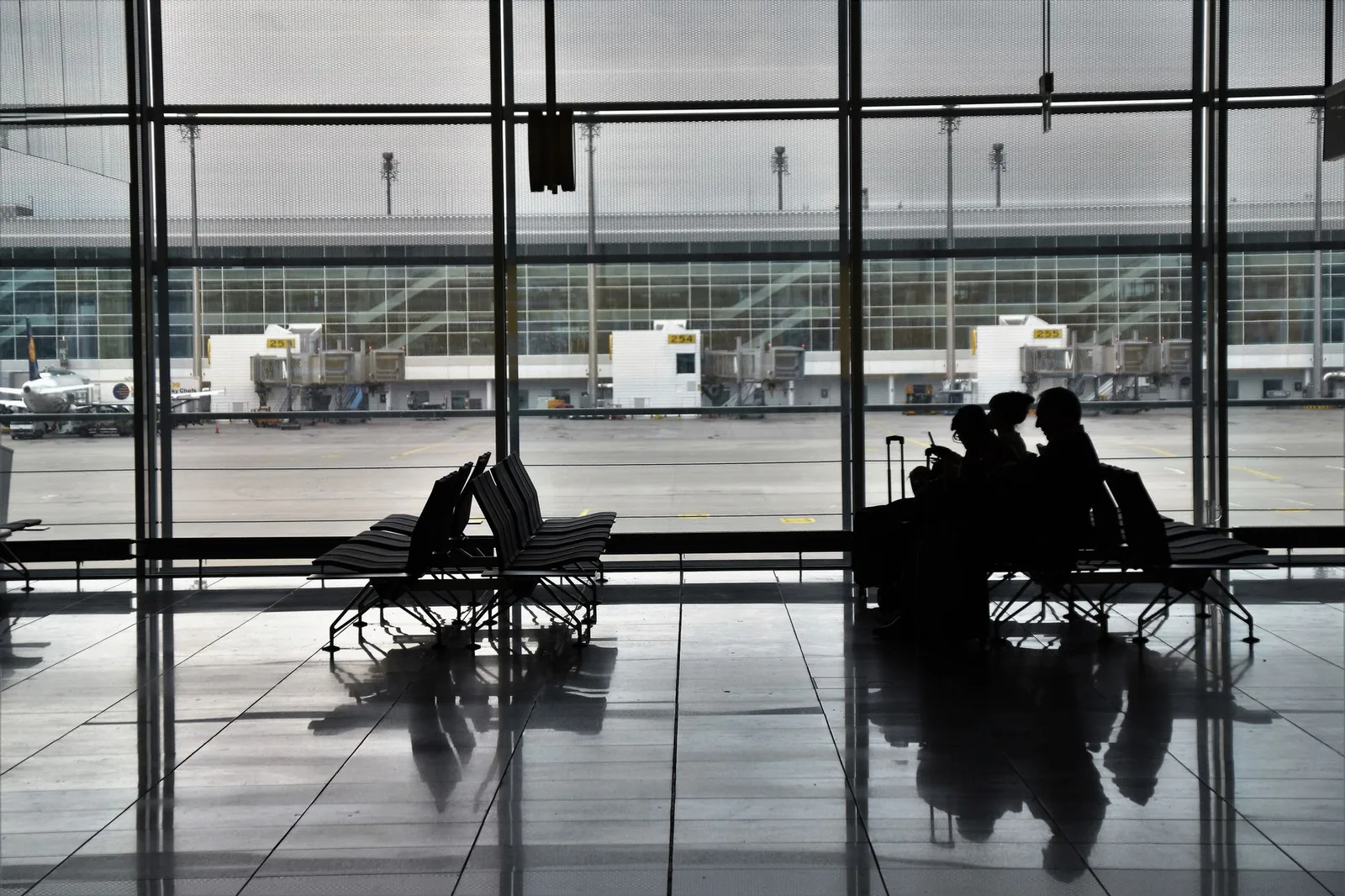
Cover photo: Asad Photo Maldives via Pexels (Pexels License).
来源: Wikipedia — Montreal Convention
计划徒步?
我们负责许可证、后勤与向导
NMA 认证的本地向导,价格透明,自 1998 年以来 5,000+ 次徒步。告诉我们你的日期,其余的交给我们。


更多「Money & Insurance」
Money & Insurance
Family Travel Insurance in 2026: Who's Covered, the 'Kids Go Free' Catch, and the Altitude Check
How family and group travel insurance really works in 2026 — whether children are covered under a parent's policy, the "kids go free" catch, single-parent and adult-child rules, and the altitude check every trekking family must make.

Money & Insurance
Trip Delay & Missed-Connection Insurance in 2026: What the Delay Benefit Actually Pays
Travel-delay and missed-connection cover reimburse the meals and hotel bed you're forced to buy when a flight is held up — but only after a trigger, and only with receipts. Here's how it works, and how it differs from the airline's own EU261/UK261 duty of care.

Money & Insurance
Cancel For Any Reason (CFAR) Travel Insurance in 2026: What It Really Covers
CFAR is an optional upgrade, not standard cover — it pays back a partial share (typically 50–75%) if you cancel for any reason, but only under strict timing rules. Here is how it works and when it is worth the extra premium.