
Trip Delay & Missed-Connection Insurance in 2026: What the Delay Benefit Actually Pays
Travel-delay and missed-connection cover reimburse the meals and hotel bed you're forced to buy when a flight is held up — but only after a trigger, and only with receipts. Here's how it works, and how it differs from the airline's own EU261/UK261 duty of care.
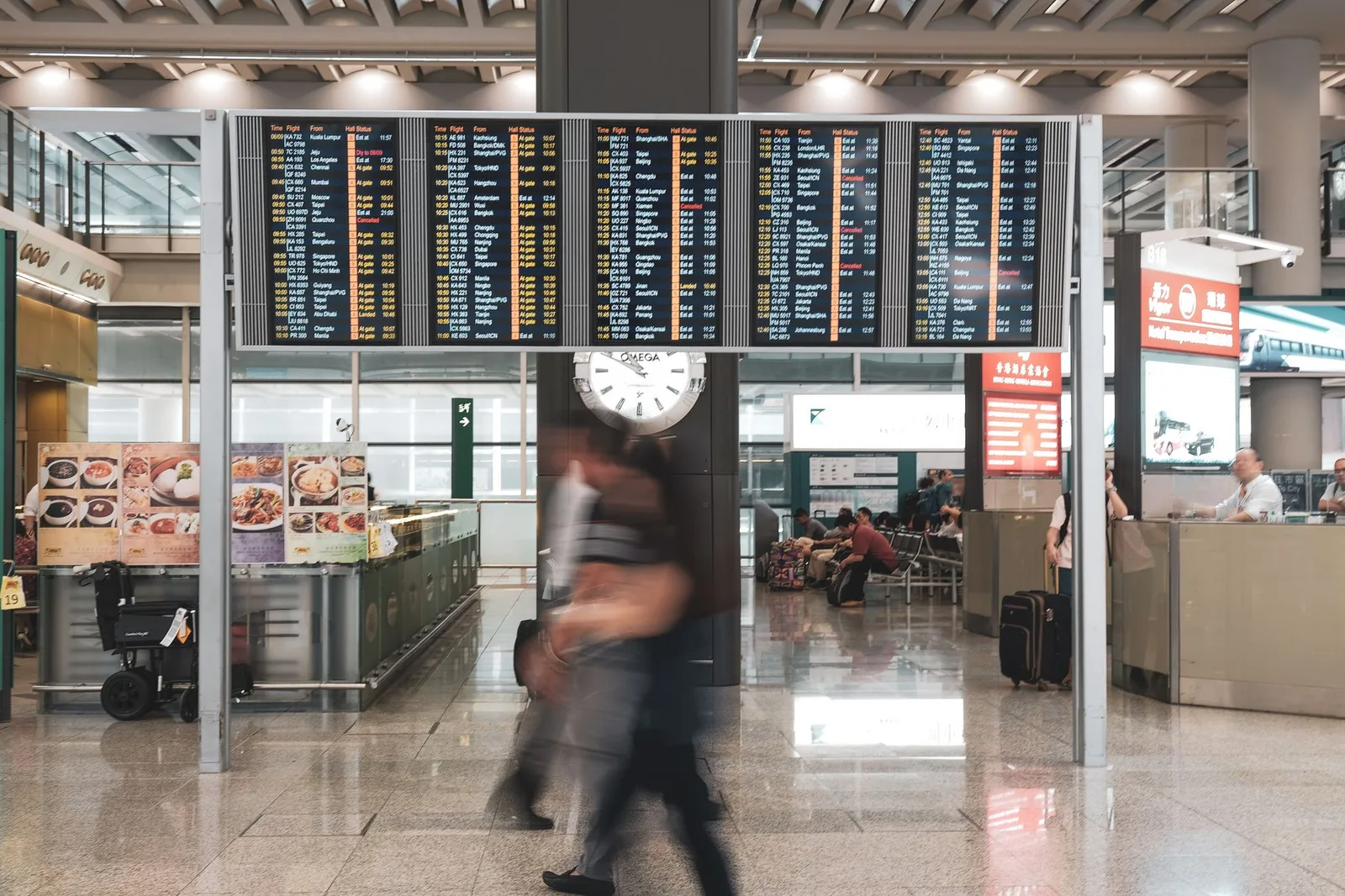
At a glance
- Published
- TopicMoney & Insurance
- Verified againstEuropean Commission — Air passenger rights (EU Regulation 261/2004)
- Treks coveredEverest Base Camp Trek — 14 Days, Everest Base Camp Trek — 15 Days, Annapurna Circuit Trek — 13 Days
Of all the promises in a travel policy, the "travel delay" benefit is the one people use most and understand least. It is not a payout for a late plane, and it is not the compensation your airline owes you by law. It is a modest, receipt-driven reimbursement for the meals and hotel bed you were forced to buy while stranded — and it only starts once your flight is held up for a set number of hours. Here is what the travel-delay and missed-connection benefits actually pay in 2026, how they sit alongside the airline's own legal duty of care, and the paperwork that decides whether you get a penny back.
The short version
- Travel delay reimburses reasonable meals and accommodation once a delay passes a policy trigger — a threshold that often kicks in after 6–12 hours and varies enormously by policy.
- It usually pays a capped amount per person, per hour or per day, up to an overall limit. The exact figures differ by insurer, so read your own certificate.
- Missed connection is a separate benefit: it covers catch-up costs when a delay makes you miss an onward flight, transfer or cruise departure.
- This is not the airline's legal duty of care. Under EU261 and the UK's retained UK261, the airline itself must feed and house you during a long delay — for free, on top of any insurance.
- No receipts, no delay confirmation, no claim. The benefit is only as good as the paper you keep at the airport.
What "travel delay" actually pays
The benefit covers the out-of-pocket costs of being stuck: an airport meal, a taxi, a hotel bed when the next flight is tomorrow. Two numbers govern it, and both live in your policy wording, not the marketing. The first is the trigger — the hours your departure must be delayed before anything pays. The second is the cap — a limit per person, often per hour or per day, under a total maximum for the trip.
Because those figures swing so widely between insurers, we will not quote a single "standard" number — anyone who does is guessing. Check three things before you travel: the delay length that triggers cover, whether it pays per hour or per full 12/24-hour block, and the overall ceiling. A benefit that only starts at 12 hours is close to useless for an ordinary two-hour hold; one that starts at 3 or 4 hours is genuinely worth having.
Missed connection is a different promise
Travel delay pays while you wait. Missed connection pays for the knock-on: when a late inbound flight makes you miss a connecting flight, transfer, train or cruise you had already booked. It typically covers the reasonable cost of catching up — a new onward ticket, an extra hotel night, local transport — up to a stated limit. The catch most travellers miss is the minimum connection time: if you booked a self-assembled itinerary with a tight, non-through-checked gap, some policies will not treat the missed leg as covered. Through-ticketed connections on a single booking are far safer ground.
This is not the airline's duty of care
Here is the distinction that saves people real money: your insurer's delay benefit and the airline's legal obligation are two separate pots, and you can claim both. For flights departing the EU (and, in mirrored form, the UK), EU Regulation 261/2004 gives you a statutory "right to care" during a long delay — the airline must provide meals and refreshments in proportion to the wait, and hotel accommodation plus transfers if you are kept overnight. This is free and separate from any ticket refund or cash compensation. The care thresholds, verified against the regulation, are:
| Situation | What the airline owes (EU261/UK261 duty of care) | What travel insurance adds |
|---|---|---|
| Delay of 2+ hrs (short haul, up to 1,500km) | Meals, refreshments, two phone calls/emails — free | Reimburses extra costs above the airline's provision, per your policy trigger |
| Delay of 3+ hrs (medium haul, 1,500–3,500km) | Same care, plus possible cash compensation (€400) if the delay is the airline's fault | Meal/hotel reimbursement if your policy threshold is met |
| Delay of 4+ hrs (long haul, over 3,500km) | Same care, plus possible cash compensation (€250 or €600 by distance) at 3+ hrs arrival delay | Higher likelihood of triggering your delay cap; may fund the onward catch-up |
| Kept overnight | Hotel plus airport transfers — free | Covers what the airline refuses or fails to arrange; missed-connection costs |
The euro figures above (€250 / €400 / €600 for qualifying cancellations and 3-hour-plus arrival delays, by flight distance) are the statutory EU261 amounts; the UK's post-Brexit UK261 mirrors the same structure in sterling. Note the crucial split: duty of care is food and shelter and applies even in bad weather; cash compensation only applies when the disruption is the airline's own fault, not an "extraordinary circumstance" like a storm. Insurance fills the weather-delay gap the airline never has to pay.
Keep these to claim
A delay claim lives or dies on paperwork gathered at the airport, not remembered afterwards. Keep: (1) written confirmation of the delay and its length from the airline — a delay stamp on the boarding pass, an email, or a screenshot of the board; (2) your original tickets and booking confirmations showing the scheduled times; (3) itemised receipts for every meal, taxi and hotel night you are claiming; and (4) any airline correspondence about the cause. Photograph everything before you leave the terminal. If you also intend to claim EU261/UK261 from the airline, ask staff in writing for the reason for the delay.
The exclusions that catch people out
Delay cover is narrower than it looks. Common exclusions: a delay you could reasonably have anticipated (a strike already announced when you booked); delays caused by your own late check-in; costs the airline already provided for (no double payment for the same hotel); itineraries that ignored the minimum connection time; and any claim without documentary proof. Many policies also exclude the first few hours by design — that is the trigger doing its job. And a delay benefit is not trip cancellation: if the whole trip collapses, a different part of the policy applies. We map the full picture of what a policy does and does not pay in our plain-English guide to what travel insurance actually covers.
Why this matters more in Nepal than almost anywhere
If you are flying into the mountains, the delay benefit stops being an abstraction. The domestic hop to Lukla — the gateway to Everest — is one of the most weather-sensitive flights in the world, and morning cancellations that push you a day or more are routine, not rare. Kathmandu's own schedules wobble in cloud and monsoon. Crucially, a weather delay is exactly the "extraordinary circumstance" that frees an airline from paying compensation, which is why your own delay and missed-connection cover carries the weight here. Two practical rules follow. First, build a buffer day into any Himalayan itinerary so a lost Lukla flight does not cost you the trek or your international connection home. Second, confirm your policy's delay trigger and missed-connection limit before you fly. We plan every trip with spare days built in for exactly this reason — see our 14-day Everest Base Camp trek for how the buffer works in practice. The mountain decides the schedule; the right cover decides who pays when it does.
Cover photo: Angelyn Sanjorjo via Pexels (Pexels License).
Planning a trek?
Trek this route with us — Everest Base Camp Trek — 14 Days
NMA-certified local guides, transparent pricing, 5,000+ treks since 1998. Message us your dates and we'll sort the permits, lodges and logistics — reply within 24 hours, no obligation.


Popular Nepal treks
All treks →


Related coverage

Money & Insurance
What Does Travel Insurance Actually Cover in 2026? (And the Exclusions That Catch People Out)
A plain-English guide to what a travel policy really pays for — medical, evacuation, cancellation, delay and baggage — and the fine-print exclusions that leave travellers with the bill.

Money & Insurance
Cancel For Any Reason (CFAR) Travel Insurance in 2026: What It Really Covers
CFAR is an optional upgrade, not standard cover — it pays back a partial share (typically 50–75%) if you cancel for any reason, but only under strict timing rules. Here is how it works and when it is worth the extra premium.
Money & Insurance
Travel Insurance for Backpackers & Long-Term Trips in 2026 (What Multi-Month Cover Actually Needs)
Long trips break the assumptions holiday insurance is built on. What single-trip, annual and backpacker policies really cover — the duration ceilings, adventure-activity tiers, gear limits and the gaps that void a multi-month claim.

Money & Insurance
Travel Insurance for Visiting the USA in 2026: Why You Need $1M+ in Medical Cover
American hospitals bill like nowhere else on earth. Before you add a US layover or a New York stopover to your Himalayan trip, here is the medical cover that actually protects you — and why a bare-minimum policy can leave you owing five or six figures.
Latest from the desk
World Destinations
Tourist Taxes in 2026: Which Destinations Charge Visitors and How Much to Budget
From Amsterdam's 12.5% hotel tax to Venice's day-tripper access fee, plus Bali, Bhutan and Japan — what the big-name destinations charge visitors in 2026, how it is collected, and how to budget for it (and where Nepal's trekking permits fit).

Deals & Routes
Package Holiday vs Booking It Yourself in 2026: The Real Cost, and the Protection Most DIY Travellers Miss
A package can cost more than booking flights and hotels separately — or less. But in the UK the bigger difference is legal: ATOL and the Package Travel Regulations give package buyers a refund-and-flight-home safety net that DIY trips rarely have.

Records & People
Missing for Six Days on Everest, With No Food, Water or Oxygen — How Dawa Sherpa Survived
A 52-year-old Everest guide vanished at 24,600 feet after losing his client on the descent. Six days later, a garbage-collection crew spotted him crawling down the Khumbu Icefall — barely alive.