
Travel Insurance for Backpackers & Long-Term Trips in 2026 (What Multi-Month Cover Actually Needs)
Long trips break the assumptions holiday insurance is built on. What single-trip, annual and backpacker policies really cover — the duration ceilings, adventure-activity tiers, gear limits and the gaps that void a multi-month claim.
At a glance
- Published
- TopicMoney & Insurance
- Verified againstMoney Saving Expert & World Nomads
- Treks coveredEverest Base Camp Trek — 14 Days, Manaslu Circuit Trek — 16 Days, Annapurna Circuit Trek — 14 Days
Long-term travel quietly breaks every assumption an ordinary travel-insurance policy is built on. A two-week holiday policy is written for one flight out, one flight home, and a beach in between. A backpacker crossing eight countries over nine months — picking up a dive course in Thailand, a via ferrata in the Alps, and a Himalayan trek at the end — is a different risk entirely, and the wrong policy leaves the most expensive things they'll do completely uncovered. Here is what multi-month cover actually needs in 2026, and the specific clauses that decide whether a long-trip claim gets paid.
The short version
- Standard single-trip policies are unlikely to cover a journey beyond roughly 60 consecutive days — long trips need dedicated backpacker, "gap year" or "extended leave" cover.
- World Nomads, one of the most traveller-facing insurers, sells policies for a maximum of six or twelve months depending on your country of residence.
- Adventure activities are tiered: World Nomads groups 150+ activities into six bands and you often must upgrade your "sporting level" for higher-risk ones.
- Comparison guides put the sensible minimum for emergency medical cover at around £2 million, including repatriation.
- Gear is capped by single-item and gadget sub-limits, and anything left "unattended" is routinely excluded.
- Add a Himalaya trek and altitude becomes the deciding clause — most policies cap trekking well below Everest Base Camp height.
Why a 12-month trip isn't just a long holiday
Travel insurance comes in three shapes, and long-term travellers buy the wrong one constantly. A single-trip policy covers one continuous journey; as of 2026, most standard versions stop being reliable somewhere around 60 days, and many simply won't quote beyond it. An annual multi-trip policy covers unlimited journeys in a year but almost always caps the length of each trip — often 30 to 45 days — so it is built for the frequent short-haul traveller, not the person who leaves and doesn't come back for eight months. The product that actually fits a long trip is backpacker or long-stay cover, sometimes sold as "gap year" or "extended leave" insurance, which is designed for a single extended journey across multiple countries.
The catch is duration ceilings. Even dedicated long-trip policies have a hard maximum — World Nomads caps its cover at six or twelve months depending on where you live — so a truly open-ended trip may need renewing or restructuring mid-journey. Buy on the actual shape of your trip, not on price.
| Policy type | Typical trip length | Best for / watch-out |
|---|---|---|
| Single-trip | One journey, usually up to ~60 days | Cheapest per trip; unreliable beyond two months |
| Annual multi-trip | Unlimited trips/year, each capped (often 30–45 days) | Great for frequent short breaks; the per-trip cap voids a long stint |
| Backpacker / long-stay | One extended trip, up to 6–12 months | Built for multi-country long trips; check the hard duration ceiling |
What multi-month cover actually needs
Once you're in the right product, four things decide whether it's worth carrying. Emergency medical, evacuation and repatriation is the number that matters most — comparison guidance points to at least around £2 million including a flight home, and the good policies also issue a Guarantee of Payment so a hospital treats you before you've paid. Adventure-activity level is next: ticking "hiking" is not the same as being covered for the specific activity band you'll actually attempt, and higher-risk pursuits usually need a paid upgrade. Baggage and gadgets come with per-item and total sub-limits, so a laptop or camera worth more than the single-item cap is only partly protected — and almost every policy excludes belongings left unattended. Finally, declare every pre-existing condition before you pay; an undeclared one is the fastest way to have a claim rejected outright.
Read before you buy
The most common long-trip mistake is the activity level, not the price. Travellers select an adventure add-on, see the word for their sport, and assume they're covered — without checking the altitude limit, depth limit or "sporting level" attached to it. If a single line on your certificate is set lower than what you'll actually do, the claim for that activity is void. Confirm the exact activity, altitude and limit in writing.
The gaps that void a long-trip claim
Long trips simply give you more time to hit an exclusion. The usual ones apply the whole way: incidents involving alcohol or drugs, possessions left unattended, and travel against your government's official advice (in the UK, an FCDO "advise against" notice) can all invalidate cover. Two extra traps catch long-haul travellers specifically. First, returning home partway through a backpacker policy may pause or end the cover, depending on the wording — check whether a mid-trip visit home restarts anything. Second, activities you drift into on the road — renting a scooter, an impromptu dive, a higher trek than planned — routinely fall outside the band you originally paid for. On a long enough trip, the plan always changes; the policy has to be able to change with it.
Adding a Himalaya trek to a long trip
This is where long-term travellers get caught in Nepal. Many finish a big trip with a trek — Annapurna, Manaslu, or Everest Base Camp — and their backpacker policy, perfect for nine months of buses and hostels, quietly stops working at altitude. Plenty of standard and even "adventure" policies cap trekking somewhere between 2,000m and 4,000m; Everest Base Camp sits at 5,364m, and the Annapurna Circuit's Thorong La and Manaslu's Larke Pass are higher still. Above the cap, the trekking claim — including the helicopter you'd need to get off the mountain — is simply excluded. Before you fly to Kathmandu, confirm your policy names your trek's maximum altitude and emergency helicopter evacuation in writing. We break down exactly what to check in our companion guide, the best travel insurance for high-altitude trekking in 2026.
If the Himalaya is the finale of your long trip, talk to us first. We'll tell you honestly what your dates, route and altitude demand from a policy — we sell no insurance and earn nothing from any provider — and help you plan a trek that fits the cover you can actually get.
Cover photo: Mattsjc via Wikimedia Commons (CC BY 4.0).
Planning a trek?
Trek this route with us — Everest Base Camp Trek — 14 Days
NMA-certified local guides, transparent pricing, 5,000+ treks since 1998. Message us your dates and we'll sort the permits, lodges and logistics — reply within 24 hours, no obligation.


Popular Nepal treks
All treks →


Related coverage

Money & Insurance
Annual Multi-Trip vs Single-Trip Travel Insurance in 2026: Which Actually Saves You Money?
An annual policy can be cheaper than buying cover trip by trip — but only past a break-even you can calculate yourself. Here's when it wins, the trip-length and adventure-sport limits that catch people out, and why altitude cover is a separate decision.
Money & Insurance
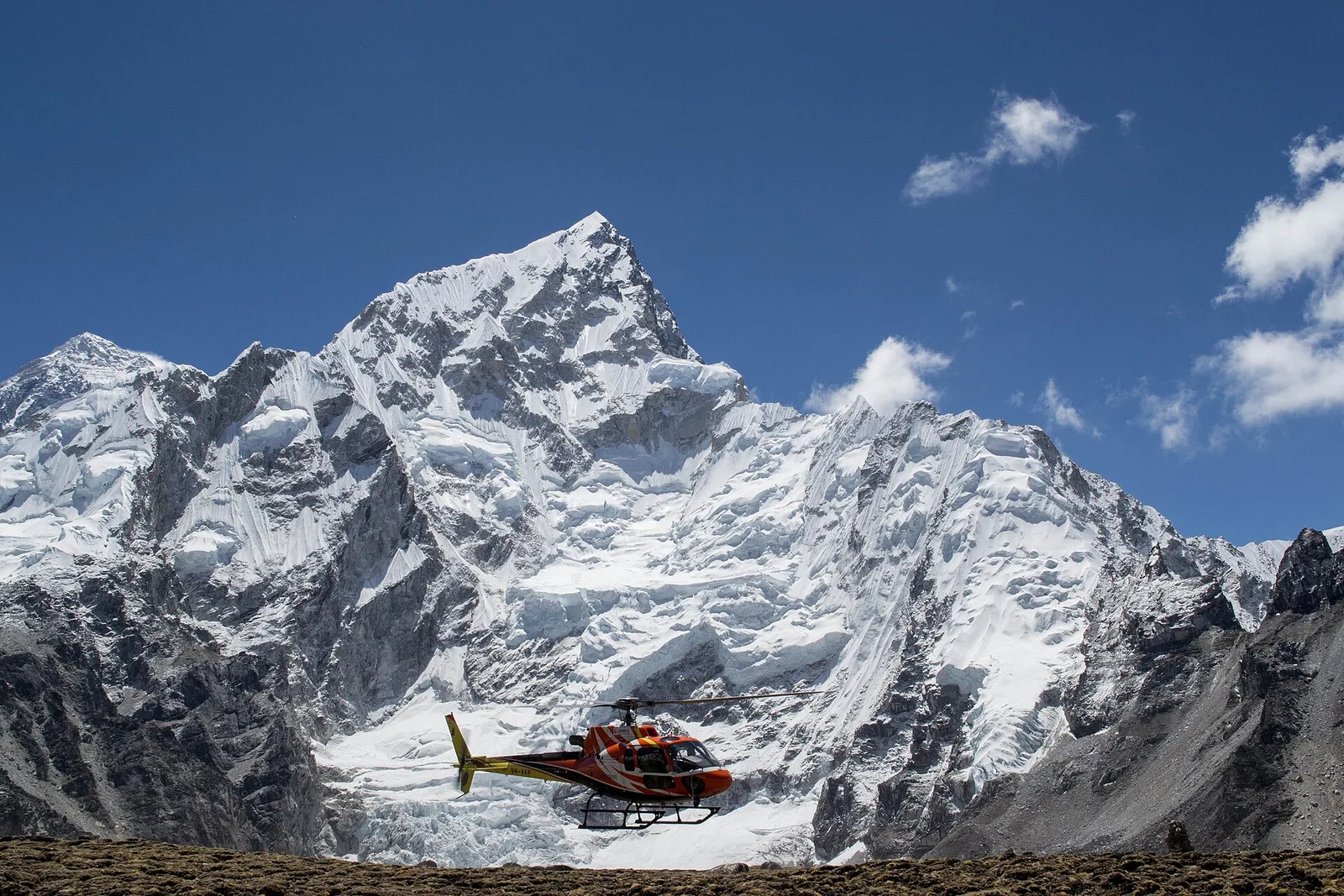
Best Travel Insurance for High-Altitude Trekking in 2026 (What Actually Covers Everest Base Camp)
Standard policies quietly stop at 4,000m — but Everest Base Camp is 5,364m. Which cover actually pays for a Himalayan helicopter rescue, the exclusions that void a claim, and how to check your policy before you fly.

Money & Insurance
What Does Travel Insurance Actually Cover in 2026? (And the Exclusions That Catch People Out)
A plain-English guide to what a travel policy really pays for — medical, evacuation, cancellation, delay and baggage — and the fine-print exclusions that leave travellers with the bill.

Money & Insurance
Travel Insurance for Visiting the USA in 2026: Why You Need $1M+ in Medical Cover
American hospitals bill like nowhere else on earth. Before you add a US layover or a New York stopover to your Himalayan trip, here is the medical cover that actually protects you — and why a bare-minimum policy can leave you owing five or six figures.
Latest from the desk
Safety & Advisories
Is Trekking in Nepal Dangerous? What the Real 2025/26 Death Data From Annapurna Shows
Twenty-five tourists died of altitude sickness in the Annapurna region this fiscal year, the highest total on record. Here's what Nepal's own numbers actually say about the risk, and how almost all of it is preventable.
Permits & Rules
Manaslu Circuit or Everest Base Camp? The Honest 2026 Comparison
Nepal just made its restricted treks easier to book solo, and nowhere benefits more than Manaslu. Here's how the permits, crowds, cost and difficulty actually compare against Everest Base Camp, trek by trek, dollar by dollar.

Visas & Entry
How to Renew Your Passport Fast in 2026 (US, UK & Processing Times)
Current UK and US passport fees and processing times, the six-month validity rule that quietly bars travellers from Nepal, how to expedite, and the mistakes that cost you weeks.