
Basic Economy Fares in 2026: The Traps, When It’s Fine, and the Real Cost After Add-Ons
Basic economy is the same seat with the extras stripped out — no seat selection, restricted carry-on, last to board, no changes. Here is what you give up, when it is genuinely fine, and how to work out the true cost.
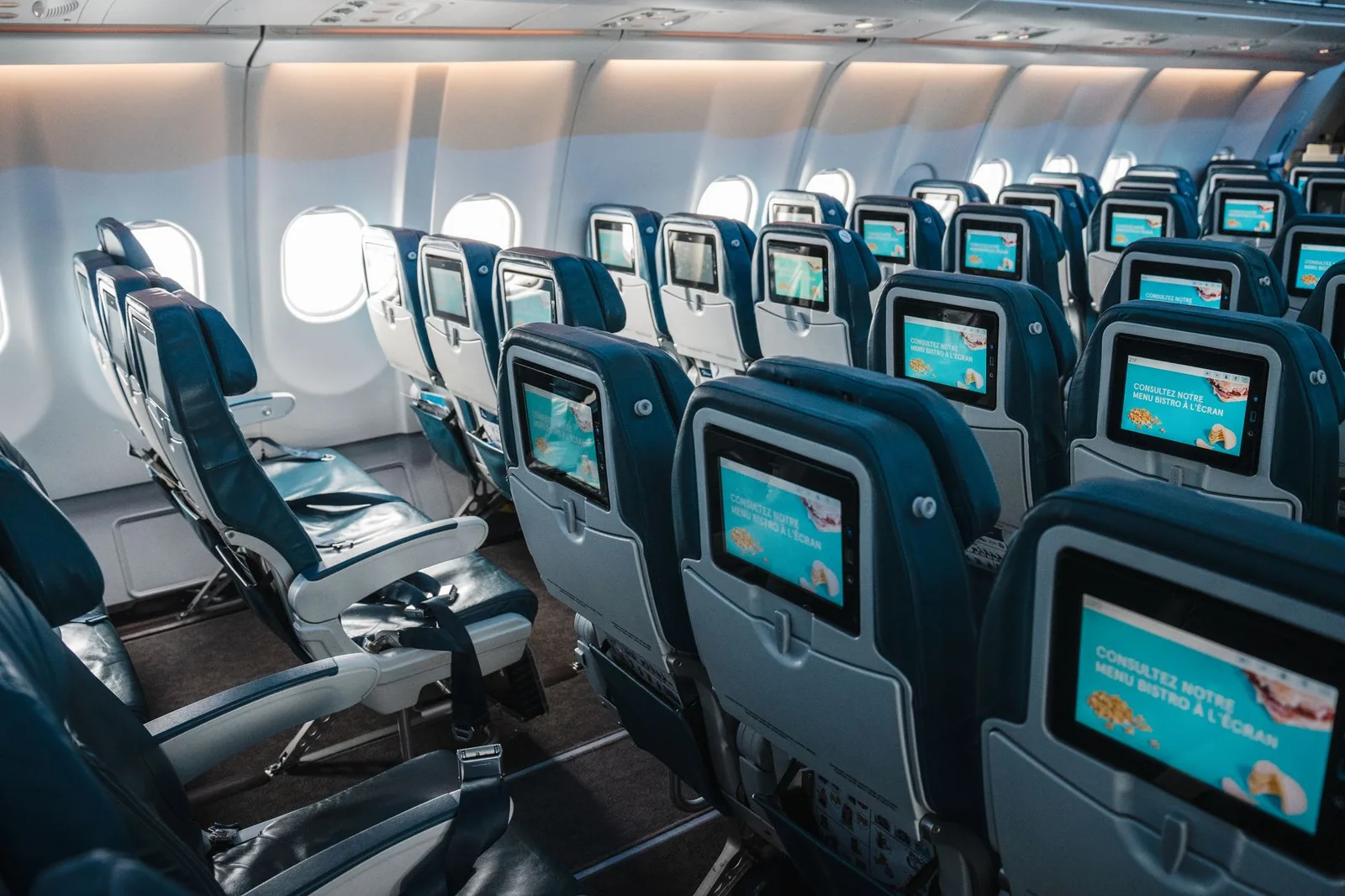
Key facts
- Basic economy is the cheapest fare tier at most major airlines — the same cabin and seat as standard economy, but with the extras stripped out.
- The common trade-offs: no advance seat selection, a restricted or paid carry-on on some carriers, last boarding group, no changes or refunds, no upgrades, and no guarantee your group sits together.
- Delta introduced the fare class in 2012; United, American, Alaska (Saver), JetBlue (Blue Basic), Hawaiian (Main Cabin Basic) and — from 2025 — Southwest all now sell a version of it.
- The exact rules differ by airline and change often, so the only safe number is the one on your own fare screen: always read the fare rules before you buy.
Basic economy is the fare that looks like a bargain and sometimes is one. You are in the same cabin, in the same seat, eating the same (or no) snack as the person who paid more — the difference is everything around the seat. Airlines built this fare class to compete with budget carriers on the headline price while quietly removing the flexibility frequent flyers take for granted. Whether it is a smart buy or a trap comes down to one honest calculation: what does the cheap fare cost once you add back the things you actually need?
What basic economy actually is
It is a pricing tier, not a different plane. Delta launched it in 2012 and the rest of the industry followed: United, American, Alaska (branded Saver), JetBlue (Blue Basic), Hawaiian (Main Cabin Basic) and, from 2025, Southwest. The strategy is deliberate market segmentation — the restrictions exist to nudge you into paying for standard economy. That is not a scam; it is a menu. The problem is that the menu is easy to misread at the moment of booking, when the only number on screen is the lowest one.
What you give up
The restrictions are broadly consistent across carriers, even if the fine print differs:
- No advance seat selection. You are usually assigned a seat free only at check-in — which means a middle seat, and no say in it.
- Carry-on limits. Some airlines allow a full cabin bag; others (and most low-cost carriers) include only a personal item and charge for anything larger. This one varies the most, so check the fare rules for your specific airline.
- Last to board. Basic economy typically boards in the final group, so overhead-bin space may be gone by the time you reach your row.
- No changes or refunds. These fares are generally locked. If your plans move, you usually lose the ticket.
- No upgrades. You normally cannot buy up or use miles/status to move to a better cabin, and you may earn reduced frequent-flyer miles.
- Families split up. Because seats are assigned late and at random, there is no guarantee a couple, or a parent and child, will sit together.
| Feature | Standard economy | Basic economy |
|---|---|---|
| Advance seat selection | Included or available to buy | Usually none — seat assigned at check-in |
| Carry-on bag | Full cabin bag included | Personal item only on some carriers; cabin bag may cost extra |
| Boarding order | Earlier groups | Last group |
| Changes & cancellations | Often no change fee (fare difference applies) | Generally not permitted — non-changeable, non-refundable |
| Upgrades & mileage | Upgrade-eligible; full miles | No upgrades; often reduced or no miles |
| Sitting together | Manageable in advance | Not guaranteed |
When basic economy is actually fine
It is a genuinely good deal when the trade-offs cost you nothing. If you are travelling solo, carrying only a personal item that fits under the seat, flying a short non-stop on a fixed date you will not change, and you do not care where you sit or when you board, basic economy is simply the cheapest way to get there. In that scenario you are paying full price for services you would never use — so don't.
How to work out the real cost
Never compare the basic-economy headline against the standard fare. Compare totals. Start with the basic fare, then add back only what you truly need: a cabin bag if it is not included, a seat assignment if you must sit in a particular spot or beside a companion, and — the big one — the value of being able to change your ticket. Once a bag and a seat are added, the gap to standard economy often shrinks to a few dollars, and standard usually wins because it also carries the flexibility for free. The extras are predictable; the trick is adding them up before you buy, not at the gate where they cost the most. Our field guide to the hidden airline fees that cost you hundreds in 2026 breaks down the typical add-on amounts, and our hand-luggage size and fees guide covers the cabin-bag rules airline by airline.
The long-haul-to-Nepal angle
For a short domestic hop, basic economy is a rational gamble. For the journey to Kathmandu, it usually is not. A trek to Nepal from Europe, North America or Australia is a 15-hour-plus trip across two or three legs, often with an overnight connection — exactly the situation where being unable to pick a seat, being last to board a full long-haul cabin, and being locked out of any change become real costs rather than minor annoyances. Add the tight onward connection to Lukla, where a single delayed or cancelled mountain flight can force you to rebuild your whole itinerary, and the no-changes rule stops being theoretical. On the routes that matter for a Himalayan trip, the standard fare's flexibility is usually worth paying for.
Once you have landed, the hard logistics are ours to carry. If you are planning the trip, our Everest Base Camp trek and Annapurna Base Camp trek come with the Kathmandu–Lukla flights, buffer days and permits built in — so the only fare you need to think hard about is the one that gets you to Nepal. Talk to our team and we will help you time it.
Cover photo: Clément Proust via Pexels (Pexels License).
计划徒步?
我们负责许可证、后勤与向导
NMA 认证的本地向导,价格透明,自 1998 年以来 5,000+ 次徒步。告诉我们你的日期,其余的交给我们。


更多「Deals & Routes」
Deals & Routes
Are Last-Minute Flight Deals Real in 2026? The Honest Answer (Mostly No)
For the routes most people fly, waiting until the last minute usually means paying more, not less. Here is when a genuine last-minute bargain is actually possible — and the smarter way to save.
Deals & Routes
Hand Luggage Size & Fees by Airline in 2026: Cabin-Bag Limits, Free vs Paid, and How to Dodge Gate Fees
Every airline draws the cabin-bag line in a different place. Here are the verified 2026 size and weight limits for Ryanair, easyJet, Wizz Air, BA and US carriers — plus the EU's push for a free cabin bag and the one Nepal flight stricter than them all.

Deals & Routes
Shoulder-Season Travel in 2026: The Sweet-Spot Months for Value, Fewer Crowds & Good Weather
Shoulder season — the weeks either side of the peak — buys you lower prices, thinner crowds and often great weather. Here is what it is, why it works, and a month-by-month guide for Europe, the Mediterranean, SE Asia and Nepal.