
Everyone has seen the Everest traffic jam photo, this is what standing in that line actually does to you
In 2019 a record 381 permits funnelled onto Everest during just two good-weather days put hundreds of climbers in a single queue above 8,000 m. Eleven died. The crowd, not the mountain, was the danger.
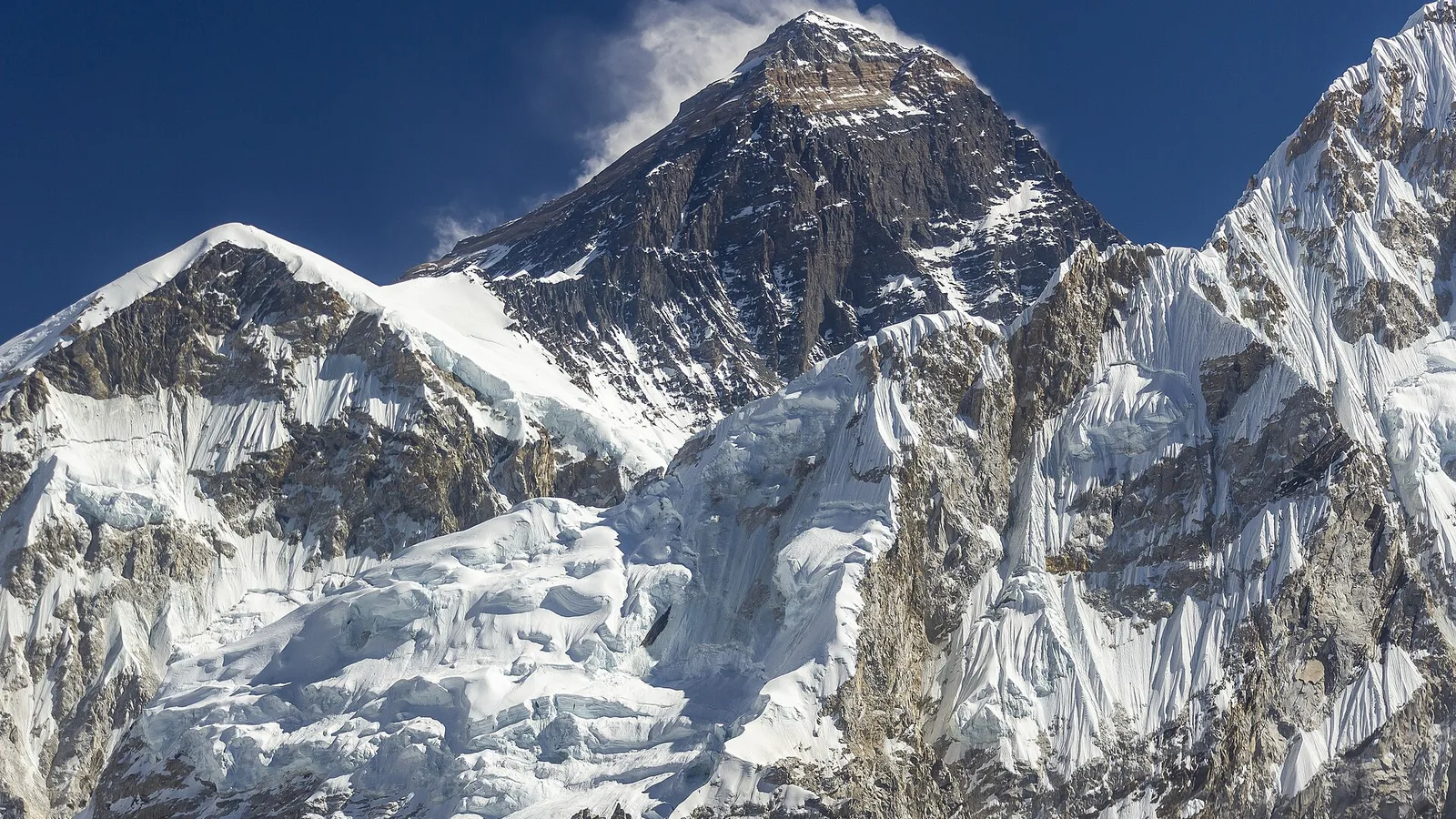
In the spring of 2019 a record number of climbers were funnelled onto Mount Everest during only two good-weather days, and the result was a queue of hundreds of people strung along the summit ridge in the “death zone” above 8,000 m. Eleven people died on the mountain that season. The photograph of that human traffic jam went around the world — but what the picture does not show is the slow, invisible thing a queue does to a body up there. On Everest the crowd itself can be the danger, not just the mountain.
At a glance
- Above 8,000 m the air holds roughly a third of the oxygen at sea level; the body is dying by the hour even at rest.
- In 2019 there were only about two viable summit-weather days all season, so nearly everyone attempted the top at once.
- Standing still in a queue burns bottled oxygen and exposes hands, feet and lungs to extreme cold with no way to warm up.
- Most of the deaths were attributed to exhaustion and altitude illness on crowded summit days, not to a single accident.
The photo that went around the world
On 22 May 2019 the Nepali mountaineer Nirmal “Nims” Purja photographed a dense, unbroken line of climbers snaking up the final ridge toward the Hillary Step and the summit. He later said there were roughly 320 people on the mountain that morning. The image landed on the front pages of the world’s newspapers because it punctured a myth: the top of the highest mountain on Earth, that day, looked like a rush-hour footpath. More than 200 people are thought to have reached the summit in that single window, and climbers reported waiting in the cold for two hours or more to pass the bottleneck below the top.
Why a queue is lethal up there
The summit of Everest sits in what climbers call the death zone — the altitude above roughly 8,000 m where there is too little oxygen to sustain human life for long, even with bottled gas. A climber’s body is deteriorating every hour: judgement blurs, muscles fail, and the risk of a fatal high-altitude brain or lung oedema climbs steeply. The plan that keeps people alive is speed — up and down through the death zone as fast as possible. A traffic jam destroys that plan. Every extra hour spent standing still burns finite bottled oxygen, and a climber who runs out high on the ridge is suddenly breathing air that cannot keep them conscious. The cold does the rest: motionless in a queue, with no exertion to generate heat, exposed fingers and toes freeze and frostbite sets in. This is also why the descent is so deadly — climbers reach the top late, spent and out of gas, then must reverse the whole exposed route, which is when many high-altitude deaths happen.
| 2019 Everest season | Figure | Why it mattered |
|---|---|---|
| Permits issued (Nepal side) | 381 | Most ever at the time; China issued 100+ more on the north side |
| Viable summit-weather days | ~2 | Compressed almost every team into the same short window |
| Climbers in the 22 May line | ~320 | Created the bottleneck below the Hillary Step |
| Wait at the bottleneck | 2+ hours | Burned oxygen and exposed climbers to frostbite |
| Deaths, 2019 season | 11 | Nine on the Nepal side, largely from exhaustion and altitude illness |
What actually caused the jam
The crowd was the visible cause, but it was the product of three things stacking up. First, Nepal issued a record 381 permits and did not cap numbers. Second, the rope-fixing to the summit was completed late and the weather refused to cooperate, leaving only a sliver of a window. Third, when that window opened, every team on the mountain went for it at once — because the alternative was to wait for a window that might never come. Put those together and you get hundreds of people trying to pass through a single knife-edge of rock at the same time, at an altitude where you cannot afford to wait. The mountain did not change in 2019. The management of the people on it did. We explain the counter-intuitive detail — that more climbers die coming down Everest than going up — and how thin the air really is in our guide to altitude sickness, AMS, HACE and HAPE.
These were not careless people. The climbers caught in that queue included seasoned mountaineers and first-timers alike, and most who died had done everything asked of them — they were simply held too long in a place the human body cannot tolerate. We name the season, not the individuals, out of respect for families who saw those images too. If you are weighing a Himalayan objective and want an honest conversation about risk and timing, message us on WhatsApp at +45 91 71 72 19 or through our contact page.
Stand under Everest without the death zone
You do not have to enter a summit queue to feel the scale of Everest. The classic trek walks you to Everest Base Camp at 5,364 m and to the Kala Patthar viewpoint, directly beneath the summit pyramid — no bottled oxygen, no bottleneck.
- Everest Base Camp Trek — 14 days · the classic, well-acclimatised itinerary
- EBC via Gokyo Lakes — 15 days · the quieter high route
Sources. Permit numbers and 2019 death toll: AFP and National Geographic, May 2019; Longreads, “The Traffic Jam on Mount Everest That Cost 11 Lives.” The 22 May queue and climber count: Nirmal Purja, via Outside and Forbes; wait times and summit-day numbers: Outside, “Yes, This Photo From Everest Is Real.” Death-zone physiology: general mountaineering and high-altitude medical record. Figures are given as reported for the 2019 season.
Cover photo: Bijay Chaurasia via Wikimedia Commons (CC BY-SA 4.0).
计划徒步?
我们负责许可证、后勤与向导
NMA 认证的本地向导,价格透明,自 1998 年以来 5,000+ 次徒步。告诉我们你的日期,其余的交给我们。


更多「Records & People」
Records & People
Why some 8,000-metre peaks get climbed thousands of times and others almost never
Everest has over 12,000 ascents and Cho Oyu thousands more; Annapurna I and Kangchenjunga barely a few hundred each. The gap between the most-climbed and least-climbed eight-thousanders is not about height.
Records & People
K2 vs Everest: Which Is Harder to Climb? The Honest Head-to-Head (2026)
K2 is 238 m shorter than Everest but kills roughly one climber in ten — a dimension-by-dimension comparison of height, technical difficulty, weather, rescue and death rate, and why K2 is “the Savage Mountain.”
Records & People
The 1996 Everest Disaster: What Happened, and What Changed
On 10–11 May 1996 a storm caught climbers high on Everest and eight people died. The sequence, the names, and the lessons that reshaped guided climbing — recounted with respect.