
Everest Just Had Its Busiest Climbing Season Ever. Climbers Also Left Behind 90,000 Kilograms of Trash.
A record 701 climbers pushed for the summit this spring, and the mountain's cleanup crews hauled down a record amount of waste right behind them.
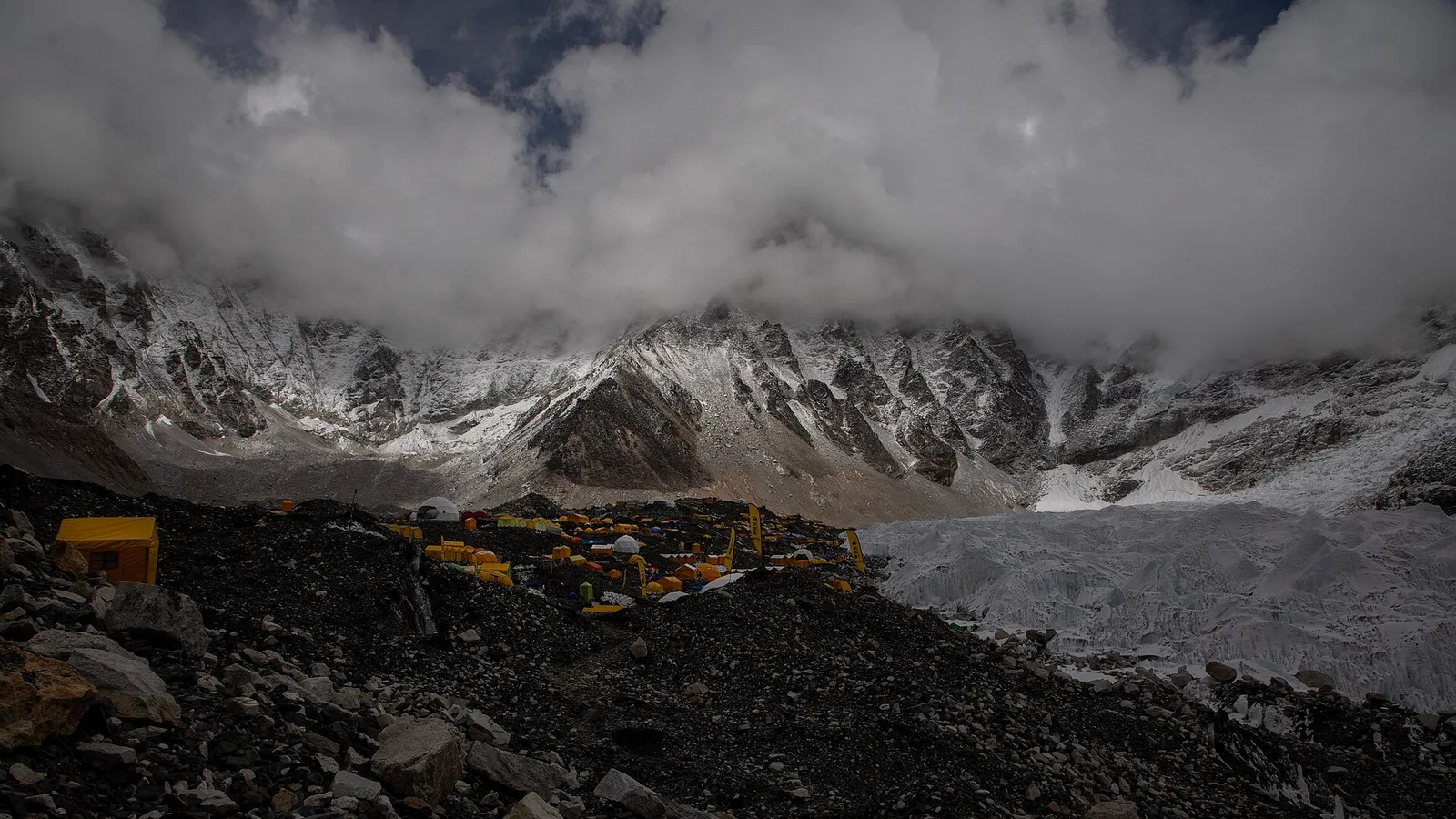
Two records were set on the south side of Everest this spring, and they belong to each other. The 2026 season was the busiest ever recorded on Everest, Lhotse and Nuptse combined, with 701 climbers active on the three peaks. By the time the last team packed up base camp, the Sagarmatha Pollution Control Committee (SPCC) had also hauled down its largest single-season waste total on record.
The number is not just a byproduct of more people on the mountain — it is also the first real result of a policy change. For years, garbage above Camp 2 was the mountain's hardest problem: oxygen canisters, tent fabric, food wrappers and worse pile up at Camp III and the South Col season after season, because an exhausted climber descending from 8,000 metres in a storm is never going to detour to pick up someone else's rubbish. This spring, for the first time, SPCC stationed rangers at Camp II specifically to check that descending climbers were carrying down waste from the high camps, not just meeting their quota with rubbish already sitting lower on the mountain. The Nepal government backed it with a rule, approved by the Ministry of Tourism on SPCC's recommendation, requiring every climber to bring down at least two kilograms of garbage from above 6,400 metres before reaching base camp at 5,350 metres.
Where the waste actually came from
| Collection point | Waste collected |
|---|---|
| Base Camp area (human, kitchen, mixed & recyclable waste) | 80,579 kg |
| Khumbu Icefall checkpoint | 6,522 kg |
| Camp III & South Col (non-recyclable waste) | 1,226 kg |
| Camp III & South Col (spent gas canisters) | 210 canisters |
The scale only makes sense against the last decade. A Nepali Army-led cleanup expedition in 2019 spent 45 days hauling roughly 11,000 kilograms of trash off the upper mountain — and recovered five sets of human remains exposed by thinning ice. A follow-up army campaign in 2024 removed a further 11 tonnes from the death zone, where retreating glacier ice is now surfacing decades of debris and bodies buried since the 1950s. Those were short, intensive campaigns aimed specifically at the highest camps. What is different in 2026 is that a full season's routine collection, working alongside the new carry-down rule, out-hauled either of them on its own.
What this means for trekkers
What this means for you
None of this is really about summit climbers alone — anyone walking to Everest Base Camp on foot or flying in on our Everest Base Camp helicopter tour is walking into a camp that is visibly cleaner than it was five years ago, and that is a direct result of SPCC's checkpoint system and the Sagarmatha National Park entry fees that fund it. It is also a reminder that the same discipline applies at trekker altitude: pack out your own rubbish, use the marked collection points in Gorak Shep and Lobuche, and do not assume someone else will carry it down for you. The mountain has just proven that the two-kilogram rule works when it is actually enforced — the same logic holds at 5,000 metres as it does at 8,000.
SPCC's next target, mountain officials have said, is closing the same gap on Lhotse and Nuptse's shared upper routes, where waste patterns mirror Everest's. For a mountain that receives more climbers every year, the 2026 season is the first real evidence that the trash problem can shrink even as the crowds grow — as long as someone is stationed at Camp II checking.
Sources: The Himalayan Times reporting on the SPCC 2026 season cleanup total and the Camp II ranger programme; Nepal Ministry of Tourism garbage carry-down regulation.
Cover photo: Sangyam adventurer via Wikimedia Commons (CC BY-SA 4.0).
计划徒步?
我们负责许可证、后勤与向导
NMA 认证的本地向导,价格透明,自 1998 年以来 5,000+ 次徒步。告诉我们你的日期,其余的交给我们。


更多「Industry & Tourism」
Industry & Tourism
Everest Base Camp or Annapurna Base Camp: Which Should You Actually Trek in 2026?
Both are sold as 'base camp treks' but they differ by 1,400 metres of altitude, a week of walking and a coin-flip mountain flight — here is how to pick the right one for your fitness, budget and time.
Industry & Tourism
Annapurna Circuit vs Tour du Mont Blanc: Which Great Loop in 2026?
Nepal's Thorong La at 5,416m against the Alps' hut-to-hut classic. One tests your lungs, the other grinds your legs — here's the honest, numbers-first comparison of two of the world's great trekking loops.
Industry & Tourism
How to Choose a Trekking Company in Nepal in 2026: The Licence Chain That Actually Protects You
A company registration, a Trekking Agency Licence, NTB registration, TAAN membership and a named, licensed guide — verify all five before you pay a deposit, not after you land in Kathmandu.