
The Schengen 90/180-Day Rule Explained (2026): How to Count Your Days and Not Get Banned
It is the most misunderstood rule in travel — and since April 2026 a biometric border system counts your days automatically. Here is how the rolling 180-day window really works, with worked examples, and what an overstay now costs.
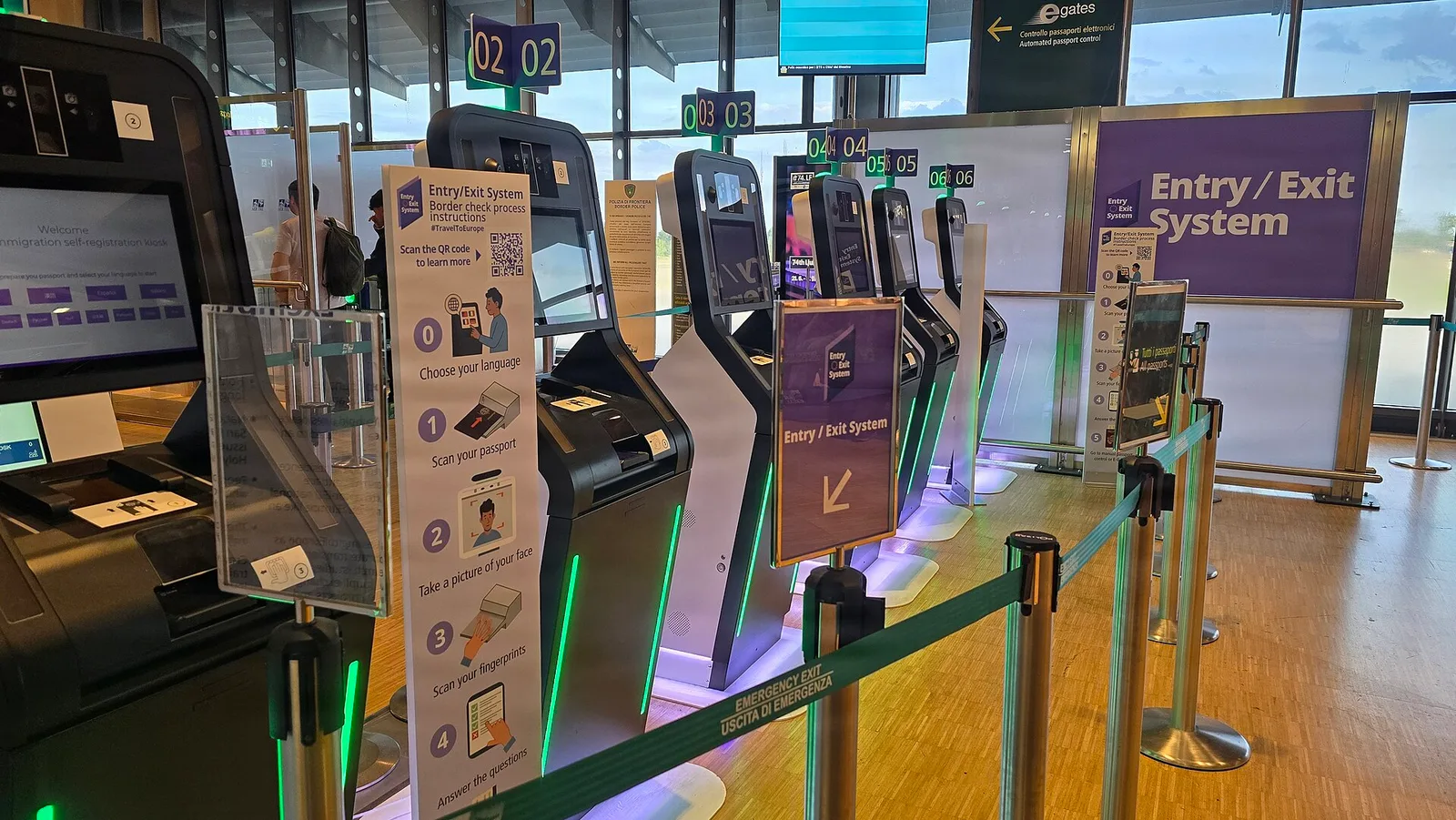
Here is the rule in one sentence: as a visa-exempt or short-stay visitor, you may spend a maximum of 90 days inside the Schengen Area in any rolling 180-day period. The word that trips everyone up is rolling. There is no annual reset, no fresh 90 days each calendar year, and — since April 2026 — no fuzzy passport stamp to argue over. A biometric computer now does the counting for you. Get it wrong and the penalty is no longer a stern look; it is an automatic overstay flag that can cost you your next trip. Verified against official EU sources as of August 2026, here is how to count correctly.
The rule at a glance
- 90 in 180. On any given day, look back over the previous 180 days. You may have been physically present in Schengen for no more than 90 of them.
- The window rolls daily. It is not a fixed calendar block. As old days pass out the back of the 180-day window, your allowance recovers gradually — one day at a time, not all at once.
- Every country counts as one. Days in France, Spain, Italy, Germany and the other Schengen states are added together. Hopping borders does not reset anything.
- Entry and exit days are full days. Land at 11:59 p.m. and that whole date is used. Arrival day and departure day both count.
- EES enforces it automatically. Since 10 April 2026 the biometric Entry/Exit System logs every crossing and calculates your days in real time.
How to count your days
Forget calendar years. Pick the day you plan to be in Schengen, count backwards 180 days from that date, and add up every day you were inside the zone during that window — including the day you entered and the day you left. If the total, with your planned trip added, stays at or below 90, you are compliant. If it tips over 90, you are in overstay territory. The European Commission publishes a free short-stay calculator that does exactly this arithmetic; use it before you book, not at the gate.
| Scenario | Days used in the 180-day window | Allowed? |
|---|---|---|
| 45 days touring in spring, then 45 days in autumn, spaced several months apart | 90 | Yes — the spring days roll off before autumn |
| 90 continuous days, then a weekend hop to London and straight back | 92+ | No — leaving does not reset the count |
| 89 days already used; you enter for one more day | 90 | Yes — but that is your last available day |
| 89 days already used; you stay two more days | 91 | No — one day over is still an overstay |
There is no "reset" trip
The most expensive myth in travel is that a quick exit — a weekend in London, a hop to Istanbul — buys you a fresh 90 days. It does not. Your days only come back as they age past 180 days from today. The border computer knows the difference; the old stamp let you bluff, EES does not.
EES now counts for you — and flags overstays automatically
The reason 2026 changed everything is the EU's Entry/Exit System (EES), which became fully operational at all external Schengen borders on 10 April 2026 after a phased rollout that began in October 2025. On your first crossing you register four fingerprints and a facial image; from then on, every entry and exit is logged digitally. The EES Regulation is explicit that the system exists to record your crossings, calculate the duration of your authorised stay, and generate an alert when it expires. In its early months the system had already flagged thousands of overstayers. There is no discretion and no ink to smudge — an officer sees your full crossing history and exact day count on screen.
What an overstay actually costs
Penalties are set by each Schengen country, not by Brussels, so they vary — but the shape is consistent and serious. Even a single day over 90 can trigger a fine, and longer overstays escalate to removal and a re-entry ban of one to several years that applies across the entire Schengen Area: banned from France means banned from Germany, Spain, Italy and the rest. An overstay recorded in EES also follows you into future decisions — including the coming ETIAS travel permit and any later visa application. The safe assumption for 2026: the system remembers, and there is no grace period to lean on.
If you need longer than 90 days
The 90/180 rule governs short stays only. If your plans genuinely need more time in one country — a sabbatical, remote work, study, retirement — the answer is a national long-stay (type D) visa or residence permit issued by that specific member state, not a clever pattern of exits. ETIAS, when it launches, is not an extension either; it is only a pre-travel authorisation for the same 90-day short-stay allowance. Apply to the consulate of the country where you will spend the most time, and do it well before you travel.
The Nepal contrast — and a gentler clock
If Schengen's rolling maths makes your head spin, Nepal is a refreshing change of pace. A tourist visa is issued on arrival to almost every nationality, in tidy 15-, 30- or 90-day blocks, extendable inside the country. The one ceiling to watch is an annual one: you may spend a cumulative maximum of 150 days in Nepal per calendar year, regardless of how many entries you make — a simple January-to-December total rather than a rolling window. That is plenty for a long Himalayan season. Many of our European guests time a spring or autumn trek precisely so their Schengen days recover at home while they are walking to Everest Base Camp or into the Annapurna Sanctuary.
Planning a trip that straddles Europe and the Himalaya? Tell us your dates and we will help you sequence it so the calendar works in your favour. Talk to our team before you lock in flights.
Cover photo: U.S. Army USAG-V by Randall Jackson via Wikimedia Commons (Public domain).
来源: European Commission — Migration and Home Affairs
计划徒步?
我们负责许可证、后勤与向导
NMA 认证的本地向导,价格透明,自 1998 年以来 5,000+ 次徒步。告诉我们你的日期,其余的交给我们。


更多「Visas & Entry」

Visas & Entry
The Cheapest Cities for Digital Nomads in 2026 (Cost of Living, Wi-Fi & Visas)
A verified, city-by-city look at where remote workers get the most for their money in 2026 — real monthly budgets, median internet speeds and which hubs actually offer a nomad visa (including an underrated Himalayan base).
Visas & Entry
The Easiest Countries to Visit in 2026: Visa-Free, Visa-on-Arrival and eVisa Destinations
Where you can still land with almost no paperwork in 2026 - the visa-free, visa-on-arrival and eVisa countries for US, UK, EU and Indian travellers, with Nepal as the friendliest border of all.