
Travel Money in 2026: Cash vs Debit vs Credit vs Prepaid Cards — What to Carry and How to Spend It
No single method wins abroad. Here is how cash, debit, credit and prepaid multi-currency cards really compare on fees — plus the dynamic-currency-conversion trap to dodge, how much cash to carry, and why Nepal’s trail runs on rupees.
Key facts
- No single payment method wins abroad — the traveller who spends the least carries a mix: a card for hotels and cities, cash for the places that take nothing else.
- The most expensive mistake is invisible: dynamic currency conversion (DCC), where a terminal offers to bill you in your home currency at a marked-up rate. Always choose the local currency instead.
- Cards carry foreign-transaction fees, ATM withdrawal fees and poor conversion rates. The exact numbers vary by card and bank — check yours before you fly.
- In Nepal, the trail is a cash economy: cards work in Kathmandu and Pokhara, but you carry rupees for the teahouse days.
You can research flights for a fortnight and still lose money the moment you land — not to a big obvious charge, but to a drip of small ones: a conversion markup here, a withdrawal fee there, an exchange desk with a tempting sign and a terrible rate. Getting travel money right in 2026 is less about finding one perfect card and more about carrying the right combination for where you are going, and knowing the one habit that saves the most at the point of sale. Here is the full picture.
There is no single best method — only the right mix
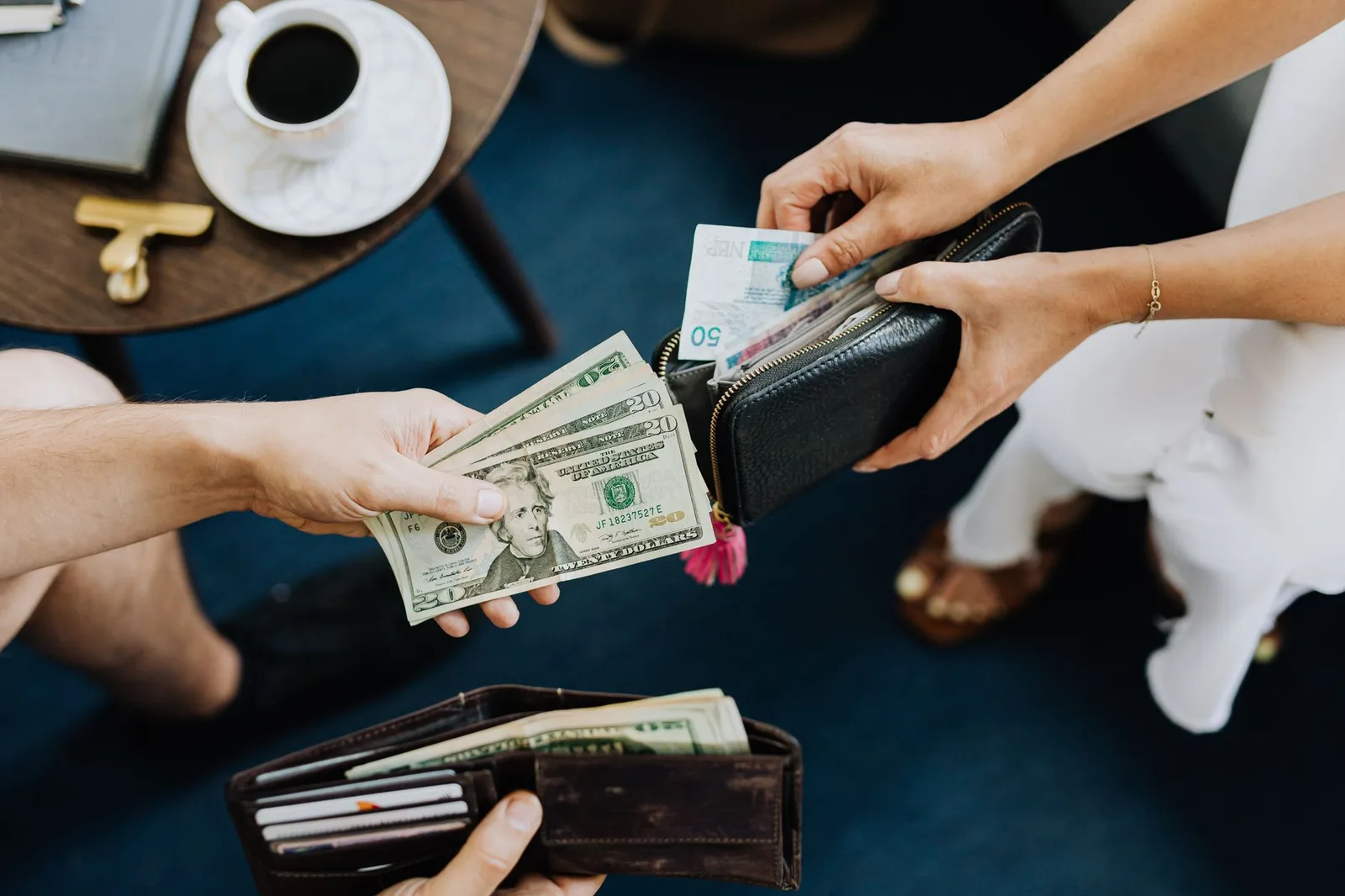
Cash, debit cards, credit cards and prepaid multi-currency cards each solve a different problem, and each has a failure mode. Cash is universally accepted and impossible to skim electronically, but it is gone for good if it is lost or stolen. Cards are secure and convenient, but useless where there is no terminal and no signal. The experienced traveller does not pick a side — they carry a card for the predictable spending and enough local cash for everything the card cannot reach. The table below is the quick version.
| Method | Best for | Watch out for |
|---|---|---|
| Cash (local currency) | Markets, small vendors, tips, transport, remote areas, anywhere off the card grid | No protection if lost or stolen; poor rates at airport and tourist exchange desks; carrying too much |
| Debit card | ATM withdrawals of local cash; everyday city spending from your own balance | Foreign-transaction and ATM fees (vary by bank); links straight to your account if compromised |
| Credit card | Hotels, flights, larger purchases; the strongest fraud and purchase protection | Foreign-transaction fees on many cards; cash-advance fees if used at an ATM; not accepted everywhere |
| Prepaid / multi-currency card | Locking in a budget; holding several currencies; a card you can freeze instantly | Load, inactivity or ATM fees on some products; weekend conversion markups; not a credit-protection substitute |
The one rule that saves you money
Whatever you carry, one habit matters more than the choice of card: how you answer the currency question at a terminal or ATM. When a card machine abroad asks whether to charge you in your home currency or the local one, it is offering dynamic currency conversion — and the "home currency" option is almost always the expensive one.
Always pay in the local currency
DCC lets the merchant's payment processor — not your own bank — do the conversion, at a rate marked up above the real interbank rate. In almost all cases it costs you more than letting your bank convert. So when the screen offers "pay in USD/GBP/EUR" versus the local currency, always choose the local currency. It costs nothing to decline DCC, and it is the single highest-value habit for spending abroad.
The reason it works on people is psychology: seeing a familiar currency feels safer, so travellers pick it by reflex. Card networks actually require that you be given a genuine choice and shown the rate — but in practice many terminals frame it as the default, so you have to look for the local-currency button and press it yourself. This is the same trap covered in our companion guide, how to avoid foreign-transaction and ATM fees abroad in 2026, which digs deeper into the fee mechanics.
The card fees to know about (and check on yours)
Three charges quietly attach to card spending overseas, and the exact rates depend entirely on your card and bank — so treat this as a checklist to run against your own terms, not a set of fixed numbers. First, the foreign-transaction fee: a percentage added to purchases and withdrawals made abroad. Second, ATM withdrawal fees: often a flat charge from your own bank plus a separate surcharge from the machine's operator. Third, the exchange rate itself, which on some cards is quietly worse than the interbank rate even when no explicit "fee" appears. Before you travel, read your card's terms for all three, and know that "no fee on purchases" does not always mean "no fee at ATMs".
How much cash to carry
Enough to cover the places cards do not reach, and no more. In card-friendly regions — most of Europe, East Asia and North America — a small reserve for markets, tips and transport is plenty. Where cash still rules, plan by the day: estimate daily spending, multiply by the days between reliable ATMs, and split the total between a wallet and a separate hidden stash so a single loss never strands you. Withdraw larger amounts less often to spread flat ATM fees, and keep small notes for tips and taxis where nobody can change a large bill.
Match the method to the country
Across most developed economies, contactless cards handle nearly everything and cash is a backup. In much of South and Southeast Asia, Latin America and Africa, the balance flips: cards work in hotels and city restaurants, but markets, buses, guesthouses and rural areas run on cash. The rule of thumb is simple — the further you get from a major city, the more cash matters.
Nepal: a cash economy on the trail
Nepal is the clearest example of matching money to place. In Kathmandu and Pokhara, cards work in the bigger hotels, restaurants and shops, and ATMs are easy to find. The moment you start trekking, that changes. Teahouses, porters, local lodges and village shops deal in Nepali rupees, in cash. There are ATMs in Kathmandu, Pokhara and a few larger trail hubs such as Namche Bazaar, but you cannot count on them high on remote routes — and when they exist, they run out. The practical approach: draw enough rupees in the city to cover the whole trek plus a margin, carry it securely, and keep some US dollars for the tourist visa on arrival and national-park and trekking permits, which are commonly paid in cash. On our guided treks, your guide helps you judge how much to carry before you leave the road behind — one less thing to get wrong at altitude. If you are planning a Himalayan trek, budget your trail cash the same way you budget your gear: before you go.
Carry a card for the cities and the big-ticket items, carry local cash for everything else, always pay in the local currency, and check your own card's fees before you fly. Do those four things and the money side of a trip stops being a source of quiet losses — and becomes one less thing between you and the mountains.
Cover photo: https://kaboompics.com/ via Pexels (Pexels License).
来源: Wikipedia — Dynamic currency conversion
计划徒步?
我们负责许可证、后勤与向导
NMA 认证的本地向导,价格透明,自 1998 年以来 5,000+ 次徒步。告诉我们你的日期,其余的交给我们。


更多「Money & Insurance」
Money & Insurance
Ski & Winter Sports Travel Insurance in 2026: Why Standard Cover Excludes the Slopes
Strap on skis and most standard travel policies quietly stop covering you. Here is why winter sports are excluded, what a ski add-on really buys — off-piste, piste closure, avalanche delay, mountain rescue, helicopter, equipment — and the exact clauses to check before you travel.

Money & Insurance
Cruise Travel Insurance in 2026: Why Standard Cover Isn't Enough at Sea
A cruise looks like the safest holiday there is, which is exactly why a standard travel policy can leave you exposed. Here's what a cruise add-on covers that ordinary insurance misses — missed departure, cabin confinement, itinerary changes and the expensive at-sea medical evacuation — and what to check before you buy.
Money & Insurance
Baggage & Lost-Luggage Travel Insurance in 2026: What It Really Pays (and Who Owes You First)
Baggage cover in 2026, decoded: delayed vs lost vs damaged luggage, the per-item and single-article limits nobody reads, why valuables are excluded, and the Montreal Convention rule that makes your airline pay before your insurer.