
Working Holiday Visas in 2026: How Under-30s Live and Work Abroad for a Year (Australia, NZ, Canada, UK)
The youth-mobility schemes that let young travellers live and work abroad for a year or two — the usual 18–30/35 age cap, which nationalities qualify for which country, and why the quota-capped ones run out.

A working holiday visa is the closest thing travel has to a cheat code: a legal permit that lets a young traveller live in another country for a year or two and take paid work to fund the trip. In 2026 a handful of countries run these youth-mobility schemes — Australia, New Zealand, Canada and the United Kingdom are the big ones, with Ireland, Japan and several European nations running bilateral agreements alongside them. The rules are country-specific and change often, so this is the plain-English overview: who they are for, roughly how old you can be, how long you get, and why the good ones run out. For the exact fee, income figure and quota, always finish on the destination’s official immigration website — those numbers move, and only the government page is current.
Key facts (as of 2026)
- Age cap: typically 18–30, and 18–35 for some nationalities and schemes — the cutoff is by scheme and passport, so check yours.
- Duration: usually one to two years, sometimes extendable by doing qualifying regional or seasonal work.
- Who’s eligible: it depends on your nationality. Most schemes are reciprocal — a bilateral deal between two countries — so your passport decides which doors open.
- Money: nearly all ask you to show savings to support yourself on arrival, plus (often) health insurance and a return-flight plan.
- Quota-capped: several schemes have an annual limit that fills fast, so timing matters as much as eligibility.
What a working holiday visa actually is
A working holiday visa is aimed squarely at young people who want to travel long-term and pay their way with local work — hospitality, farm and seasonal jobs, retail, ski resorts, offices. It sits between a tourist stamp (no work allowed, short stay) and a skilled-work visa (job offer required, sponsored). You do not need an employer to sponsor you, you do not need a career in the destination, and you can usually change jobs freely. What you do need is the right passport, an age under the cap, and enough savings to land on your feet. Because most of these programmes exist under reciprocal agreements — country A lets country B’s youth work if country B returns the favour — the single biggest factor in whether you qualify is simply your nationality.
The 2026 line-up, country by country
These are the best-known schemes. The age ranges below are the general bands; the exact upper limit, the annual quota and the savings figure differ by scheme and by your passport, and are set on each government’s official page.
| Country & scheme | Typical age range | Duration | Note |
|---|---|---|---|
| Australia — Working Holiday (subclass 417) & Work and Holiday (subclass 462) | 18–30 (18–35 for some countries) | 1 year, extendable to 2nd/3rd via regional work | Two separate subclasses; which one you use depends on your passport |
| New Zealand — Working Holiday Scheme | 18–30 (18–35 for some countries) | Up to 12 months (23 months for UK/Canada) | Many nationality-specific schemes, several quota-capped |
| Canada — International Experience Canada (IEC) | 18–30 or 18–35 (by country) | Up to 12–24 months | Random invitation draws from a pool, not first-come |
| United Kingdom — Youth Mobility Scheme | 18–30 (18–35 for some) | Up to 2 years (3 for some) | Limited partner countries; some places allocated by ballot |
| Ireland, Japan, and various EU bilateral schemes | Generally 18–30/35 | Usually 1 year | Availability and terms vary by the specific bilateral agreement |
Australia and New Zealand: the classic gap
Australia runs the world’s best-known version through two subclasses — the Working Holiday visa (417) and the Work and Holiday visa (462) — and which one you apply for is decided by your nationality, not your preference. The headline appeal is that a first-year visa can be extended to a second and even a third year by completing a stint of specified regional or seasonal work. New Zealand mirrors the model with a long list of nationality-specific schemes; some are effectively uncapped while others have an annual quota that opens on a set date and fills within hours. For travellers from the UK and Canada, New Zealand’s scheme runs longer than the standard year.
Canada and the UK: the ballot problem
Canada’s International Experience Canada (IEC) works differently from a simple application: you enter a pool and wait to be drawn at random for an invitation to apply, so getting in is partly a matter of luck and of entering early in the season. The UK’s Youth Mobility Scheme is open to a limited set of partner countries and territories, and for the most popular nationalities the places are handed out by ballot because demand outstrips the quota. In both cases, eligibility is only half the battle — you also have to win the draw. That is the recurring theme of working holidays in 2026: the schemes are generous, but the seats are limited.
Apply early — places are capped
Many of these schemes have an annual quota, a ballot, or a random draw, and the best ones close fast once they open. Know your scheme’s opening date, have your documents and savings evidence ready in advance, and apply only through the country’s official immigration website — never a copycat “fast-track” site that clones the government form and adds a fee. If you are weighing a working-holiday year against remote work instead, our guide to digital nomad visas in 2026 covers the income-based route, and the Australia entry-authorisation explainer is worth a read if Australia is on your shortlist.
How to actually qualify
The eligibility checklist is broadly similar everywhere: hold a passport from an eligible country, be within the age band at the time you apply (a birthday can quietly close the door), show enough savings to support yourself while you look for work, and usually hold health insurance and prove you have no dependents travelling with you. Because the exact figures — the visa fee, the minimum bank balance, the annual cap — are revised regularly and vary by nationality, treat any number you read secondhand as a rough guide only and confirm it on the official scheme page before you commit. Getting one detail wrong, especially the age cutoff or the savings evidence, is the most common reason an otherwise-eligible application fails.
The Nepal angle
A working-holiday year rarely happens in isolation — it tends to bookend a bigger trip. Plenty of travellers spend a year earning in Australia or New Zealand and then blow the savings on the adventure that year was really about. From either country, Nepal is a genuinely cheap add-on: a short-haul-ish hop into Kathmandu, a straightforward visa on arrival, and some of the best value trekking on the planet once you are here. If your working-holiday route runs through Australia or New Zealand, it is worth penciling a Himalayan finale onto the map — a short Poon Hill trek if you are tight on time, or the full Everest Base Camp trek if the whole point of the year was to save up for something unforgettable.
Cover photo: Ketut Subiyanto via Pexels (Pexels License).
来源: Wikipedia — Working holiday visa
计划徒步?
我们负责许可证、后勤与向导
NMA 认证的本地向导,价格透明,自 1998 年以来 5,000+ 次徒步。告诉我们你的日期,其余的交给我们。


更多「Visas & Entry」

Visas & Entry
TSA PreCheck vs Global Entry vs CLEAR in 2026: Which Trusted-Traveller Program Is Worth It
PreCheck speeds up domestic security, Global Entry clears US customs on arrival and includes PreCheck, and CLEAR is a private biometric line. What each costs, who they suit, and which to buy first.
Visas & Entry
Passport Validity in 2026: The Six-Month Rule That Gets Travellers Refused at the Gate
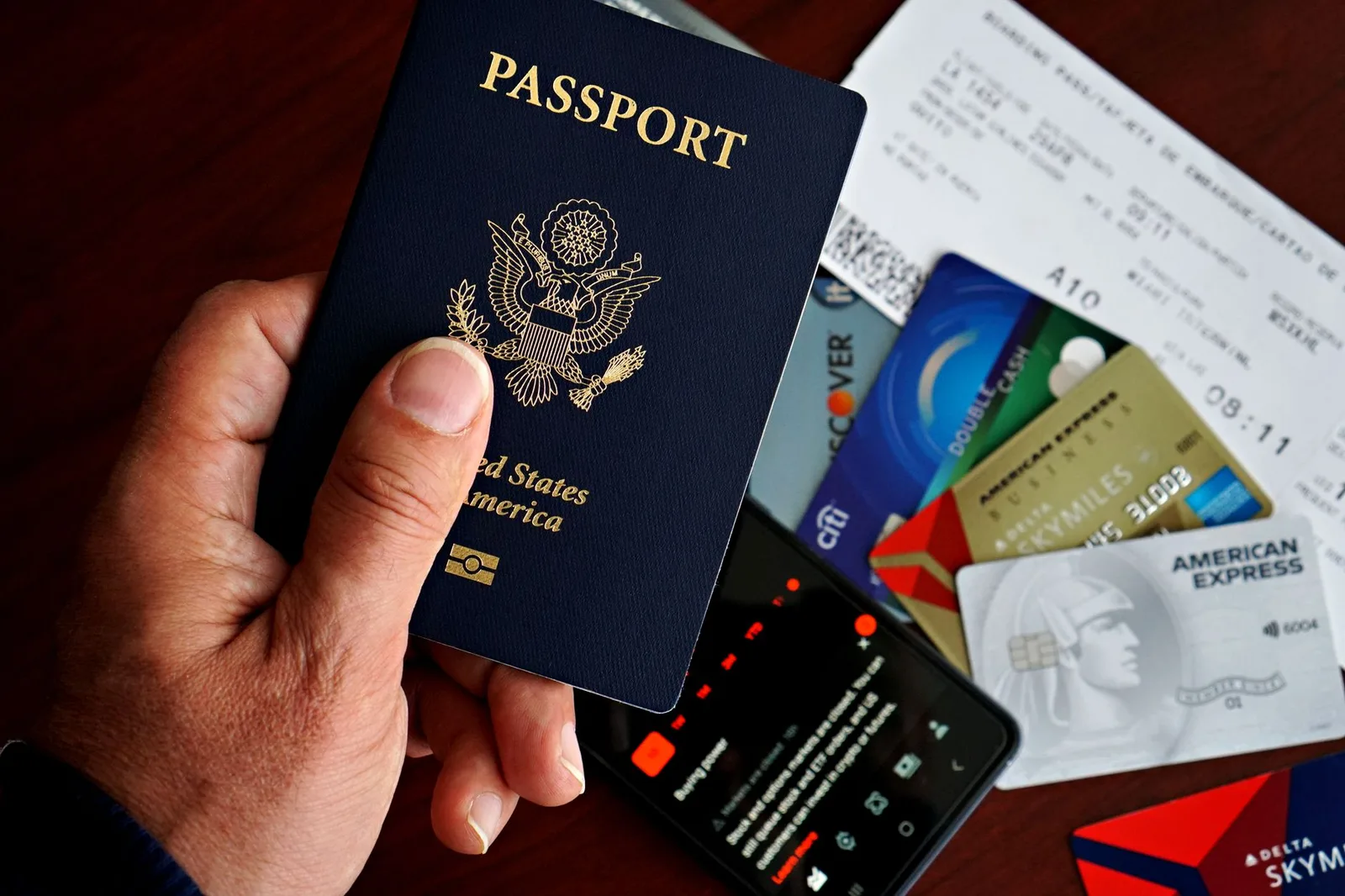
A passport that has not expired can still be rejected — the six-month rule, the Schengen 10-year catch, blank pages, damage and name mismatches that get people denied boarding even with a valid visa.

Visas & Entry
Brazil E-Visa 2026: US, Canadian and Australian Tourists Now Need One Again
Brazil has reintroduced a tourist visa — an online e-visa — for US, Canadian and Australian travellers on a reciprocity basis. Here is who needs it, how the e-visa works, and why many other nationalities still enter visa-free.