
Nepal's Monsoon Is Turning Erratic and Extreme: the Climate Science Behind the Floods (2026)
A warmer sky holds more water, and Nepal's rains now arrive in shorter, fiercer bursts — driving worse landslides and floods.
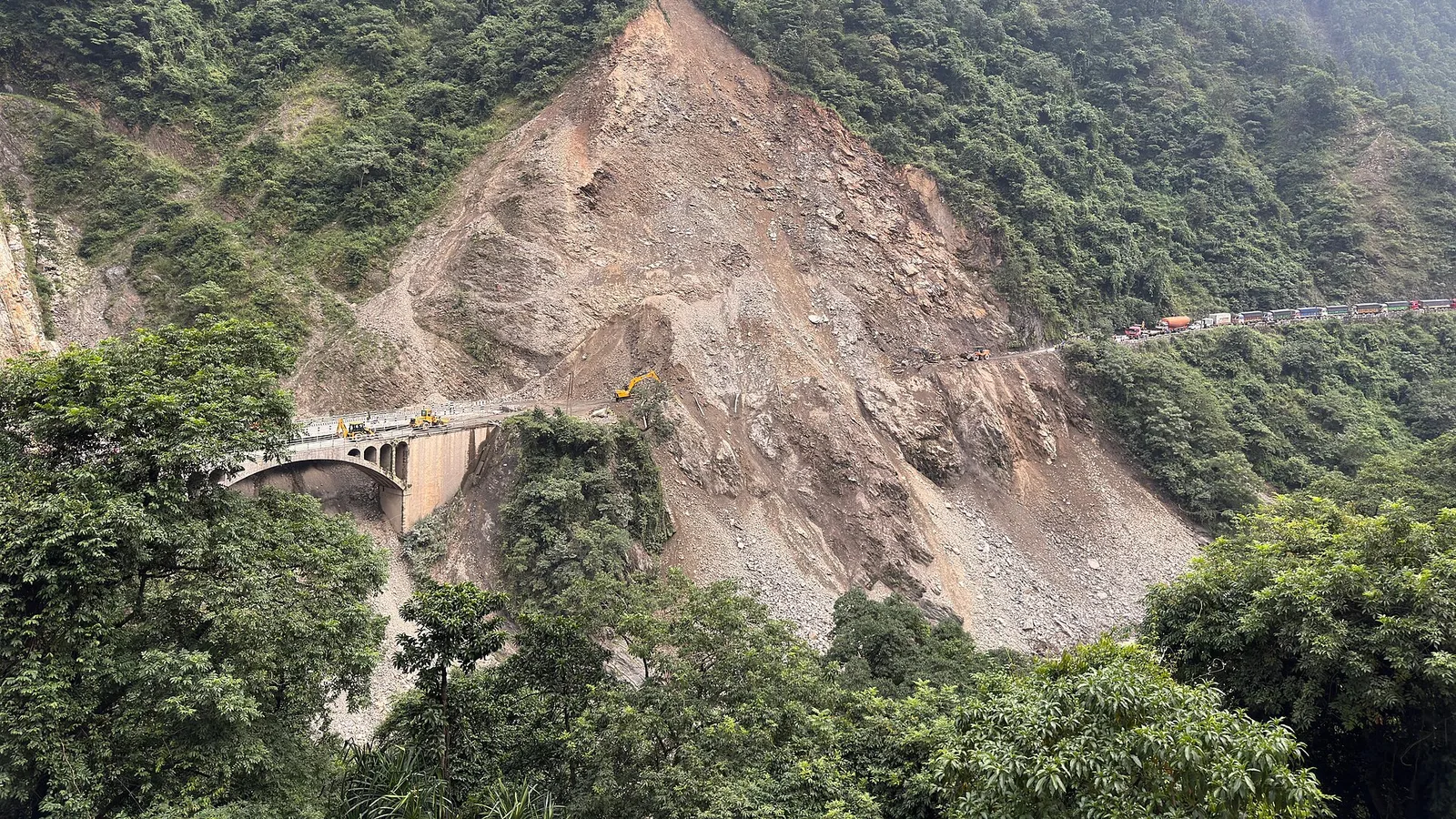
Ask anyone who has lived through a Nepali summer and they will tell you the monsoon no longer behaves the way it used to. The rains still come — broadly June to September — but they increasingly arrive in shorter, harder bursts: a month's water in a single night, then an uneasy quiet. That shift has a cause in basic physics, a warmer atmosphere, and it is quietly rewriting the risk map for every road, hillside and river valley in the country.
This is a different story from when the monsoon starts and ends. If you want the season's dates and how to plan a trek around them, we cover that separately in when the monsoon starts and ends in Nepal. What follows is the climate-change layer underneath it: why the rain itself is changing character, and what that means on the ground.
Key facts
- Physics sets the pace: for every 1°C of warming, the air can hold roughly 7% more water vapour — so when it rains, it can rain harder.
- Across the wider South Asian monsoon, widespread extreme-rainfall events roughly tripled over central India between 1950 and 2015, feeding more flash floods.
- In Nepal, precipitation extremes are increasing, and more than 80% of disaster property loss comes from water-related hazards — floods, landslides and glacial-lake outburst floods.
The physics: a fuller sponge in the sky
The engine behind heavier rain is old, settled science. Warm air holds more moisture than cold air — the Clausius–Clapeyron relationship — and the working rule is about 7% more water vapour for every degree Celsius of warming. A sky carrying more water has more to wring out, so, as climate scientists put it, “the greater amount of water in the troposphere then increases the chances for more intense rainfall events.” And the extremes climb faster than the averages: even where the total seasonal rainfall barely moves, the heaviest downpours get heavier.
That distinction matters for Nepal. Studies of the South Asian monsoon find the mean circulation is in some respects weakening as the Indian Ocean warms — overall monsoon rainfall has drifted downward over central India — even as the violent, concentrated cloudbursts multiply. Less steady rain spread across the season; more of it delivered in short, dangerous bursts. For a steep, water-fed mountain country, that is close to the worst of both worlds.
What that does on the ground
Rain that falls fast, onto steep, deforested and already-saturated slopes, does not soak in — it runs off, and it can take the hillside with it. Nepal's monsoon now routinely kills people and severs highways: each summer brings landslides burying roads, swollen brown rivers washing out bridges, and settlements cut off for days at a time. The national hazard accounting attributes more than 80% of disaster-related property loss to water-linked events — floods, landslides and glacial-lake outburst floods — the exact category climate change is loading.
The strain is not only on concrete and tarmac. Farmers describe a monsoon that has become harder to plan around: long dry spells inside the rainy season, punctuated by unseasonal heavy downpours, and off-season rain in winter. When the rain stops arriving on the old schedule, planting and harvest windows slip, and a single cloudburst can flatten a season's work. And the same warming that intensifies the rain is shrinking Nepal's glaciers and swelling the meltwater lakes whose sudden failure adds a flood threat from above.
The trend, not the forecast
No single flood proves climate change, and no dry season disproves it. What the science describes is loaded dice: a warmer atmosphere makes extreme wet events more likely and more severe, year on year, on top of whatever any given monsoon does. For Nepal — steep, monsoon-fed and lightly engineered against water — that loading lands hardest on the roads and the hillsides, not on the high ridgelines most trekkers actually walk.
What this means for trekkers
The mountains are not more dangerous on every day of the year — but the monsoon-season road and landslide risk is rising, and it sits on the drives far more than on the trails. If you travel in the rains, build in buffer days for flight and road delays, do long road transfers in daylight, and lean toward the rain-shadow valleys — Mustang, Dolpo, the Manang side — that sit behind the big peaks and stay dry while the rest of the country floods.
None of this means staying away. It means travelling with the season's grain rather than against it. If you want to trek through the summer rains, the driest ground in the country is the high desert behind the Himalaya — a good place to start is our Upper Mustang trek, where the rain rarely reaches.
Cover photo: Gunjan Raj Giri via Wikimedia Commons (CC BY 3.0).
This story is part of Travel Himalaya Nepal’s in-depth look at how climate change is reshaping the Himalaya.
计划徒步?
我们负责许可证、后勤与向导
NMA 认证的本地向导,价格透明,自 1998 年以来 5,000+ 次徒步。告诉我们你的日期,其余的交给我们。


更多「Climate & Environment」
Climate & Environment
Soot Is Darkening Himalayan Snow and Speeding Its Melt, 2026 Science Shows
Soot darkens Himalayan snow so it absorbs more sunlight and melts faster — a second, faster-acting driver of glacier loss alongside warming, and the one the region could switch off within weeks.
Climate & Environment
Nepal's Glacial-Flood Warning Gap: Why GLOFs Keep Catching the Mountains Off Guard (2026)
Nepal's flood alarms watch its own known lakes — but the Bhote Koshi's disasters keep starting across the border in Tibet, beyond every sensor, arriving with minutes of warning at best.
Climate & Environment
Glacial Lake Outburst Floods: Nepal’s Fast-Growing Mountain Hazard in 2026
As Himalayan glaciers retreat they leave meltwater lakes dammed by loose moraine — and when a dam fails, the flood tears down the valley. Here is what a GLOF is, why they are increasing, and what Nepal is doing about it.