
Travel Insurance for Visiting the USA in 2026: Why You Need $1M+ in Medical Cover
American hospitals bill like nowhere else on earth. Before you add a US layover or a New York stopover to your Himalayan trip, here is the medical cover that actually protects you — and why a bare-minimum policy can leave you owing five or six figures.
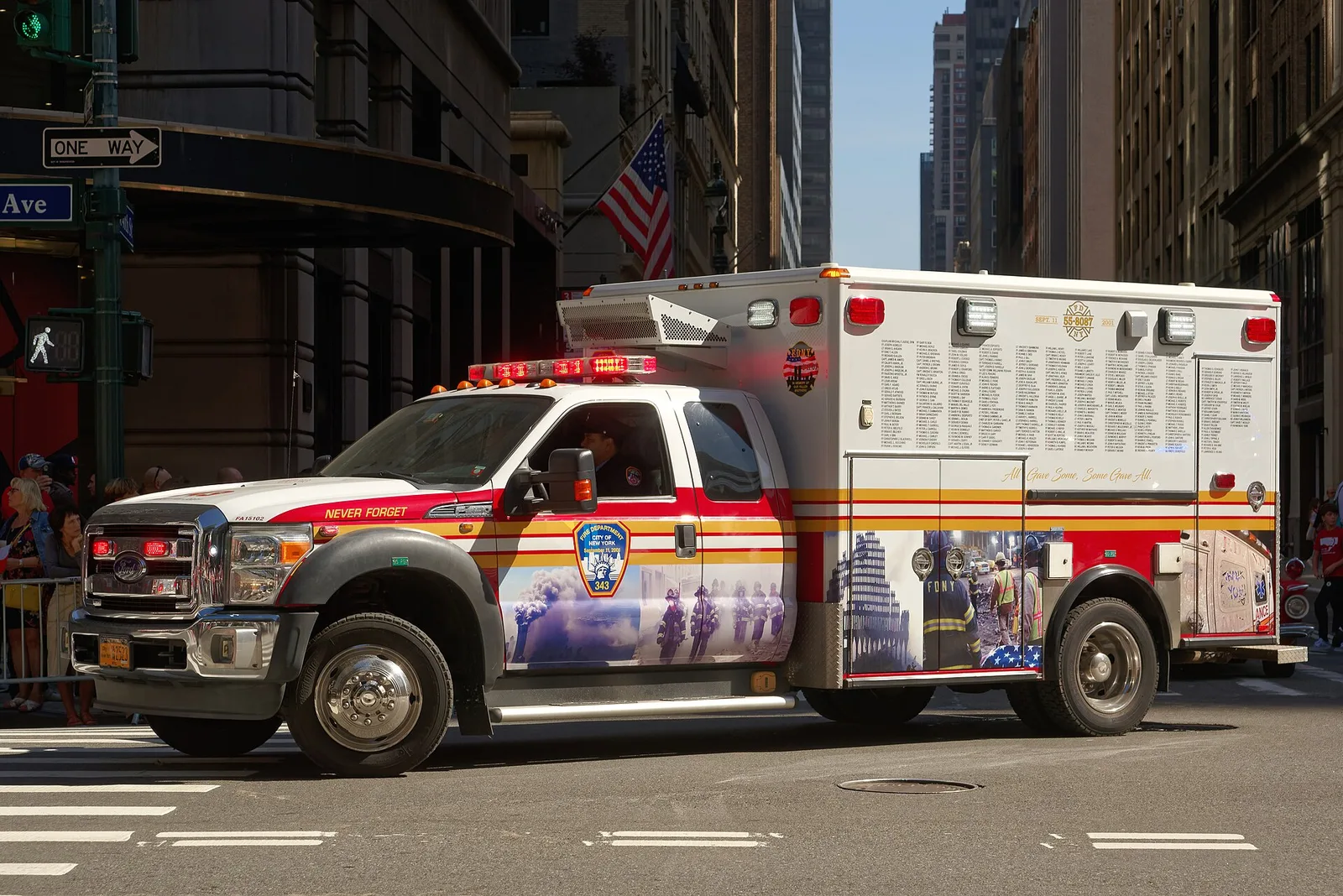
Most of our travellers picture their insurance mattering somewhere remote — a twisted ankle above Namche, a helicopter off the Manaslu Circuit. But there is one destination where a thin policy can hurt you far more than any mountain: the United States. A growing number of our guests route through a US city on the way to Nepal — a few days in New York, a work trip in California with a Himalayan holiday tacked on the end, a long layover that turns into a stopover. If that is your 2026 itinerary, the US leg is the part you must insure properly.
The quick version
- The USA has no cap on what a hospital may charge a visitor — a single day as an inpatient can top $10,000.
- Comparison sites recommend at least $100,000 in emergency medical cover for any international trip; for the USA, many advisers now point travellers toward $500,000–$1,000,000+.
- Your ESTA or US visa is travel authorisation only — neither includes a cent of healthcare.
- Add medical evacuation and repatriation cover of at least $200,000; an air ambulance alone can cost that much.
- Declare any pre-existing condition honestly — an undeclared one is the fastest way to have a large claim refused.
Why the USA is the single most expensive place to fall ill
American healthcare is billed like nowhere else on earth. There is no national price list and no ceiling on what a hospital can invoice someone who walks in without local insurance. A routine doctor or urgent-care visit runs roughly $250–$350. An emergency room visit — the default when a traveller has no local physician — is reported at $2,500–$7,000 before any treatment even begins. From there the numbers climb fast: insurers and comparison sites report that a heart attack can cost anywhere from $25,000 to $150,000 or more, and an ICU stay after a stroke can exceed $150,000 on its own.
| Treatment or service | Typical US cost |
|---|---|
| Doctor or urgent-care visit | $250 – $350 |
| Emergency room visit | $2,500 – $7,000 |
| One day as a hospital inpatient | $10,000+ |
| Echocardiogram (heart scan) | $1,500 – $4,000 |
| Heart attack treatment | $25,000 – $150,000+ |
| ICU stay after a stroke | $150,000+ |
| Air ambulance / medical evacuation | $75,000 – $200,000+ |
These are ranges, not quotes — the actual bill depends on the state, the hospital and the treatment. But the direction is clear: high-cost states such as New York and California sit at the top of every range, which is exactly where most international visitors land first.
How much medical cover do you actually need?
For an ordinary international trip, Squaremouth and other comparison sites suggest a floor of about $100,000 in emergency medical cover plus $200,000 in medical evacuation. That is a sensible baseline for most of the world. The United States is the exception. Because a serious cardiac or neurological event can pass $150,000 in a single hospital admission, providers of US visitor insurance recommend a minimum of $100,000 but push most travellers toward $500,000, and toward $1,000,000 or more for older travellers, who face a higher likelihood of a costly cardiac or stroke emergency. Plans are widely sold with limits from $50,000 all the way up to $2,000,000.
The bottom line
If you remember one number, make it this: a bare $50,000 policy is not enough for the United States. In a country where an ICU week can pass $150,000, treat $500,000–$1,000,000 in medical cover as your floor, not your ceiling — as of 2026.
What a US visitor policy must include
The headline medical limit is only half the story. Before you buy, read the policy for four things:
- Emergency medical evacuation and repatriation — evacuation to or within the USA can cost upwards of $200,000. Make sure this is a separate, high limit, not a small sub-limit of your medical cover.
- Direct billing or a guarantee of payment — a US hospital may demand payment or proof of cover before it treats a non-emergency. A policy that pays the hospital directly, rather than reimbursing you months later, is worth paying more for.
- A high enough per-condition limit — some cheap plans cap any single illness well below the overall figure. Check the fine print.
- 24-hour assistance — a real emergency line that can find you a hospital and speak to it on your behalf.
Pre-existing conditions
This is where large claims are most often lost. If you have a managed condition — high blood pressure, diabetes, a heart history — you must declare it. Many US visitor plans offer an "acute onset of a pre-existing condition" benefit, but only if the condition was disclosed and stable. An undeclared condition gives the insurer a clean reason to refuse the exact claim you bought the policy for.
Your ESTA or visa does not cover a single dollar of it
It is worth repeating because so many travellers assume otherwise: the US ESTA (which rose to $40 in 2026) and a US visa are permission to enter the country. They carry no health cover of any kind. The USA does not require visitors to hold travel insurance — which is precisely why so many arrive with none, and why a single accident can turn into a life-changing bill.
The same principle applies at the other end of your trip. If Nepal is on your itinerary, the government now expects trekkers to carry insurance that includes high-altitude helicopter rescue — a topic we cover in our guide to trekking insurance for Everest Base Camp. One trip, two very different risks: crushing hospital bills in the USA, and a $5,000+ helicopter evacuation in the Himalaya. A good annual multi-trip policy can cover both — just confirm the US medical limit is high enough and the trekking altitude is included.
Planning to fly on to Nepal after your US trip? Once your cover is sorted, the fun part begins. Our team designs Himalayan itineraries around whatever US or European leg you are already flying — see our guide to planning a Nepal trek from the USA, or browse the treks below and tell us your dates.
Cover photo: Jakub Hałun via Wikimedia Commons (CC BY 4.0).
来源: American Visitor Insurance & Squaremouth
计划徒步?
我们负责许可证、后勤与向导
NMA 认证的本地向导,价格透明,自 1998 年以来 5,000+ 次徒步。告诉我们你的日期,其余的交给我们。


更多「Money & Insurance」

Money & Insurance
The Hidden Airline Fees That Cost You Hundreds in 2026 (and How to Dodge Them)
Baggage, seat selection, basic-economy traps, payment surcharges, change fees and currency conversion at booking can quietly double a headline fare. Here is what each typically costs in 2026 — and how to avoid it.

Money & Insurance
Annual Multi-Trip vs Single-Trip Travel Insurance in 2026: Which Actually Saves You Money?
An annual policy can be cheaper than buying cover trip by trip — but only past a break-even you can calculate yourself. Here's when it wins, the trip-length and adventure-sport limits that catch people out, and why altitude cover is a separate decision.
Money & Insurance
Medical Tourism in 2026: The Countries Where Treatment Costs a Fraction of the US Price
Heart bypass, knee replacement, dental implants and more — how far your money goes in Thailand, India, Mexico, Turkey, Malaysia and Costa Rica, and the accreditation and insurance checks to do first.