
The short version
The Annapurna Base Camp trek needs two permits in 2026: ACAP (NPR 3,000 ≈ US$22) and the TIMS card (NPR 2,000 ≈ US$17) — about NPR 5,000 / US$40 per person. Here is exactly where to get them, who is exempt, and the documents you need.
Getting permits for the Annapurna Base Camp trek is one of the first questions every trekker asks — and the good news is that the process is simpler than the internet makes it sound. For 2026 you need the ACAP conservation permit, a TIMS registration, and a licensed guide. Two offices, a handful of documents, and you are on the trail. This guide covers every rule change, cost and checkpoint so you never arrive unprepared.
- ACAP — NPR 3,000 (about USD $25–30) per foreign trekker. Mandatory, single-entry, covers the whole Annapurna region.
- TIMS — NPR 2,000 individual / NPR 1,000 group (about USD $15–20). Issued only through a registered, TAAN-affiliated agency in 2026.
- Licensed guide required — since April 2023 and strictly enforced in 2026, solo trekking is banned inside conservation areas including Annapurna.
- Where: Nepal Tourism Board offices in Pokhara (Damside) or Kathmandu (Bhrikutimandap). No card payments — bring cash.
- Total budget: roughly USD $45–55 in permits, plus a small Ghandruk village fee.
ACAP — Annapurna Conservation Area Permit
The Annapurna Conservation Area Permit (ACAP) is the single most important document for the ABC trek. For 2026 it costs NPR 3,000 per foreign trekker — the equivalent of roughly USD $25–30 depending on the exchange rate — and NPR 1,000 for SAARC nationals. It is required for every trekker entering the Annapurna region, regardless of route. This one permit covers ABC, Poon Hill, Mardi Himal, the Annapurna Circuit and every other trail inside the conservation area.
ACAP is issued by the National Trust for Nature Conservation (NTNC). You can obtain it at the Nepal Tourism Board counters in either Pokhara or Kathmandu, or have your agency arrange it. It is a single-entry permit and must be carried at all times — it is the document checkpoints actually scrutinise on the Annapurna trails today.
Your ACAP fee is not a tax — it funds ranger posts, trail maintenance, micro-hydro and community projects across the conservation area through the NTNC. It is the most direct way your trek supports the Gurung and Magar villages you walk through.
TIMS Card — Trekkers' Information Management System
The TIMS card is a rescue-and-tracking registration: if something goes wrong on the trail, rescue teams use TIMS records to identify and locate trekkers. For 2026 it costs NPR 2,000 for individuals and NPR 1,000 for trekkers booked through a group/agency — roughly USD $15–20.
Two important 2026 changes. First, TIMS is now issued only through a registered, TAAN-affiliated trekking agency — the walk-in independent option has effectively closed alongside the mandatory-guide rule. Second, Nepal is moving to e-TIMS, a digital record tied to your passport rather than a laminated card; in practice checkpoints on the Annapurna trails now verify ACAP first and foremost, with TIMS held in the system. We still register every client on TIMS because it is your rescue safety net and remains the official requirement.
Since April 2023, and firmly enforced in 2026, all foreign trekkers in Nepal's national parks and conservation areas — Annapurna included — must trek with a licensed guide from a registered agency. Solo and fully independent trekking on ABC is no longer permitted. This is exactly why TIMS is now agency-issued: the two rules are linked.
Where to Get Permits in Pokhara
The easiest option for most trekkers flying into Pokhara is to collect permits here before heading to the trailhead.
- Location: Nepal Tourism Board office, Damside (Pardi), Pokhara — the TAAN office at Lakeside also processes agency permits
- Hours: Sunday–Friday, 9:00am–5:00pm (closed Saturdays and public holidays)
- What to bring: 2 passport-size photos, a photocopy of your passport (bio page + Nepal visa), cash in NPR or USD (no card payments)
- Time required: 20–40 minutes if you have all documents ready
Both ACAP and TIMS are arranged at the same office in Pokhara. Fill out the forms, hand over documents and fees, and your permits are issued on the spot.
Where to Get Permits in Kathmandu
If you are flying into Kathmandu and heading to Pokhara by bus or plane, you can collect permits in the capital instead.
- Location: Tourist Service Centre, Bhrikutimandap, Kathmandu (near Thamel)
- Hours: Sunday–Friday, 9:00am–5:00pm
- What to bring: Same as Pokhara — 2 photos, passport copy, cash
The process is identical. Many Kathmandu-based trekkers find this more convenient since they are already in the city before flying to Pokhara.
2026 Permit Cost Breakdown
Here is exactly what an ABC trekker pays in 2026, with the NPR rate and a US-dollar guide figure side by side. Exchange rates move, so treat USD as approximate.
| Permit / fee | Cost (NPR) | Cost (USD approx.) | Required? |
|---|---|---|---|
| ACAP (Annapurna Conservation Area Permit) | 3,000 | $25–30 | Yes — every trekker |
| TIMS (group / agency rate) | 1,000 | $15 | Yes — via agency |
| TIMS (individual rate) | 2,000 | $20 | If not group-booked |
| Ghandruk village conservation fee | ~300–400 | $2–3 | If route passes Ghandruk |
| Typical total (group trekker) | ~4,400 | ~$45–50 | — |
For full permit cost details across all Annapurna routes, see our ACAP & TIMS permit guide, the Nepal permits hub, or the official Nepal Tourism Board TIMS page.
If You Book With an Agency
When you book your ABC trek with Travel Himalaya Nepal, we handle all permit paperwork on your behalf. You arrive in Pokhara, we sort it — no queuing, no confusion, no risk of missing documents. Because the 2026 rules require a licensed guide and agency-issued TIMS anyway, going through a registered agency is no longer just convenient — it is how the system now works.
All you need to bring are your original passport and two passport-size photos. We prepare every form, pay the fees on your behalf (included in your trek cost), and hand you both permits ready for the trail. If any question arises at a checkpoint, you have a local point of contact and a licensed guide walking with you.
Bring four passport photos, not two. Visa-on-arrival, ACAP, TIMS and the occasional unexpected form all want one — and the nearest photo booth from the trail is hours away. A photocopy of your passport bio page and visa stamp saves time at every counter.
Permit Checkpoints on the Trail
Your permits are checked at multiple points along the Annapurna Base Camp route. The main checkpoints are:
- Nayapul / Jhinu area — first checkpoint near the start of the trail
- Chhomrong — major checkpoint further up the valley
- Dovan / Bamboo — checkpoint before the upper sanctuary section
Rangers inspect your ACAP and record your details; your TIMS registration links to the same record. Trekkers caught without a valid ACAP face heavy on-the-spot fines — typically double the original fee — and in some cases are turned back entirely. There is no grace period and no option to pay later. Carry your permit at all times and keep it dry in a zip bag.
Ghandruk Conservation Fee
If your itinerary passes through Ghandruk village — which many ABC routes do on the return leg — you may be asked to pay a small additional conservation fee of approximately NPR 300–400 (USD $2–3) at the village entrance. This is separate from ACAP and TIMS and is collected locally for village upkeep. Keep all receipts in case you are asked again at a later checkpoint.
Do These Permits Cover Poon Hill and Other Annapurna Treks?
Yes — your ACAP permit is valid for all treks within the Annapurna Conservation Area for its single-entry duration. This includes:
The classic sanctuary trek — see our 6-day ABC itinerary.
Sunrise ridge classic — the 4-day Poon Hill trek.
Quiet high ridge — the 4-day Mardi Himal trek.
The grand loop — the 10-day Annapurna Circuit.
One permit, one fee, all Annapurna trails. If you combine treks — for example doing Poon Hill on the way to ABC — your existing ACAP covers everything within its validity. You do not pay again. For how this compares to other regions, the Everest Base Camp route needs three separate permits, and Manaslu requires a costly restricted-area permit.
Frequently Asked Questions
How much do ABC trek permits cost in total in 2026?
For a group/agency trekker, budget roughly NPR 4,400 (about USD $45–50): NPR 3,000 ACAP, NPR 1,000 group-rate TIMS, plus a small Ghandruk village fee of NPR 300–400. Individual-rate TIMS is NPR 2,000. This makes ABC one of the most affordable major treks in Nepal from a permits perspective.
Can I do the ABC trek solo without a guide in 2026?
No. Since April 2023 and strictly enforced in 2026, foreign trekkers in Nepal's conservation areas — including Annapurna — must trek with a licensed guide from a registered agency. Solo and fully independent trekking on ABC is not permitted, which is also why TIMS is now issued only through agencies.
Is the TIMS card still required for Annapurna?
Officially yes, and we register every client on it for rescue safety. In practice, Annapurna checkpoints in 2026 primarily verify the ACAP permit, with TIMS held digitally (e-TIMS) in the system. Because the rules now require an agency-issued guide, your TIMS is arranged as part of your booking either way.
Can I buy ACAP and TIMS online?
ACAP and TIMS are arranged in person at Nepal Tourism Board / TAAN offices in Pokhara or Kathmandu, or — the simplest route — through your trekking agency. Nepal is rolling out e-TIMS digital registration, but you still cannot self-issue at the trailhead, so sort permits before you start walking.
What documents do I need for the permits?
Your original passport, a Nepal entry visa, two passport-size photos (bring four to be safe), and cash in NPR or USD — offices do not accept cards. A photocopy of your passport bio page and visa stamp speeds things up. See our Nepal visa guide for entry details.
What happens if I'm caught without a permit?
Checkpoint rangers issue heavy on-the-spot fines — typically around double the original permit fee — and can turn you back. There is no pay-later option and no grace period. Always carry your ACAP and keep it dry.
Book the ABC trek with us and every permit, your licensed guide and the TIMS registration are handled from day one. Arrive in Pokhara with your passport and two photos; we do the rest.
Book the 6-Day ABC Trek →Still planning? Browse all Annapurna treks, read our ultimate ABC trek guide, or learn how your permit fees support local communities. Questions about checkpoints or timing? Contact our Pokhara team — we answer within a day.
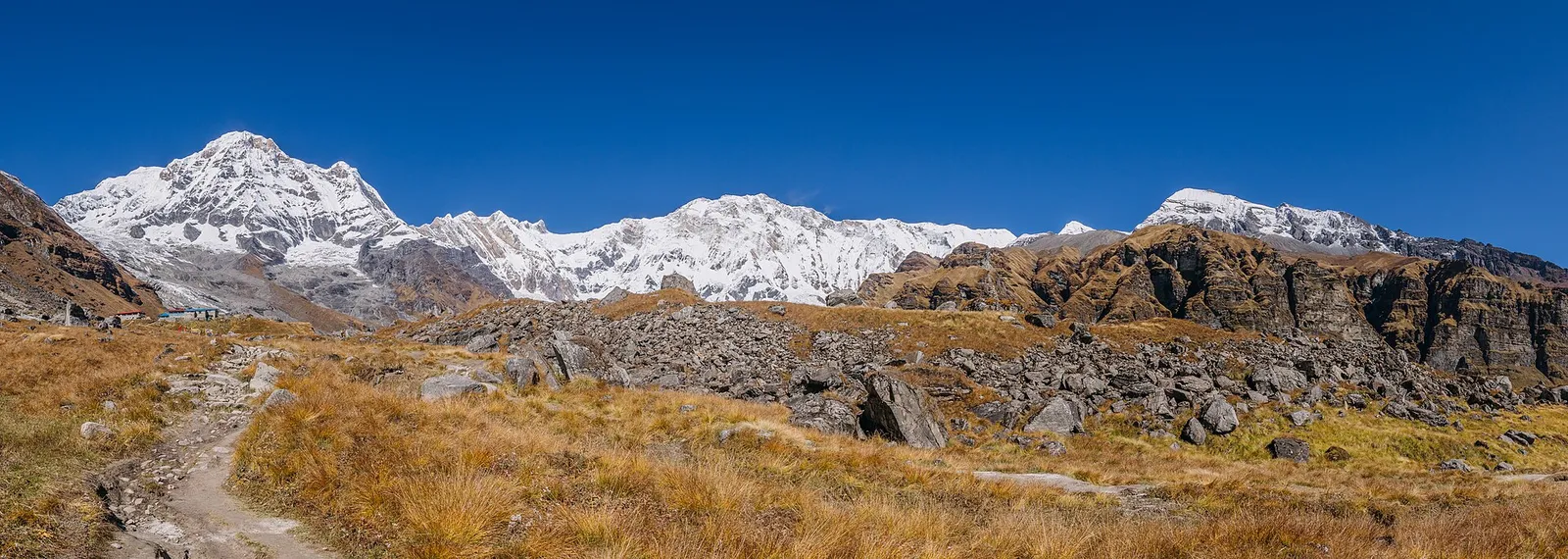
Featured image: Bijay Chaurasia via Wikimedia Commons (CC BY-SA 4.0).
Use our free Nepal permit cost calculator for the 2026 total in NPR and USD, or read the full Annapurna ACAP and TIMS permit guide.
Written by
Travel Himalaya Nepal
Pokhara-based, NMA-certified trekking guides. We’ve led 5,000+ treks across the Annapurna and Everest regions since 1998 — every word here comes from the trail. Meet the team →
Share this article
Ready to Trek?
From reading about it to standing on it
Our Pokhara-based guides have been doing this since 1998. Tell us your dates and fitness level — we'll build your perfect itinerary. Free, no obligation.
Popular treks to consider
Free Trekker's Insider Guide
Permits, packing lists, cost breakdowns — no fluff.
We send one useful email. You can unsubscribe anytime.