
The Gurkha Blood Myth That Even the Falklands War Couldn't Kill
Every campfire story about the kukri insists a Gurkha must draw blood before sheathing it again — actual Gurkhas, and two centuries of British Army history, say otherwise.

At a glance
- Published
- TopicRecords & People
- Verified againstAsia Times
- Treks coveredGhandruk Village Trek — 3 Days, Royal Trek — 4 Days
Ask a trekking guide in Nepal about the kukri and, sooner or later, you'll hear it: a Gurkha soldier who draws his curved blade is honour-bound to draw blood before it goes back in the sheath, even if that means nicking his own thumb. It's one of the best campfire stories in the Himalaya. It is also, according to the Gurkhas themselves and the historians who have actually asked them, not true.
Key facts
- The kukri has been Nepal's working knife and battle blade for at least 2,500 years
- Britain first encountered it in the Anglo-Nepalese War of 1814-16 and began recruiting Gurkha regiments soon after
- The Brigade of Gurkhas today numbers roughly 4,090 serving soldiers
- In February 2026, 323 recruits were selected from more than 14,000 applicants nationwide
The blade predates the British relationship entirely. A ceremonial kukri held in Kathmandu's national arsenal collection is dated to 1627, and King Prithvi Narayan Shah's forces used the knife decisively in the 1768 campaign that unified modern Nepal — a full 46 years before any British soldier ever saw one. The reputation was earned honestly, just not through folklore. Gurkhas proved their loyalty to Britain during the Sepoy Mutiny of 1857-58, after which they were formed into their own rifle regiments rather than kept as irregular auxiliaries. They carried the kukri through both world wars, and it became so associated with close-quarters courage that the British press simply called it 'the Gurkha knife.' None of that required a blood ritual — it required two centuries of soldiers who happened to carry a genuinely brutal-looking weapon into genuinely brutal fighting.
The myth itself has a documented, and surprisingly recent, origin. Before the 1982 Falklands War, British forces released photographs of Gurkha soldiers sharpening their kukris ahead of the advance on Port Stanley. It was psychological warfare, not tradition — and it worked. Argentine conscripts facing Gurkhas for the first time had grown up on the blood-oath story, and the image did exactly what it was meant to do. Historians and cutlery specialists who have since asked serving and retired Gurkhas about the custom get the same answer every time: nobody has ever been taught it, because a knife you use to clear trail brush, butcher a goat for dinner or open a tin of food would be a strange thing to swear a blood oath over every single time you touch it.
| Year | Event |
|---|---|
| 1814-16 | Anglo-Nepalese War — Britain meets the kukri in battle for the first time |
| 1857-58 | Sepoy Mutiny — Gurkha loyalty proven, own regiments formed |
| 1982 | Falklands War — sharpening photos used as psychological propaganda |
| 2026 | 323 recruits selected from over 14,000 applicants across Nepal |
What this means for trekkers
What this means for you
Walk through Gurung hill villages like Ghandruk or along the Royal Trek near Pokhara and you'll meet the myth's real-world source material: retired and serving British Army Gurkhas, many from families that have sent sons to the Brigade for three or four generations. Their kukris hang in kitchens as tools and heirlooms, not relics of a blood oath — used the same week for firewood, for the kitchen garden, or for a Dashain festival cut, never for theatre.
If a guide offers to show you a family kukri on the Ghandruk village trek or the Royal Trek near Pokhara, ask him what it was actually used for that week — the honest answer is almost always more interesting than the myth.
Sources: Asia Times, Forces News, Atlanta Cutlery Corporation, and British Army Brigade of Gurkhas recruitment figures.
Cover photo: Mick Latter via Pexels (Pexels License).
Still running this season
Ghandruk Village Trek — 3 Days is running normally
NMA-certified local guides, transparent pricing, 5,000+ treks since 1998. Message us your dates and we'll sort the permits, lodges and logistics — reply within 24 hours, no obligation.
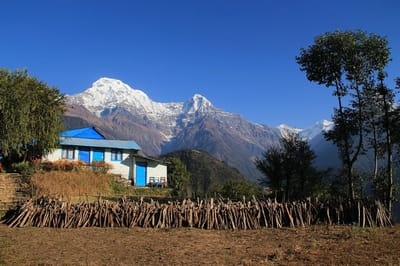

Popular Nepal treks
All treks →
Related coverage
Records & People
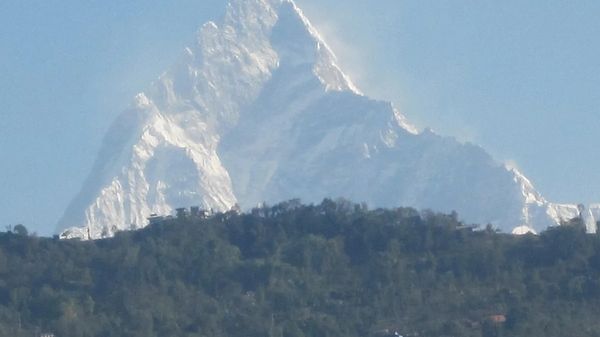
The 22,943-Foot Himalayan Peak No One Has Ever Officially Stood On
In 1957 a British team stopped 150 feet short of Machapuchare's summit and kept their word never to finish it — Nepal has banned every climber from trying since.
Records & People
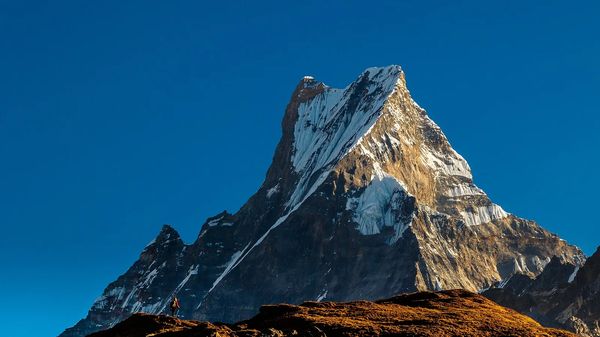
Machapuchare Is the Nepal Mountain Nobody Has Ever Been Allowed to Summit (2026)
At 22,943 feet, Machapuchare towers over the Annapurna Sanctuary, and by Nepal's own law, no one has legally set foot on its true summit since a British team turned back 150 feet short of it in 1957.
Records & People
The Himalayan Peak So Sacred Nepal Has Never Once Let Anyone Legally Climb It
Machapuchare's twin summit rises 6,993 metres above Pokhara — and for more than sixty years, Nepal has refused every application to stand on top of it.
Records & People
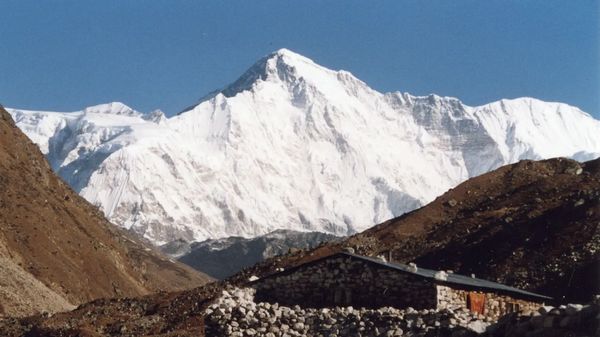
Cho Oyu and Shishapangma are closed again this autumn and every 14-peak climber is funnelled into Nepal
The China-Tibet Mountaineering Association has kept Cho Oyu and Shishapangma shut to foreign teams for autumn 2026, and Manaslu absorbs the whole overflow.
Latest from the desk

Flights & Access
That Tiny Hole in Every Airplane Window Is Not a Manufacturing Flaw
It is a precision pressure valve, and it is the reason your photo of a Himalayan skyline from 35,000 feet doesn't come out fogged over.

Trail & Weather
Everest Base Camp or Kilimanjaro: Which Trek Should You Actually Do in 2026?
One is a five-day sprint to 5,895 metres, the other a fourteen-day walk to 5,364 — the honest trade-off between them comes down to acclimatization, not fitness.

Flights & Access
How Many Days Do You Actually Need for Everest Base Camp in 2026? Every Itinerary Length Compared
Ten days is possible, fourteen is what most operators actually recommend, and the flight into Lukla is why you should budget more time than either number, not less.