
Everest Base Camp or Kilimanjaro: Which Trek Should You Actually Do in 2026?
One is a five-day sprint to 5,895 metres, the other a fourteen-day walk to 5,364 — the honest trade-off between them comes down to acclimatization, not fitness.

At a glance
- Published
- TopicTrail & Weather
- Verified againstClimb Kilimanjaro Guide
- Treks coveredEverest Base Camp Helicopter Tour — 1 Day, Everest Base Camp Trek — 12 Days, Everest Base Camp Trek — 14 Days
If you can only pick one bucket-list trek, here is the direct answer: choose Kilimanjaro if you want a shorter trip and can commit to at least 7-8 days on the mountain, and choose Everest Base Camp if you have 12-14 days free and prefer teahouse comfort over camping. Both are non-technical, both are walked, not climbed, and both are genuinely achievable by an averagely fit adult who prepares properly. The real difference is not difficulty in the abstract, it's how much time you give your body to adjust, and that number changes the outcome more than anything else on the packing list.
Key facts
- Kilimanjaro summit (Uhuru Peak): 5,895m, reached via a single overnight push
- Everest Base Camp: 5,364m; the classic viewpoint, Kala Patthar, adds 5,545m
- Kilimanjaro 5-day routes succeed as low as 27% of the time; 8-9 day routes reach 85-95%
- Kilimanjaro park fees alone run USD 800-1,500, before guide, food or gear
- A standard EBC package (guide, porter, permits, flights) runs USD 1,250-1,800
Why Kilimanjaro is faster but less forgiving
Kilimanjaro is climbed in one continuous push against the clock. Routes range from a 5-day Marangu dash to an 8-9 day Lemosho or Northern Circuit, and the data on outcomes is stark: shorter itineraries fail far more often, and almost always for the same reason. According to Climb Kilimanjaro Guide's route-by-route breakdown, 5-day climbs succeed only around 27% of the time, 7-day routes climb to 64-85%, and the 8-9 day Northern Circuit tops 95%. More than three-quarters of failed summit attempts trace back to poor acclimatization, not poor fitness — people simply climbed too high, too fast. Summit night itself is a single 10-16 hour push through the dark in freezing wind, at an altitude EBC trekkers only touch briefly at Kala Patthar before descending the same day.
Everest Base Camp is built the opposite way. A standard 12-14 day itinerary gains height gradually over roughly ten trekking days, with two dedicated acclimatization days at Namche Bazaar (3,440m) and Dingboche (4,410m) built in before you go near 5,000m. You sleep in stone-and-tin teahouses with a hot meal and a bed most nights, not a tent. The trade-off is time: there is no fast version that safety-conscious operators recommend. A 10-day itinerary exists and reaches Kala Patthar, but it's built for trekkers who are already acclimatized or have prior high-altitude experience, not first-timers.
| Factor | Everest Base Camp | Kilimanjaro |
|---|---|---|
| Typical duration | 12-14 days | 6-9 days |
| Peak altitude | 5,545m (Kala Patthar) | 5,895m (Uhuru Peak) |
| Ascent style | Gradual, teahouse-to-teahouse | Rapid, single summit-night push |
| Sleeping | Teahouses, private rooms | Tents, shared camp |
| Typical guided cost | $1,250-1,800 | $2,300-5,000 |
| Park/permit fees alone | ~$60 | $800-1,500 |
What this means for trekkers
What this means for you
If your calendar only has a week free, Kilimanjaro can work, but book the 8-9 day route, not the 5-day one — the extra two or three days buy you a summit success rate roughly three times higher. If you have two weeks, Everest Base Camp's built-in rest days do the same acclimatization job with less physical shock, at roughly half the total cost once you add up park fees, permits and logistics. Neither mountain rewards rushing; both punish it in different ways — Kilimanjaro with a failed summit night, EBC with altitude sickness that ends the trek early.
Who should book which
Kilimanjaro suits someone who wants a short, intense, single physical test with a defined finish line, is comfortable camping for a week, and can genuinely commit to an 8-day-or-longer route rather than the cheapest 5-day option. Everest Base Camp suits someone who wants two weeks of walking through inhabited Sherpa villages with real beds and real food, who prefers a gradual physical and mental build rather than one hard night, and who wants Himalayan scale and culture as part of the reward, not just the summit photo. If EBC is the one that fits, our 14-day Everest Base Camp trek follows the exact acclimatization structure described above, with both rest days built in before altitude, not after symptoms appear.
Sources: Climb Kilimanjaro Guide (climbkilimanjaroguide.com), route success-rate data; Much Better Adventures and Climbing Kilimanjaro, 2026 park fee and cost breakdowns; Nepal Hiking Team and Best Heritage Tour, Everest Base Camp cost breakdowns.
Cover photo: Balazs Simon via Pexels (Pexels License).
Still running this season
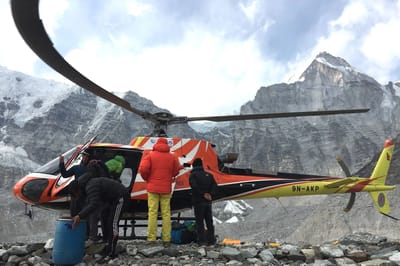
Everest Base Camp Helicopter Tour — 1 Day is running normally
NMA-certified local guides, transparent pricing, 5,000+ treks since 1998. Message us your dates and we'll sort the permits, lodges and logistics — reply within 24 hours, no obligation.
Popular Nepal treks
All treks →
Related coverage
Industry & Tourism
Everest Base Camp or Annapurna Base Camp: Which Should You Actually Trek in 2026?
Both are sold as 'base camp treks' but they differ by 1,400 metres of altitude, a week of walking and a coin-flip mountain flight — here is how to pick the right one for your fitness, budget and time.
Safety & Advisories
Can a Beginner Do the Everest Base Camp Trek? The Honest Difficulty Answer (2026)
No mountaineering skills required — but altitude, not fitness, is what actually turns beginners back. Here is the real difficulty, by the numbers.
Safety & Advisories
Can You Trek to Everest Base Camp at 82? What the Record and the Research Actually Say
There is no legal or medical age cutoff on the trail to Everest Base Camp, and the current record holder just proved it at 82.

Flights & Access
Everest Base Camp Trek or Helicopter Tour? The Kala Patthar Reopening Changes the Math in 2026
A shared helicopter can land you on Kala Patthar again after a three-year ban, but it still can't buy you what nine days on the trail does.
Latest from the desk

Flights & Access
How Many Days Do You Actually Need for Everest Base Camp in 2026? Every Itinerary Length Compared
Ten days is possible, fourteen is what most operators actually recommend, and the flight into Lukla is why you should budget more time than either number, not less.
Records & People
Everyone Calls This Nepal's Deepest Lake. A Government Survey Says It Isn't.
Phoksundo's turquoise water and no-fishing custom are real, but Nepal's own hydrology surveys put the actual depth record on a different lake entirely.
Flights & Access
Pokhara Just Got Its First Real International Flight, Three Years After the Airport Opened
flydubai starts daily Dubai–Pokhara flights on 23 September 2026, the first scheduled international airline to serve Nepal's trekking capital since its $216 million airport opened in 2023.