
How to Find Cheap Flights in 2026: The Search Strategy That Actually Works
Flexible-date search, alternate airports, split tickets, fare alerts and mistake fares — the tools that surface a lower fare, and the one myth you can stop believing.

At a glance
There is no secret website that hands you a cheap flight. What separates travellers who consistently pay less from everyone else is method — how they search, how widely they look, and which claims they wisely ignore. In 2026 the search tools are better than ever, but the fare you see still depends almost entirely on the way you ask the question. This is the search strategy that reliably surfaces a lower number, and the one popular myth you can finally stop believing.
At a glance
- Search whole months, not single dates — flexible-date and calendar views expose the genuinely cheap departures.
- Widen the map before you narrow the date: nearby airports and connecting hubs routinely undercut the "obvious" route.
- Split tickets and hidden-city fares can be cheaper, but each carries a specific, real risk.
- Set fare alerts and let the price come to you; mistake fares are rare and never guaranteed to be honoured.
- Incognito mode does not lower fares — repeated investigations have never shown a reliable, cookie-based markup on the individual searcher.
Start with flexible dates, not a fixed day
The most valuable feature in any modern flight search is the flexible-date or whole-month calendar. Airfares move by booking class: an aircraft's cheapest seats are released in limited inventory "buckets," and once a bucket empties the price steps up to the next one. Two flights on the same route a day apart can therefore sit hundreds of dollars apart for no reason a passenger can see. If your travel dates have any give at all, search the whole month and let the calendar show you where the cheap buckets still are. Mid-week departures and unsociable hours are the usual winners, precisely because fewer people compete for those seats.
Widen the map before you narrow the date
The second lever is geography. Set your origin and destination to search nearby and alternate airports rather than a single field. A metro area with two or three airports, or a willingness to drive an hour, frequently opens a cheaper carrier or a cheaper connection. The same applies at the far end: flying into a large hub near your final city and taking a short regional hop or train can beat the direct fare. Multi-city and "explore" style searches, where you fix the dates but not the destination, are how flexible travellers find the route the airlines are quietly discounting this week.
The advanced tactics — and their catches
Beyond flexible dates and airports lie the tactics travel forums love. They can work, but every one of them trades money for risk, and you should know the trade before you make it.
| Tactic | How it works | The catch / risk |
|---|---|---|
| Flexible / whole-month dates | Compare every day in a calendar view and book when the cheap inventory bucket is still open. | Almost none — this is the safe default. It just needs schedule flexibility. |
| Nearby & alternate airports | Search a whole metro area, or a nearby city, instead of one airport code. | Add the cost and time of ground transport before you celebrate the saving. |
| Split ticketing | Book two separate point-to-point tickets instead of one through-fare. | No through-protection: if the first leg is late, the airline owes you nothing on the second, and you re-check bags between them. |
| Hidden-city ("skiplagging") | Book a fare that connects past your real destination and simply get off at the connection. | Carry-on only (checked bags go to the ticketed end); any return legs auto-cancel; it breaches the carrier's contract of carriage — airlines have sued. |
| Fare alerts | Track a route and get notified when the price drops. | Requires patience; an alert is not a held seat, and popular dates still move fast. |
Two of these deserve a plain warning. Split ticketing saves money because a pair of one-way or point-to-point fares can undercut a single connecting fare, but the airline treats them as two unrelated trips — a delay on the first is your problem, not theirs. Hidden-city ticketing exploits the fact that fares do not track distance, so a longer itinerary through your target city can cost less than stopping there; but it only works one-way with hand luggage, cancels anything booked after the segment you skip, and puts you in breach of the airline's rules. Use them with open eyes, not as a default.
Fare alerts and mistake fares: patience beats luck
The lowest-effort tactic is also one of the best: set fare alerts on the routes you actually want and let the drop come to you. Prices on a given route swing constantly as inventory sells and reloads, and an alert catches the dip without you refreshing a tab for weeks. Mistake fares (also called error fares) are the lottery-ticket version — a pricing or currency slip that briefly lists a route far below cost. They are real and they do get booked, but they are uncommon, they vanish within hours, and an airline is not always obliged to honour a genuine error. Book refundable arrangements around one, never the reverse: don't buy non-refundable hotels on the strength of a fare that might be cancelled.
The myth to ignore
Switching to incognito or private browsing does not make flights cheaper. The belief is that airlines watch your cookies, see you searching a route repeatedly, and raise the price to pressure you. Journalists and consumer investigators have tested this claim again and again and never found a reliable pattern — when prices change between searches it is inventory selling out and demand shifting, not your browser history. Clearing cookies costs nothing, so do it if it makes you feel better, but do not expect a discount, and never delay a good fare waiting for one.
The Nepal angle: search the hubs, not just Kathmandu
Nepal is the clearest case for hub-thinking. There is no long-haul non-stop to Kathmandu from Europe, North America or Australia, so every fare is a connection anyway — which means the smart search is not "cheapest flight to Kathmandu" but "cheapest way through a hub that serves Kathmandu." Run your flexible-date search across the Gulf carriers via Doha, Dubai and Abu Dhabi, plus Delhi, Bangkok and Istanbul, and you will often find one hub is hundreds cheaper than the others on your week. Pricing the final Kathmandu leg separately (split ticketing, with its caveats) can beat the through-fare too. For the timing half of the puzzle — how far ahead to actually book once you have found the route — see our companion guide on the cheapest time to book international flights in 2026.
Get the flight strategy right and the trip itself is the easy part. Once your dates are set, we can build the ground half — a guided Everest Base Camp trek, a short Annapurna Base Camp route, or the quieter Manaslu Circuit — around whatever arrival works out cheapest. Message us your rough window and we will tell you which Himalayan season it lands in.
Cover photo: wal_ 172619 via Pexels (Pexels License).
Planning a trek?
Trek this route with us — Everest Base Camp Trek — 14 Days
NMA-certified local guides, transparent pricing, 5,000+ treks since 1998. Message us your dates and we'll sort the permits, lodges and logistics — reply within 24 hours, no obligation.


Popular Nepal treks
All treks →


Related coverage
Deals & Routes
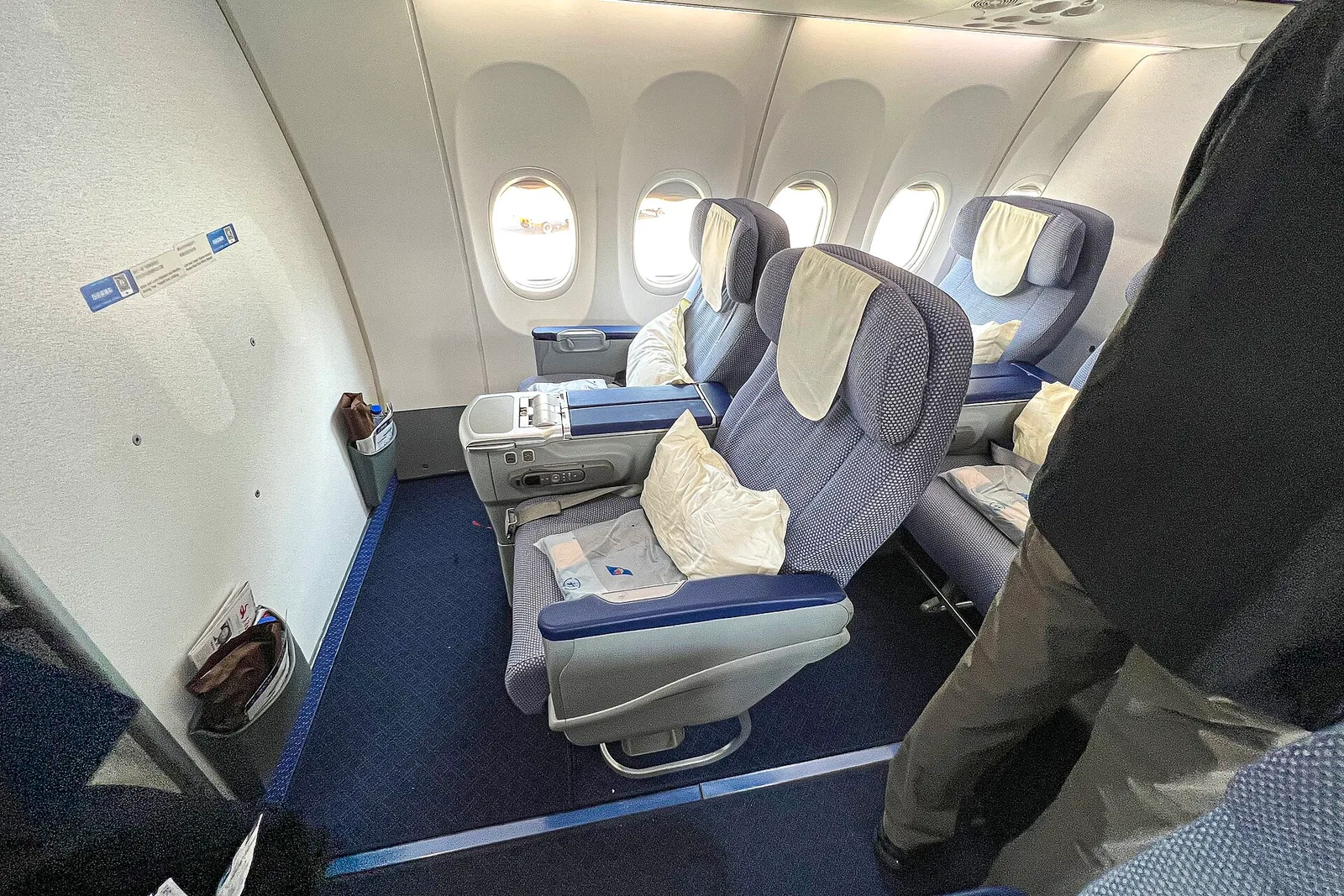
How to Fly Business Class for Less in 2026 (Points, Miles, Upgrades & Error Fares)
The legitimate playbook for lie-flat seats at a fraction of the cash fare — transferable points, sweet-spot award redemptions, transfer bonuses, upgrade bids, error fares and positioning flights, as of 2026.
Money & Insurance
How to Avoid Foreign-Transaction & ATM Fees Abroad in 2026 (Cards, Cash and the Real Cost of Convenience)
Foreign-transaction fees, dynamic currency conversion and ATM surcharges quietly drain travel budgets. A plain guide to how each fee works in 2026 — and the free habits that beat them, including the cash-only reality of Nepal’s teahouse trails.

Flights & Access
Planning a Nepal Trek From the United States in 2026: Real Flights, Costs and a 14-Day Everest Itinerary
No airline flies nonstop from the US to Kathmandu — here is exactly how Americans actually get there, what a real Everest Base Camp trek costs in dollars, and an itinerary built around the flight.

Deals & Routes
The Cheapest Time to Book International Flights in 2026 (What the Data Actually Says)
The "book on a Tuesday" rule is dead. Two of the biggest airfare datasets agree on when to actually book — and what it means for flights to Kathmandu.
Latest from the desk

Gear & Tech
Public Wi-Fi Safety and Travel VPNs in 2026: The Real Risks, and What Actually Protects You
Evil-twin hotspots, session hijacking and whether you truly need a travel VPN — an honest 2026 explainer on why ubiquitous HTTPS already does most of the work, and the four habits that matter more.
Visas & Entry
Second Passport in 2026: How Citizenship by Investment Really Works, the Real Costs, and the Scams to Dodge
A verified 2026 guide to citizenship by investment — the real minimum amounts from St Kitts to Malta, what a second passport actually buys, and how to spot the cons.

Money & Insurance
Travel Insurance With Pre-Existing Medical Conditions in 2026: What Declaring Really Means
Declaring a condition, the stable-condition clause and why an undeclared illness can void your whole claim — plus cover for cancer, diabetes, heart conditions and pregnancy.