
Nepal's Cliff Honey Hunters Risk Their Lives for a Honey That Can Get You High — and the Bees Are Vanishing
High in the cliffs of Lamjung, Gurung hunters climb hand-woven rope ladders for the world's largest honeybee's harvest — a tradition now disappearing at an alarming rate.
At a glance
- Published
- TopicRecords & People
- Verified againstEarth Island Journal
- Treks coveredRoyal Trek — 4 Days, Ghandruk Village Trek — 3 Days, Ghalegaun Homestay Trek
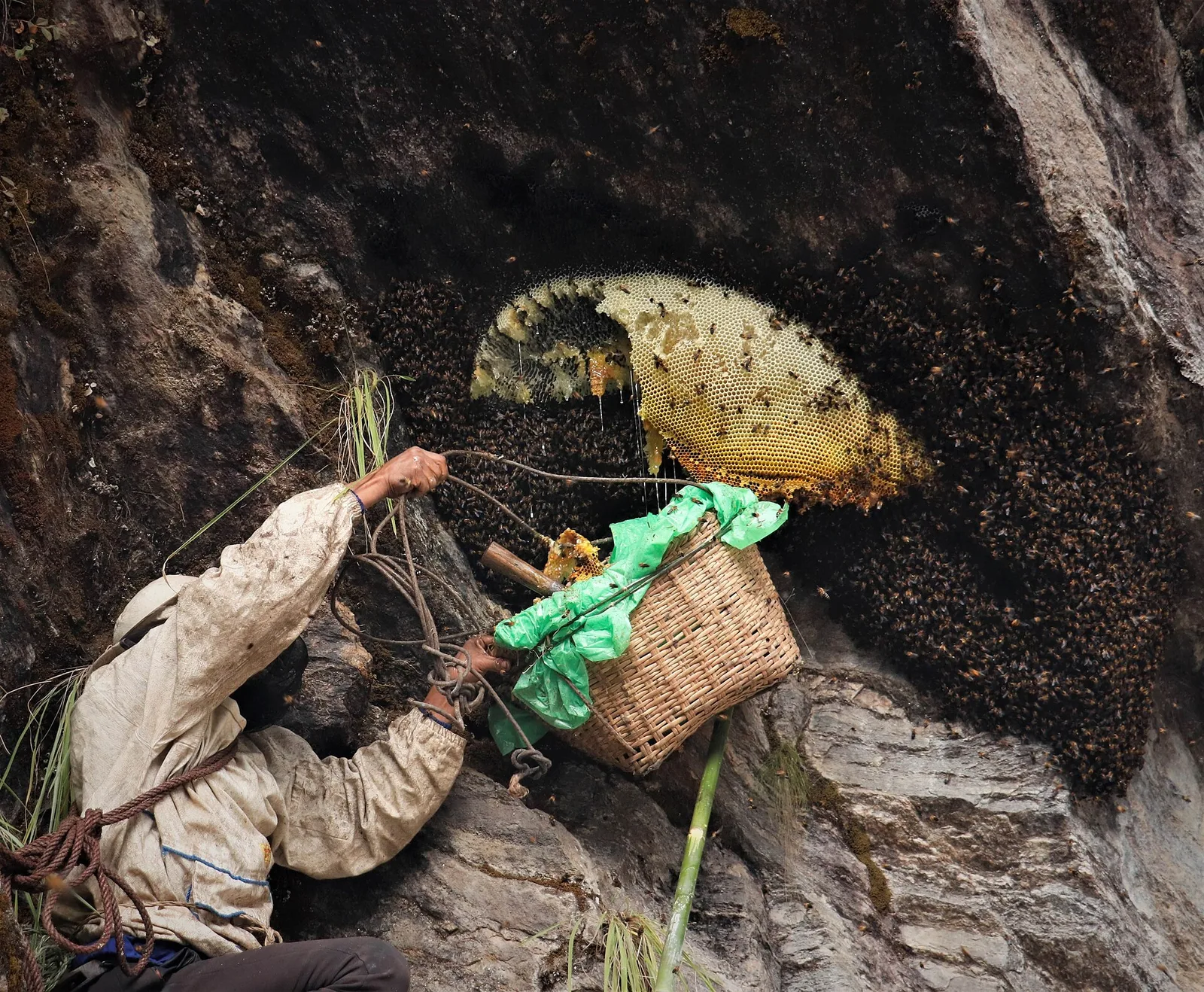
The world's largest honeybee builds its hive up to 14,000 feet up a bare Himalayan cliff face, and the only way to reach the honeycomb is a rope ladder woven by hand from bamboo and jungle vine. Twice a year, men from Nepal's Gurung community climb it anyway.
The bee is Apis laboriosa, the Himalayan giant honeybee — the largest honeybee species on the planet, with a range stretching roughly 2,500 kilometres along the southern edge of the Himalaya. More than a third of the world's population lives in Nepal's mountains. Villages around Bhujung, in Lamjung district a few days' walk from Pokhara, have harvested the combs this way for thousands of years, timing the hunt to April–May and again to November–December, when the honeycombs hang heaviest.
Key facts
- Apis laboriosa is the world's largest honeybee and nests on cliff faces up to 14,000 feet (4,267m) high.
- Gurung hunters in Lamjung district harvest twice yearly — April–May and November–December — using hand-woven rope ladders.
- Bee researcher Ratna Thapa of Tribhuvan University estimates colony numbers are falling roughly 70% a year at surveyed sites.
- The honey comes from rhododendron nectar and contains grayanotoxin, the compound that makes it mildly intoxicating in small doses and dangerous in large ones.
What happens on the cliff is closer to a controlled fall than a climb. One or two hunters lower themselves over the edge on the rope ladder while others brace it from above and below. A long bamboo pole, cut and shaped for the job, is used to slice the comb free and lower it into a woven basket, while smoke from a fire below drives the bees off without killing them. The bees defend the colony the entire time, and hunters wear little more than the clothing their grandfathers wore for the same climb a generation earlier.
The hunt is woven into Gurung cultural life well beyond the honey itself. Communities mark it with small rituals asking permission of the cliff and the bees before anyone descends, and ownership of specific cliff faces has traditionally passed down within particular families or village councils. That system has been shifting since around 1990, as roads reached deeper into Lamjung and fewer young men chose to inherit the climb.
The honey itself is the reason people outside the village ever hear about this. Apis laboriosa feeds heavily on Himalayan rhododendron nectar, which carries the natural neurotoxin grayanotoxin. In small amounts, roughly a teaspoon or two, it produces a warm, mildly intoxicating buzz that has made ‘mad honey’ a minor export curiosity. In larger amounts, clinical case reports out of eastern Nepal describe nausea, a dangerously slowed heart rate and dropping blood pressure severe enough to need hospital treatment within a few hours of eating it. It is not a party drug. It is a wild, unpredictable toxin that happens to taste like honey, and the exact dose in any comb depends on which flowers were blooming that week.
What this means for trekkers
Nobody hands a visiting trekker a rope ladder, and an operator offering to let a foreigner ‘try honey hunting’ should be treated as a red flag rather than a selling point — this is a Gurung livelihood, and a genuinely dangerous one, not a tourist activity. But the villages where it happens are real, walkable, and among the most welcoming homestay communities in the Annapurna foothills. Ghalegaon, a Gurung hilltop village in Lamjung built almost entirely on homestays, sits inside the same belt of cliffs the hunters work, with Annapurna II and Lamjung Himal filling the skyline from the rooftops. Ghandruk and the villages on the Royal Trek carry the same Gurung heritage — stone-roofed houses, a community museum, home-cooked meals — a short, low-altitude way to meet the culture behind the honey without romanticising the risk taken to harvest it.
What this means for you
The bees the hunters risk their lives for are disappearing faster than most endangered species get discussed. A night in a Gurung homestay is one of the few ways an outside visitor actually supports the community keeping the cliffs, and the tradition, alive.
Researchers point to overharvesting, road-building and a warming climate pushing rhododendron bloom out of sync with the bees as the likely drivers of the decline — the same pressures reshaping trekking routes across Nepal's mid-hills. Source: Earth Island Journal.
Cover photo: Aerackkkkk via Wikimedia Commons (CC BY-SA 4.0).
Planning a trek?
Trek this route with us — Ghandruk Village Trek — 3 Days
NMA-certified local guides, transparent pricing, 5,000+ treks since 1998. Message us your dates and we'll sort the permits, lodges and logistics — reply within 24 hours, no obligation.


Popular Nepal treks
All treks →


Related coverage
Records & People
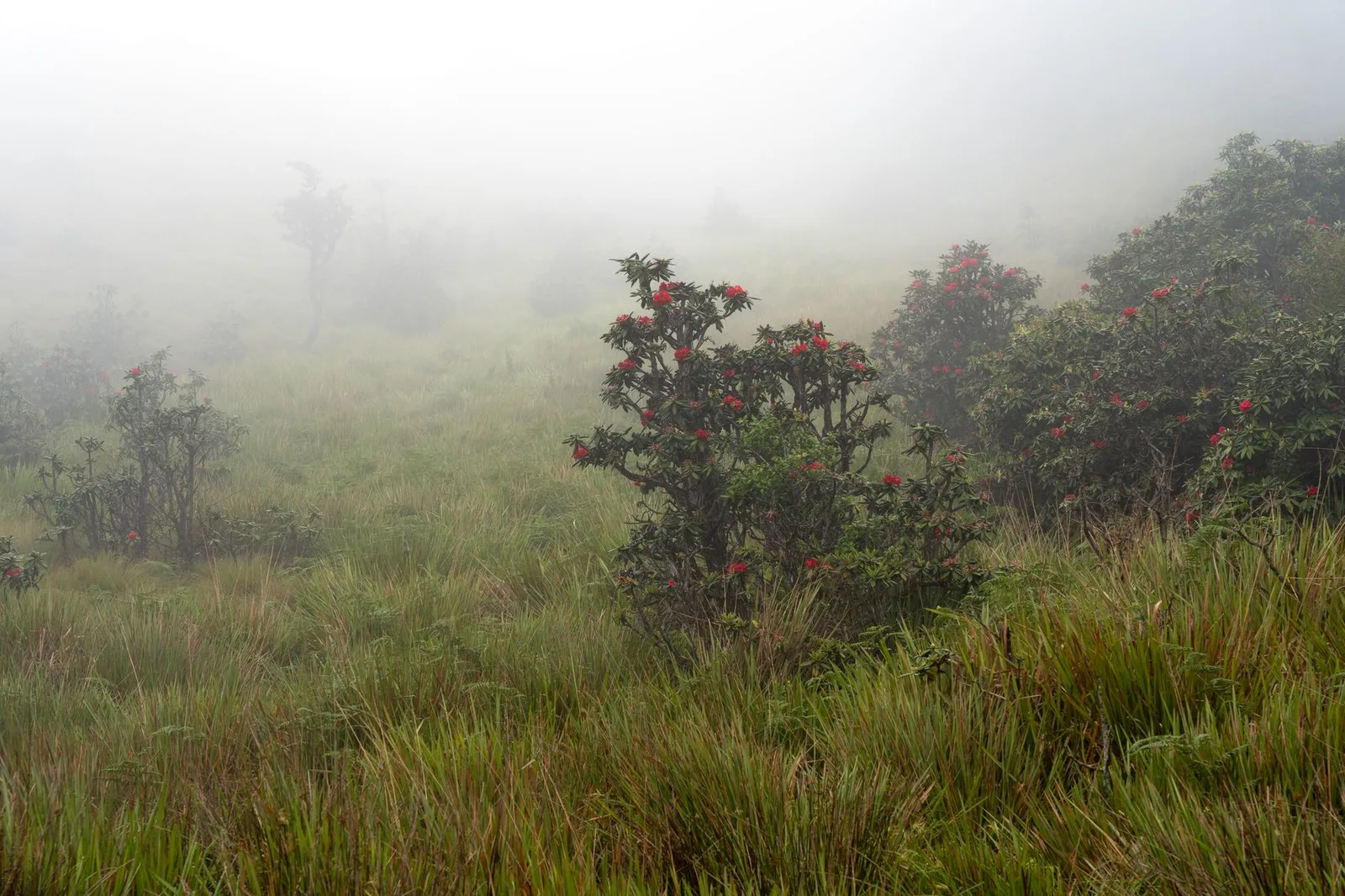
Nepal Is Home to the World's Largest Rhododendron Forest, and It Blooms Blood-Red Every Spring
Inside the Annapurna forest above Ghorepani that turns crimson for ten weeks a year, and the narrow window when the low, mid and high bloom all line up at once.

Records & People
The Sacred Nepal Peak No One Is Allowed to Climb — Even Though a Team Got Within 150 Feet
Machapuchare has stood unclimbed since 1957, not because the summit is out of reach, but because Nepal decided some mountains should stay untouched.
Records & People
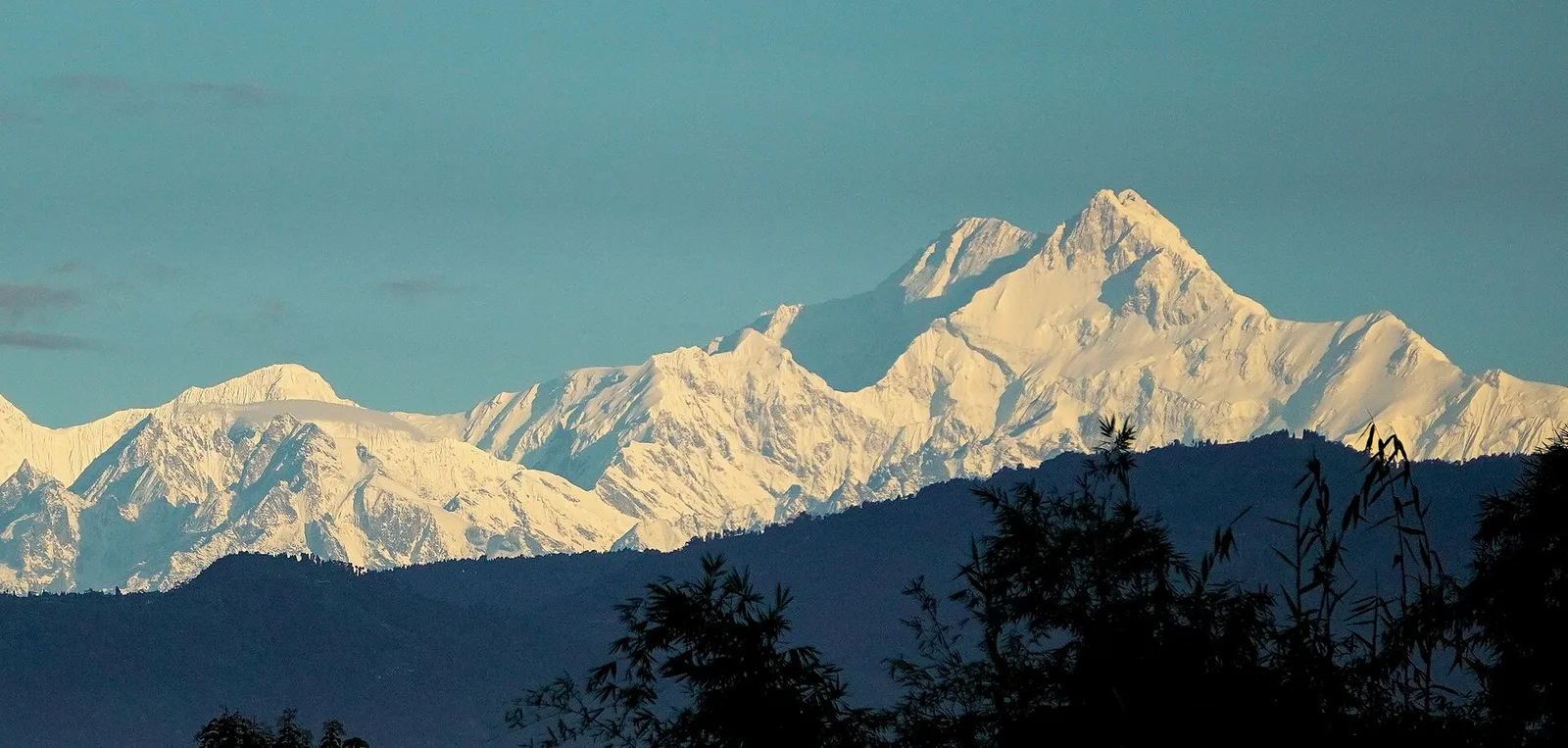
In 1955 They Stopped a Few Feet From the Top of the World's Third-Highest Mountain. Seventy Years Later, India Wants No One to Ever Take the Last Step.
Joe Brown and George Band summited Kangchenjunga on a promise never to stand on its true top. A 2025 Indian Army climb from the Nepal side broke that unwritten rule again, and reignited a decades-old fight over whether the mountain should be climbed at all.

Records & People
The Nepali Soldier Who Descends 100 Stairs Faster Walking on His Hands Than Most People Can on Their Feet
Hari Chandra Giri began hand-walking as an eight-year-old party trick; today the Nepal Army athlete holds four Guinness World Records, set everywhere from a Kathmandu hilltop stupa to a staircase in China.
Latest from the desk
Records & People
A French-Canadian Just Walked the Length of Nepal — 1,700 Kilometres, 20 Districts, 143 Days
Stephane Champoussin finished the Great Himalayan Trail on August 1, becoming one of barely 130 people to ever cross Nepal end to end on foot, through Kanchenjunga, Makalu and the Manaslu Circuit.

Records & People
The First Omani Woman to Summit Everest Died Chasing All 14 of the World's Highest Peaks
Nadhira Al Harthy failed her first mountain in 2015, then reached Everest's summit four years later. On July 30, 2026, an avalanche below Camp III on Pakistan's Broad Peak ended her climb toward the 8,000-metre club.
Industry & Tourism
Nepal's First Bungee Jump Opened in 1999 on a Bridge Built for One Purpose — Jumping Off It
A hundred kilometres east of Kathmandu on the road to Tibet, a steel suspension bridge engineered only for bungee jumping has been dropping visitors 160 metres into the Bhote Koshi gorge for 27 years — the jump that started Nepal's adventure-sports industry.