
Nepal Culture & Heritage in 2026: Faiths, Peoples, Festivals and Living Traditions
A respectful overview of Nepal's cultural richness — its intertwined faiths, its mosaic of peoples, the UNESCO heritage of the Kathmandu Valley, and the great festivals and living traditions.
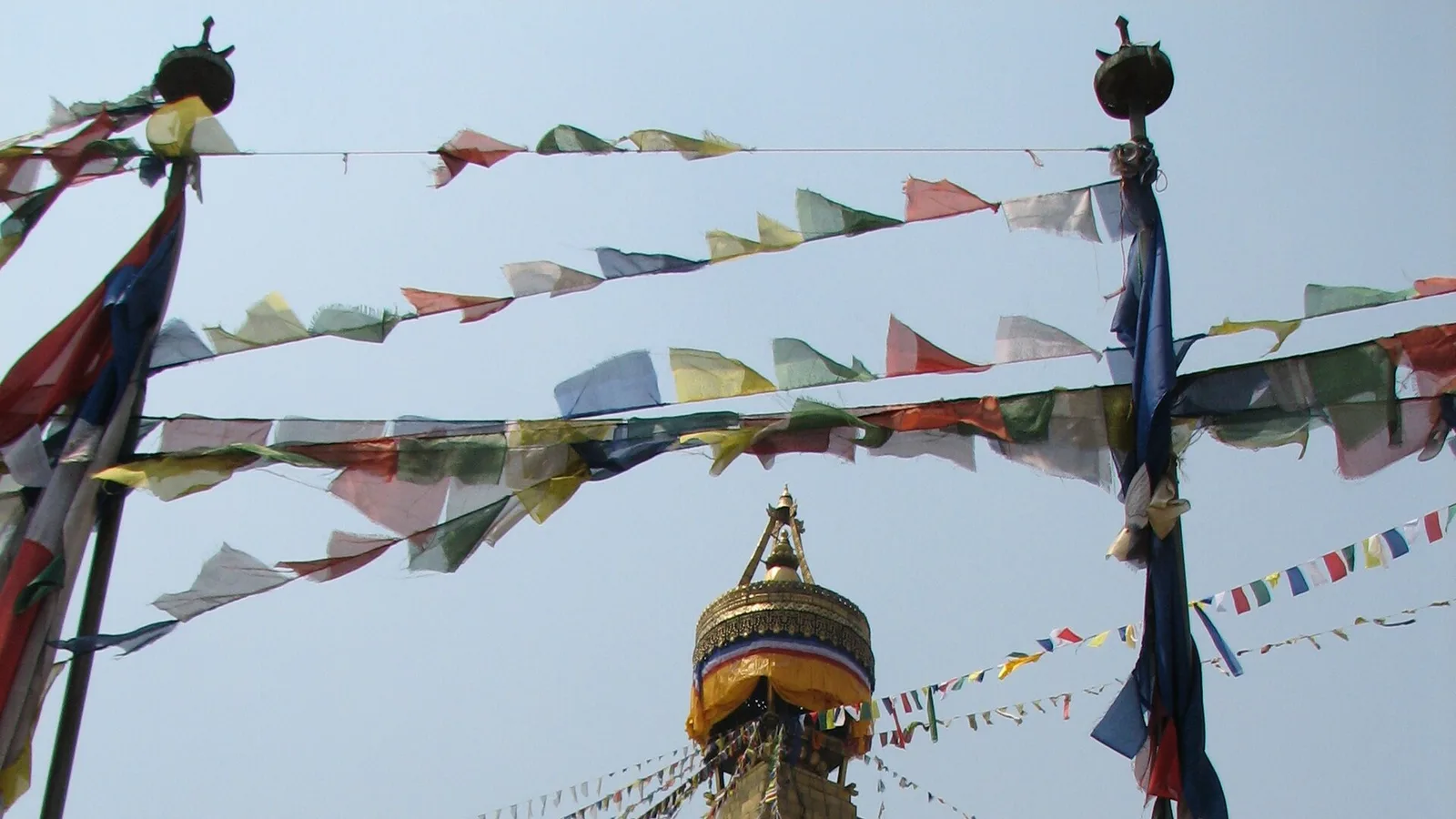
Few countries pack as much cultural richness into so small a space as Nepal. Between the plains of the Terai and the high Himalaya live scores of peoples, faiths and languages, layered over one another for centuries and still very much alive. Temples and stupas share the same square; a Hindu festival and a Buddhist one can fall in the same week; and a young girl worshipped as a living goddess still leans from a carved window above a medieval palace. This is a broad, respectful map of that world — and a doorway to the deeper stories behind it.
Key facts
- Faiths: at the 2011 census about 81.6% of Nepalis were Hindu and around 9% Buddhist, with roughly 4.2% Muslim and 3.6% following the indigenous Kirant religion. Hindu and Tibetan Buddhist traditions are deeply intertwined.
- Peoples: the 2011 census recorded 125 caste and ethnic groups speaking 123 languages — among them Newar, Sherpa, Gurung, Tamang, Magar, Tharu, Rai and many more.
- Heritage: the Kathmandu Valley was inscribed as a UNESCO World Heritage Site in 1979, grouping seven monument zones.
- Festivals: Dashain is the longest and most important, followed by the lights of Tihar and the street pageantry of Indra Jatra.
A land of intertwined faiths
Nepal is often called a Hindu-majority country, and by numbers it is: the 2011 census identified 81.6% of the population as Hindu and about 9% as Buddhist, with roughly 4.2% Muslim, 3.6% following the indigenous Kirant religion, and less than 1% Christian. But those figures understate how closely the traditions live together. In the Kathmandu Valley especially, Hindu and Tibetan Buddhist practice have long borrowed from one another, drawing on Shaivite, Nyingma and tantric strands until the boundary between them blurs. Many shrines are honoured by both communities, and many festivals are shared. A traveller quickly learns that asking whether a temple is "Hindu or Buddhist" often misses the point — it may be both.
A mosaic of peoples
What makes Nepal extraordinary is not one culture but the sheer number of them. The 2011 census counted 125 caste and ethnic groups and 123 spoken languages, most belonging to the Indo-Aryan or Tibeto-Burman families. Hill and mountain peoples such as the Sherpa, Gurung, Tamang and Magar, valley-dwelling Newar, and the Tharu of the southern plains each carry their own dress, food, music and rites of passage. None is a museum piece; these are living communities whose young people trek, study and work abroad while still returning home for the great festivals.
| Group | Share | Known for |
|---|---|---|
| Chhetri | 16.6% | The largest single group, spread across the hills |
| Bahun (Hill Brahmin) | 12.2% | Priestly and scholarly traditions |
| Magar / Tharu | 7.1% / 6.6% | Hill soldiers and craftspeople; Terai farmers and dancers |
| Tamang | 5.8% | Tibetan Buddhist hill communities near Kathmandu |
| Newar | 5.0% | Indigenous builders of the Kathmandu Valley's cities |
| Gurung / Sherpa | 2.0% / 0.4% | Annapurna and Everest mountain cultures |
The Kathmandu Valley: a living museum
If Nepal has a cultural heartland, it is the Kathmandu Valley, and its creators were the Newars — the indigenous people who built the valley's three royal cities and gave the Himalaya the multi-roofed pagoda. Newari architecture spans the pagoda, stupa, shikhara and chaitya, and Newar craftsmanship travelled far: the 13th-century artist Araniko carried the style to the court of Kublai Khan. In 1979 UNESCO recognised the valley as a World Heritage Site, grouping seven monument zones — the Durbar Squares of Kathmandu, Patan and Bhaktapur, the stupas of Swayambhunath and Boudhanath, the Hindu temple complex of Pashupatinath, and the hilltop temple of Changu Narayan. Walk any of them and you find working temples, not ruins: pilgrims, offerings, and daily worship among the carved wood and brick.
The great festivals
Nepal's calendar is stitched together with festivals. Dashain, falling from late September into mid-October, is the longest and most important, celebrating the goddess's victory over demons and drawing families home across the country. Weeks later comes Tihar, the festival of lights, when homes glow with oil lamps and even crows, dogs and cows are honoured on their appointed days. In the capital, Indra Jatra is the biggest religious street festival: eight days of masked dances and processions in Kathmandu Durbar Square, honouring Indra, the king of heaven. Its most famous moment is the Kumari Jatra, when three chariots carrying the living representations of Ganesh, Bhairava and the Kumari are pulled through the old city — a rite formalised in 1756 and joined by Hindus and Buddhists alike.
Explore Nepal's living heritage
This overview only opens the door. Each of these stories has its own deep-dive:
- Nepal's Kumari, the living goddess of Kathmandu — how a young girl is chosen, how she lives, and the modern debate around the tradition.
- The Sherpa people and their culture — the Tibetan Buddhist world of the Khumbu behind the Everest headlines.
- Nepal's cliff honey hunters — the Gurung tradition of harvesting wild honey from Himalayan cliffs.
- Dashain and Tihar 2026 — when Nepal's two greatest festivals fall, and what they mean for travellers and trekkers.
- The Kathmandu Valley UNESCO sites — the seven monument zones (the three Durbar Squares, Boudhanath, Swayambhu, Pashupatinath, Changu Narayan) every trek passes through.
- Nepali food, from dal bhat to momo — what you will actually eat, and why dal bhat is the trekker's fuel.
More Nepal culture & heritage stories
- The Khumjung ‘yeti scalp’ — what scientists made of Hillary’s famous Khumbu relic.
- The summit left untouched — Kangchenjunga and the tradition of stopping just short of the top.
- Muktinath, where flame burns on water — one of Nepal’s strangest sacred sites, high on the Annapurna circuit.
- The all-seeing eyes of Boudhanath — the symbolism watching over Kathmandu’s great stupa.
- Nepal’s newest living goddess — a two-year-old installed as a Kumari — the ritual in practice.
- The Sherpa altitude gene — DNA borrowed from an extinct human species.
Travelling Nepal's culture respectfully
Living heritage is not a backdrop. Ask before photographing people, priests or shrine interiors, and step back during worship rather than through it. Walk clockwise around stupas and mani walls, keeping them to your right; remove your hat and shoes where asked; and dress modestly at temples. Buy from local artisans rather than imports, learn a greeting or two — namaste opens most doors — and treat festivals as devotion, not performance. Meet Nepal this way and its culture will meet you back.
From the intertwined faiths of the valley to the honey-hunting cliffs of the middle hills and the monasteries of the high Khumbu, Nepal's culture is not a single thing but a conversation between many. It is best understood slowly, on foot, in the company of the people who keep it alive.
Cover photo: McKay Savage from London, UK via Wikimedia Commons (CC BY 2.0).
来源: Wikipedia: Culture of Nepal, Kathmandu Valley, Ethnic groups in Nepal, Indra Jatra
计划徒步?
我们负责许可证、后勤与向导
NMA 认证的本地向导,价格透明,自 1998 年以来 5,000+ 次徒步。告诉我们你的日期,其余的交给我们。


更多「Culture & Heritage」
Culture & Heritage
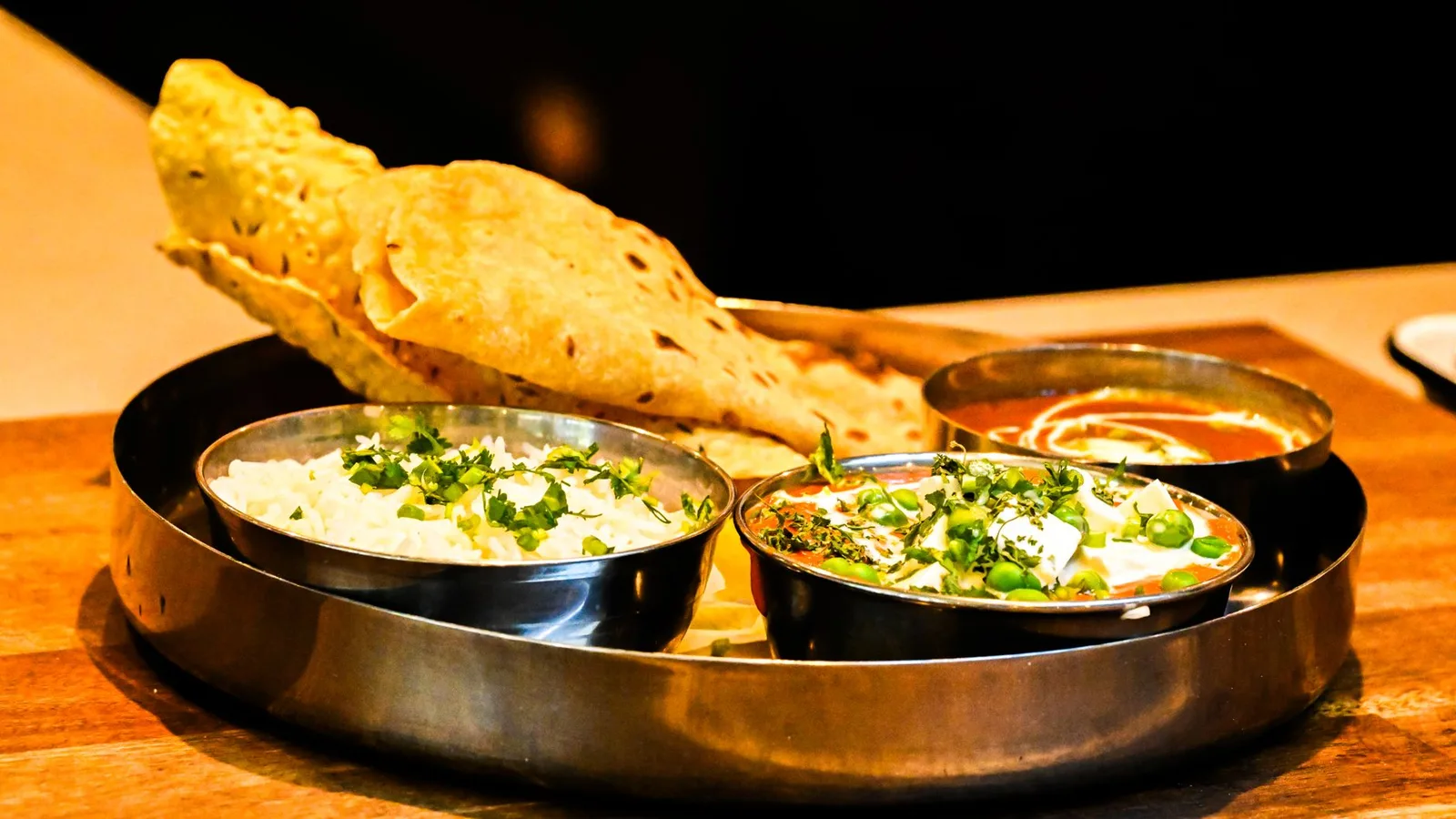
Dal Bhat, Momo and Everything Between: What You'll Actually Eat in Nepal in 2026
Dal bhat, momo and Nepal’s real food culture
Culture & Heritage
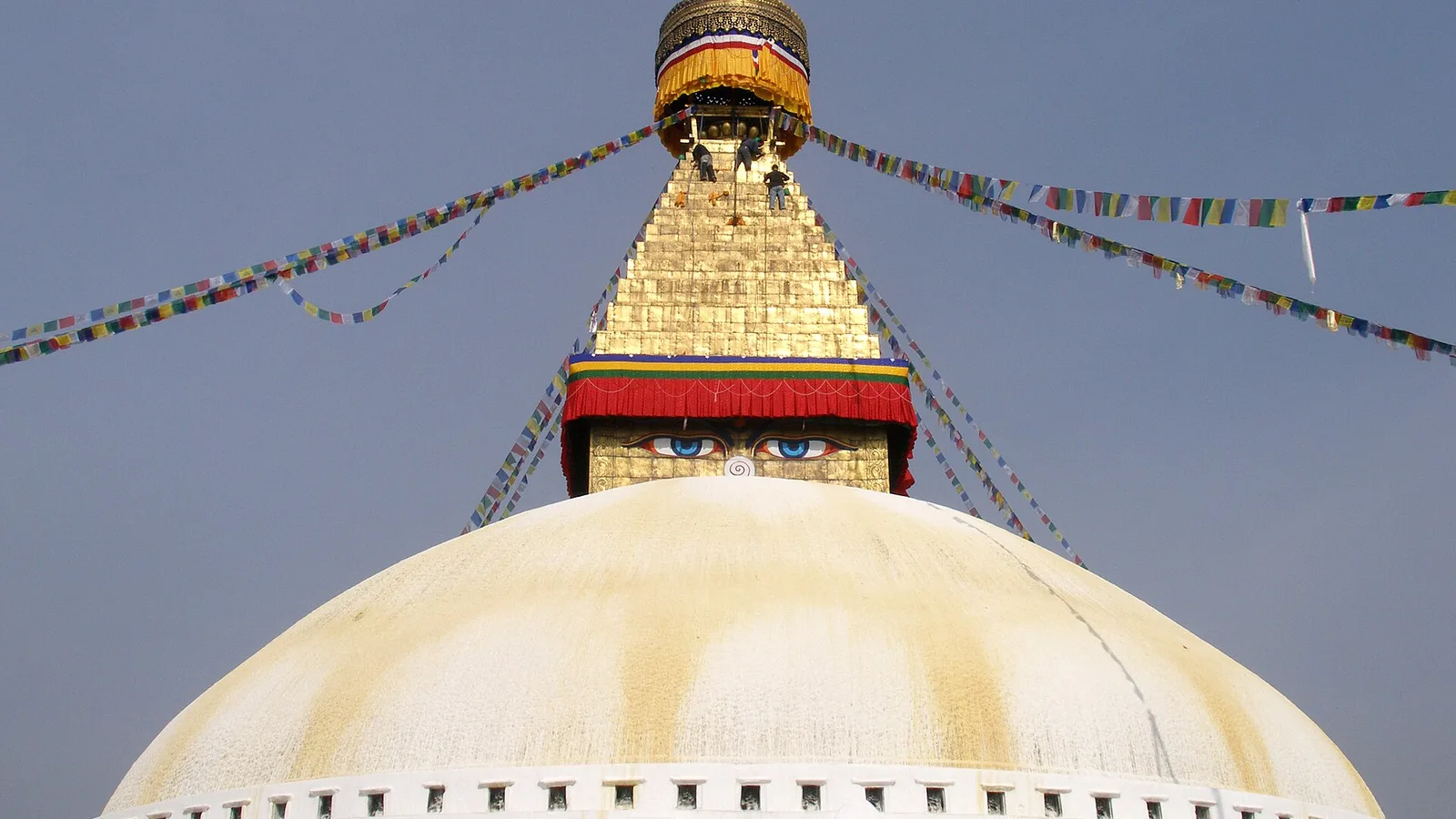
Kathmandu Valley UNESCO Site: 7 Monument Zones, One Inscription (2026)
Seven monument zones, inscribed together in 1979 as one World Heritage Site, are the cultural gateway every Nepal trek passes through.
Culture & Heritage
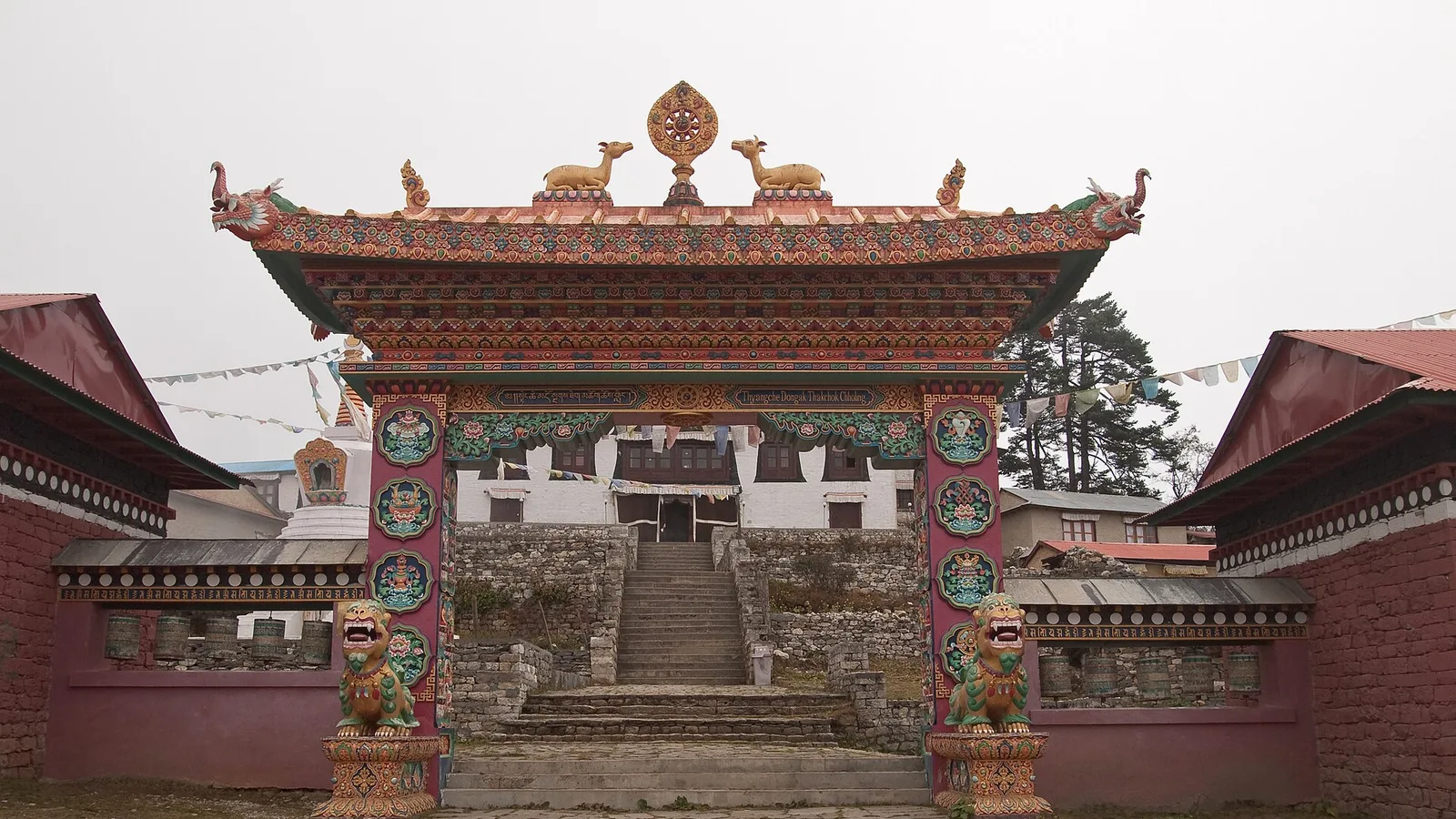
The Sherpa: A Tibetan-Origin People, Not a Job Title (2026)
An ethnic group, not an occupation — the Sherpa of the Khumbu have their own language, Nyingma Buddhist faith and a homeland below Everest, far beyond the mountaineering fame that made their name a household word.