
Nepal Just Named a 2-Year-Old a Living Goddess — She Can't Touch the Ground Until She Retires
Aryatara Shakya was enthroned as Kathmandu's Royal Kumari in 2025, the latest in a 17th-century tradition of worshipping a toddler as a living deity.
At a glance
- Published
- TopicRecords & People
- Verified againstOnlineKhabar
- Treks coveredKathmandu Valley Cultural Tour — 3 Days, Nepal Classic Tour — 7 Days
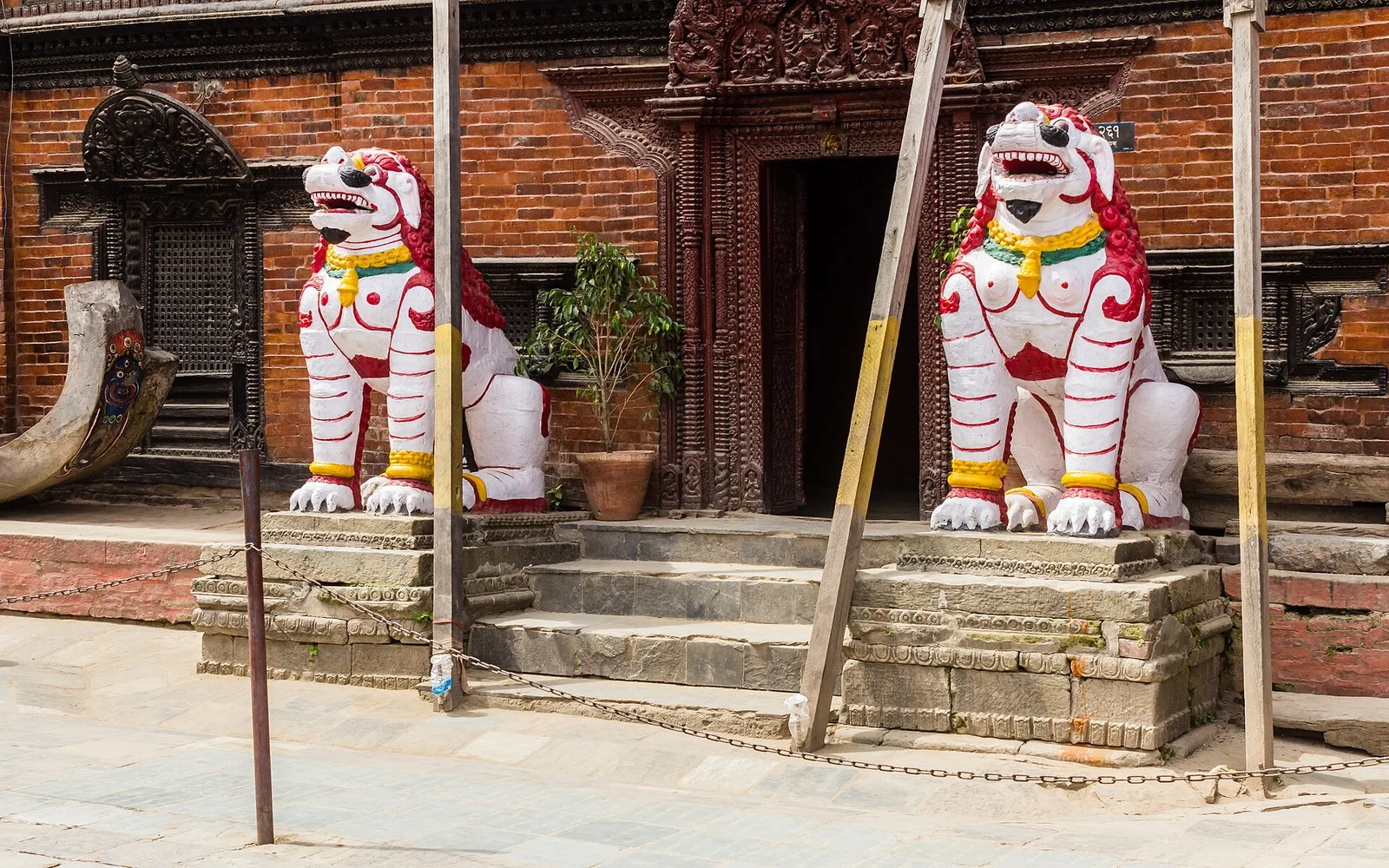
In Kathmandu's Durbar Square, past the carved wooden windows of a three-storey temple-palace, lives a girl who is, by Nepal's own religious and legal reckoning, a living goddess. In September 2025 she was two and a half years old.
Key facts
- Aryatara Shakya was enthroned as the Royal Kumari of Kathmandu on 30 September 2025, aged two and a half
- She succeeded Trishna Shakya, who had served since 2017 and retired at age 11
- The tradition dates to the 17th-century Malla dynasty and is unique to Nepal
- Former Kumaris receive a government pension of NPR 10,000 (about $75) a month, for life
The Kumari is chosen from the Shakya clan of Kathmandu's Newar Buddhist community, and worshipped by both Hindus and Buddhists as the living incarnation of the goddess Taleju. For Aryatara's enthronement, the Shakya Mahavihar Association solicited nominations from 15 monastic courtyards in the Itumbahal neighbourhood; a selection panel working with the Guthi Sansthan (the state body that administers religious trusts) and the Panchang astrological committee narrowed the field before she was carried into the Kumari Ghar, the 'House of the Living Goddess,' in a ceremony timed to the minute — she assumed the role in an eleven-minute window between 12:05pm and 12:16pm.
Historically, the selection tests were far stranger than a paperwork process: candidates were checked against 32 physical 'perfections' — the texture of their skin, the shape of their teeth, even the sound of their voice — and, in the most famous test, made to spend a night alone among the severed heads of ritually sacrificed buffalo and goats to see if she showed fear. A girl who wept or flinched failed. One who sat calm was closer to the throne.
The Malla kings of the Kathmandu Valley establish the living-goddess tradition; the Kumari Ghar is later built beside the royal palace.
The monarchy that once knelt before the Kumari for blessing is abolished — the tradition continues under state administration instead.
At around three years old, she becomes the Royal Kumari of Kathmandu.
Trishna retires at 11; two-and-a-half-year-old Aryatara is enthroned in her place.
While she holds the role, a Kumari lives inside the Kumari Ghar, is dressed daily in red and gold with a painted third eye on her forehead, and — in the strictest reading of the tradition — does not touch the ground outside her own home; when she leaves for a festival procession, she is carried or wheeled. Older accounts describe Kumaris kept entirely out of formal school. That has changed: today's Kumaris are given a private tutor inside the palace, with internet access, books and magazines, and sit national exams under supervision rather than at a public school desk.
What this means for the traveller
The takeaway
You can visit the Kumari Ghar in person — it's one of the most photographed buildings in Kathmandu's Durbar Square, a UNESCO World Heritage Site, and on the right afternoon the current Kumari appears briefly at an upper window (photographing her directly is discouraged, out of respect). She also makes rare public processions during the Indra Jatra festival each September, carried through the old city on a wheeled chariot as thousands watch.
The role ends the moment a Kumari reaches puberty — by tradition, her first period is treated as proof the goddess has left her body — and she returns to an ordinary life, no longer worshipped, with a monthly government pension and, for the first time, a normal childhood ahead of her. Trishna Shakya's own farewell in September 2025 was marked with ceremonial music before Aryatara took her place days later. By most accounts it is a difficult transition: after years of being carried everywhere and addressed as a deity, former Kumaris describe having to relearn how to simply walk down a street.
Kathmandu Durbar Square, home to the Kumari Ghar, sits at the centre of every one of our Kathmandu Valley itineraries — see it on our Kathmandu Valley Cultural Tour or as a stop on the Nepal Classic Tour before you head into the mountains. For more of the valley's living traditions, read our report on Nepal's hidden wonders.
Source: OnlineKhabar
Cover photo: Bijay chaurasia via Wikimedia Commons (CC BY-SA 4.0).
Planning a trek?
Trek this route with us — Kathmandu Valley Cultural Tour — 3 Days
NMA-certified local guides, transparent pricing, 5,000+ treks since 1998. Message us your dates and we'll sort the permits, lodges and logistics — reply within 24 hours, no obligation.


Popular Nepal treks
All treks →


Related coverage
Records & People
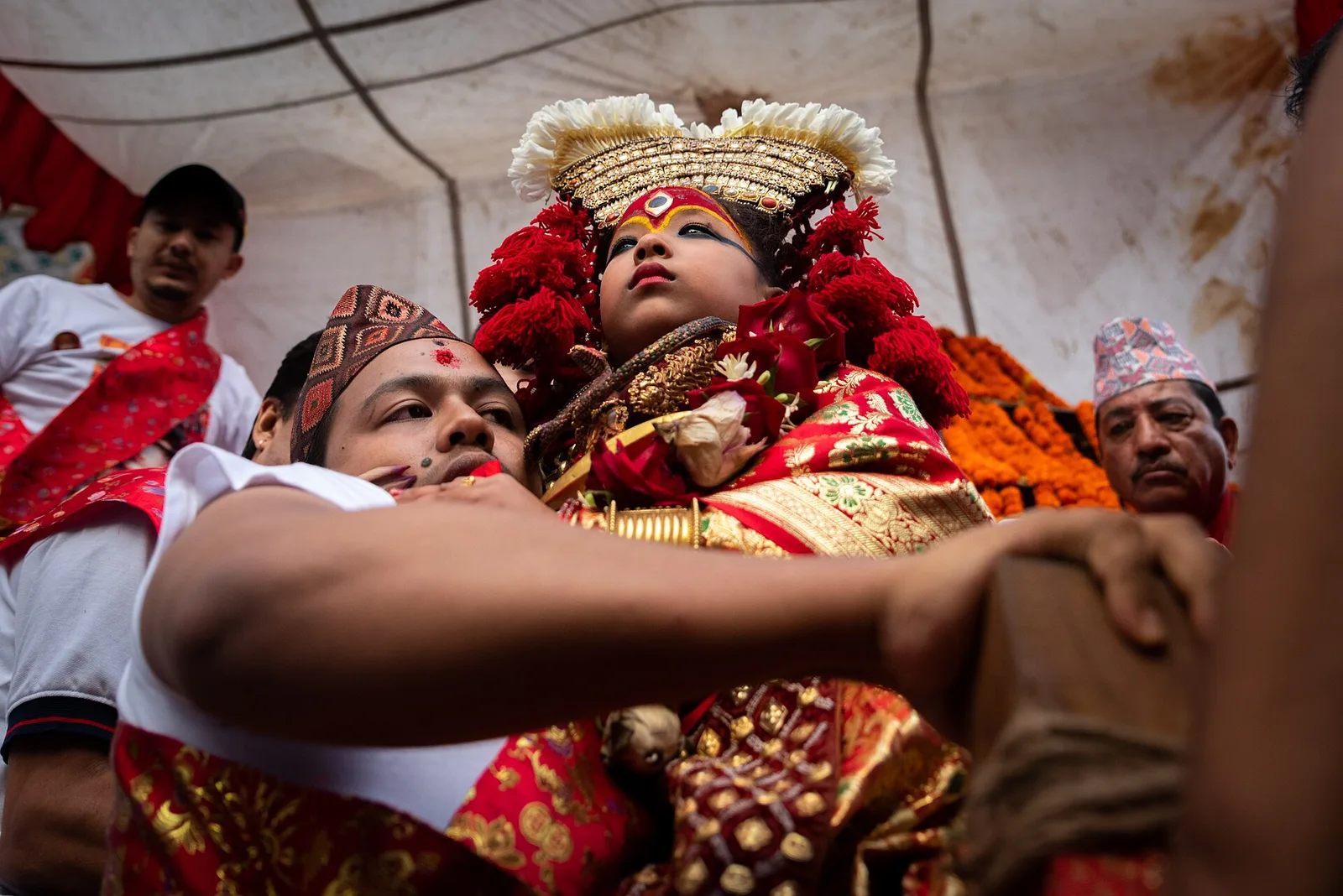
Nepal Picks a Living Goddess Every Few Years — and She's Almost Always Three Years Old
In a centuries-old ritual beside Kathmandu's Durbar Square, a toddler is chosen for 32 physical perfections, tested for total fearlessness beside sacrificed buffalo heads, and enthroned as a living goddess — until her first period ends the reign overnight.
Records & People
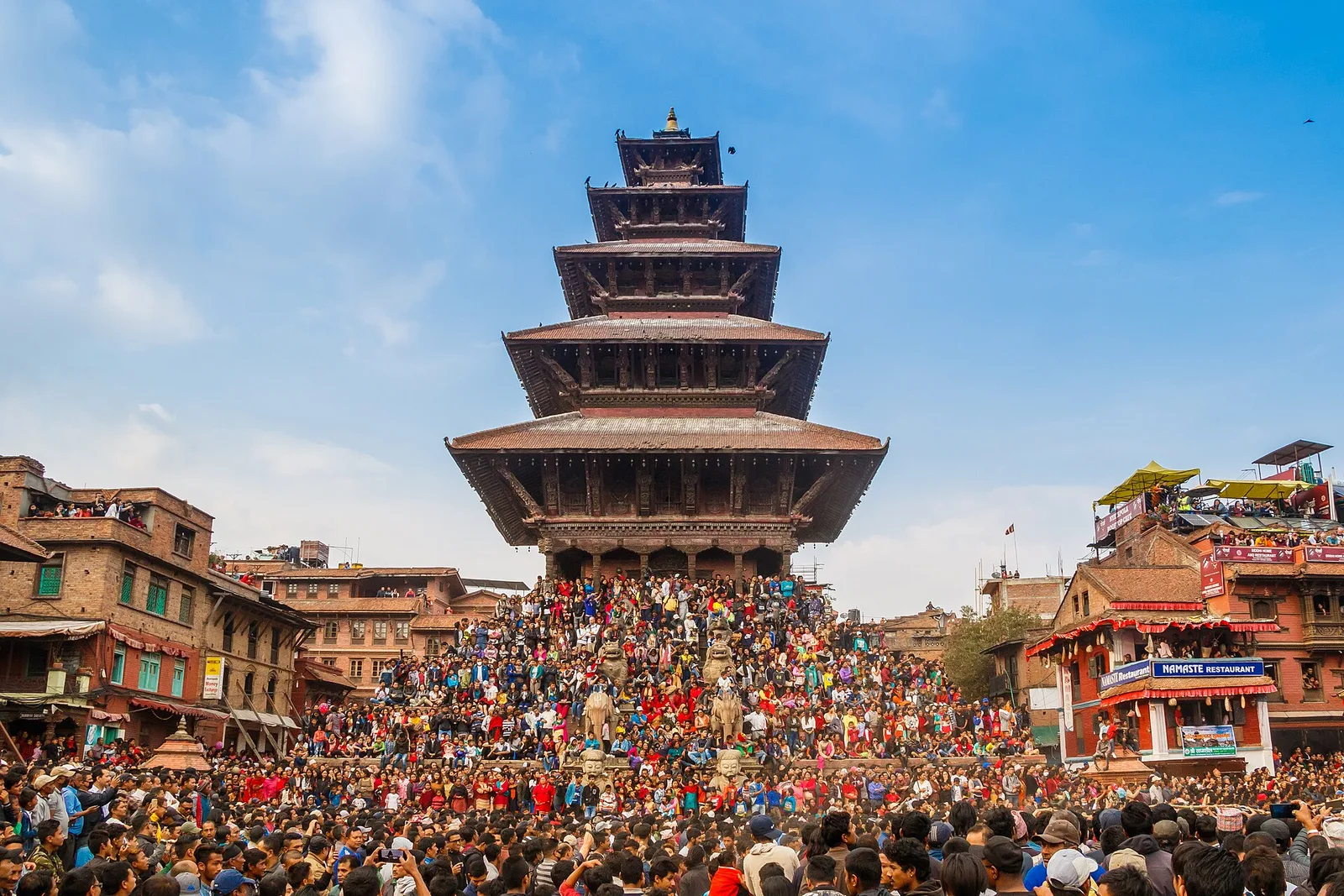
At 17, a Nepali Teenager Led 80 Artists Into Tibet. He Designed the White Pagoda Beijing Still Protects 700 Years Later
Long before Nepal became a bucket-list trekking destination, one Kathmandu Valley teenager designed a monument so revered that a Chinese premier personally ordered it saved from the Cultural Revolution.

Records & People
A New Pangolin Species Was Hiding in Kathmandu Valley for 190 Years
DNA from a 190-year-old museum skin just confirmed Nepal has its own pangolin species — living in ordinary community forests that ring the capital.
Records & People
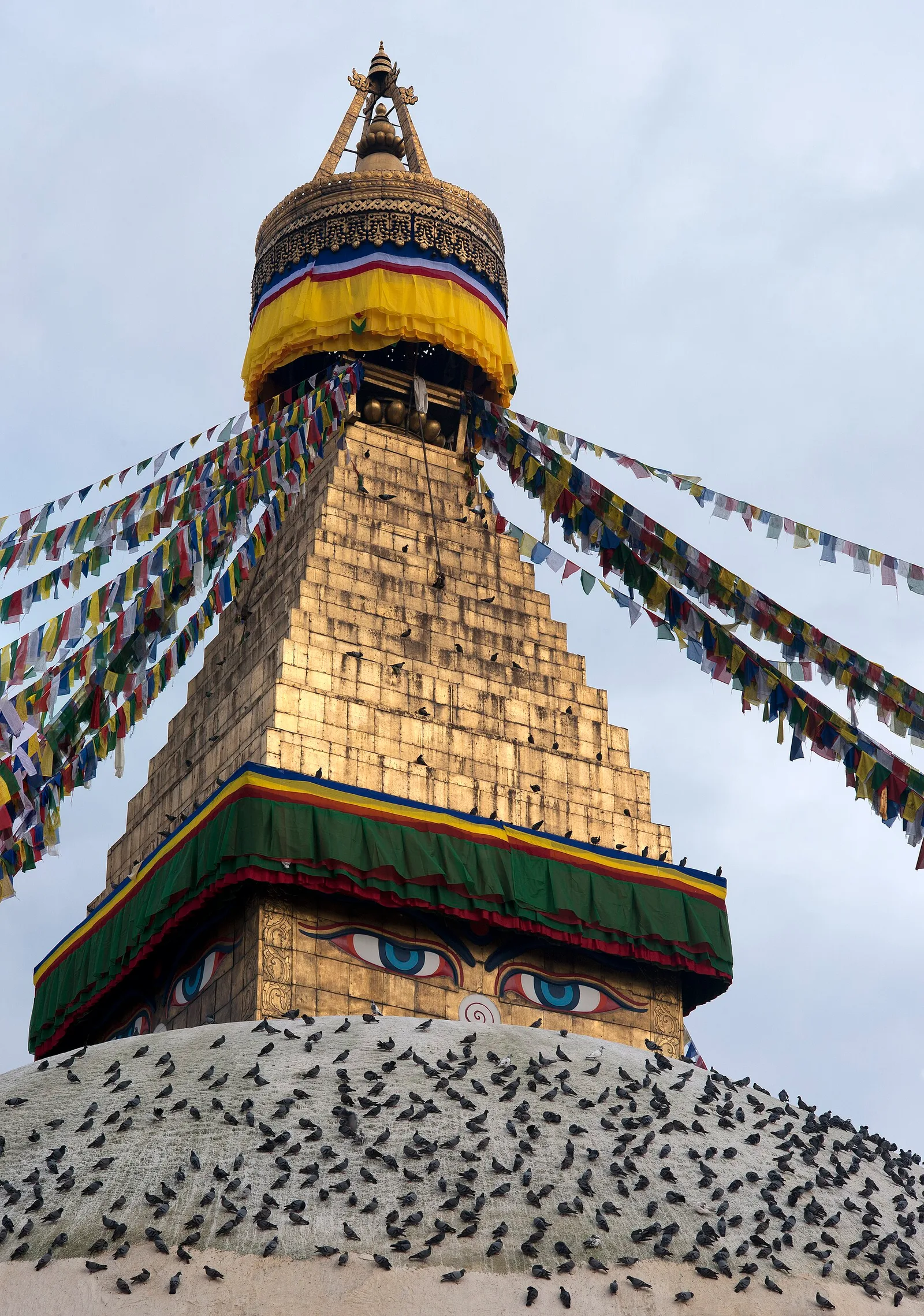
Why Four Pairs of Giant Painted Eyes Watch You From Every Direction in Kathmandu
The all-seeing eyes atop Nepal's Boudhanath Stupa are not decoration — every element, from the nose shaped like a Nepali numeral to the 13 gold tiers above, encodes a specific step toward enlightenment.
Latest from the desk
Records & People
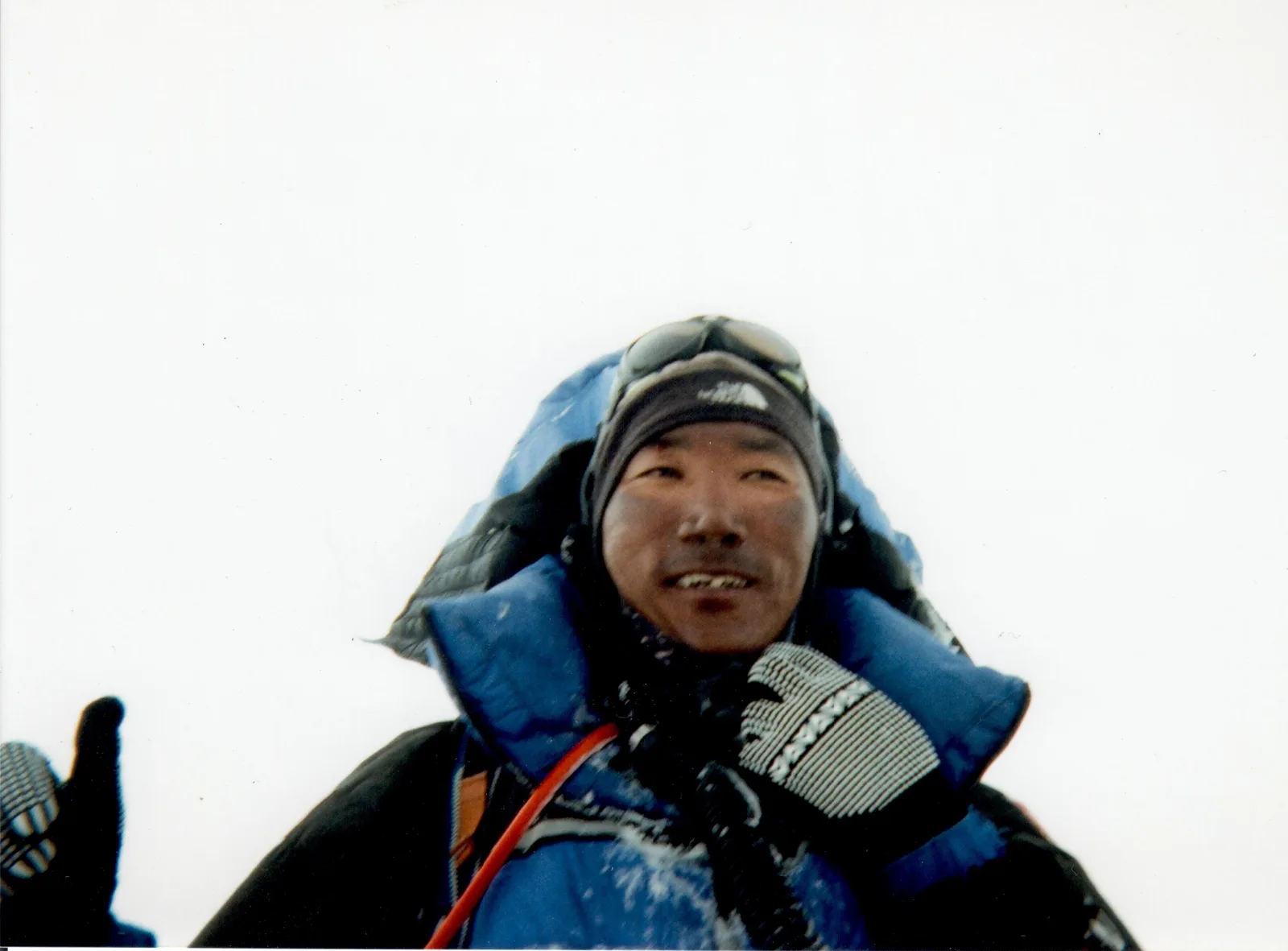
He's Climbed Everest 32 Times — More Than Anyone Alive, and No One Else Is Within Two
Kami Rita Sherpa set the record again on 17 May 2026, extending a world record he has now owned for eight straight years.
World Destinations
The Best Warm Winter-Sun Destinations for 2026 (Where to Escape the Cold)
From 34°C Zanzibar beaches to Nepal’s clear-sky, 20°C+ lowlands — the temperature-checked map of where to chase winter warmth this season.

Gear & Tech
Travel Adapters & Power Banks in 2026: What to Pack (and the Airline Rules You'll Break by Accident)
Nepal runs 230V on Type C/D/M plugs, and your power bank flies in the cabin only — up to 100Wh with no approval, 100-160Wh with permission, over 160Wh banned. The 2025 crackdown, the watt-hour maths, and a charging plan that beats teahouse fees.