
Travellers' Diarrhoea and Food & Water Safety Abroad in 2026: The Rules That Keep You Well
The most common travel illness, demystified: what causes it, the 'boil it, cook it, peel it or forget it' food rules, safe water and ice, rehydration as the mainstay, and exactly when it is serious enough to see a doctor.
It is the single most common thing that goes wrong on a trip abroad, and almost nobody plans for it. Travellers' diarrhoea is rarely dangerous, but a bad case can wipe out two or three days of a holiday — or, at 4,000 metres on a Nepal trek, turn an already hard day into a genuinely miserable one. The good news: the causes are well understood, prevention is mostly common sense, and the treatment that matters most is cheap and sold in every pharmacy on earth.
The short version
- It is almost always caught from contaminated food or water. The commonest culprit is a strain of E. coli, though other bacteria, viruses and parasites all play a part.
- Rehydration is the mainstay of treatment — replacing lost fluid and salts, ideally with oral rehydration salts (ORS). Most cases settle on their own within a few days.
- "Boil it, cook it, peel it or forget it" is the old rule of thumb, and it still holds: hot cooked food, sealed or treated water, fruit you peel yourself.
- See a doctor or travel clinic if there is blood in the stool, a high fever, signs of dehydration, or if it lasts more than two to three days.
This article is general information, not medical advice. It does not cover doses of any medicine. For advice about your own health — including whether any medication is right for you — speak to a doctor, pharmacist or travel clinic before and during your trip.
What actually causes it
Travellers' diarrhoea spreads the same way whatever the country: through food or water that has picked up traces of faecal contamination somewhere between the field and your plate. According to reference sources such as the NHS and the medical literature, most cases are bacterial, and the single most common organism is enterotoxigenic Escherichia coli. Other bacteria (Shigella, Salmonella, Campylobacter), a share of viruses, and slower-acting parasites such as Giardia all contribute. You don't need to know which one you have to manage it — the response is much the same.
Food and water: what is safe, what is risky
The practical decisions come down to a handful of everyday choices. This is the "boil it, cook it, peel it or forget it" principle turned into a table.
| Item | Lower risk | Higher risk |
|---|---|---|
| Water | Sealed bottled water, or water you have boiled, filtered or chemically treated yourself | Tap water, water from an open jug, brushing teeth with untreated tap water |
| Ice | Drinks with no ice, or ice you know was made from treated water | Ice of unknown origin — it is frozen tap water and does not become safe by being cold |
| Cooked food | Food served piping hot, cooked through and eaten straight away | Food left standing warm at a buffet, or reheated after sitting out |
| Salad and raw vegetables | Vegetables you have cooked; anything you can peel yourself | Raw salads and garnishes, often washed in untreated water |
| Fruit | Fruit with a skin you peel yourself (bananas, oranges) | Pre-cut fruit, or fruit with edible skins washed in tap water |
| Dairy | Sealed, clearly pasteurised products | Unpasteurised milk and soft cheeses; ice cream from an uncertain cold chain |
| Street food | Busy stalls cooking to order, high turnover, food served hot in front of you | Quiet stalls with food sitting out, or anything lukewarm |
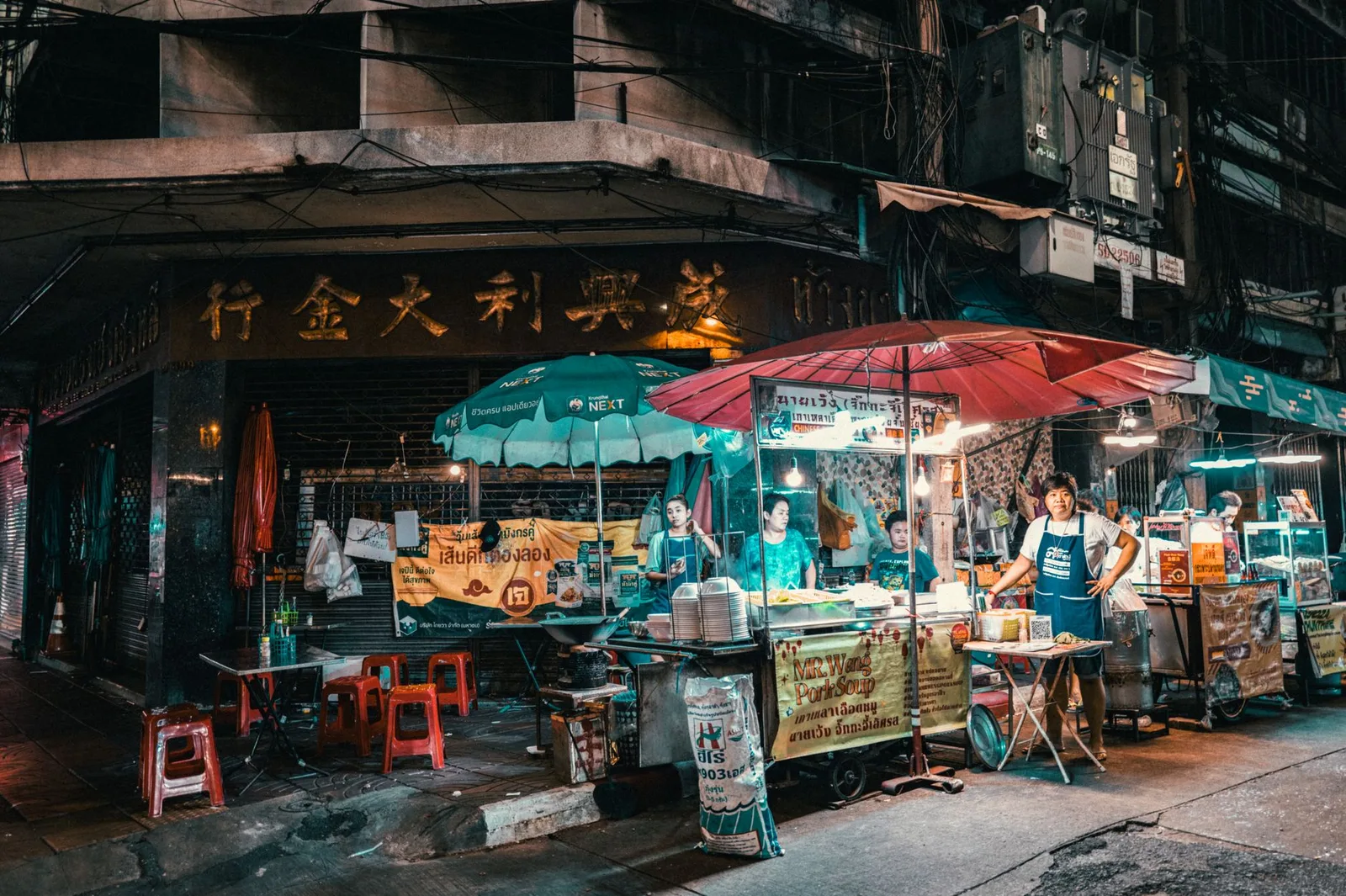
Street food is not off-limits — a busy stall frying to order in front of a queue is often safer than a lukewarm hotel buffet. The signals to read are heat, freshness and turnover, not price.
Treatment: fluids first
If it does happen, the priority is not to stop the diarrhoea but to stay hydrated. Fluid and salts are lost fast, and dehydration is what actually makes people feel wretched. The single most useful thing you can carry is a few sachets of oral rehydration salts (ORS) — a measured mix of sugar and electrolytes that you dissolve in clean water and sip steadily. Plain water, weak squash and soups all help; very sugary fizzy drinks and fruit juice can make things worse. Eat plain food when you can face it.
Medicines do exist — anti-motility drugs that slow the gut, and antibiotics for more severe or specific cases — but they are not for everyone, they are not always appropriate (anti-motility drugs in particular should be avoided when there is a fever or blood in the stool), and this is not the place for doses. If you think you need them, that is exactly the point at which to see a doctor, pharmacist or travel clinic. Many travellers sensibly ask their own clinic before departure what they should carry.
When to stop self-treating and see a doctor
Seek medical help if any of these appear: blood or mucus in the stool; a high fever; signs of dehydration (very dark urine, passing little, dizziness, unable to keep fluids down); severe or worsening abdominal pain; or diarrhoea that lasts more than two to three days (or keeps returning). It matters more, sooner, for young children, older travellers, pregnant women and anyone with a long-term illness. On a remote trek, err on the side of descending and getting help earlier rather than later.
Prevention comes down to hands and water
Beyond food choices, the humblest measure is the most effective: wash your hands with soap and water regularly — always before eating and after the toilet — and carry an alcohol hand gel for when there is no sink. Treat your drinking water as a deliberate decision, not an afterthought.
On a Nepal trek, water is the main risk
In the mountains the balance shifts. Teahouse kitchens generally cook food hot and to order, so the bigger hazard is what you drink. Do not trust untreated stream or tap water at altitude: boil it, filter it, or treat it. Along popular routes like the Annapurna Circuit you will find safe-drinking-water stations selling treated refills, which are cheaper and vastly greener than buying single-use plastic bottles the whole way up. Be wary of raw salads at high lodges, peel your own fruit, and carry ORS sachets in your daypack from day one.
There is an altitude twist that makes all of this matter more. Dehydration and altitude are a bad combination — losing fluid to a stomach bug at 4,000 metres can leave you feeling far worse and can blur the picture with early altitude sickness. Staying well hydrated is part of acclimatising in the first place. If you want the companion piece, our guide to altitude sickness on the Everest trek covers the simple rules that keep you safe higher up, and our rundown of what vaccines you actually need before a Nepal trek is worth reading before you fly.
None of this should put anyone off. A little care with food and water, a few ORS sachets and clean hands prevent the majority of cases — and if you do go down, fluids and rest fix most within a couple of days. For a trip run by guides who know where the safe water stations are and how to keep a group well at altitude, our Everest Base Camp and Annapurna Base Camp treks are a good place to start.
Cover photo: Tony Wu via Pexels (Pexels License).
来源: NHS; Traveler’s diarrhea (Wikipedia)
计划徒步?
我们负责许可证、后勤与向导
NMA 认证的本地向导,价格透明,自 1998 年以来 5,000+ 次徒步。告诉我们你的日期,其余的交给我们。


更多「Safety & Advisories」
Safety & Advisories
How Many Days Do You Actually Need for Everest Base Camp? 10 vs 12 vs 14 vs 15-Day Itineraries
The honest answer, checked against Nepal's own altitude-medicine numbers — not against which itinerary sells fastest.
Safety & Advisories
How to Avoid Pickpockets and Theft Abroad in 2026: The Common Tricks, and How to Beat Them
Distraction teams, the bump, moped snatches and ATM skimming rely on the same few weaknesses. Here is where theft really happens, what actually protects you, and what to do if it happens — including in Kathmandu.
Safety & Advisories
How to Choose a Trekking Company in Nepal in 2026: The Real Vetting Checklist
After a $19.7 million fake-rescue fraud case rattled Nepal's trekking industry, here is exactly how to verify a licensed, honest operator before you hand over a deposit.